Lantau Island is the largest of the islands that comprise the Hong Kong territory. It lies 15km from downtown Hong Kong and is where Hong Kong Airport is based. However, don’t just fly in and out of the Airport on Lantau, make time to visit some of the key sights on the island, including the Ngong Ping Cable Car, ‘Big Buddha’, the Precious Lotus Monastery, and a traditional stilt fishing village. Not satisfied with all of this, you could also go in search of Mickey Mouse!
Lantau Island is 147 square miles large, nearly twice the size of Hong Kong Island. Not only it is large, but it is also wild and green – covered in forest and offering walking trails such as the 70km long Lantau Trail.
This is why is referred to as ‘the lungs of Hong Kong’ – much needed greenery alongside the skyscrapers of the city. It is also perhaps the reason why there are 225 feral cows which call Lantau Island home.
Tian Tan Buddha is a 34-meter-tall, bronze Buddha statue; hence its nickname of the ‘Big Buddha’. The statue of Shakyamuni Buddha, who formed the Buddhist religion, symbolises peace, compassion, and enlightenment. It promotes harmony between nature, religion and man.
Transport options (to be covered later) take you up to the top of the hill, where you will start by entering through impressive white gates.
This brings you to the bottom of a tall staircase leading up to Tian Tan Buddha. As you ascend the 268 steps you will certainly feel like you are on the ‘Path to Enlightenment’. Take a moment of quiet contemplation once you get to the top and get your breath back.
The Big Buddha statue stands 482 metres above sea level, and is an impressive sight, both up close and from a distance – it is 34 meters tall and weighs 250 tonnes.
Below the Tian Tan Buddha is a 3-floor base platform designed according to the Alter (Tan) of Heaven (Tian). As you walk around the Buddha, you will see 6 smaller bronze statutes known as “The Offering of the Six Devas”.
The Tian Tan Buddha is free to visit.
Bad weather is common here so plan you trip around the forecast (as we should have done).
The Po Lin (Precious Lotus) Monastery is located at the bottom of the steps up to the Big Buddha, just to the side of the top bus stop.
As you approach the monastery you will see beautiful water baths filled with Lotus flowers, filling the air with their heady scent. This is a working monastery and is free to enter, but it’s worth getting a guide for the visit, to help you understand the symbolism of this Buddhist temple.
On the left-hand side of the main Shrine Hall, is a counter where you can pay HK$30 for a meal ticket, get a number and wait until your number is called to collect a 10-dish vegetarian meal freshly prepared in the monastery kitchen – its basic and they’ve got a captive market, but the spring rolls are good.
Don’t skip The Wisdom Path, a short 10-minute walk from the foot of the Buddha steps, (well sign-posted) consisting of 38 wooden columns, each inscribed with Chinese calligraphy, and arranged in a figure-eight or infinity configuration. It felt Zen after the morning’s activities and walking.
Ngong Ping Cable Car (official name, Ngong Ping 360) is a 5.7 km long bi-cable gondola (Asia’s longest) over the South China Sea and up to the site of the Tian Tan Buddha (the ‘Big Buddha’). The journey takes 25 minutes and offers incredible views along the way. Unfortunately for us, the Ngong Ping Cable Car was closed for annual maintenance during our visit to Hong Kong, so we were unable to make the journey.
If you’re lucky enough to travel on Ngong Ping 360, there are three different cabin options to choose from:
The cheapest option - 295 HK$ (£28.00)*
With a glass floor with views down to the ground - 365 HK$ (£35.00)
Has tempered glass offering more than 80% visibility - 545 HK$ (£50.00).
*Adult Return tickets, based on 2026 prices.
Whilst there is a path leading all the way up the hill to the Tian Tan Buddha, it looks like hard work so you might want to consider transport options:
The integrated transport system of Hong Kong is in evidence here as at the base of the Ngong Ping Cable Car, you will also find a bus stop, and an MTR station, Tung Chung Terminus.
You can catch the MTR as far as the Tung Chung Terminus and then choose whether to take the bus up to the Big Buddha, or catch the Ngong Ping Cable Car and arrive in style (if it’s open!).
You can take the Fast Ferry from Central Pier No 6 on Hong Kong Island (5-minutes’ walk from Star Ferry Pier 7), signposted for the Outlying Islands / Mui Wo (Lantau Island).
Ferries are frequent and only take 35 minutes. Tickets cost HK$33.50 and can be paid for by Octopus card; tickets can be bought at the Pier.
Once at Mui Wo, which is a very pretty fishing village, catch the Line 2 Bus to Ngong Ping.
There’s no shop on board the Mui Wo ferry so, if the sun is out, you might want to stock up on water beforehand at one of the many shops in the ferry terminal.
Alternatively, if you don’t want to have to worry about transport logistics, then book a tour through Get Your Guide, such as:
Not ready to stop sightseeing on Lantau Island yet? Catch a taxi from outside the Ngong Ping Bus Terminus for a short trip to Tai O Village on Lantau Island. Taxis cost around HK$70.
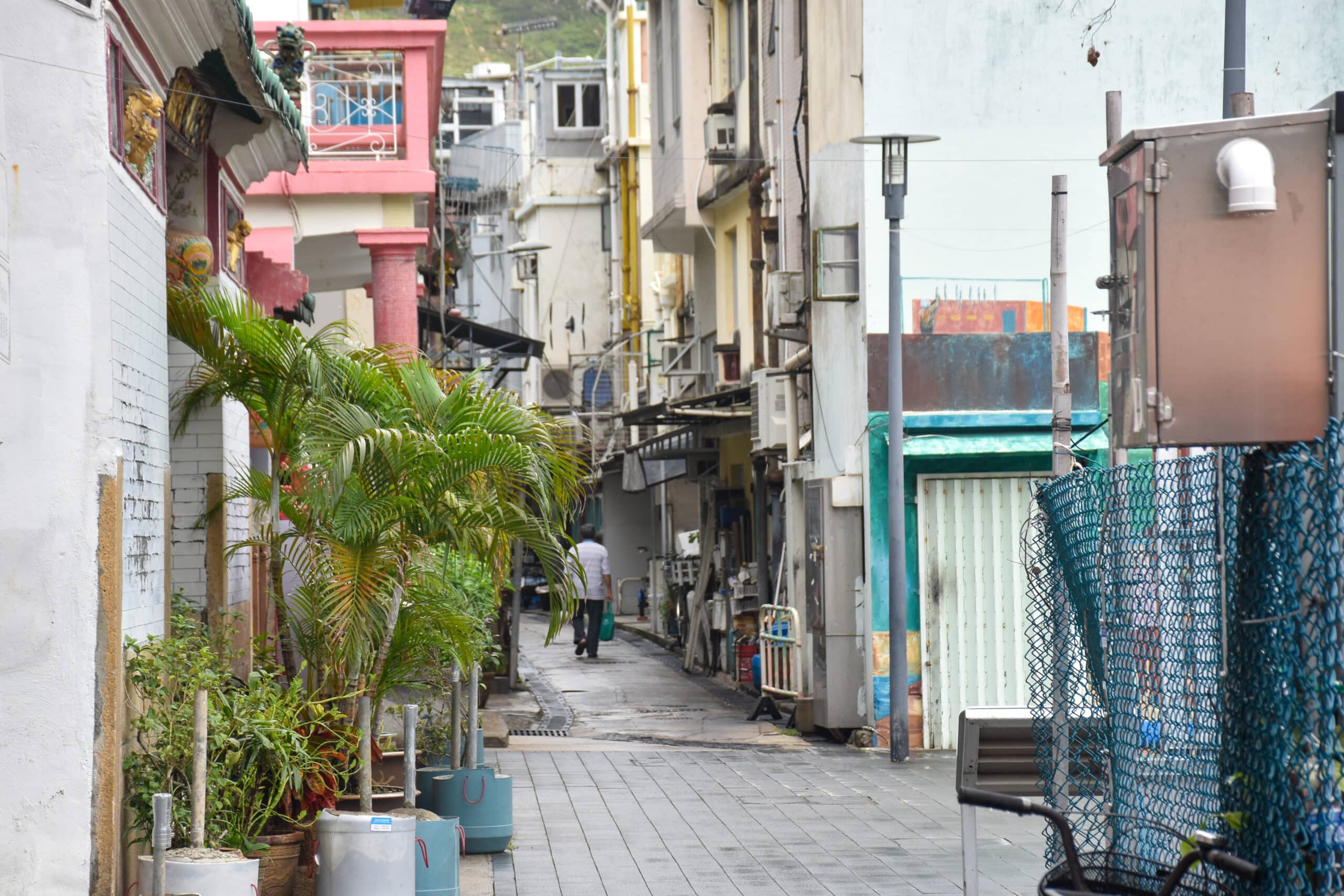
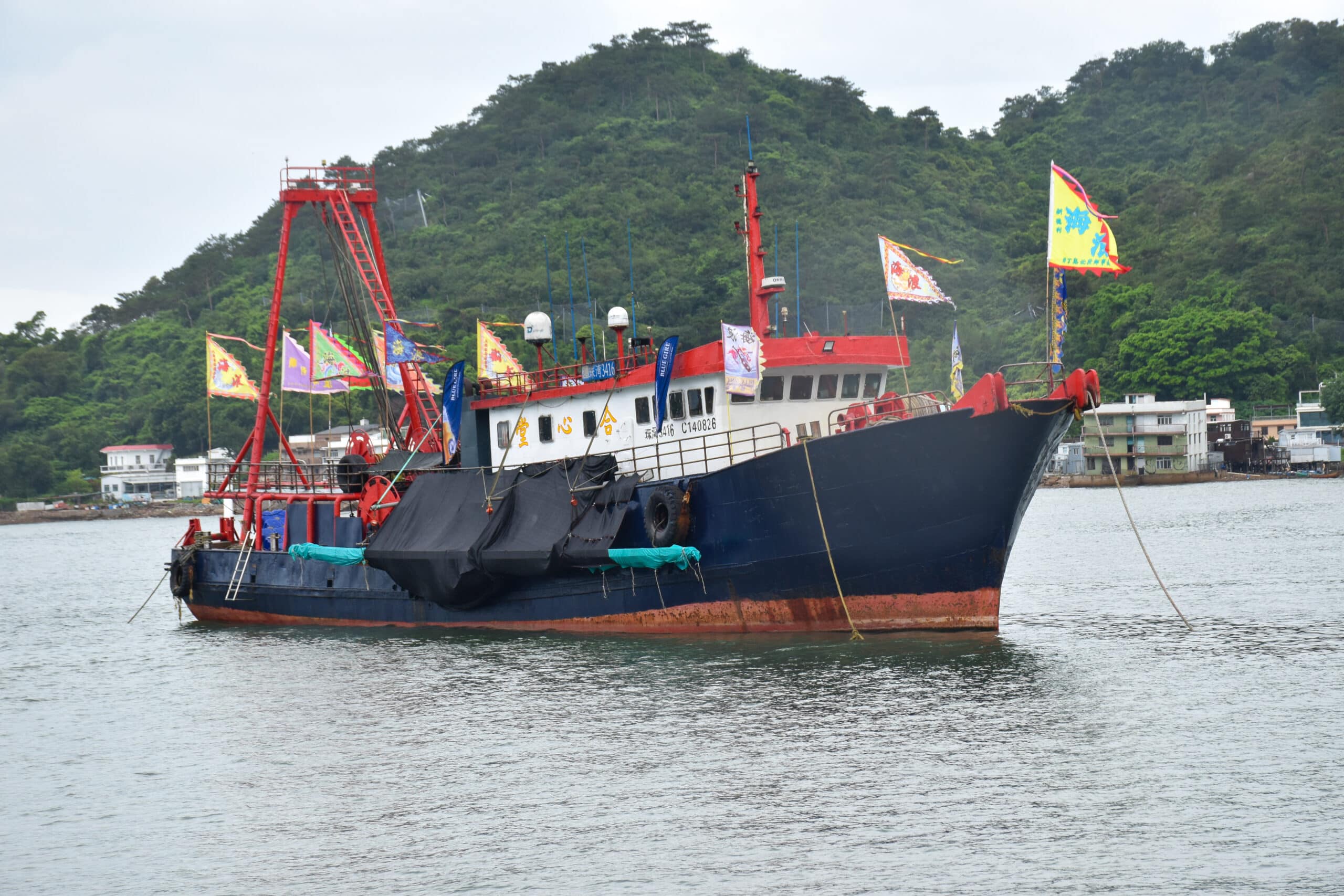
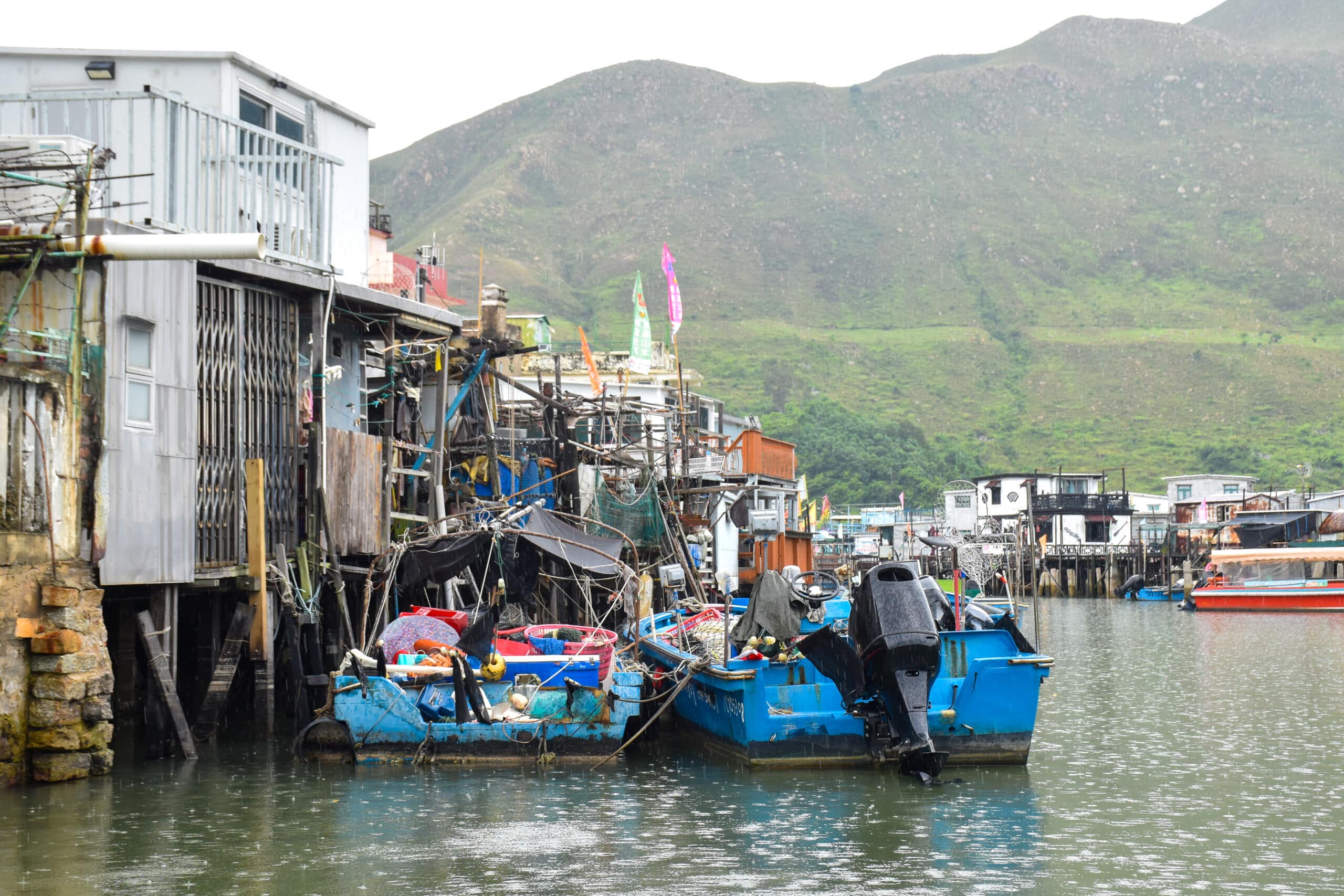
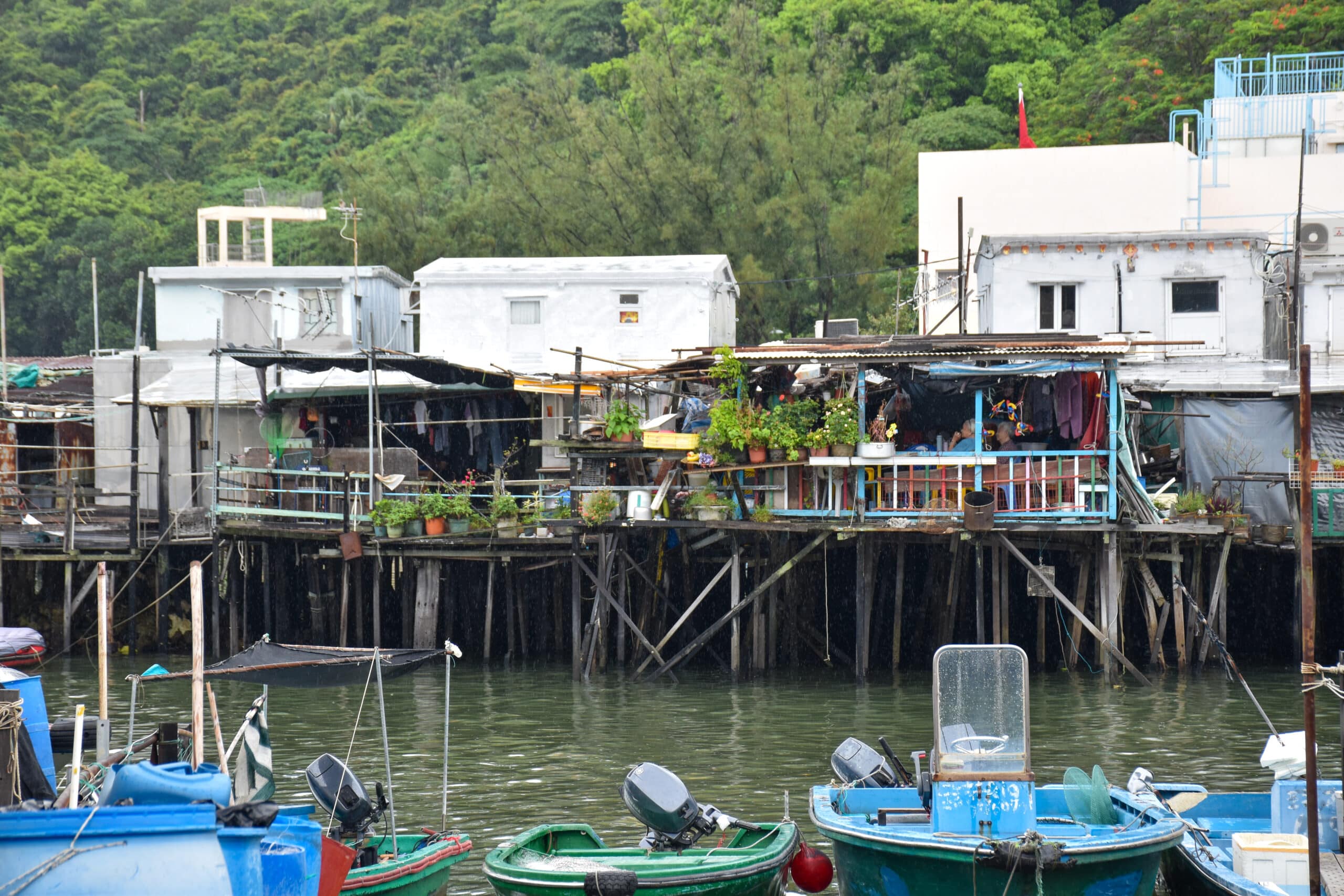
Tai O is a fishing community of houses built on stilts (slang: Pang Uk) connected by a maze of wooden bridges and boardwalks. Tai O is home to the Tanka people, or boat people, who have lived in Hong Kong waters for centuries.
Wander along Kat Hing Street (Market Street) observing the traders, take a selfie at Sun Ki Bridge, walk the many narrow footpaths, maybe visit a temple or two, and try local dried seafood at any of the waterfront cafes. They produce speciality shrimp paste which you can watch being made by hand in large blue barrels.
Take a short walk to the Tai O Heritage Hotel, a former Tai O Police Station and Customs House built in the colonial style. They still have two prison cells in the main entrance to view and an Archive Room telling the history of the building and its role in protecting against pirates.
Pick up a boat tour from the village (HK$50) by the blue rope-drawn Tai Chung Bridge to explore the stilt houses before heading out to sea in the hope of seeing pink dolphins – unfortunately a no-show on the day of our visit. However, we got a great view of Hong Kong-Zhuhai-Macau bridge, the world’s longest sea crossing at 55 km.
The stilt houses here reminded me of the colourful ‘palafitos’ we had seen (and stayed in) on the island of Chiloe in Chile, South America. Similarly, these were also fishermen’s houses.
Once you’ve finished exploring Tai O, pick up the Line 11 bus for a 40-minute ride back to Tung Chung Station (HK$12); then onto the MTR back to Kowloon passing the Disneyland Resort at Sunny Bay Station along your way.
Whilst a visit to Hong Kong Disneyland does not fit with the above sightseeing locations, as it deserves a full day visit on it’s own, I am mentioning it briefly here because it is based on Lantau Island, at Penny’s Bay on land reclaimed from the sea.
Hong Kong Disneyland was opened in 2005, the second DisneyLand in Asia after the Tokyo DisneyLand. It is not as large as the American DisneyLand theme parks, making it easily explored within a single day.
For those who are interested, it has the World’s first, and largest, World of Frozen!
In closing
Obviously, we were disappointed not to have been able to ride the Ngong Ping Cable Car up to the Big Buddha, however annual maintenance sounds like a good enough excuse for it not to have been running.
The Big Buddha is seriously impressive and the views are super, and take your time exploring the Precious Lotus Monastery for some quiet contemplation. The stilt fishing village is a window to the past which shouldn't be missed before returning to the vibrant metropolis of Hong Kong.
A day on Lantau Island is a day well spent!
For other ideas of what to do on a visit to Hong Kong, check out the following blogs.
Thank you so much for reading my blog. For more stories, itineraries, and advice, check out my Related Posts and sign up to receive my blogs by email.
If you have a blog-related question, please do ask in the comments box below and I'll try to help.
A little request: if you use my photos, please credit Love Travel Planning on your social media or give me a shout out on Instagram @lovetravelplanning as I am growing my website. Huge thanks.
Join thousands of travelers looking for inspiration from our FREE Planet Travel newsletter!
Your step-by-step framework for stress-free, unforgettable trips — from first idea to final itinerary.
There are 241 UNESCO Global Geoparks across 51 countries as of 2026, covering over 882,000 square kilometres. The programme was created in 2015 and celebrated its tenth anniversary in 2025.
A World Heritage Site is usually a single landmark protected for its outstanding universal value, often with timed tickets. A Global Geopark is a whole region protected for its geological heritage, run by the local community and built around education and sustainable tourism. You explore a Geopark over a day or more rather than visiting a single gate.
Usually not; a Geopark is an open region rather than a gated attraction, so moving through it is generally free. Individual geosites within it, such as a show cave or a visitor centre, may charge entry, and some guided geowalks need pre-booking.
Allow a full day at minimum and two or more for the larger Geoparks. Because the geosites are spread across a region, the time is mostly spent travelling between them and walking, so it pays to base yourself inside or beside the Geopark.
Yes, unlike World Heritage Sites which are rarely de-listed, UNESCO Global Geoparks are subjected to a strict re-evaluation every four years. If a site fails to maintain its environmental standards, community integration or geological education quality, it receives a yellow card giving it two years of renewal (instead of four), in which time it needs to improve. If it still fails to meet criteria, it receives a red card and loses its UNESCO status entirely.
There are 241 UNESCO Global Geoparks across 51 countries as of 2026, covering over 882,000 square kilometres. The programme was created in 2015 and celebrated its tenth anniversary in 2025.
A World Heritage Site is usually a single landmark protected for its outstanding universal value, often with timed tickets. A Global Geopark is a whole region protected for its geological heritage, run by the local community and built around education and sustainable tourism. You explore a Geopark over a day or more rather than visiting a single gate.
Usually not; a Geopark is an open region rather than a gated attraction, so moving through it is generally free. Individual geosites within it, such as a show cave or a visitor centre, may charge entry, and some guided geowalks need pre-booking.
Allow a full day at minimum and two or more for the larger Geoparks. Because the geosites are spread across a region, the time is mostly spent travelling between them and walking, so it pays to base yourself inside or beside the Geopark.
Yes, unlike World Heritage Sites which are rarely de-listed, UNESCO Global Geoparks are subjected to a strict re-evaluation every four years. If a site fails to maintain its environmental standards, community integration or geological education quality, it receives a yellow card giving it two years of renewal (instead of four), in which time it needs to improve. If it still fails to meet criteria, it receives a red card and loses its UNESCO status entirely.
There are 241 UNESCO Global Geoparks across 51 countries as of 2026, covering over 882,000 square kilometres. The programme was created in 2015 and celebrated its tenth anniversary in 2025.
A World Heritage Site is usually a single landmark protected for its outstanding universal value, often with timed tickets. A Global Geopark is a whole region protected for its geological heritage, run by the local community and built around education and sustainable tourism. You explore a Geopark over a day or more rather than visiting a single gate.
Usually not; a Geopark is an open region rather than a gated attraction, so moving through it is generally free. Individual geosites within it, such as a show cave or a visitor centre, may charge entry, and some guided geowalks need pre-booking.
Allow a full day at minimum and two or more for the larger Geoparks. Because the geosites are spread across a region, the time is mostly spent travelling between them and walking, so it pays to base yourself inside or beside the Geopark.
Yes, unlike World Heritage Sites which are rarely de-listed, UNESCO Global Geoparks are subjected to a strict re-evaluation every four years. If a site fails to maintain its environmental standards, community integration or geological education quality, it receives a yellow card giving it two years of renewal (instead of four), in which time it needs to improve. If it still fails to meet criteria, it receives a red card and loses its UNESCO status entirely.
There are 241 UNESCO Global Geoparks across 51 countries as of 2026, covering over 882,000 square kilometres. The programme was created in 2015 and celebrated its tenth anniversary in 2025.
A World Heritage Site is usually a single landmark protected for its outstanding universal value, often with timed tickets. A Global Geopark is a whole region protected for its geological heritage, run by the local community and built around education and sustainable tourism. You explore a Geopark over a day or more rather than visiting a single gate.
Usually not; a Geopark is an open region rather than a gated attraction, so moving through it is generally free. Individual geosites within it, such as a show cave or a visitor centre, may charge entry, and some guided geowalks need pre-booking.
Allow a full day at minimum and two or more for the larger Geoparks. Because the geosites are spread across a region, the time is mostly spent travelling between them and walking, so it pays to base yourself inside or beside the Geopark.
Yes, unlike World Heritage Sites which are rarely de-listed, UNESCO Global Geoparks are subjected to a strict re-evaluation every four years. If a site fails to maintain its environmental standards, community integration or geological education quality, it receives a yellow card giving it two years of renewal (instead of four), in which time it needs to improve. If it still fails to meet criteria, it receives a red card and loses its UNESCO status entirely.
There are 241 UNESCO Global Geoparks across 51 countries as of 2026, covering over 882,000 square kilometres. The programme was created in 2015 and celebrated its tenth anniversary in 2025.
A World Heritage Site is usually a single landmark protected for its outstanding universal value, often with timed tickets. A Global Geopark is a whole region protected for its geological heritage, run by the local community and built around education and sustainable tourism. You explore a Geopark over a day or more rather than visiting a single gate.
Usually not; a Geopark is an open region rather than a gated attraction, so moving through it is generally free. Individual geosites within it, such as a show cave or a visitor centre, may charge entry, and some guided geowalks need pre-booking.
Allow a full day at minimum and two or more for the larger Geoparks. Because the geosites are spread across a region, the time is mostly spent travelling between them and walking, so it pays to base yourself inside or beside the Geopark.
Yes, unlike World Heritage Sites which are rarely de-listed, UNESCO Global Geoparks are subjected to a strict re-evaluation every four years. If a site fails to maintain its environmental standards, community integration or geological education quality, it receives a yellow card giving it two years of renewal (instead of four), in which time it needs to improve. If it still fails to meet criteria, it receives a red card and loses its UNESCO status entirely.