On a recent visit to Hong Kong, we set aside a day to explore Hong Kong Island, which lies to the south across Victoria Harbour from Kowloon. The journey to Hong Kong Island on the Star Ferry is itself reason to go. Then, once you’re on Hong Kong Island there is plenty to explore, including the Victoria Peak Tram, the business district, fish markets and sandy beaches. So, set your alarm clock early and get ready to cover some miles getting to the heart of Hong Kong Island.
Hong Kong Island sits to the south of the Chinese mainland. It is the second largest island in the territory after Lantau Island. Much of the northern business district was built on reclaimed land to help enlarge the island to 31 square miles and support its 1.2 million residents.
Crossing Victoria Harbour on the Star Ferry, an historic passenger ferry, never disappoints. You get the best skyline views of both Kowloon and Hong Kong Island on the 10-minute journey across the harbour.
In the early 1800s a Parsi cook of Indian heritage used a boat to transport his baked goods, and workers, across the harbour. He then saw an opportunity to accept paying passengers and established the Kowloon Ferry Company. This concern was bought by businessman Sir Chatchick Paul Chater in 1988, rebranding to the Star Ferry in 1989.
The Star Ferry has a double-ended design allowing it to be piloted from either end; this means the ferry does not need to turn around when it reaches either side of the harbour.
Admire the ingenuity of the directional benches on the Star Ferry with back rests that can flipped over so you are facing in the direction of travel. If too hot outside, there is an air-conditioned cabin at front.
Today, the crew still wear traditional blue sailor uniforms, and the old boats smell of teak oil, engine fumes and paint, so it still feels like an authentic experience.
70,000 passengers use the Star Ferries each day!
Both have rolling departures running from around 7.00am until 11.00pm. There’s no need to book a ticket in advance, just turn up and use your bank card, or an Octopus card (HK$4) to enter. Bargain.
Yes, catching the MRT or taking a cab through the Cross Harbour Tunnel is quicker, but then you’d miss out on the views and experiencing this piece of living history.
Once on Hong Kong Island, the best way to start exploring is to take the brown open top Hop-on-Hop-off (HoHo) bus called the Big Bus in Hong Kong.
There are 3 bus routes to choose from:
Full trip takes 1 hour 20 minute, without stops. Leaves from the Bruce Lee statue on Avenue of the Stars, on the Kowloon side of Victoria Harbour.
A 2-hour loop around the peninsula including Stanley, Aberdeen and Ocean Park.
a loop around the 'city' side of the island including the Victoria Peak Tram, Mid-levels escalator and Central district - 1 hour 15 minutes.
Both the Stanley and Hong Kong Island Tours leave from the Central Terminal Pier 7, and can easily be combined by taking one after the other on a full day’s visit to Hong Kong Island.
Buses start at 10.00am. There’s an App so you can see when the next bus is due to arrive, and you get headphones for the audio tour. Your ticket is valid for 24 hours, with the option of an add-on ticket for the Victoria Peak Tram. You can also purchase your Star Ferry tickets alongside the Big Bus ticket.
We took the Hong Kong Island Tour and stayed on for the full loop of Hong Kong Island (Red Route), exploring on foot after the tour. The architecture changes so much as you progress along the route – I found the juxtaposition of the modern skyscrapers with the colonial buildings of old Hong Kong fascinating.
We got off the Big Bus at the Victoria Peak Tram to experience ‘the world’s steepest funicular railway’ – a 27 degree incline. It takes 7 minutes to ride to the top by tram, a lot quicker than the journey would have been by sedan chair, back in the day.
The Victoria Peak Tram has been significantly upgraded since I last visited; today, it’s a very modern air-conditioned tram rather than the hot and rickety version of yesteryear, although the wooden benches remain.
The tram takes you from Mid-town up through lush forests to the top of Mount Austin, the highest peak on Hong Kong Island. Once at the top you can pay for entry (around £5) to the Sky Terrace 428 observation deck at 396 meters for stunning panoramic views of Victoria Harbour and surrounding areas set out below you.
To be honest, it’s a bit of a tourist trap at the top, with gift shops and restaurants, however, it’s more than worth it for the views. It provides you with the classic view of Hong Kong.
Tickets for both the Tram and Sky Terrace can be purchased at the entrance of the lower terminus to Victoria Peak Tram.
It was hot, humid on the day of our visit, so once we’d finished on the Sky Terrace, we came back down to ground level and crossed Peak Street to The Peak Lookout for a memorable and refreshing Tsingtao beer overlooking the South China Sea. Then, it was back down the hill on the Victoria Peak Tram to pick up the Big Bus and finish our tour.
The audio on the bus tour explained a lot about the commerce side of Hong Kong, so when we’d finished the Big Bus tour, we returned to the Central District to explore further amongst these seriously impressive buildings.
The Bank of China tower is 1000 ft tall and caused a stir when it was built because its design does not follow the principles of Feng Shui. The sharp angles of the Bank of China tower, located next to Government house, looks ‘like a knife ready to cut through the Governor’s home’. Locals believed that, since its construction in 1989, the building has caused instability for many Hong Kong governors, including a death and a sacking.
To help improve the Feng Shui of the Bank of China building, a fishpond with carp was installed beside the Governor’s house to absorb the negative energy of the tower. This addition is believed to have brought much-needed harmony, and since then the First Executive of Hong Kong has successfully continued in office.
A holiday is not a holiday without ‘touching a bronze statue for luck’ (for example, rubbing the nose of Greyfriar’s Bobby in Edinburgh), and Hong Kong is no exception. Outside the entrance to the HSBC building on Hong Kong Island, there are two large bronze lions called Stephen and Stitt who have stood guard for over a century. The lions were named after HSBC’s general manager Alexander Stephen (‘power’) and HSBC Shanghai Manager Gordon Stitt (‘authority’).
During the Japanese invasion in 1941, Stephen and Stitt were taken to Japan to be smelted into weapons. Only after the War did an American GI find the lions in a Yokohama warehouse and return them to Hong Kong. The lions bear the scars of artillery fire. Rubbing the paws of Stephen and/or Stitt is believed to bring good luck and prosperity.
The Mid-level Escalators are impressive and comprise ‘the world’s largest covered escalator system’ with 20 interconnected escalators and 3 inclined walkways.
On average the Mid-level Escalators carrying an average of 85,000 people a day between Queen’s Road and Conduit Road, 800m further up the hill, at an incline of 135 meters. Rather cunningly, the escalators change direction depending on the time of day; they travel downward in the morning, and up at all other times.
Many locals are using the Mid-level escalators to get quickly to their places of work. As a traveller, I was fortunate just to be able to stand and marvel at the ingenuity of the escalators passing bustling shops, restaurants, bars and people’s homes.
Always stand on the right on the escalators to left busy commuters get past you on their way to work (like on the London Underground!)
You can catch the Mid-level escalators to Conduit Road and then walk up to the Victoria Peak Tram if you’re feeling energetic and it’s not too humid.
The whole Mid-Town area is worth taking time to explore: Mong Kok (meaning ‘busy corner’) is said to be the most densely populated place on earth and is a Mecca for foodies; whereas, at night Lan Kwai Fing is a lively hub of bars and clubs.
Having a partner who is more than a little bit obsessed with transport means that you must allow time for them to indulge their transport passions – with the Victoria Peak Tram completed, the next stop was the Ding Ding Trams.
The Ding Ding trams are double decker trams operating between Kennedy Town and Shau Kei Wan on Hong Kong Island, with 100 stops along 13 km of track. The trams have been operating since 1904 – a narrow-gauge electric tram system, and Hong Kong’s first large transportation system.
The trams are known as Ding Ding trams due to distinctive sound made by the bells to warn pedestrians of their approach.
The trams are a lovely way to get around Central, Wan Chai and Causeway Bay, with the wooden windows open and communal benches to sit on and watch the world go by. The trams take exact cash, with each journey costing HK$3.3 although you can also pay using an Octopus Card.
For a different experience on Hong Kong Island, plan to explore further afield, such as Aberdeen, Deep Water Bay and Stanley. All three locations are well worth a visit whilst you’re on the island. It’s easy enough to visit using public transport, however, you could also visit on the Big Bus Stanley Tour (Green Route).
The old fishing village (now town) of Aberdeen, on the southwest coast of Hong Kong Island, is easy to reach on either the MTR using the South Island East Line, stopping at Lei Tung Station, or alternatively using Bus 37X or 37B from Central Bus Terminus under the IFC building.
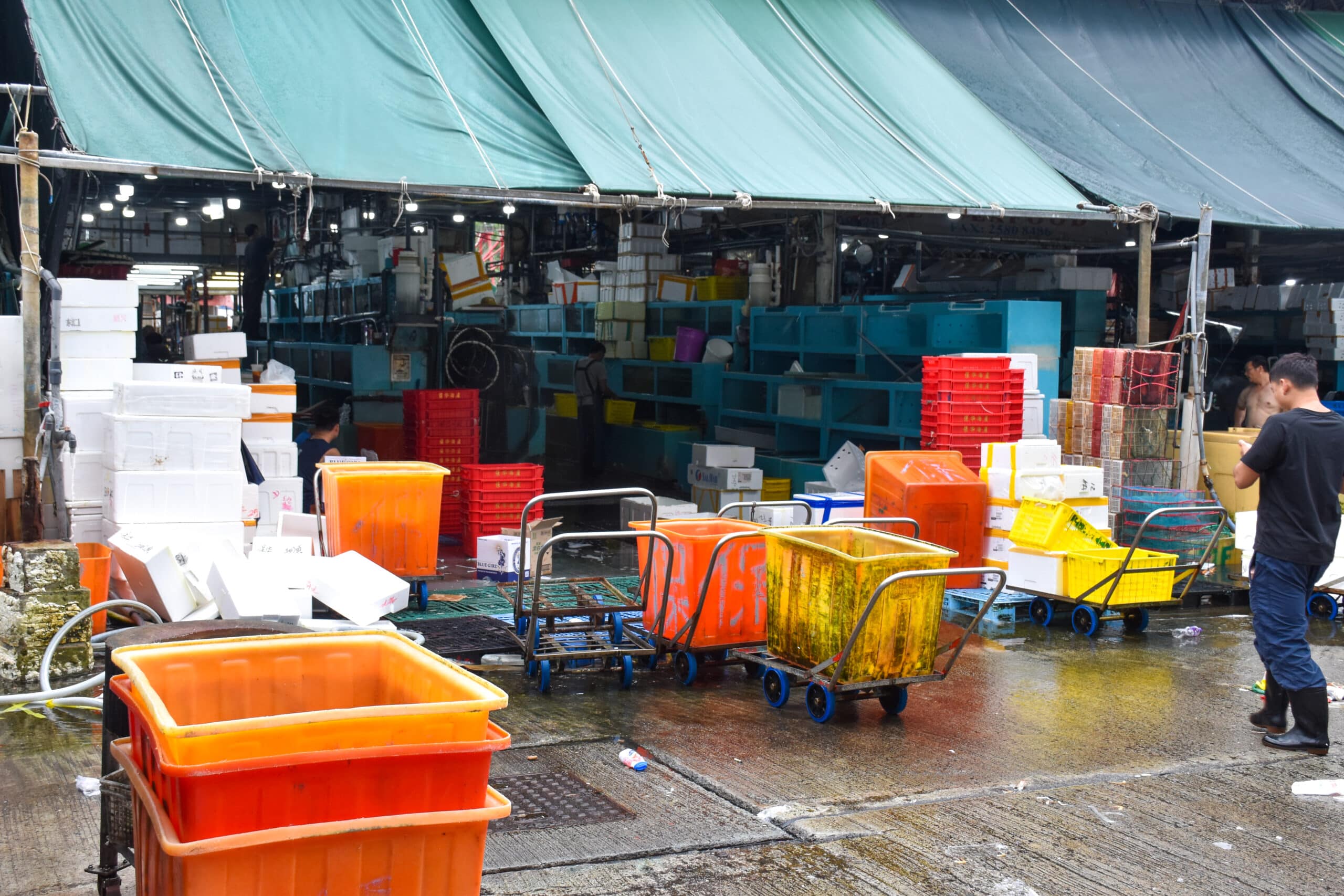
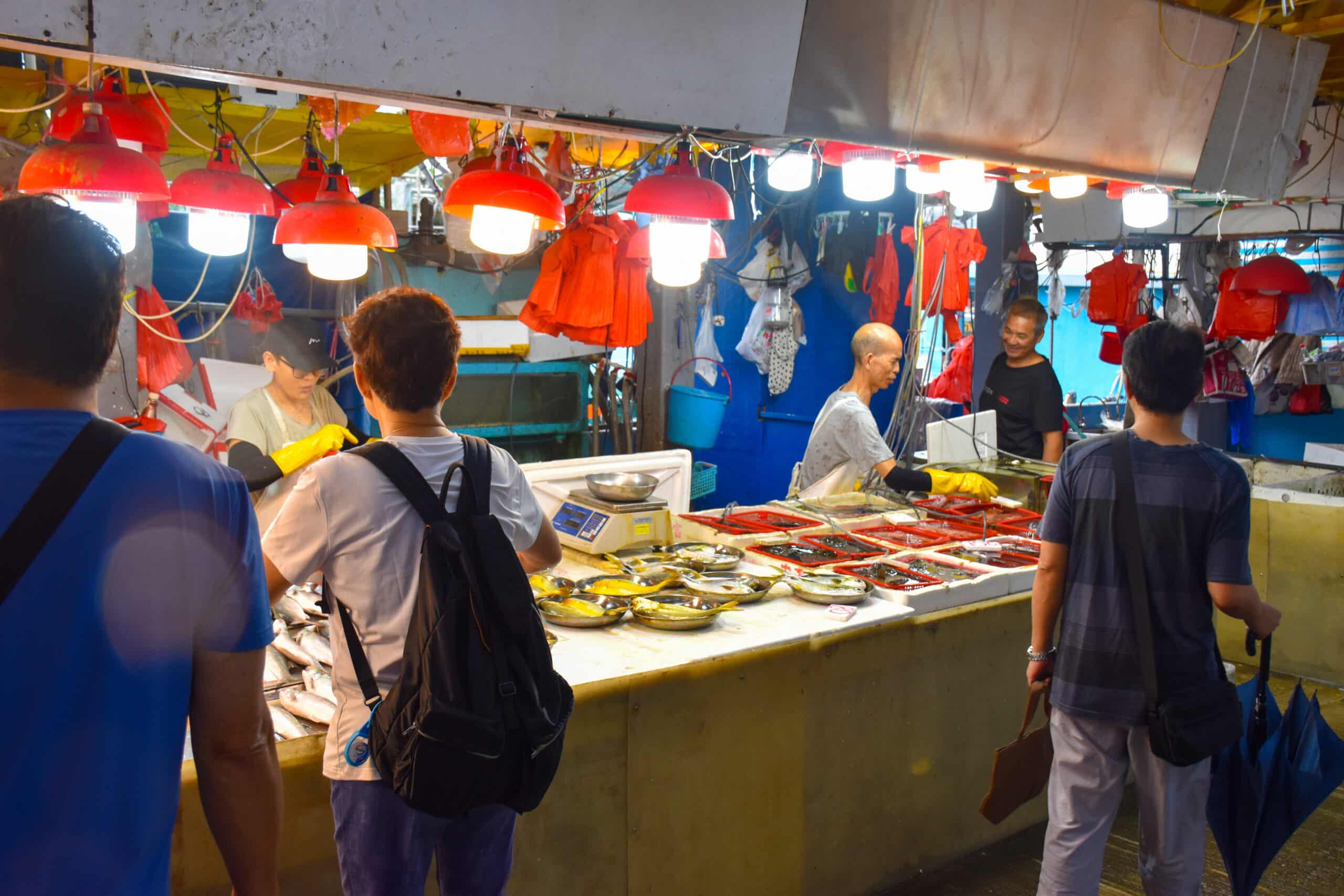
Depending on what time you arrive in Aberdeen, you might catch the Aberdeen Fish Markets in full swing (early in the mornings). Although the public is not technically allowed into the fish markets, you can sneak a peek to see the traders ankle deep in flowing water, selling live and exotic fish. There is lots of noise and plenty of theatre to observe.
Aberdeen is a very busy port; we had fun weaving between all the fishing trawlers and luxury yachts. Look for the fishermen selling fish from their floating homes and locals performing Tai Chi.
We took the opportunity to go round the harbour on a Sampan, a flat-bottomed handcrafted fishing boat which cost HK$150 for a 30-minute trip. However, there are some great options to book on Get Your Guide relating to Aberdeen’s fishing heritage, such as:
If you have time on your side, you can catch a ferry to Sok Kw Wan on Lamma island or to PO Toi Island.
We continued our land-based journey on the 973 Bus to Deep Water Bay and then Repulse Bay.
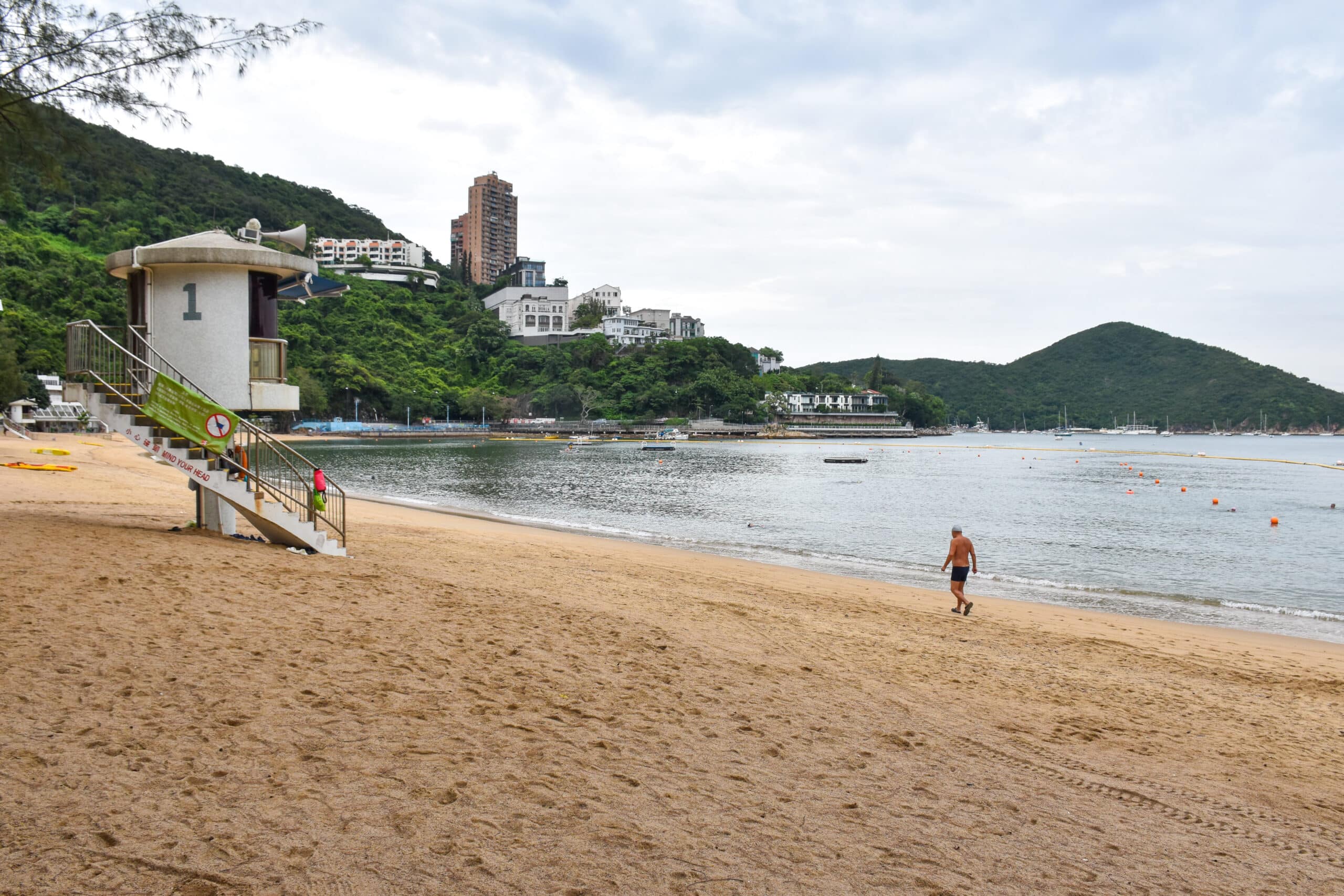
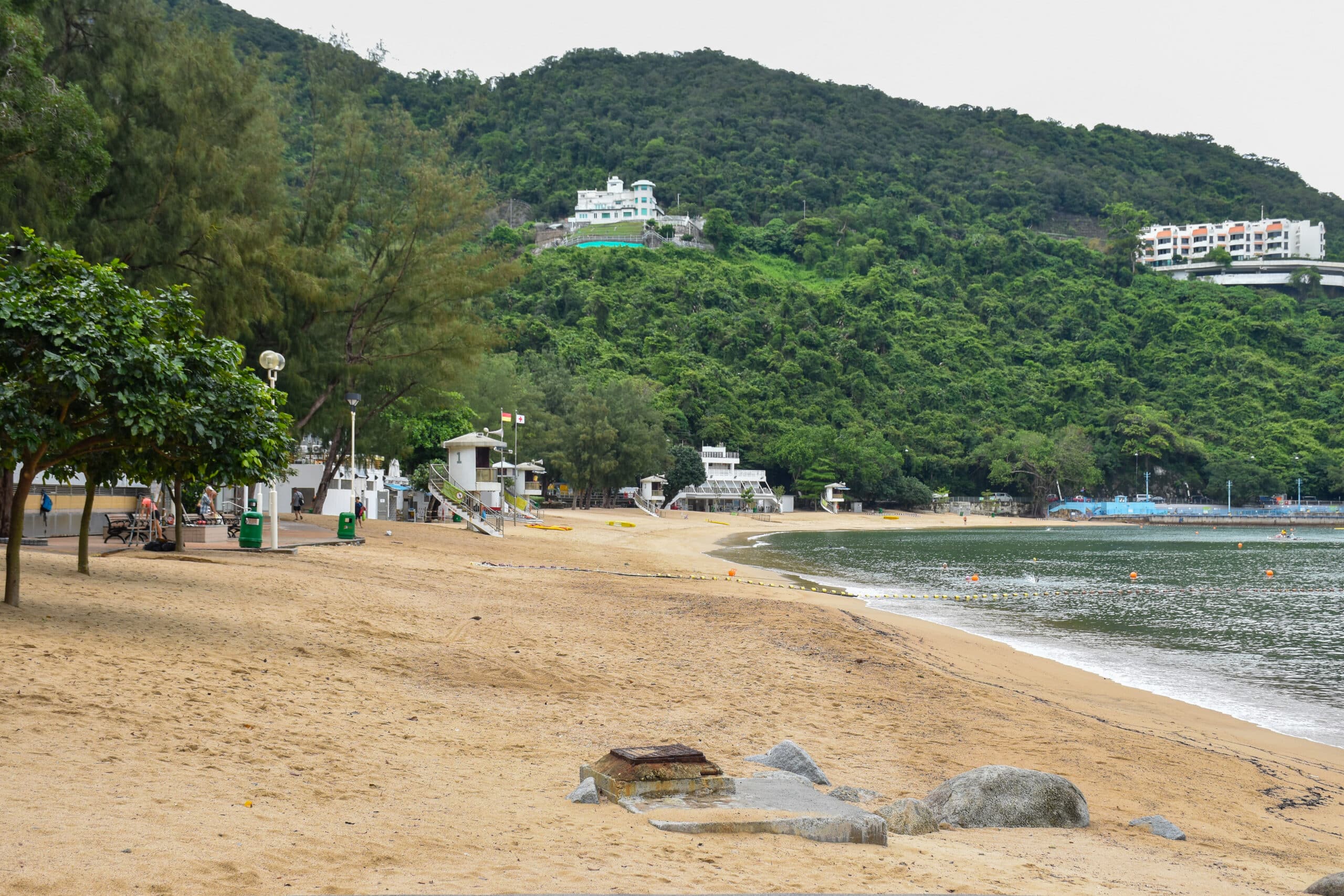
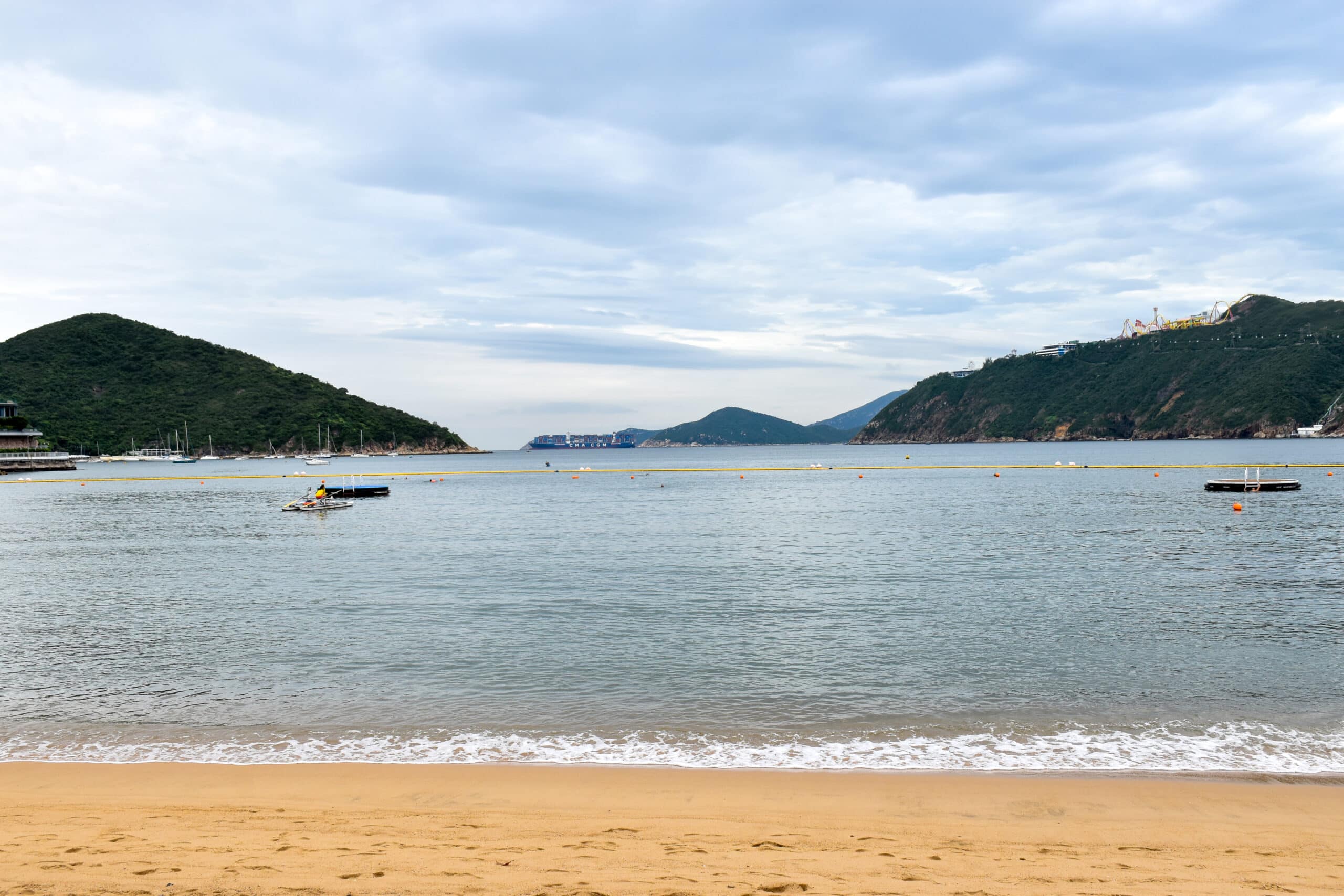
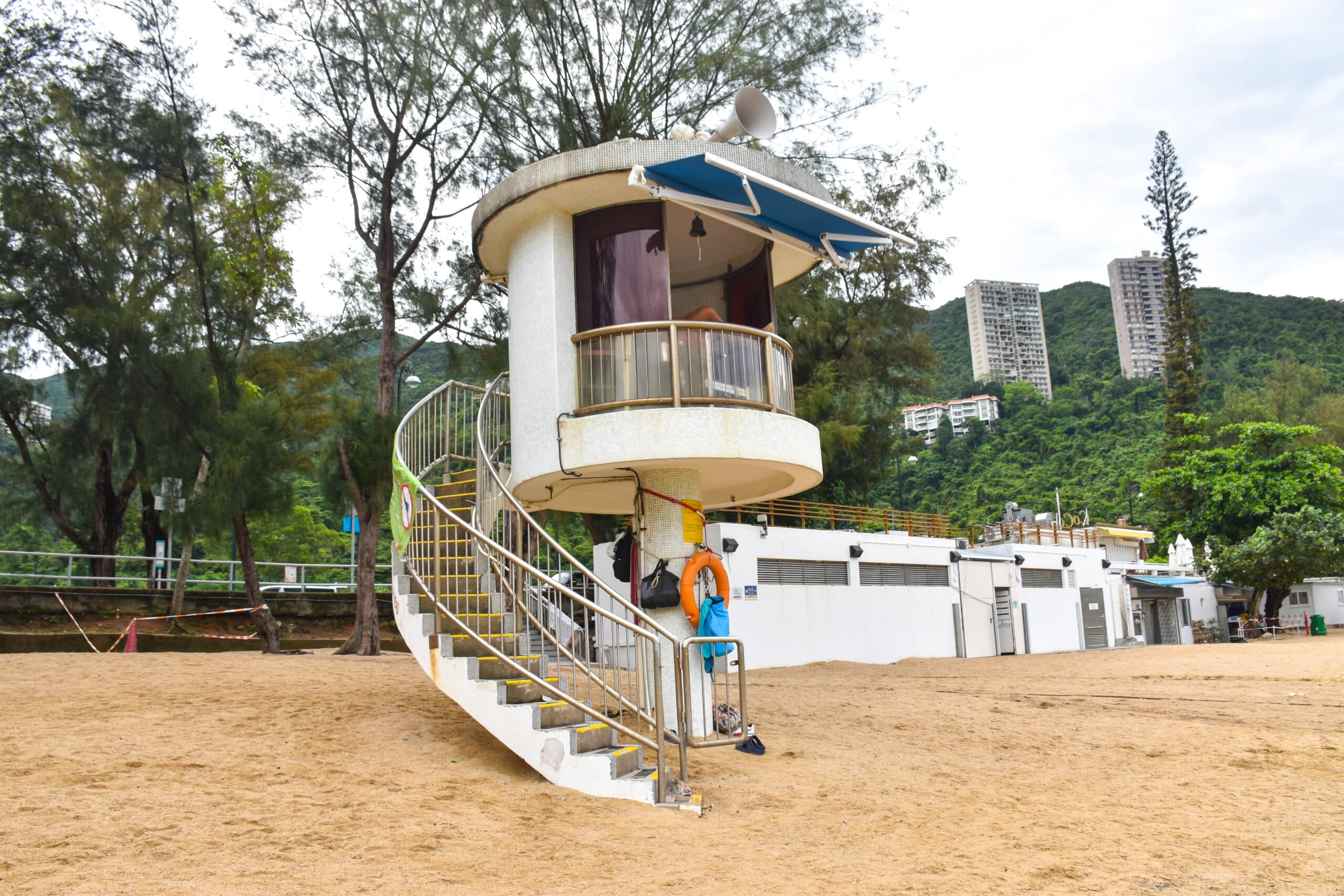
Deep Water Bay has a crescent-shaped beach with golden, manicured sands and clear waters. We wished we’d brought our swimwear, as it looked like a lovely place to spend a few hours, with all the required facilities on hand – toilets, showers, and lifeguards.
There are loads of eateries, so we stopped for a coffee and enjoyed watching the locals take their morning dip and a couple of dragon boats racing each other on the water to the frantic beat of drums.
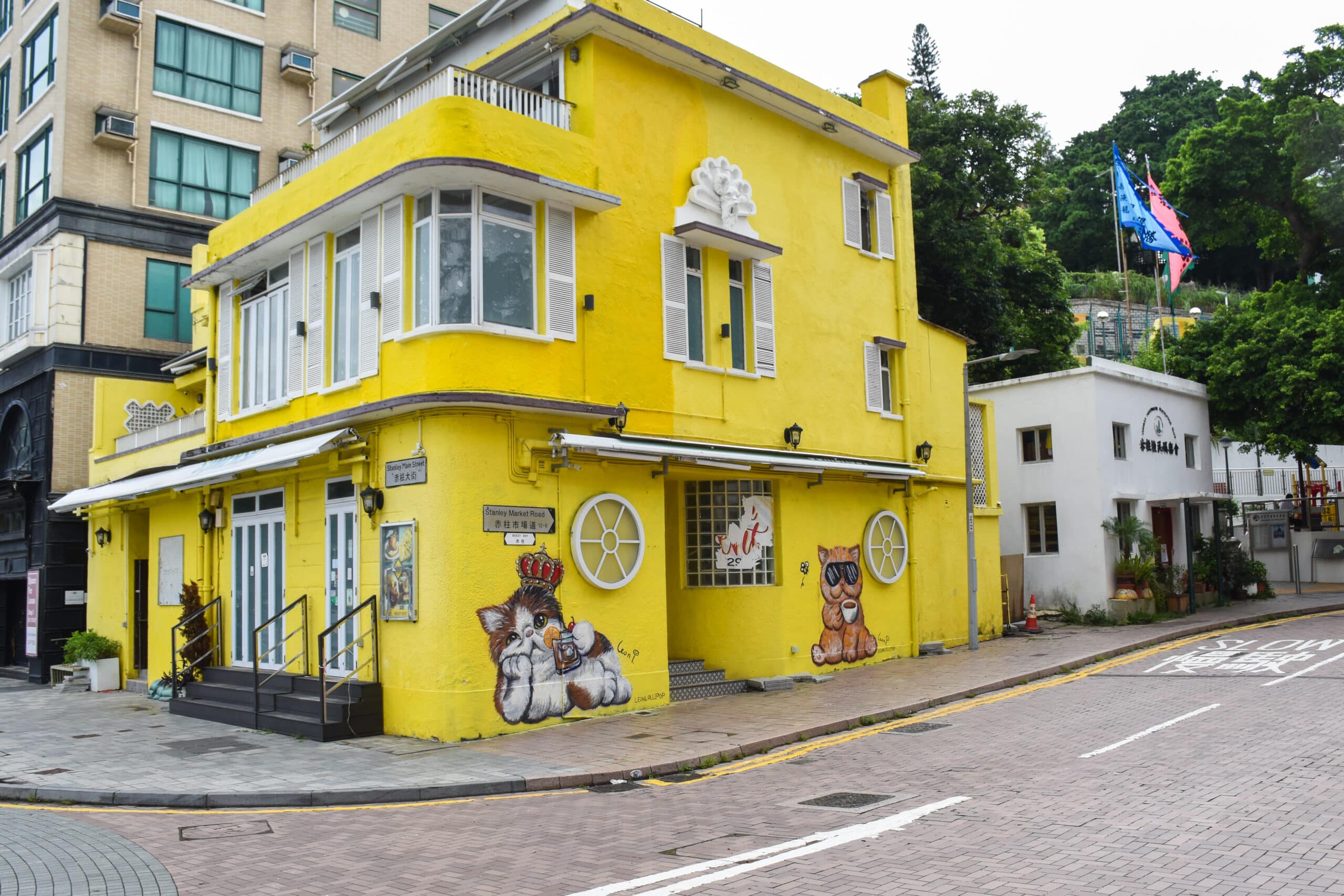
Another 5-minute journey on the bus, brings you to Stanley, passing the very chic Repulse Bay along the way. Stanley is a seaside town with beautiful beaches, markets, and a couple of key tourist attractions.
Start with a walk out to Stanley Blake Pier where you can pick the ferry to PO Toi Island if you have time; otherwise, it makes for a good photo stop. Then continue your walk to Murray House. Both Stanley Blake Pier and Murray House were originally built in the Central neighbourhood of Hong Kong Island and moved out here ‘brick by brick’ in the 2000’s as tourist attractions. Murray House was originally a military barracks built where the Bank of China building now is (yes, the controversial Bank building!).
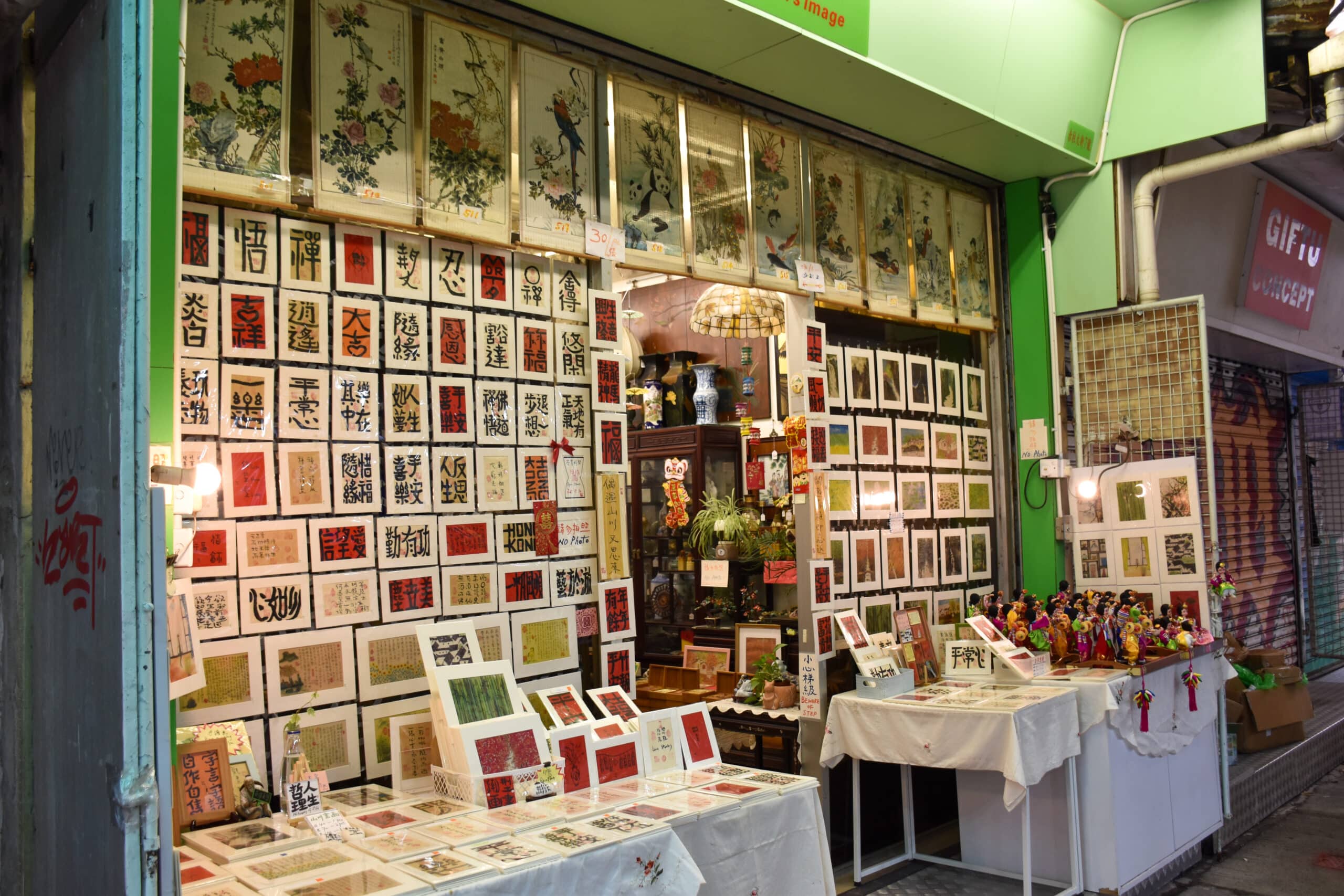
As you walk round the waterfront and admire the mix of building styles, you will end up at Stanley Market, a covered market with an art vibe to it – we picked up a few mementos including a scroll which an artist wrote on in Chinese calligraphy, now proudly hanging in the Love Travel Planning headquarters (my office!).
There is no MTR to Stanley, but the bus (6, 6A, 6X and 260) works well. Try to grab the front two seats on the double-decker bus for the best views. It takes around 40 minutes to return to the Central bus terminus on Hong Kong Island. Note - Bus 6 is the best for a slower trip through the greenery of Wong Nai Chung Gap albeit with more stops.

In closing
The primary goal of our day on Hong Kong Island was to ride the Star Ferry and take the iconic Victoria Peak Tram for the views back over Kowloon. That done, we thoroughly enjoyed the rest of our time on Hong Kong Island and found the buses to work brilliantly to get around.
For such a relatively small place, Hong Kong Island has something for everybody – beaches, hiking trails (over the Dragon’ back), markets (fish or craft), exclusive bays, nightlife in Lan Kwai Fing, temples and the skyscraper filled business district. Whilst we spent a very full day exploring, there were places that we just couldn’t fit into our plans, such as Happy Valley Racecouse.
Hong Kong, we'll be back!
Thank you so much for reading my blog. For more stories, itineraries, and advice, check out my Related Posts and sign up to receive my blogs by email.
If you have a blog-related question, please do ask in the comments box below and I'll try to help.
A little request: if you use my photos, please credit Love Travel Planning on your social media or give me a shout out on Instagram @lovetravelplanning as I am growing my website. Huge thanks.
Join thousands of travelers looking for inspiration from our FREE Planet Travel newsletter!
Your step-by-step framework for stress-free, unforgettable trips — from first idea to final itinerary.