For those following this road trip itinerary through the Chilean Lake District, you will have read about mighty volcanoes, beautiful lakes, ancient forest of araucaria trees, and even Patagonian Sea Lions. But did you know there’s an island at the bottom of the Lake District region offering UNESCO Heritage Site churches, colourful houses on stills, a national park, and best of all, penguins? So if you love wildlife, read on to find out where to see penguins on this road trip.
Table of Contents
The Chiloe Archipelago
Chiloe is an archipelago, comprising around 40 islands. The largest island is Isla Grande, often referred to as the Isle of Chiloe, which is 180 km long and 50 km wide. The archipelago is situated south of Puerto Montt at the bottom of the Chilean Lake District region.
Catching the ferry to Chiloe Island
It’s easy to reach Chiloe from the mainland on the roll-on, roll-off car ferries. The ferries leave Pargua on the mainland to make the 25-minute crossing to Chacoa in the north of Chiloe Island. Note – other ferry routes are available but this one fits with this road trip itinerary.
When you arrive at Pargua, just queue up as instructed by the port staff and wait to drive onto the ferry when it’s your turn. Once on board, a conductor will come and ask for payment – about 17,000 Chilean Pesos each way – and you’re off!
You should have just enough time to visit the baños, buy a coffee and look at the crafts which the locals are selling on board, before you need to return to your vehicle to disembark the ferry.
Note – keep your eyes peeled for some cool statues of men with oars on large boats as you approach to the ferry terminal at Pargua on the mainland.
Why include a visit to Chiloe?
The island of Chiloe felt so different from everywhere else on our Chilean Lake District itinerary. Whilst Pucon and Frutillar could easily be in Switzerland, Chiloe feels otherworldly.
Instead of dramatic volcano landscapes, you’ll find gentle rolling hills, fields, and forests. Chiloe is very green and lush, aided by the high amount of rainfall each year. Some say that it’s greener than Washington State, USA.
Horses roam freely on the island and tiny deer called Pudu hide in the woodland. It’s also a place filled with myths and Chilean folklore which adds a magical quality to it.
As everywhere else on our Chilean Lake District itinerary, there is a national park to explore – Chiloe National Park (Parque Nacional Chiloe). Remember to buy your National Park tickets in advance through www.conaf.cl
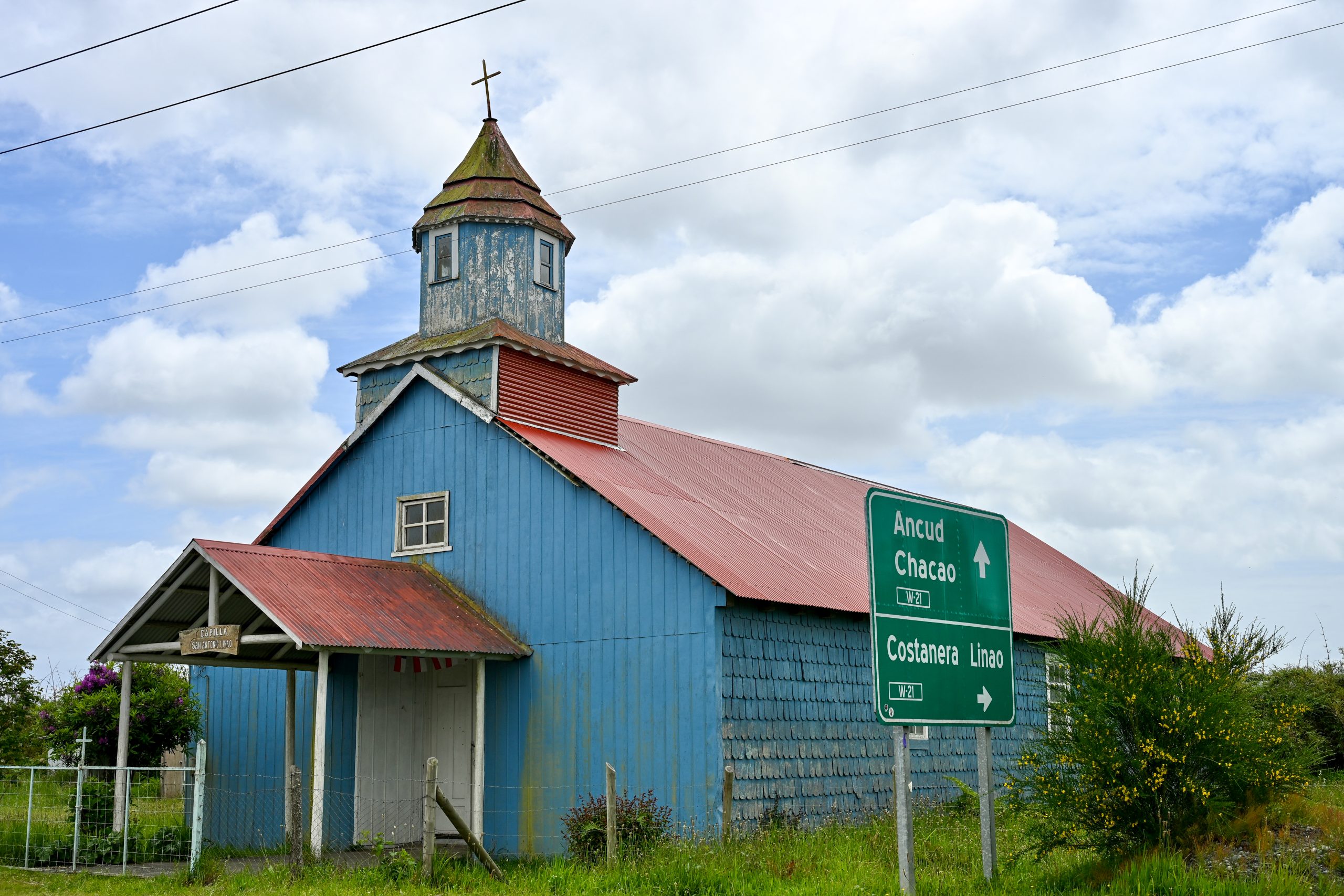
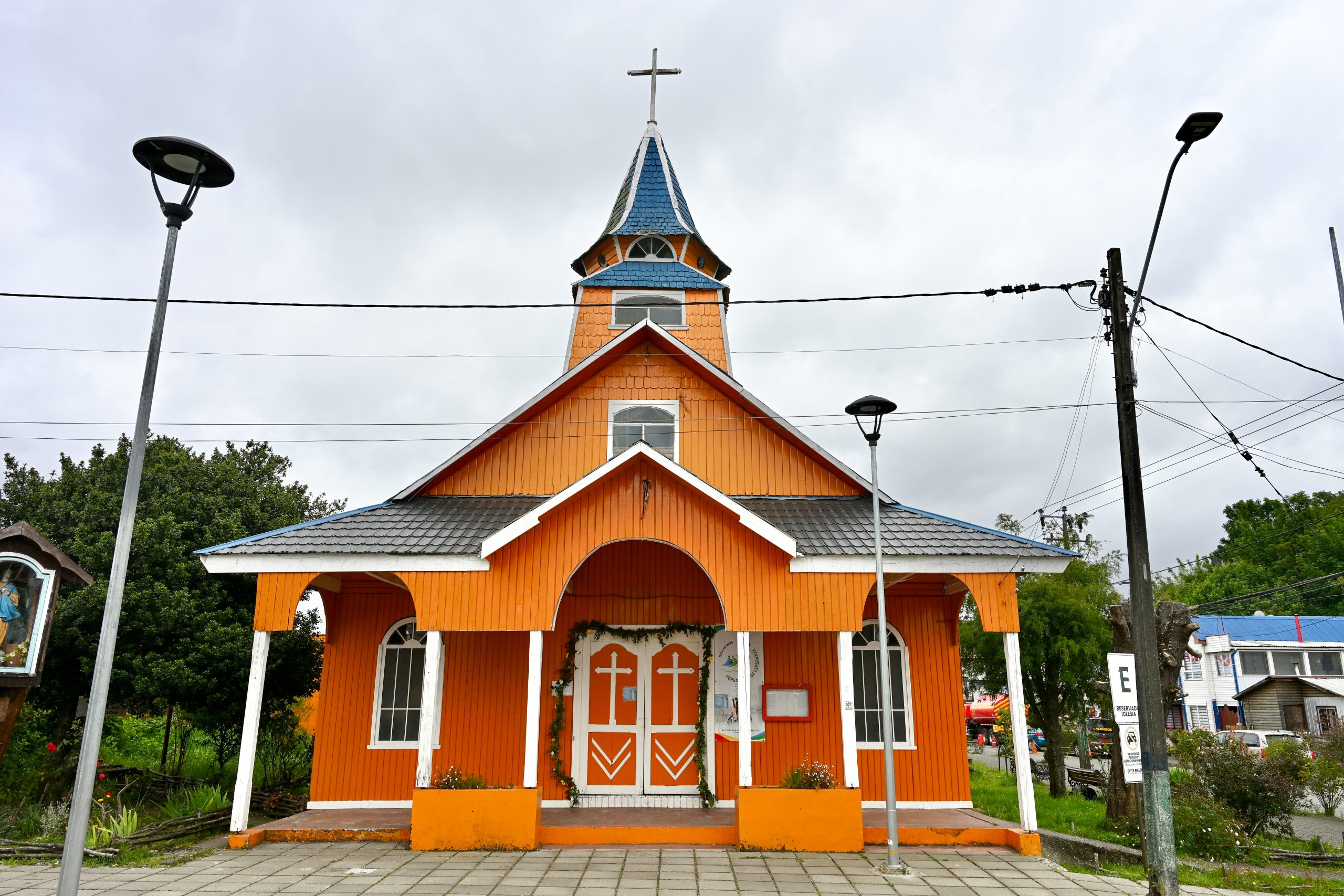
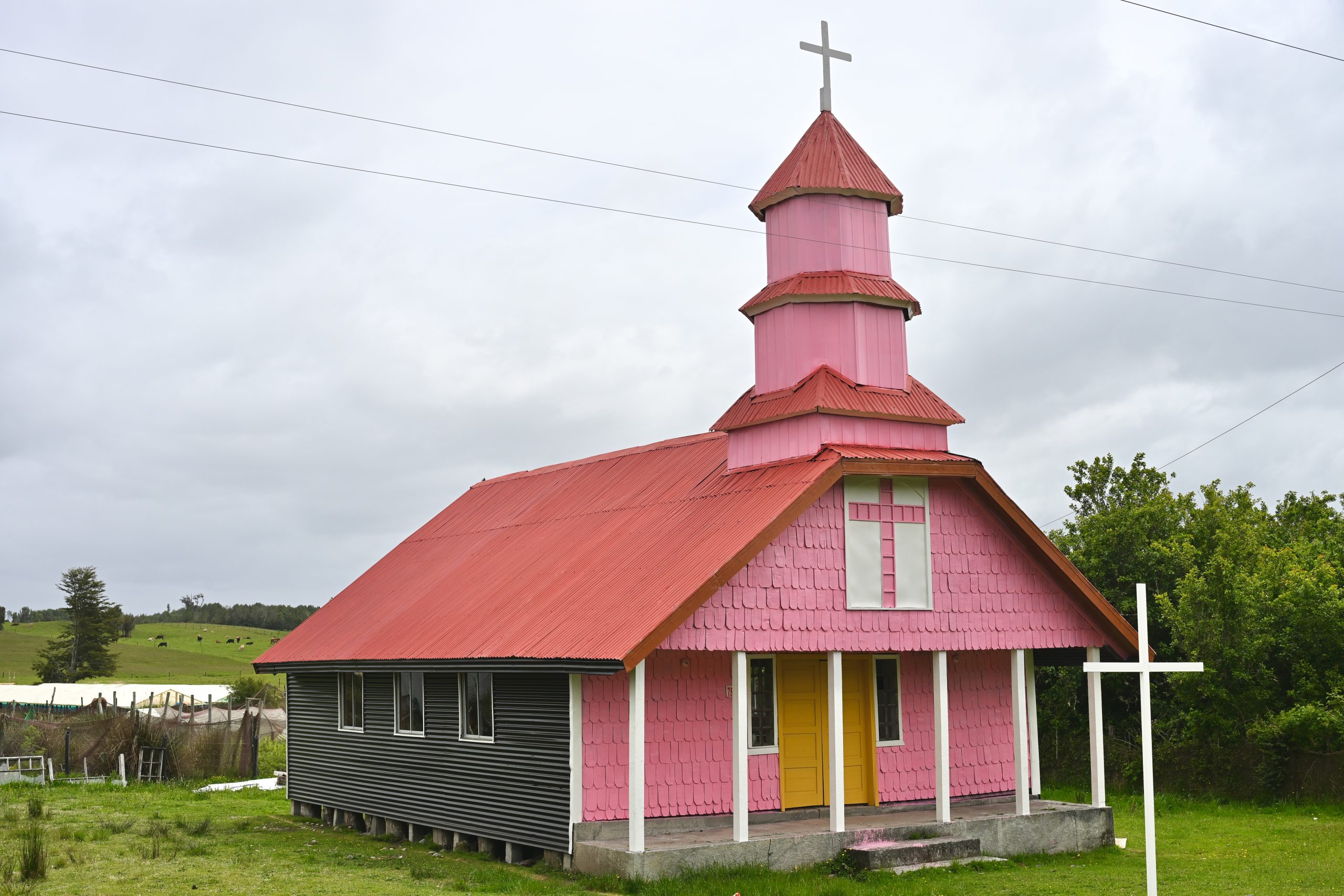
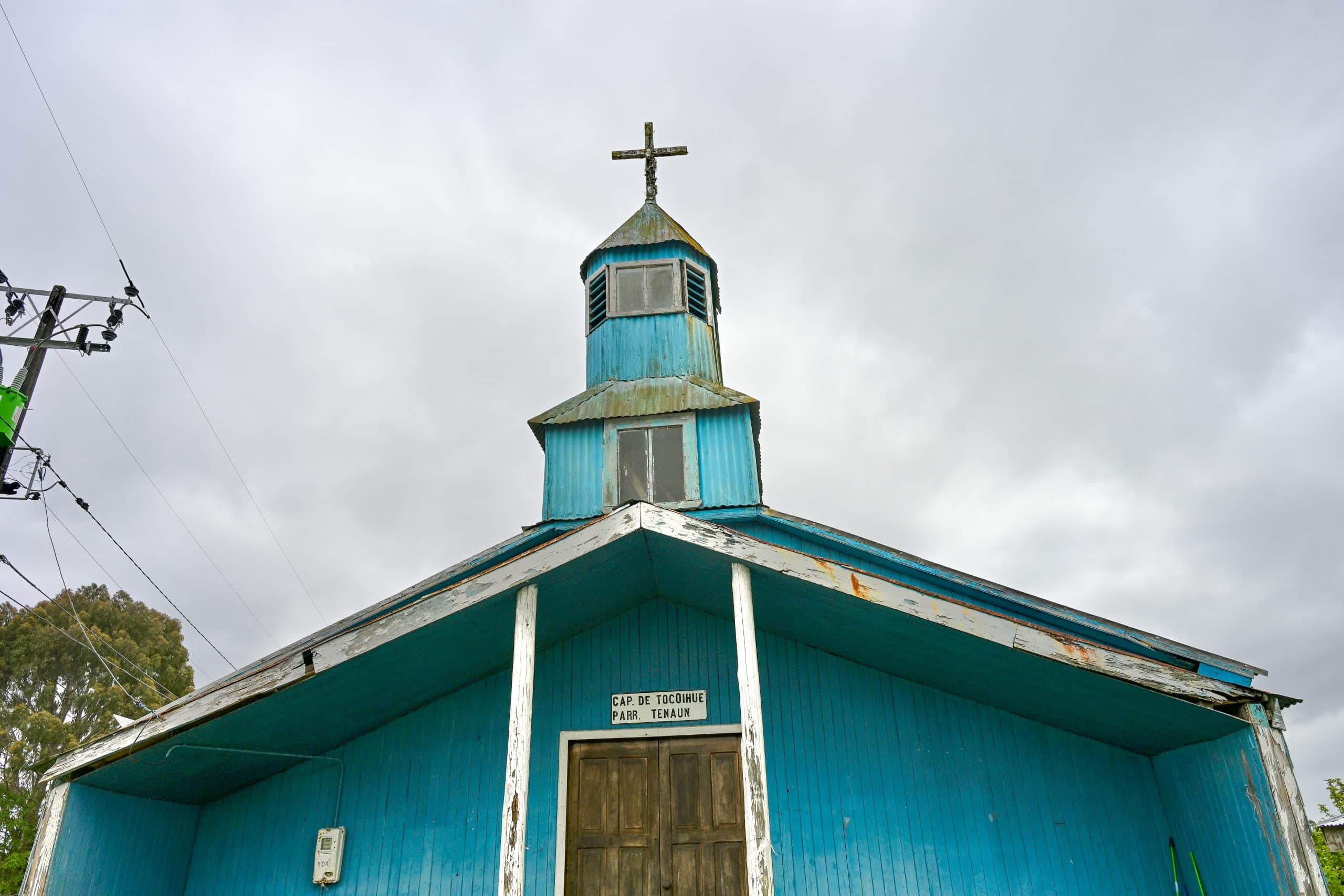
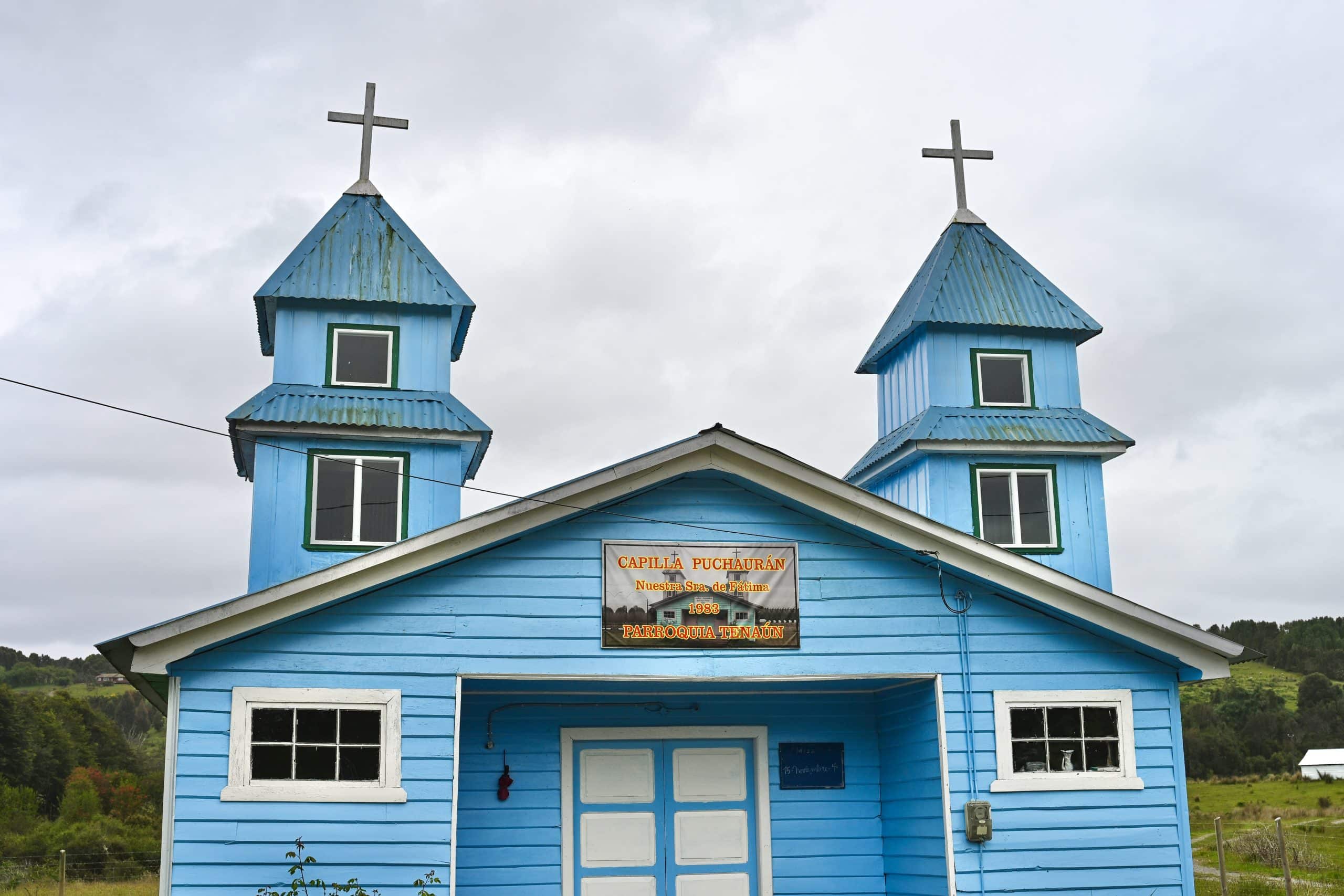
In contrast to the green of the countryside, the towns and villages are filled with colour, either by the painted wooden UNESCO Heritage Churches, or by the colourful fishermen’s huts on stilts (palafitos).
And then of course Chiloe is where to see penguins in the Chilean Lake District….
Make Castro your base on a visit to Chiloe
Castro was Isla Grande’s oldest colonial settlement dating back to 1567, although it wasn’t until 1912 when a narrow-gauge railroad linked it with Ancud and rest of the country. Today, it’s a bustling and colourful small university city, roughly in the centre of Isla Grande making it a good base for sightseeing.
Colourful Palafitos
One of the big draws of visiting, or staying in, Castro are the palafitos – wooden houses built on stilts along the edge of the Castro fjord painted in vibrant colours.
They were originally built for local fishermen in the 19th century so they could moor their boats underneath their houses and climb up a wooden ladder straight to their home after a hard day’s fishing.
Palafitos offered another advantage to the owners who didn’t need to buy land; they just paid a small concession to the state for the pitch. If they needed to move, then they simply pulled the stilts out of the mud and towed their house elsewhere – simple!
Unfortunately, the Great Chilean Earthquake of 1960 (magnitude of 9.4 in Valdivia) destroyed many of the original palafitos lining the island’s eastern shore, though some have been restored.
Stay in a palafito – today many palafitos are hotels or guesthouses, which you can book on sites such as Booking.com. We stayed in Palafito Azul and enjoyed our experience staying in the cosy flat heated by wooden pellets in a stove. Tip – book a flat on the top floor as the floorboards are creaky so you could hear every footstep of the people above!
Around town in Castro
Palafito viewpoints – there are two main areas to view clusters of colourful palafitos in Castro:
- Plazuela Palafitos de Pedro Montt – you will see the colourful palafitos to your right as you drive into Castro from the north on Highway 5. If you stop and park up to look at the palafitos here, keep your eyes peeled for kingfishers as this is where we spotted one under the bridge.
- Mirador Gamboa – to the left before the bridge on Highway 5 (PanAmerican Road) as you leave Castro to drive south. This is a fantastic place to view the riot of palafitos colour and there is also a CASTRO sign with a heart for good photo opportunities.
Monkey Puzzle trees – some of the houses have monkey puzzle trees (Araucaria) in their front gardens, but they weren’t looking as healthy as the ones in Conguillio National Park; maybe it’s the very damp climate here? However, it’s a big decision to plant one, as once you’ve planted it, legally you can’t chop it down!
Church of San Francisco (Iglesia San Francisco) – this imposing yellow church stands on the Plaza de Armas of Castro. It was built in 1912 as a Catholic church with twin spires and a symmetrical shape. The towers were intended to be beacons for the fishermen and sailors. In 2000 it became a UNESCO Heritage Site, but more of that later.
Where to eat in Castro
There are plenty of eateries in Castro, but I’d like to make two recommendations:
Restaurant Travesia – This was a recommendation from our tour guide for the penguins, Jonathan, and it did not disappoint. Offering ‘traditional Chilote food with a modern twist’, the food was outstanding. By way of example, I had a smoked pork dish with Murta berries and potatoes, washed down with Murta Pisco Sours, and all served up in a room which looked like someone’s lounge – no bling, no glitz, just incredible cooking.
Sabores de mi Tierre – a restaurant in a palafito overlooking the Castro Fjord.
This restaurant offers Curanto dishes using a variation of the traditional Chilote method of cooking where food is cooked in an earth oven over heated rocks, covered at the top with large leaves and turf to keep the heat in. The food is layered with the meats at the bottom closest to the hot rocks (as they need the longest time to cook); then potatoes and vegetables, with anyal shellfish on top allow them to cook more gently.
If you decide to try the Curanto then either go hungry, or share a dish between two people, as it is very filling. My dish included: the biggest mussels known to man, clams, pork, chicken and potato bread with a sauce to pour over, and fresh salsa for the meat – delicous but very filling.
The Curanto was invented by fishermen who went sailing in remote places, taking supplies with them which could last weeks – smoked pork, smoked sausage, dried vegetables, potato dumplings. They supplemented these with shellfish, wrapped it all in a kind of giant rhubarb plant leaf and buried it between heated stones under a fire so that whole lot could stay warm for a day or more.
It is thought that this Polynesian style of cookery may have been brought to the Chilean mainland by islanders who roamed the Pacific centuries ago, maybe from Rapa Nui (Easter Island).
The Jesuit Churches of Chiloe Island
I’ve already mentioned one church which is listed as a UNESCO Heritage Site on Chiloe, but in fact there are 16 churches which constitute a UNESCO World Heritage Site on the archipelago.
Whilst Spain founded the city of Castro in 1567, Jesuit missionaries arrived in 1608 with the intention of converting the indigenous Huiliche. The priests disembarked at each indigenous settlement, converted its people, left one of its representatives in position, and then returned each year on a Circular Mission.
Don’t miss Dalcahue
Is this where to see penguins in Chiloe? Sadly not, but stay tuned as the penguins are coming soon.
Dalachue sits on the eastern coast of Isla Grande opposite the smaller islands of the Chiloe archipelago, and just 20 km northeast of Castro.
Dalcahue Church (Inglesi Dalcahue) – Dalachue evolved as a town on the Jesuit Circular Mission and has one of the recignised UNESCO Heritage Site Churches on Chiloe. The one you see today was built in 1903 on the site of the Jesuit’s original mission.
The white wooden Dalcahue Church stands at the top of a small square filled with trees and has a single spire and an arched arcade in front of its main doorway. The inside of the church is deceptively large; it has a simple design and is painted in calming colours. Whilst the columns look like marble, in fact they are made of native wood and painted to look like stone. This is like the columns of The Painted Chapel at the Royal Naval College, Greenwich, London.
Dalcahue Market (Mercado Dalcahue) – Dalcahue means ‘boat people’ in the local language. The indigenous Huilliche people (the southernmost branch of the Mapuche) originally fished these waters and sheltered inlets. Today, the town is still full of boats.
Some of the daily catch is taken to the Mercado Dalcahue, a circular, wooden dining hall lined with stalls offering the best of Chilote food – cooking fresh salmon, empanadas and milco (deep fried potato and pork dumplings). The market was full of locals tucking in to freshly caught fish at lunchtime.
Artesan craft market (Feria Artesanal) – next to the Mercado Dalcahue on the waterfront, you’ll find the craft market with an incredible array of knitted, crocheted and woven goods. I thought it was special that craftspeople from the smaller, neighbouring islands travel to the market each day to sell what they’ve made. Throughout the market there were ladies knitting at their stalls, demonstrating that nothing here was ‘Made in China’.
And finally, where to see penguins on Chiloe
Yes, what you’ve all been waiting for…where to see penguins on the Chiloe archipelago.
Monumento Natural Islotes de Punuhuil
The Monumento Natural Islotes de Punihuil sits on the Pacific coast, 27km southwest of Ancud on the north of Isla Grande. The islets of Punihuil are home to summer breeding colonies of both Magellanic and Humboldt penguins (Sept – April). In fact, it’s one of the few places where these two species of penguin nest side by side.
Whilst you can visit Punihuil under your own steam, it’s probably easier to book a tour to make sure that you get booked onto the boat tours out to the rocks where the penguins nest.
We booked the following tour on Get Your Guide and enjoyed the day trip with our guide Jonathan.
In terms of what to expect on this tour:
- Our guide picked us up from our palafito in Castro and drove us north to Ancud. Along the way he chatted about Chilote folklore and living on the islands.
- We arrived an hour later at a sandy beach (Bahai Punihuil) on the Punihuil peninsula to the west of Ancud where we registered for our boat tour (that our guide had previously secured).
- The area felt quite remote, with just a couple of boats moored on the beach and a restaurant, sadly not open as it was still pre-summer season in November.
- When it was time for our boat tour, we enjoyed a very novel transfer to our boat – first a group of men pushed our boat into the water, then we were asked to climb onto a trolley, before being wheeled into the water where we crossed over into the boat. A simple but innovative way to avoid getting our feet wet!
- Then the boat set off towards 3 small islands of volcanic rock not far from the beach. These rocks are where the colonies of penguins take refuge when they are breeding.
- When we pulled up closely to the rocks, we saw two juvenile Magnellanic penguins practising their swimming skills – jumping in and out of the water under the watchful gaze of Mum. On the next rocks were groups of sleeping penguins, always with one penguin awake and keeping watch of the eggs.
- Our trip was fruitful with lots of sightings of fluffy penguin chicks, two sea lions curled up on the rocks and two marine otters frolicking in the water.
In case you want to know how to tell the difference between Humboldt and Magnellanic penguins when they are nesting together – Humboldt’s have one white stripe, and Magnellanic penguins have two. Every day is a learning day!
After our penguin sightings, we headed back to shore and drove to Ancud.
Although we didn’t spend much time in Ancud (it was raining!), we did visit the San Antonio Fort built by the Spanish in 1768 to keep out invaders and Dutch pirates. This is also the site where Royalist forces made the last stand in Chile’s War of Independence – the obelisk marks the point where the Spanish finally lowered their flag in 1826 after their Crown’s defeat.
Final thoughts...
On considering where to see penguins on my travels, I never thought that it would be in the Chilean Lake District. It was a bonus of our trip to the Chiloe archipelago.
As the most southern point of our road trip, I felt a little melancholy at points when on the island as leaving Chiloe meant that we would shortly be leaving Chile which made me sad. So, when a full rainbow appeared over the mudflats outside our palafitos on our last night, it was quite moving.
So, what better antidote than heading to the wine regions to drown our travel sorrows?
Next stop, Casablanca Valley for some wine tasting before heading home….
Thank you so much for reading my blog, I hope you found it useful?
For more stories, itineraries, and advice, check out my Related Posts and sign up to receive my blogs by email.
If you have a blog-related question, please do ask in the Comments box and I’ll try to help…
Request please – if you use my photos, then please credit Love Travel Planning on your social media or give me a shout out on Instagram @lovetravelplanning as I am growing my website. Huge thanks.
Enjoy your travels!
Leave a reply
You must be logged in to post a comment.