The Limestone Coast is a well-trodden route for Australian travellers, but it rarely registers with international visitors. I landed in Adelaide from Perth with the start of the Great Ocean Road in my sights, but had little interest in rushing towards it.
Almost every blog I read in my research came from the west, but barely anyone started in the east. So, having enjoyed a week in Adelaide, I pointed my car south east and followed the Limestone Coast and Princes Highway (B1); a stretch of South Australia coastline full of sinkholes, crater lakes, sleepy fishing towns and volcanoes, in order to understand why barely anyone travels east to west.
This is the road trip itinerary I followed, with two overnight stops, one sunrise coastal walk, and a swim in a sinkhole. I have flagged my mistakes along the way so you can plan a much smoother trip.
This road trip runs from Adelaide to Allansford (the official start of the Great Ocean Road), taking 4 days, with overnight stops in Murray Bridge, Robe, and Port Fairy. With full days of adventure, including volcanoes, crater lakes and sinkholes around Mount Gambier.
Having spent four days travelling this route, there were places where I could happily have added an extra night, or even a first one in the case of Mount Gambier, which I only passed through. If you only have a long weekend free, though, this is the itinerary for you:
The Limestone Coast officially ends at the South Australian to Victoria border. However, this road trip extends past the border, through to Port Fairy and Allansford. This is simply to help get you to the start of the Great Ocean Road.
These are the non-stop estimates in normal driving conditions between each leg. You may wish to add time for fuel, meals and sightseeing stops:
| Day | Leg | Distance | Driving time (no stops) |
|---|---|---|---|
| Day 1 | Adelaide to Murray Bridge | 76km | 55 minutes |
| Day 2 | Murray Bridge to Robe | 265km | 2 hour 45 minutes |
| Day 3 | Robe to Mount Gambier | 129km | 1 hour 25 minutes |
| Day 3 | Mount Gambier to Port Fairy | 154km | 1 hour 45 minutes |
| Day 4 | Port Fairy to Allansford | 39km | 34 minutes |
In total, Adelaide to Allansford covers just under 665km and takes around 7 hours straight driving. Most of the route after Murray Bridge sticks to the Princes Highway.
South Australia runs half an hour behind Victoria, so you will jump 30 minutes forwards when you cross the border.
For the Limestone Coast part of the road-trip, there are two different highways which connect Adelaide with Mount Gambier, one takes you inland, the other takes you coastal:
This is the road that the itinerary follows, and it forms part of the wider Southern Ocean Drive. Expect around 450km and 4 hour 45 minutes of pure driving between Adelaide and Mount Gambier. It is a quiet two lane rural highway with beaches, lagoons, and coastal towns.
The slightly faster, more direct option at around 435km and 4 hour 40 minutes of driving, running through wine and farming country via Keith, Naracoorte and Penola. It is the main freight corridor, so you will need to expect trucks and plenty of overtaking.
You do however, benefit from the Coonawarra wine region, famous for cabernet sauvignon and the World Heritage listed Naracoorte Caves.
If you are flying in and out from Adelaide, and just wish to do the Limestone Coast, you could take the coast one way, and inland the other, stopping at Mount Gambier. This would make an entirely different road trip – and one I may return to do!
This corner of South Australia sits on limestone that was laid tens of millions of years ago, when the region was under a shallow sea. The remains of shells and coral piled up on the seabed. When the sea fell away, the limestone was all that remained.
Almost every highlight of this four day road trip exists because of the limestone landscape. The sinkholes, caves, and underground waterways that riddle the ground. Even the volcanoes at Mount Gambier and Mount Schank erupted through those limestone layers.
From my research, there were three main reasons…
The first comes from the travel blogs, which almost universally say the best way to drive the Great Ocean Road is to come east to west from Melbourne, so the sea sits on your left and the lookouts are easy to pull into. While this is true, driving the opposite way means the coastline isn’t hidden and it means pulling into the small towns and villages along the coast is easier.
The second is Melbourne itself. Most visitors have a couple of days in the city, drive the Great Ocean Road in a day, and head straight back. Very few follow the coastline to Adelaide, particularly because Adelaide has a reputation for being quiet. As I made the case in my guide to whether Adelaide Is Worth Visiting, that reputation is undeserved, and I can promise you the city is anything but quiet.
Even among those who do drive Melbourne to Adelaide via the Great Ocean Road, many cut inland at Mount Gambier and take the direct road (Riddoch and Dukes Highway) to Adelaide, skipping the best of the Limestone Coast in the process.
The third is time – doing the Limestone Coast and the Great Ocean Road slowly needs at least 10 days once you factor in travel days either side, staying in Melbourne/Adelaide for a city break, and for many people that is the longest stretch of annual leave they can take in one go. If you fall into this category, this itinerary is built around a longer Adelaide to Melbourne trip without wasting a single day of it.
The most reliable time to do the Limestone Coast road trip is between mid October through to late April, with the region delivering a Mediterranean styled climate with warm, fairly dry days, perfect for beaches and coastal drives.
I travelled in January and found myself experiencing the highs and lows of peak season travel; the Blue Lake at its bluest, but wildfires and public holidays raging.
Peak beach weather, the longest days, and the Blue Lake is an intense cobalt colour. It is also the busiest and most expensive window, especially through the January school holidays, and it is also the season of wildfires.
Thinner crowds, better value and wildflowers, with the Blue Lake beginning its colour change. Coonawarra also runs its cabernet celebrations at this time of year.
Mild temperatures, autumn colours, and a quieter coast.
The quietest and most budget friendly season, suited to cellar doors, caves and windswept coastlines. Expect cooler, wetter days, a grey Blue Lake and little beach swimming.
If you are travelling in Summer, make sure you book Robe well in advance. This town is an Australian summer holiday destination, and so becomes very busy.
The first leg of the road trip is short and easy, only an hour from Adelaide to Murray Bridge. That might sound like an unambitious first day, but it helps you to get out of the city, settle into the trip, and start enjoying the quieter rural towns.
I stayed at the Bridgeport Hotel, which has its own pool and entertainment facilities, so there is plenty to keep everyone occupied without leaving the building. For dinner, the 1924 River Steakhouse is a five minute walk from the hotel and made for an easy first night.
Around 15 minutes from Murray Bridge is Monarto Safari Park, a huge open range park where you can get close to African wildlife. Visiting Monarto Safari Park was my main reason for staying in Murray Bridge, however the park had refunded my GetYourGuide ticket due to the park having to close as there were wildfires nearby.
Make sure you check your emails or the GetYourGuide app before leaving, Monarto Safari Park cancelled my ticket the night before leaving. In the South Australian summer, parks and reserves can close at short notice on days of high fire danger.
Luckily, I had already been to the Adelaide Zoo so I wasn’t overly upset by having to miss this out.
The drive from Murray Bridge to Robe took around 2 hours 45 minutes, and it was one beautiful drive. Traffic was almost nonexistent, and the road runs straight and scenic for most of the way.
For a large stretch of this drive, you are driving alongside the Coorong National Park, a long ribbon of lagoons and dunes between the road and the sea. A few things worth knowing:
Rest stops: There are several pulls in along the Coorong where you can get out, stretch your legs, and take in the scenery. Use them, because the views are…well… chefs kiss.
Detour option: If you have time, there are granite rocks and sand dunes, a short detour off the main road, worth it if you are not in a rush to reach Robe.
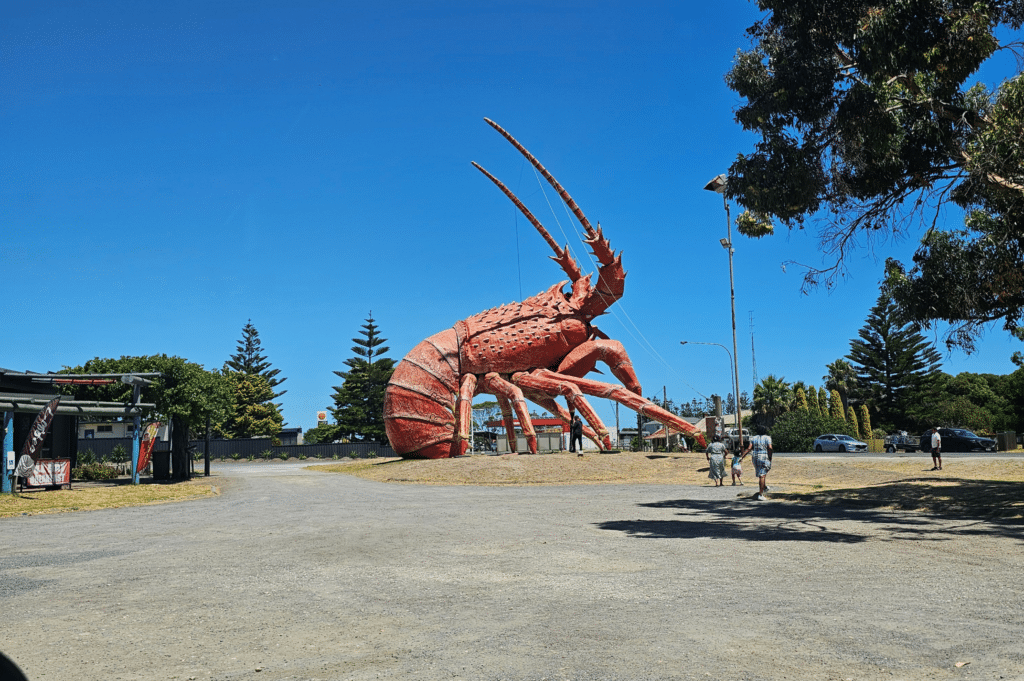
Australian culture: The road passes through Kingston SE, home of Larry the Big Lobster, a classic of Australia’s roadside big things.
Robe is a coastal holiday town, with a relaxed surfing, sailing and fishing feel. It is full of holiday homes, motels and pubs, and has a great sunrise coastal walk to the Cape Dombey Obelisk, which I had entirely to myself and would rank among the most reflective parts of the trip.
With more time, Long Beach and the local rock lobster make the case for a second night. Where I stayed, ate and how to do the sunrise walk are all in this dedicated guide:
If you hug the coast towards Mount Gambier via the Princes Highway, you could stop at Beachport which has one of South Australia’s longest jetties. As well as cliffs and dunes of the Bowman Scenic Drive and the Pool of Siloam, which is a lagoon so salty you can float – similar to our trip to Little Manitou Lake in Canada.
Alternatively, you can follow the route I did, which took me to two stops just south of Mount Gambier; Mount Schank, a dormant volcano with a steep but child friendly walk to the crater rim, and the Little Blue Lake, a water filled sinkhole you can swim in. I would recommend climbing the volcano first, then swimming in the lake. The full climb, the rim circuit and the wild swimming opportunity are all within this dedicated guide:
The Blue Lake is a crater lake next to Mount Gambier, with famously blue water. The Umpherston Sinkhole, is a collapsed limestone cave which has been turned into a sunken garden.
Unfortunately, Australia Day meant that Mount Gambier was pretty much closed when I came, but it is the obvious place to add a third night if you wanted to extend your trip. If you want to learn more about the Blue Lake, Umpherston Sinkhole and what to do in Mount Gambier, here is a dedicated guide:
From Mount Gambier, it is around a two hour drive across the Victorian border to Port Fairy, and 35 minutes to Allansford, where this itinerary passes over to the Great Ocean Road. Mount Gambier itself sits 20km from the South Australia & Victoria border, which also marks the official end of the Limestone Coast.
Port Fairy was my overnight destination for this leg, but there are two options on how to get there:
The direct route: Around two hours - which is what I did after I couldn’t find anywhere to have a substantial meal in Mount Gambier..
The coastal route: Drops south via Portland and the Yambuk Lookout, where you have a chance of spotting wild koalas. Allow at least an extra 50 minutes with stops.
If seeing wild koalas is high on your list, and you have daylight, take the coastal option. Port Fairy is a lovely coastal town, and a great place to stay before joining the Great Ocean Road:
The Great Ocean Road officially runs between Torquay and Allansford, a small town just past Warrnambool. Travelling west to east, Allansford is our starting point.
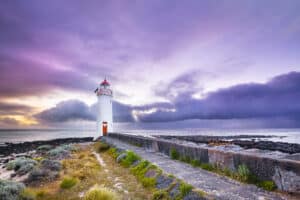
After enjoying a night in Port Fairy, take the morning for Griffiths Island or an easy breakfast in the town, then drive the final half hour or so to Allansford. From there, the Great Ocean Road begins, and arriving from the west like this means you join it at its quiet end, away from the Melbourne day trip buses, driving in the less common direction.
This road trip crosses from South Australia into Victoria partway through, and the road rules change with the border. Luckily, Australia drives on the left, so much of driving the Limestone Coast route is common sense, but there are some things that may catch you out:
In South Australia, signed school zones drop to 25 km/h whenever a child is present, on any day and at any time, and some roads also carry separate time based 40 km/h limits around school day drop off and pick up.
In Victoria, school zones are time based instead, 40 km/h during set periods on school days, whether you can see children or not.
Passing a stationary emergency or breakdown vehicle with flashing lights means slowing down to 25 km/h in South Australia, but 40 km/h in Victoria.
Driving on the sand is permitted at Long Beach in Robe, with a 40 km/h limit dropping to 25 km/h within 50 metres of any person; police patrol in Robe and Beachport in holiday periods.
In Victoria, driving on beaches is prohibited almost everywhere, including around Port Fairy, so leave the beach driving in South Australia.
Unless a sign says otherwise, U-turns at traffic lights are legal in Victoria but prohibited by default in South Australia.
A few things I learned the hard way, or was glad I knew in advance.
I travelled over the Australia Day weekend, which meant lively pubs on the run up, but closed kitchens on the day. A lot of these coastal towns take their holidays seriously, so plan meals around them.
Police run regular operations around Robe, Kingston, and Mount Gambier on weekends and long weekends, covering speed, seatbelts and drug driving. Speed limits are also frequently changed once you reach the coastal roads, so your satnav speed may not be correct.
Kangaroos are most active at first and last light. Make sure you scan the verges and avoid driving rural roads in the dark where you can.
In every major town, I made a conscious effort to fill up my car. The distances between towns are long by UK standards, and it meant if I wanted to go on a side quest I could.
Before setting off from Adelaide, make sure you have downloaded the following apps on your phone:
I found that I was constantly checking both Alert SA and VicEmergency as I was travelling down the Limestone Coast due to the worsening wildfires in the area.
The Limestone Coast is the far south east of South Australia, stretching along more than 400 km of coastline from the Coorong down to the Victorian border.
For this route, Murray Bridge is a good first night, Robe is the best coastal overnight, and Mount Gambier is the place to add a third night if you can. Beachport is the quieter alternative.
On the direct inland route, the halfway point falls around Nhill or Horsham in Victoria. On the coastal route, Mount Gambier sits close to the true midpoint.
Yes, the driving days are short, the Bridgeport Hotel in Murray Bridge has a pool, Monarto is excellent for children. The Mount Schank climb is steep but manageable for kids, and the Little Blue Lake will stay with them into their adulthood.
Thank you so much for reading my blog. For more stories, itineraries, and advice, check out our Related Posts and sign up to receive Lucy's blogs by email.
If you have a blog-related question, please do ask in the comments box below and I'll try to help.
This blog was written by Tom at Smyto Creative.
A little request: if you use my photos, please credit Smyto Creative on your social media or give me a shout out on Instagram @smytocreative as we are growing this website. Huge thanks.
Join thousands of travelers looking for inspiration from our FREE Planet Travel newsletter!
Your step-by-step framework for stress-free, unforgettable trips — from first idea to final itinerary.