Boat trip on the Kura River, Tbilisi

There’s Something For Everyone On A Tbilisi City Break

There are many ways to organise your time on a Tbilisi City Break, but it can tempting to pack too much in, simply because there are so many great things to do in the city and in a week in Georgia.  What I like most about Tbilisi is the variety of experiences to choose from – there’s truly something for everyone here.  So, if it’s your first time to Tbilisi, try to sample a bit of everything. This will help you get best acquainted with the city’s history, people and culture.  Whilst, this blog barely scratches the surface, or gets off the main tourist trail, here are some ideas for your visit to Tbilisi, Georgia.

Table of Contents

For History – Take a Walking Tour of Tbilisi

Your first impression of Tbilisi might be the crazy traffic on the roads, or the confusing layout of streets.  So, what better way to ‘find your feet’ on a Tbilisi City Break than to put yourself in the hands of a local and take a walking tour, getting insights about the history and culture along the way.

There are lots of walking tour options in Tbilisi.  We chose one focused on the Old Town for the starting point of our Tbilisi City Break. Check it out on Get Your Guide.

Powered by GetYourGuide
Booking Tip

When choosing a walking tour of Tbilisi, make sure to choose one which includes the cable car trip up to the Mother of Georgia (Kartlis Deda) monument on the Sololoki Ridge.  

We met our guide, Salome, at Freedom (Liberty) Square, before setting off on the cobblestone streets of Tbilisi Old Town. We explored hidden courtyards with houses proudly displaying colourful carpets on their balconies, historically done to show that the family could afford a carpet.  Many of the old houses have ornate balconies, and, as Salome’s Grandma said, A house without a balcony is nothing!

Ornately carved large wooden balcony with glass windows
Beautiful Tbilisi balcony

My takeaways from the walking tour of Tbilisi were that:

Tbilisi is a charming hotchpotch

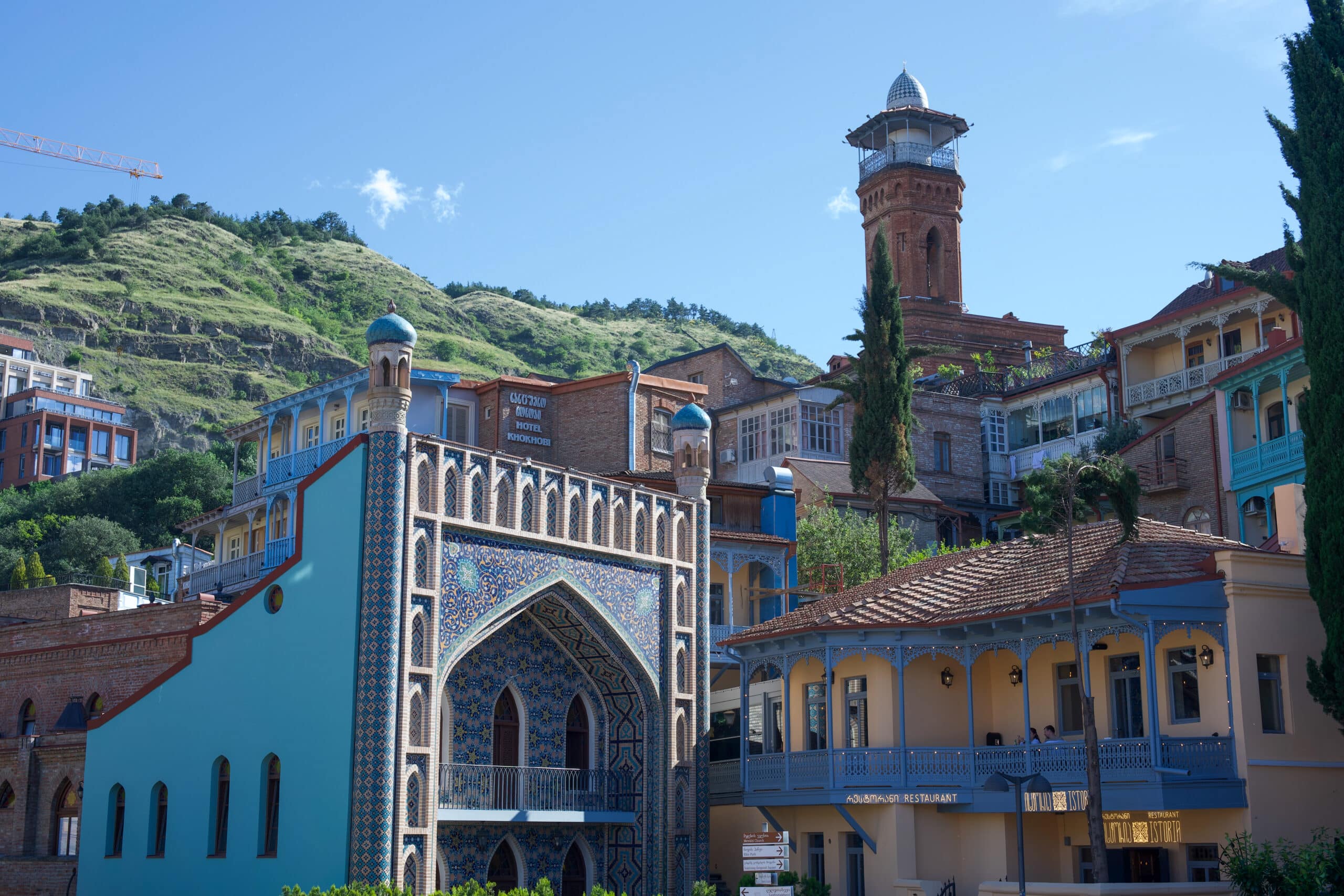
Tbilisi is a delightful hotchpotch of narrow lanes, hidden squares and architectural styles. Having been conquered 29 times, each invader has left some imprint on what you see (and eat!) in today’s Georgia, for example, Persian influences are visible in the blue coloured balconies and buildings of Tbilisi’s Old Town, blue being a favoured Iranian colour.

Circular blue two-story house with white balconies on stone foundations
One of the oldest houses in Tbilisi

Similarly, Tbilisi’s position on the ancient Silk Road, also means that influences came from those moving through the city on the important trade route. The more you explore, the more you find!

The old and new stand side by side

Overseen by the 4th century Narikala Fortress, and encircled by the remnants of ancient city walls, Tbilisi’s Old Town is a charming cluster of crumbling, ivy-covered buildings, in stark contrast to some of the modern structures which have been built. 

Key modern structures to look out for on your Tbilisi City Break include:

  • The glass and iron covered Bridge of Peace designed by Italian Architect Michele de Lucchi. The Peace Bridge cross the Kura (Mtkavari) River, joining the ‘east and west’ of the city and the ‘old and the new’. It looks good lit up at night.
A white metal and glass arch bridge over river
Bridge of Peace, Tbilisi
  • The Rike Concert Hall at the northern end of Rike Park, looks like two ‘silver slugs’ lying on the park grass. Designed as a futuristic concert hall, they currently lay unused.
Modern glass structure snakes through trees to a town on horizon
One of the silver tubes of Rike Concert Hall
  • The State Palace of Ceremonies, formerly the Presidential Palace, sits imposingly on the hill above the Rike Concert Hall.
Large parliament style building above trees above rover bank
The Public Service Hall or Justice House, standing on the western banks of the Kura River, looks like a clump of mushrooms, with a cluster of umbrella-shaped white roofs packed tightly together. 
Cluster of white circles forming a roof over a modern glass structure. Looks like mushrooms

We thought it was interesting that most of the city’s oldest crumbling buildings and houses are still under private ownership so, rather than being maintained by the State, they are at the mercy of the owners – when they’re gone, they’re gone.

That said, there are some areas of the city, such as Gudiashvili Square, which have been extensively restored (perhaps to the detriment of its charm?).

You can’t escape the churches in Tbilisi

Georgia is the second oldest place to formally recognize Christianity (after Armenia) and so it is unsurprising that Tbilisi, it’s capital city, is full of churches – more than 150 in total, including circa 137 Georgian Orthodox Churches, with triangular designs to represent the Holy Trinity.

Whilst you might not want to spend your time on a Tbilisi City Break visiting them all, there are some real gems which you could prioritise or pop into if you’re passing.

  • Dating to the 6th century, this is Tbilisi’s oldest Orthodox church, which sits quietly around the corner from the Rezo Gabridaze Square where the leaning clocktower and puppet theatre are based. If you visit the Basilica around 10.00am on a Sunday listen out for the renowned Anchiskhati Choir practicing polyphonic chanting (a unique vocal style where different melodies are sung at the same time), which you should be able to hear from the garden.
  •  
looking down steps to old stone church with painting of Jesus over door
Anchiskhati Basilica
  • The tallest church in Tbilisi and third-tallest Eastern Orthodox cathedral in the world. It sits above Rike Park side of the eastern side of the Kura River and stands out a mile amongst the small buildings which surround it. It was built on such a large scale as a symbol of post-Soviet church resurgence.
  •  
Looking down a street - trees to the left. Tall church on hill in front.
The Sameba Cathedral towering over Tbilisi
  • This landmark church stands on a cliff overlooking the Kura River directly opposite the Old Town. It has a super statue of King Vakhtang Gorgasali on horseback on the patio in front of the church, erected in the 1960s, on the spot where the King had his palace and first decided to make Tbilisi the capital of Georgia, rather than Mtskheta.
A large monastery church stands to the left. City to the right. Blue sky.
Metekhi Church
Directly beneath the statue of King Vahtang Gorgasali outside the Metekhi Church (above), there is a gate and steps down to a small church on the banks of the river.  This is the Church of Saint Abo Tbileli, with shrines and an oratory housing a gold-hued mosaic of a turbaned Saint Abo, a perfumer from Baghdad who came to Georgia in the 8th century and preached Christianity during the Saracen raids. He was martyred by the ruling Persians and his remains thrown into the river where the church now stands.
Cluster of small stone church buildings in front of stone wall
Church of Saint Abo Tbileli
Remember to follow Church Dress Codes

Dress Codes are in place to enter Georgian Orthodox Churches. Ladies - take a headscarf with you to cover your hair and make sure your legs and shoulders are covered. Gentleman - no shorts and vest tops please. 

The town is colourful and arty

You can find murals and street art all over Tbilisi. Look out for the many pieces of artwork by GoshaArt, the ‘local Banksy’ specialising in feline murals – there are over 1000 of them around the city; everywhere you look there are cats, either real ones or in paintings. 

Mural street art of two cats. Black cat to left holding up a grey mouse to white cat
Cat mural by GoshaArt

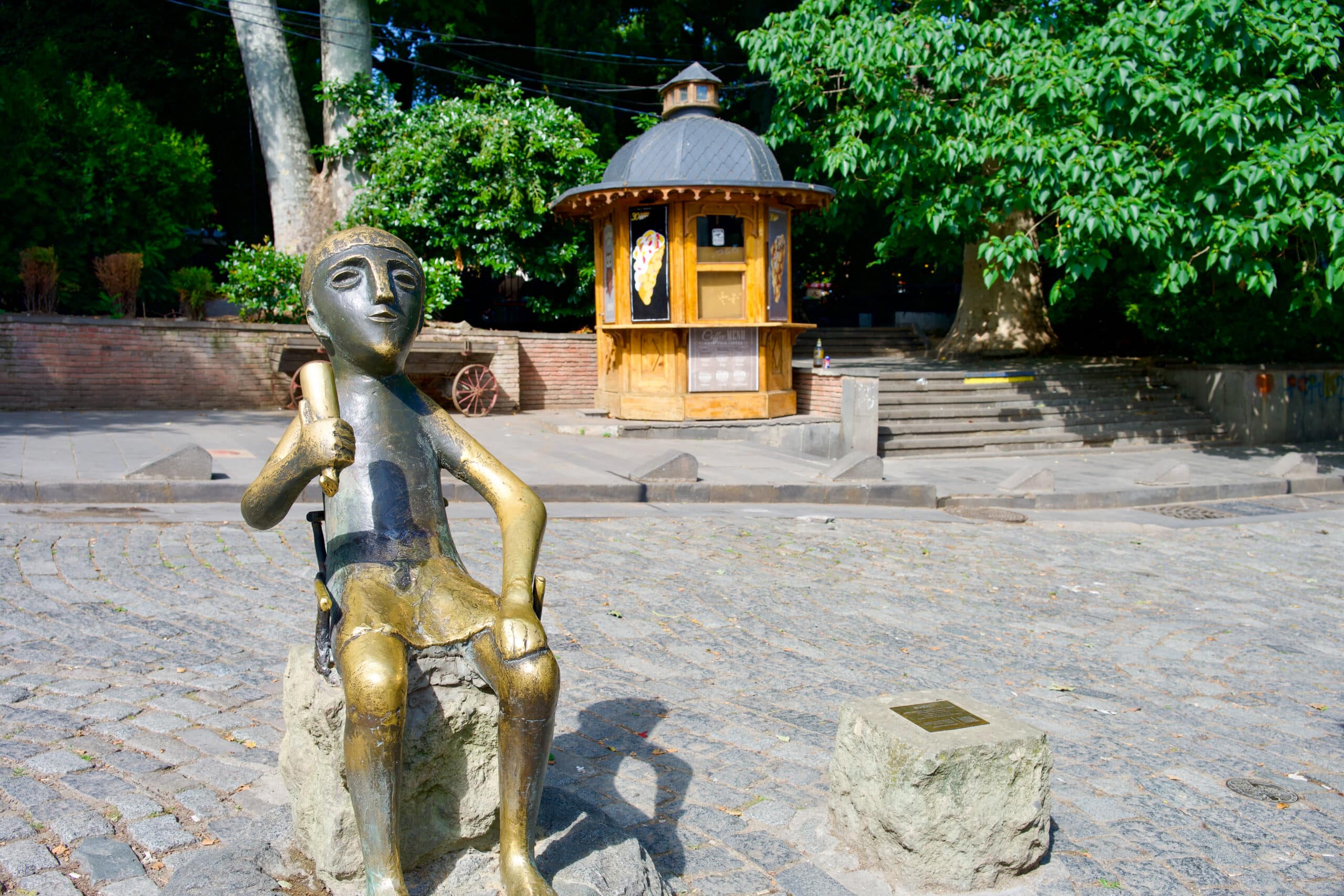
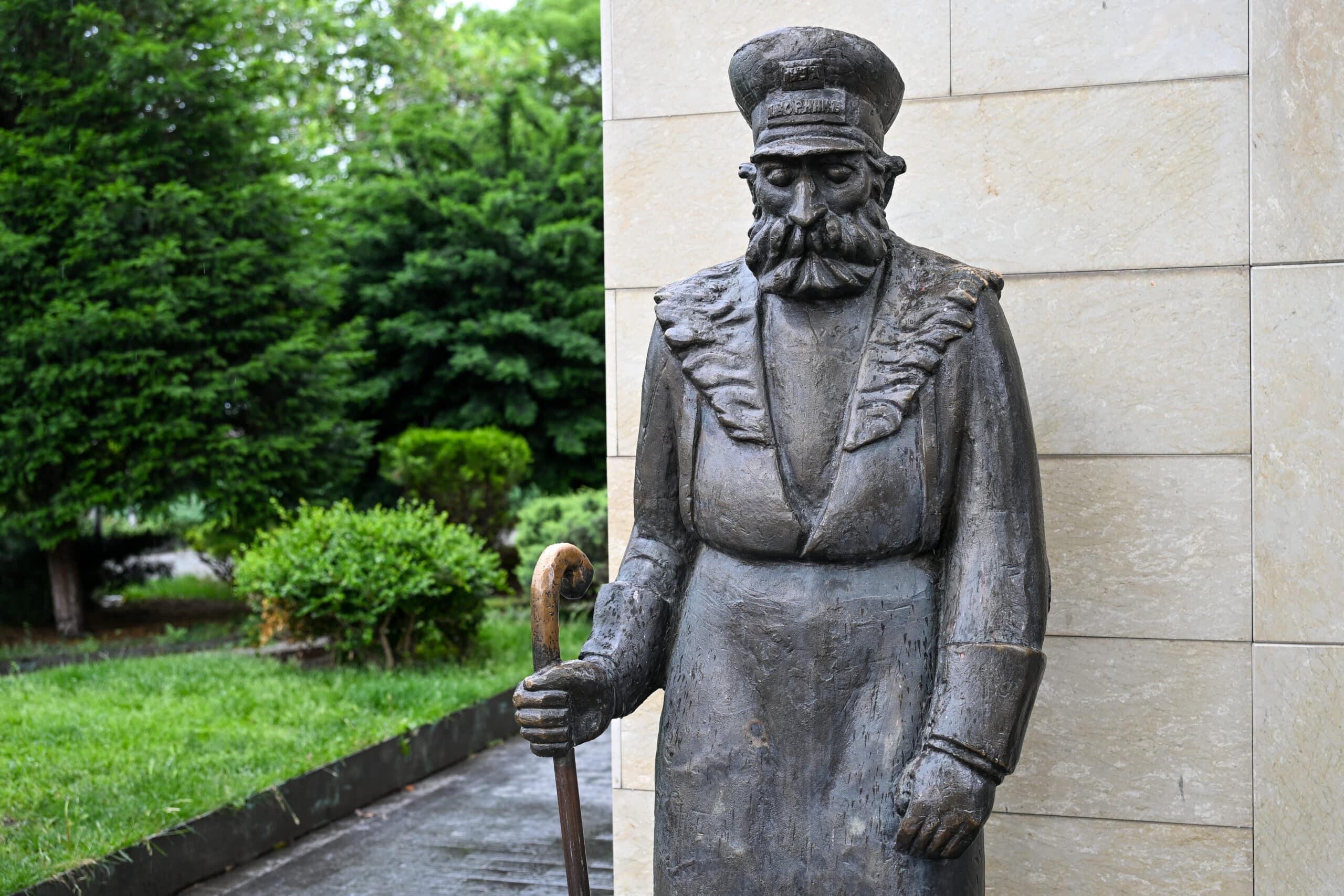
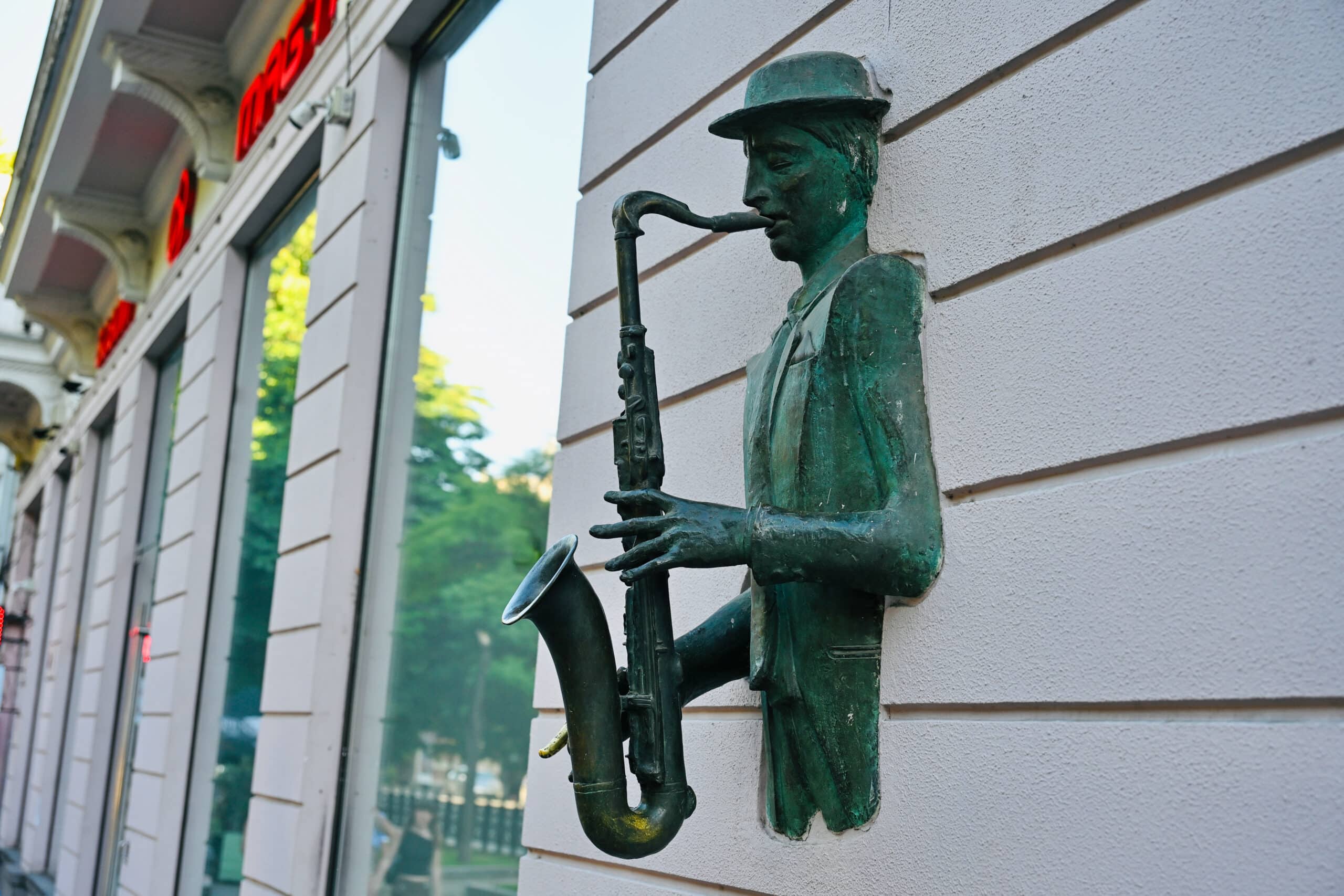
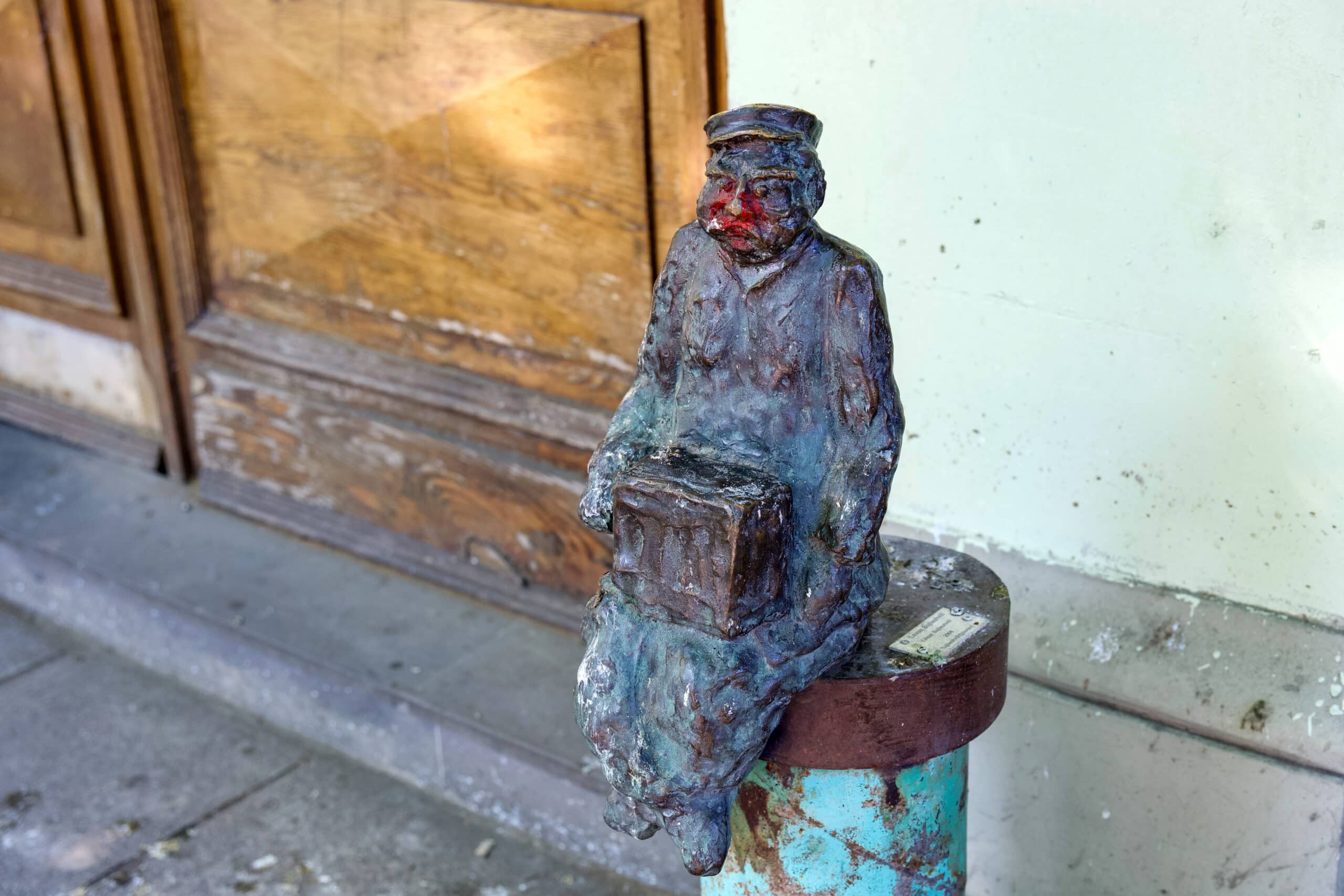
In addition, look for the sculptures throughout Tbilisi by Georgian artist Levan Bujiashvili, including:

The Toastmaster (Tamada) statue at the end of Jan Shardeni Street.

The Janitor's Sculpture based on a painting by Georgian artist Niko Pirosmani, outside Hotel Ambassadori.

The Saxophonist, a sculpture coming out of a wall on Rustaveli Avenue, also lined with small statuettes based on characters from the paintings of Pirosmani.

You can also see bronze statues climbing on the Baratashvili Bridge, particularly as you pass underneath on one of the river boat tours. These were sculpted by Gia Japaridze in 2006.

Looking up at 3 metal statues of people on bridge
Statues on the Baratashvili Bridge

Tbilisi is quirky

The best example of this is the Puppet Theatre with a leaning clock tower, Gabriadze Clock Tower, built by the puppet master.  Try and catch the clock on the hour when a model angel emerges to ring a bell with a small hammer.

Looking up at the top of a crooked tower with clock face on front.
Top of the Gabriadze Clock Tower

Tbilisi is very green

Tbilisi has some lovely tree-lined avenues, shady park spaces and a lovely old flower market.  The city is full of Mulberry trees which drop their berries on the floor and get squished by passersby, and pine trees which smell lovely. Add in the Botanical Gardens, it’s river setting and a city centre waterfall, and you can still feel very connected with nature in the centre of Tbilisi.

Alternative to a walking tour – Pick up a Golf Buggy Tour

If you don’t want to explore the city on a walking tour, you can pick up one of the golf buggy tours waiting by the sides of the road around the city centre. Simply agree your price and off you go, no need to pre-book. This can be a good idea if your feet are weary from exploring.

White golf buggy advertising City Tour sits empty on road with trees behind.
Waiting for some punters...

For River Views – Take a Boat Trip on the Kura (Mtkavari) River

Tbilisi straddles the Kura River, so the river is central to the layout of the city.

If you have a spare 30 minutes on your Tbilisi City Break, then head to the river for a short but rewarding activity.  Representatives of boat tour companies hang out in Rike Park around the Bridge of Peace and Cable Car station. We picked up a leaflet from one of the reps when we were passing on the walking tour of Tbilisi, then contacted them by WhatsApp later to book a boat trip with Tbilisi River Cruises.

There are steps down to the riverside from the Peace Bridge (Rike Park end).  Once you’ve found the right boat company launch points (there are a couple of different ones), then wait for your boat to arrive and off you go.  The crew offer you a drink on arrival, but the check-in process is all very casual.  The boats are small and whizz quickly along the river; our driver cranked up the music, so we had ‘banging tunes’ along the way.

The boats don’t travel very far, however the views on the way are impressive.  You get a very different perspective from the water, especially looking up at the houses and buildings overhanging the steep cliffs along the Kura River – some of them look very precarious.

We went under the Bridge of Peace and past the old Parliament Building, ‘mushroom’ Justice Hall, and under the bridge with iron statues on it, before heading the opposite way to enjoy the cliff views, and spot birds nesting by the side of the river.  

Looking up at old wooden houses with balconies overhanding a cliff
Looking up at the houses perched on the cliffs

For City Views – Ride the Cable Cars or Funicular

There are 2 main cable car routes in the centre of Tbilisi, and 1 funicular.

Cable Car to the Mother of Georgia (Kartlis Deda)

From Rike Park you can take a cable car up to the top of Sololoki Ridge, the hill overlooking Tbilisi’s Old Town.  The ride only takes 5 minutes, and you can ‘tap on/off’ with your bank card for just a few Georgian Lari. This cable car usually runs from 8.00am to 8.00pm.

Once at the top, follow the path past the men with birds of prey offering you photographs, and stalls selling souvenirs and refreshments.  Keep going until you get to the base of the enormous Mother of Georgia statue (20 m tall). 

Designed by Elguja Amashukeli and erected in 1958 to celebrate the city’s 1500th anniversary, the Mother of Georgia is an emblem of Georgia’s independence. With a sword in one hand to see off enemies and a bowl of wine in the other to welcome guests, the Mother of Georgia makes a striking figure. However, this aluminum version is a replacement as the original wooded statue suffered weather damage. You will bond with this impressive statue on your Tbilisi City Break as it is visible from all over the city.

A silver aluminium statue of lady looks to the right.
Mother of Georgia keeping watch over Tbilisi

From the Mother of Georgia, you can walk east for 10 minutes along the Sololoki Ridge to reach the ruins of 4th century Narikala Fortress. The fortress was built as a Persian citadel but was largely destroyed by Russian munitions in 1987.  That said, the views from here are worth making the journey for.   

Walk past the top entrance of the Narikala Fort and pick up the path down the hill through the Botanical Gardens which stretch down 160 hectares of the Leghvtakhevi Gorge.  On the way downhill, look out for the Leghvtakhevi Waterfall, a beautiful waterfall in the city. Note – the waterfall is beautifully illuminated at night and so if you are in the area around 9.00pm, pop along to see it lit up.

Funicular and Cable Car to Mtsatsminda Park

Funicular – a funicular operates daily between 9.00am and 04.00am from the lower station on Daniel Chonkadze Street (between the Solokai and Vera districts) to the top of the mountain (5 mins). It makes an intermediate stop at the Pantheon and Mamadaviti Church.

Cable car – alternatively you can reach the top of Mtsatsminda Mountain (meaning Holy Mountain), Tbilisi’s highest peak, on a cable car from Rustaveli Avenue, near the Telegraph Hotel.  The ride takes 8-10 minutes and offers fantastic views at the top.

Once at the top you can enjoy the sweeping city views, check out the red and white Soviet era TV tower on the plateau, or have fun in Mtsatsminda Park which is full of 1930s amusement rides, restaurants and large Ferris wheel.

Sun down on a city with hill in background
Looking up to Mtsatsminda Mount from the Rolling Stone rooftop bar at sunset

For Relaxation – Head to the Sulfur Baths

The word Tbilisi means ‘warm place’, a name given to the city due to the mineral sulfur (Georgian spelling!) springs on which it is built.

Legend has it that 5th century King Vakhtung discovered the area’s natural hot springs on a hunting trip and was so taken with the place that he made it the capital of Georgia, transferring power from the ancient capital of Mtskheta.  For many years, particularly during times of plague, it was customary for anyone entering the city to cleanse themselves in the sulfur baths before entering.

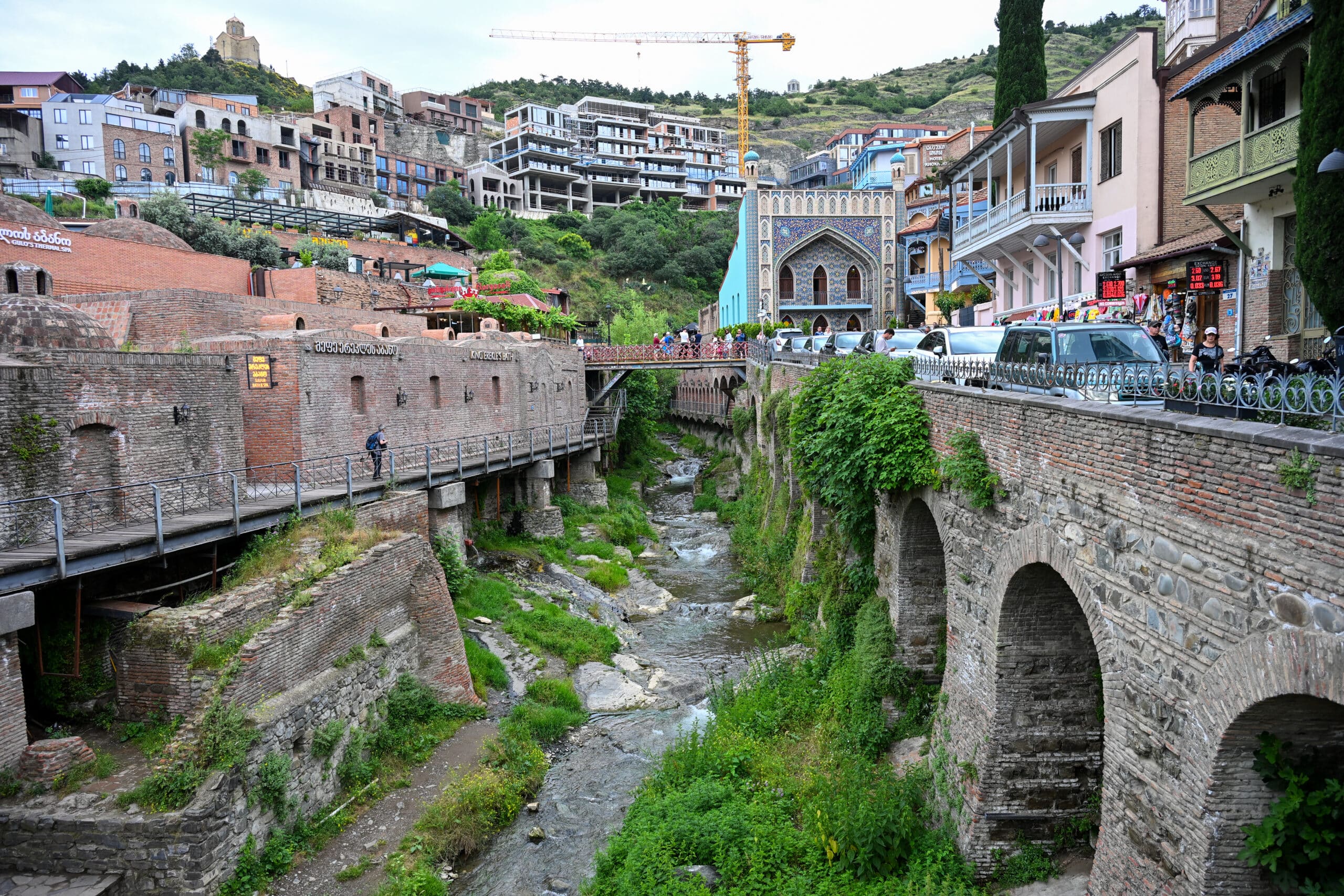
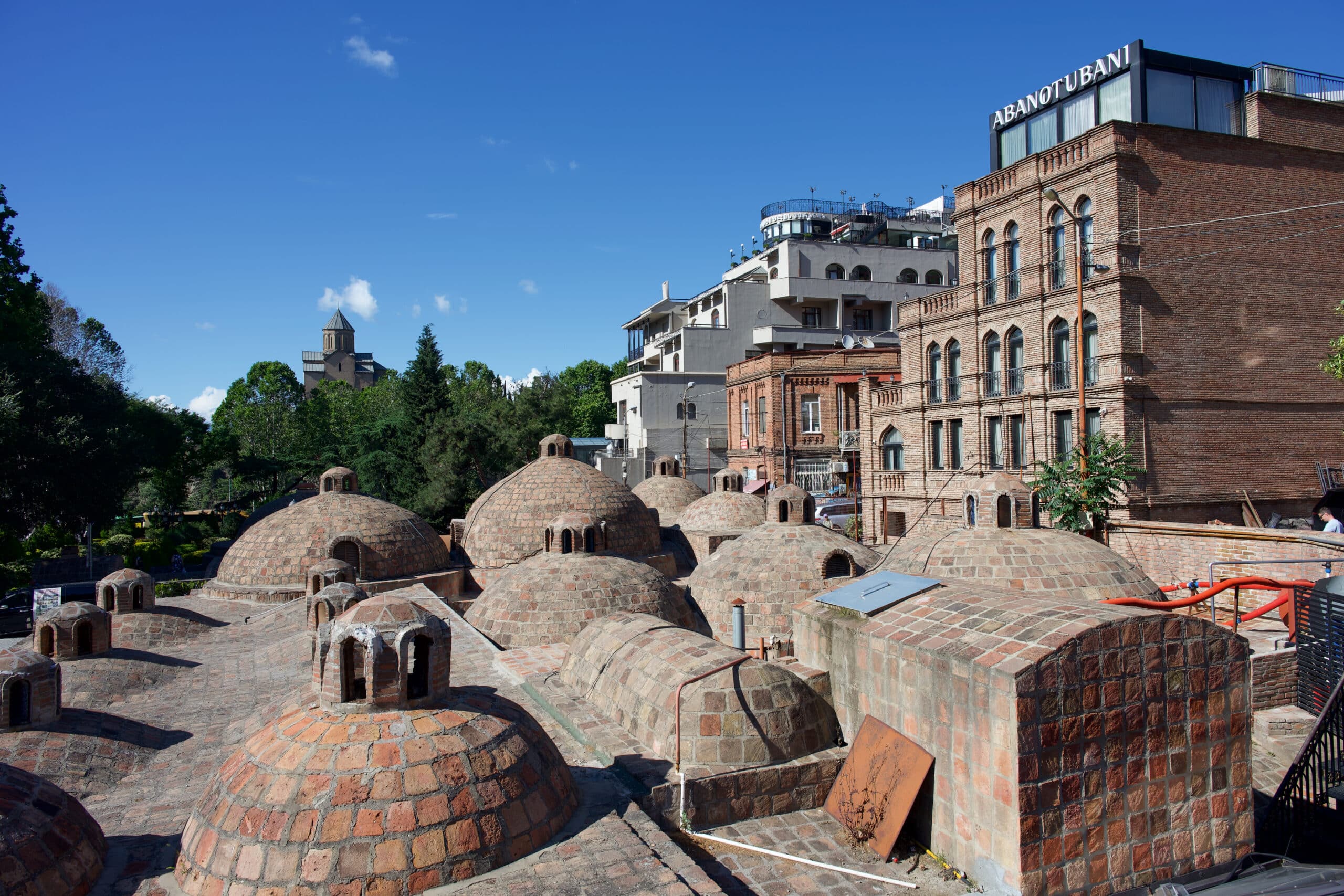
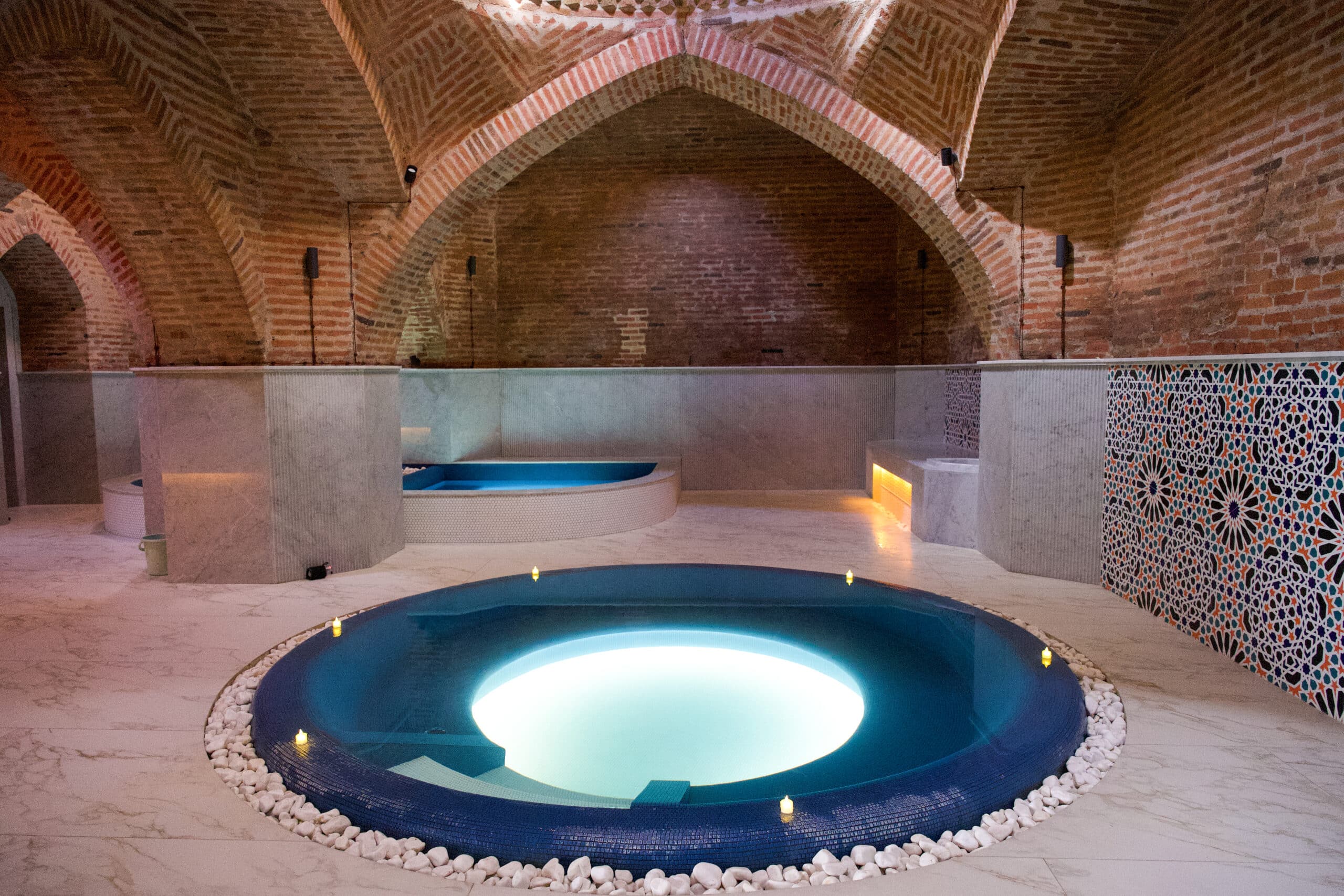
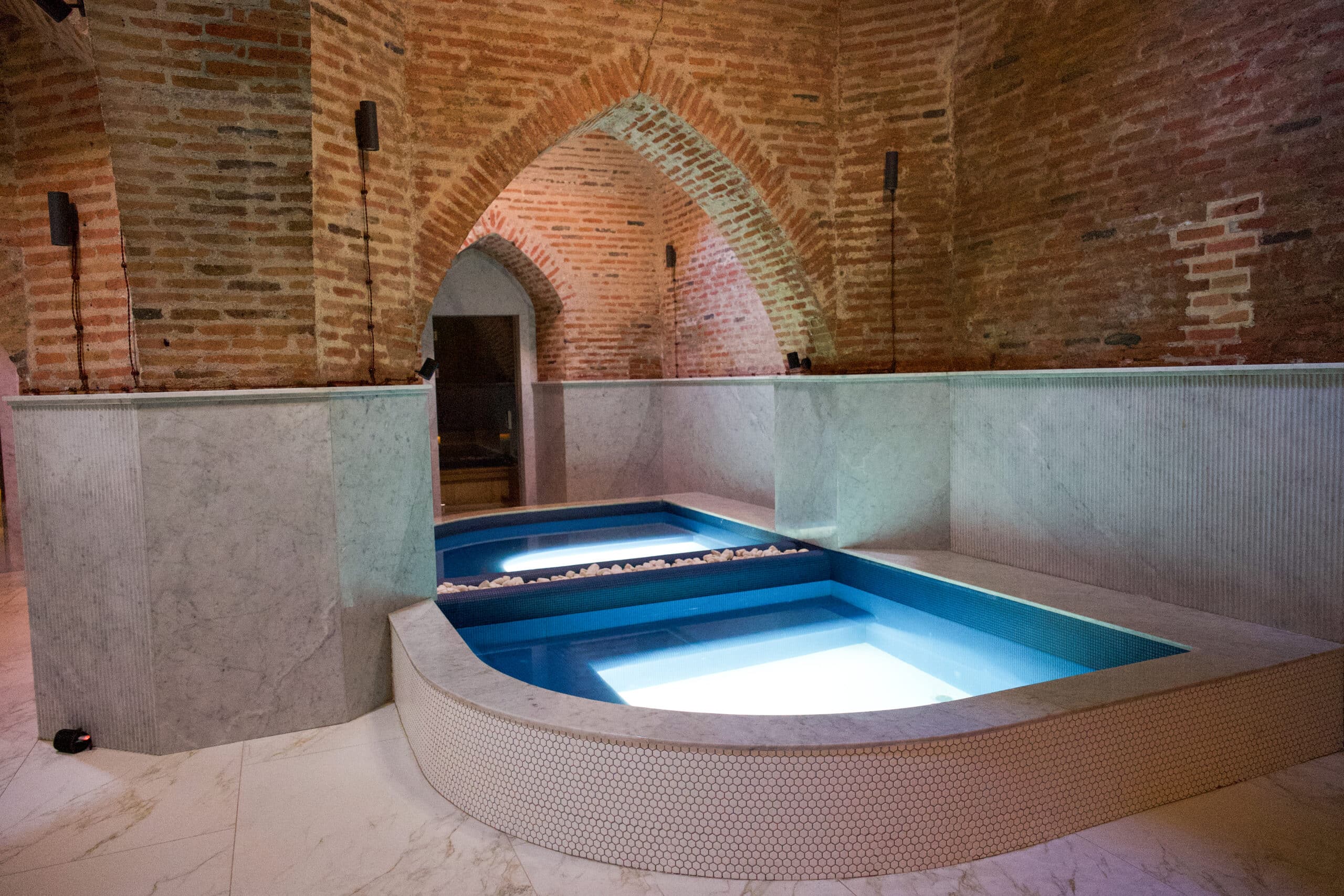
Today, the sulfur baths of the Abanotubani District (‘baths district’) are open for recreation.  There are several different bath houses you can visit (about a dozen), some with private options, and some public baths (nudity possible, although males and females are separated). I would say this is a don’t miss experience for your Tbilisi City Break.

Gulo’s Thermal Spa, Tbilisi

We booked the following private baths session at Gulo’s Thermal Spa via Get Your Guide, which was a real holiday highlight.

Powered by GetYourGuide

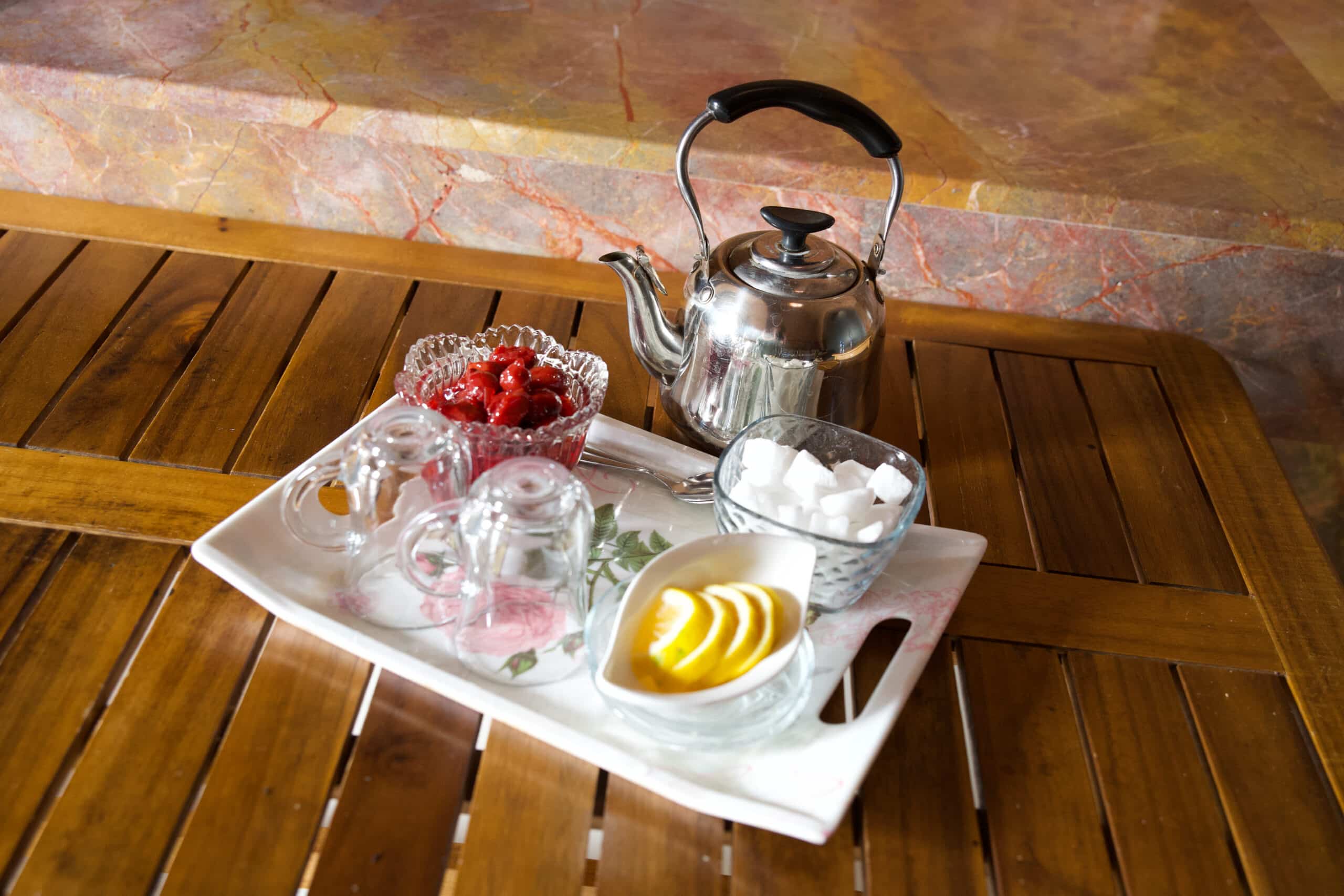
On arrival, we were given an explanation about how to get the best out of our experience at the baths. Our advised rotation was: 10-12 mins in the hot sulfur pool (38 degrees), quick cold shower, 10-15 mins in the dry Sauna, quick shower, then 4 minutes in the cold pool (17 degrees). You can repeat the rotation if you have time. Then you can relax and ‘come around’ in the temperate waiting room over a cup of lemon tea with fruits.  

Our skin felt fantastic afterwards, squeaky clean and soft, and we felt very relaxed.  We appreciated the privacy of our baths area, with its own toilet, showers, and hairdryer. Shampoo provided. We just needed to take our towels. Maybe next time we’ll be brave enough to try a nude session!

You can pay extra for a loofa scrub (Kisi); however, we didn’t have time for this as our morning tour ran over time due to ‘Tbilisi time’ (see Travel Planning a Week in Georgia).

Photo Tip

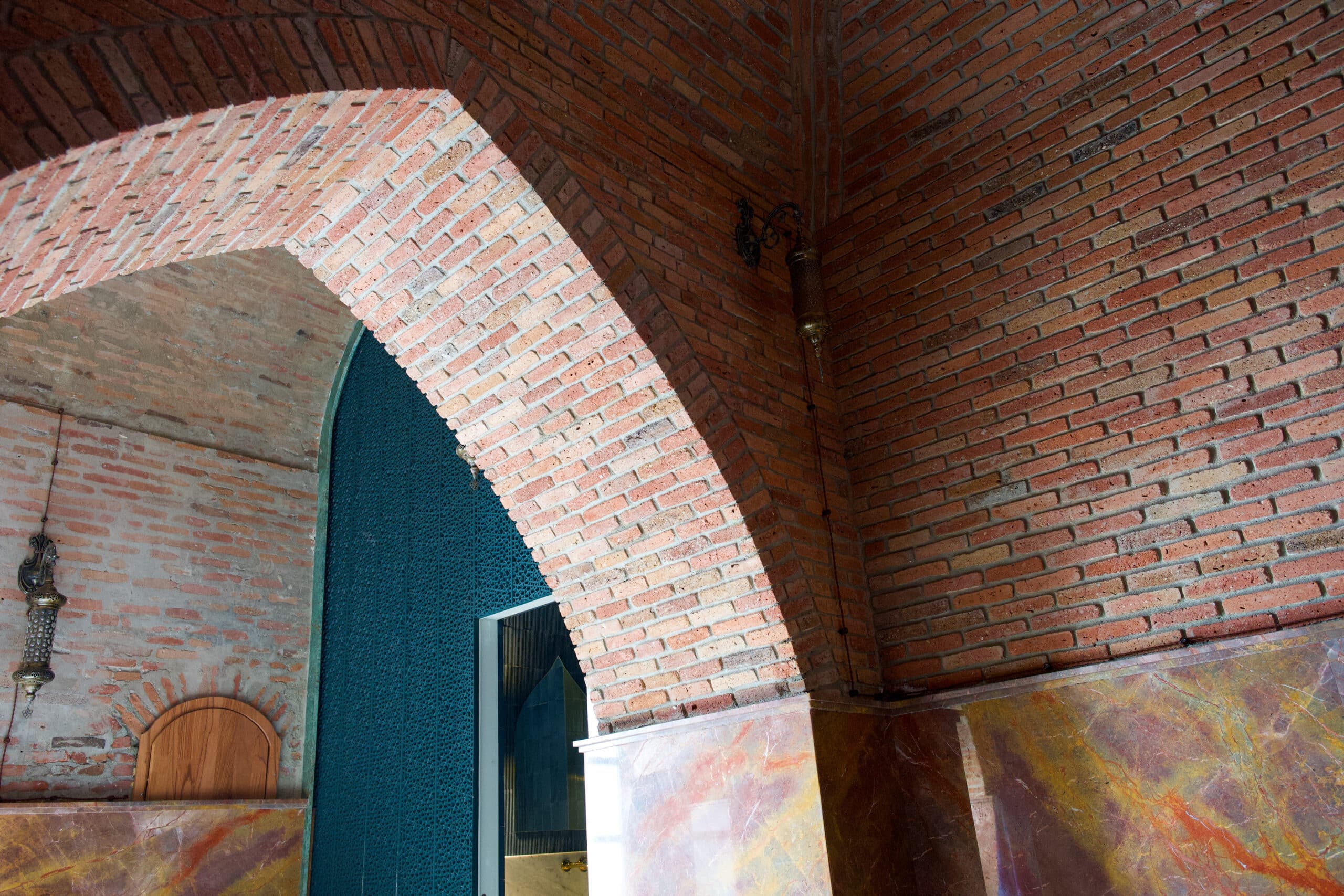
The patio to the side of Gulo’s Thermal Spa offers great views for photos over the domed stone roofs of the sulfur baths. 

For Architecture – Book the Urbex and Soviet Era Tour

If you love urban cityscapes and Brutalist architecture, then you can take a tour to visit some of the key sites around the city. As Georgia was under Soviet rule for 70 years, then it is of no surprise that some of the architecture reflects this period.

We booked an Urbex (Urban Exploration) Tour via Get Your Guide which was excellent and highly recommended.

Powered by GetYourGuide

The main stops on the tour included:

Stalin’s Printing House

  • Stalin was born in Gori, Georgia, and lent his name to a house which was modified to hide a printing press, smuggled into Georgia from Germany and used to produce 300,000 propaganda leaflets to be distributed throughout Europe and beyond.The fact that the materials for this operation had to be transferred to/from the basement of the house through a narrow 15 m water well, makes it a fascinating insight into the lengths taken for this purpose.
Pink house with wooden balcony
Stalin's Printing House
  • An incredible monument on the outskirts of Tbilisi consisting of several tall columns, carved with scenes from the bible and key figures in Georgia’s history, including its Kings.You can see the Monument from miles around as it stands on a hillside overlooking the Tbilisi Sea (reservoir?) and a large area of utilitarian Soviet era flats.  This is a must see on any Tbilisi City Break.
Four stone pillars and connecting bars covered in carvings of people and events.
Chronicles of Georgia
  • Abandoned museum made on the edge of a reservoir with impressive, over-sized stone frieze over the closed-up entrance.It overlooks one of the Soviet designed ‘self-sufficient cities’ which aimed to have everything in one place for its residents, such as, hospitals, schools, police stations, and factories.  To qualify for a metro station, it needed city status and to have 1 million residents, hence the scale of the flats sitting starkly in front of the mountain backdrop. When the Soviet Union collapsed, so did the idea behind this complex, and the museum in 1991.  However, it is still full of artefacts which are yet to be moved to the Georgian National Museum.  There is an eye-catching belltower in front of the museum.
A carved stone plaque over entranceway
Entrance to the Old Archaeological Museum
  • Eye-catching building which was originally the Ministry of Highway Construction in 1975 which looks like a Brutalist pile of Jenga bricks.The design leaves space on the ground so that ‘nature can flow beneath the building’ (‘Space City’ method).
Modern architecture - Pile of stone cubes and arms
Bank of Georgia
  • Three Soviet era blocks of flats on the Nutsubidze Plateau, linked by metal bridges to help residents move from the bottom of the hill to flats at the top of the hill (and in a different district).The block of flats at the bottom of the hill has 4 lifts capable of transporting up to 10 people per lift to the top, where they can walk over the bridges to flats higher up the hill. This was thought to be more efficient than installing a cable car. We met Maiza, the ‘Lift Lady’ who has manned the lifts for 70 years, although only one lift is operational today; she proudly demonstrated her control panel to us.
Looking up at two blocks of flats lined by an iron walkway
Skybridge flats, Tbilisi

We thoroughly enjoyed this tour as our guide was very interesting, and it gave a different perspective to Tbilisi that that gained in the Old Town. Sadly, the tour didn’t include a visit to The Palace of Rituals (Wedding Palace) which is one of Tbilisi’s best-known Soviet-era buildings.  Private tours required to visit. Next time!

For Food – Have fun on a Georgian Cookery Course

The food in Georgia is fantastic, although navigating the menu can be a little overwhelming at first. If you want an immersive experience, then book a cookery course for your Tbilisi City Break and get your hands dirty whilst learning more about Georgian food.  

We booked a Khinkali and Khachapuri Cookery Course through Get Your Guide which was fun and informative. We enjoyed the cookery and also swapping travel stories with the other participants over a glass of wine. 

Powered by GetYourGuide

However, once you’ve mastered Khinkali and Khachapuri, there are plenty of other foods to try, and endless places to eat and drink in Tbilisi.  We barely scratched the surface of everything on offer.

Budget Tip

As you eat what you make on this Cookery Course, then there's no need to book a restaurant for your evening meal! 

For Music – Head to a Jazz Club

Georgia loves jazz and Tbilisi even has its own Jazz Festival, usually in May.  There are lots of Jazz Clubs in Tbilisi, so we decided to book a table at the Tatuza Jazz Club in the basement of The Telegraph Hotel. You can find details of the jazz club on the hotel’s website and see who is playing on the calendar.  Then you can buy tickets via the Georgian ticket app: TKT.GE (just have your Google translator handy!).

The environment at Tatuza was very smart, with small tables, low lighting, a cosy atmosphere and very good sound.  There is a menu for small plates of food alongside cocktails and full bar.  With everything catered for, you can then just sit back and enjoy the music. We saw the award-winning Jazz vocalist Ashley Pezzotti perform and she was amazing.

A small table lamp on red circular table with Jass club layout behind
Ready for some jazz?

Alternative – apparently Techno and Electronic music is huge in Georgia.  Not our thing, but some of the youngsters we met on tours were very excited about it!

For Culture – Find a Georgian Dinner Dance Show

Whilst we didn’t do this, our walking tour guide suggested a Georgian Dinner Dance Show would be fun. This is something you can also book via Get Your Guide.

Powered by GetYourGuide

More for Culture Vultures – visit one of the city’s many museums, such as:

Georgian National Museum

Impressive collection of historical and archaeological artefacts. Top floor is dedicated to the Museum of Soviet Occupation.

National Gallery

Classic art gallery with over 30,000 pieces, including artwork by Georgian painter Niko Pirosmani.

MoMA Tbilisi

Modern art gallery with stunning Apple of Love sculpture outside by Georgian artist Zurab Tsereteli.

For Shopping – Check out a Flea Market

Whilst shopping wasn’t top of my list on a Tbilisi City Break, there are some good opportunities for shopping if that’s what you like to do, for example:

Flea Markets

There are several flea markets in the centre of Tbilisi, such as the Dry Bridge Market which is full of antiques and vintage finds.  On our walking tour, we visited the Meidan Bazaar, an underground tunnel filled with all things Georgian – traditional garments, sheepskin hats, jewellery, food produce, wine and chacha. If you are looking for Georgian souvenirs, then this is the place!

A hand holding up a toasting horn in market
Toasting horn anyone?

High Street heaven

Just of Freedom (Liberty) Square on Rustaveli Avenue is Galleria Tbilisi, a large shopping mall full of High Street brands, food outlets and a cinema.

High End shopping

For exclusive shops, wander along Rustaveli Avenue from Freedom (Liberty) Square towards the Vera neighborhood.  A Burberry store overlooks Freedom Square.

Boulevard street with trees on left and buildings with balconies to the right
Rustaveli Avenue

Explore further afield – Mountains or Wine Regions

Whilst we chose to concentrate on exploring the city whilst on our Tbilisi City Break, we did meet other travellers who were using Tbilisi as a base whilst taking day tours to other places further afield, such as Kazbegi in the mountains, and the Kakheti Wine Region.

This is something that Tbilisi seems to do very well as the list of tours was endless.  Other options included the UNESCO sites at Mtskheta, Georgia’s Rainbow Mountain, the Stalin Museum at Gori, and many more.

Final thoughts on a Tbilisi City Break…

Now is a great time to visit Tbilisi, and Georgia in general. With more direct flights available from the UK, and several positive appearances on TV shows such as Race Across The World, there is a buzz about Tbilisi which has returned since 2008 when Russian invasion knocked its tourism status.

We packed a lot into our time in Tbilisi and still left the city with a long To Do list.  We couldn’t have included anything else without it having made the visit exhausting. So, the advice is to pace yourself in Tbilisi, as there’s so much to do and it’s an exciting place. Try to pick a range of activities so that you sample the variety on offer in Tbilisi, but leave some things for next time, as I’m sure you will want to return.

Love Travel Planning
Thank you for reading

I hope you found it useful

Thank you so much for reading my blog. For more stories, itineraries, and advice, check out my Related Posts and sign up to receive my blogs by email.

If you have a blog-related question, please do ask in the comments box below and I'll try to help.

📸

A little request: if you use my photos, please credit Love Travel Planning on your social media or give me a shout out on Instagram @lovetravelplanning as I am growing my website. Huge thanks.

Enjoy your travels! ✈️
Get Planet Travel

Join thousands of travelers looking for inspiration from our FREE Planet Travel newsletter!

Thanks! Check your inbox to confirm.

Leave a reply

FREE GUIDE

The Platinum Travel Planning Roadmap

Your step-by-step framework for stress-free, unforgettable trips — from first idea to final itinerary.

FREE GUIDE

The Platinum Travel Planning Roadmap

Your step-by-step framework for stress-free, unforgettable trips — from first idea to final itinerary.

Get Planet Travel

Join thousands of travelers looking for inspiration from our FREE Planet Travel newsletter!

Thanks! Check your inbox to confirm.