This blog was inspired by the TV show Somebody Feed Phil on Netflix. We watched the episode when writer-actor Phil Rosenthal visited Tbilisi and found ourselves reaching for the computer to book flights as soon as the episode had finished. It’s not the first time we’ve done this, as having watched his episode on New Orleans, we followed suit and enjoyed an incredible meal at Shaya which had featured on Phil’s show. Somebody Feed Lucy some Georgian Khinkali!
When we first arrived in Georgia, we were a little discombobulated by the menu options, but we soon got the hang go it. Hopefully this blog will help you distinguish your Khinkali from your Khachapuri and Chakapuli. But my biggest tip is to have Georgian tomatoes with everything!
The above methodology might seem a little extreme for choosing trip destinations, but you need to undertake your pre-trip research in some way – we just like to watch Food and Travel programmes, most notably, anything by Anthony Bourdain, Stanley Tucci, Rick Stein and Phil. Travel guidebooks can be a bit dry, so if you can find a presenter who is enthusiastic about a destination, then it can be infectious. Anyway, we were only too happy to include a food focus in the planning for our week in Georgia.
Georgia has been shaped by many influences over the centuries, reflecting the country’s turbulent history of being conquered by different nations, including the Romans, Mongols, Persians, Ottomans along the way, and more latterly, the Russians.
As a result, you can see these influences in Georgian food – from spices transported to and from Georgia on the ancient Silk Road, to the walnuts and pomegranates from Persia which appear in the salads, and kebabs (Mtsvadi) hailing from Türkiye.
Even the beloved Georgian Khinkali may have originated elsewhere, potentially from Mongolia in the 13thcentury (more on this later), although Georgians believe they originated in their northern mountains.
Whilst we didn’t go to all the same places as Phil Rosenthal on our trip to Tbilisi, we managed a few of them, as well as discovering many other foodie treats.
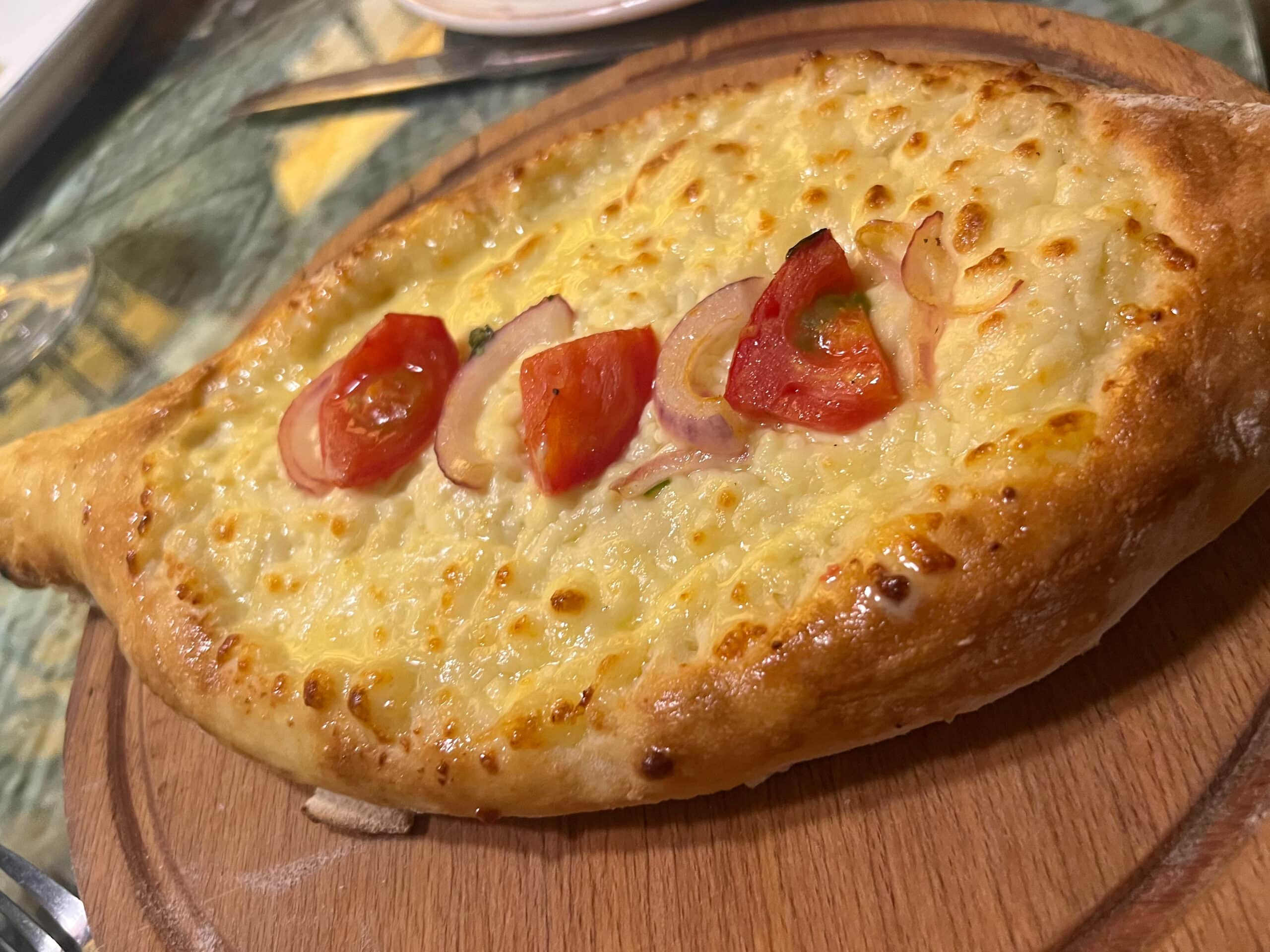
Perhaps the best place to start on a food discovery journey of Georgia is to try one of its staple foods, Khachapuri – delicious homemade bread stuffed with salted curd cheese, and lots of it. Cheap, simple and filling; Khachapuri is the bread of life for Georgians.
Phil tried khachapuri in the Svaneti mountains, made over an open fire by Chef Guram Baghdoshvili of Tbilisi restaurant, Chveni.
We made ours in slightly different circumstances, on a small-group Cookery Course at the St Bunny restaurant in the centre of Tbilisi which we’d booked via Get Your Guide. The Cookery Course was to make both Georgian Khinkali and Khachapuri.
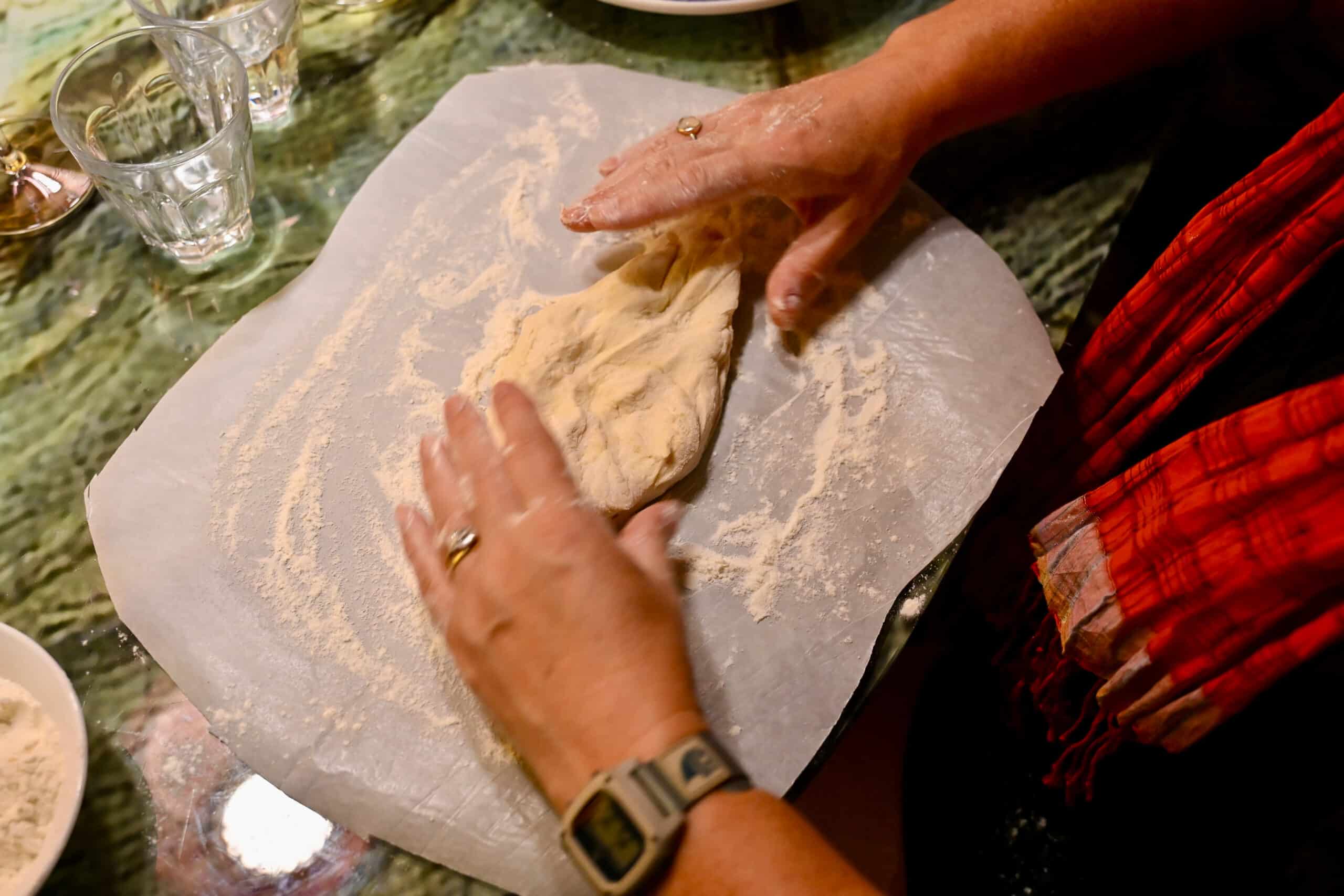
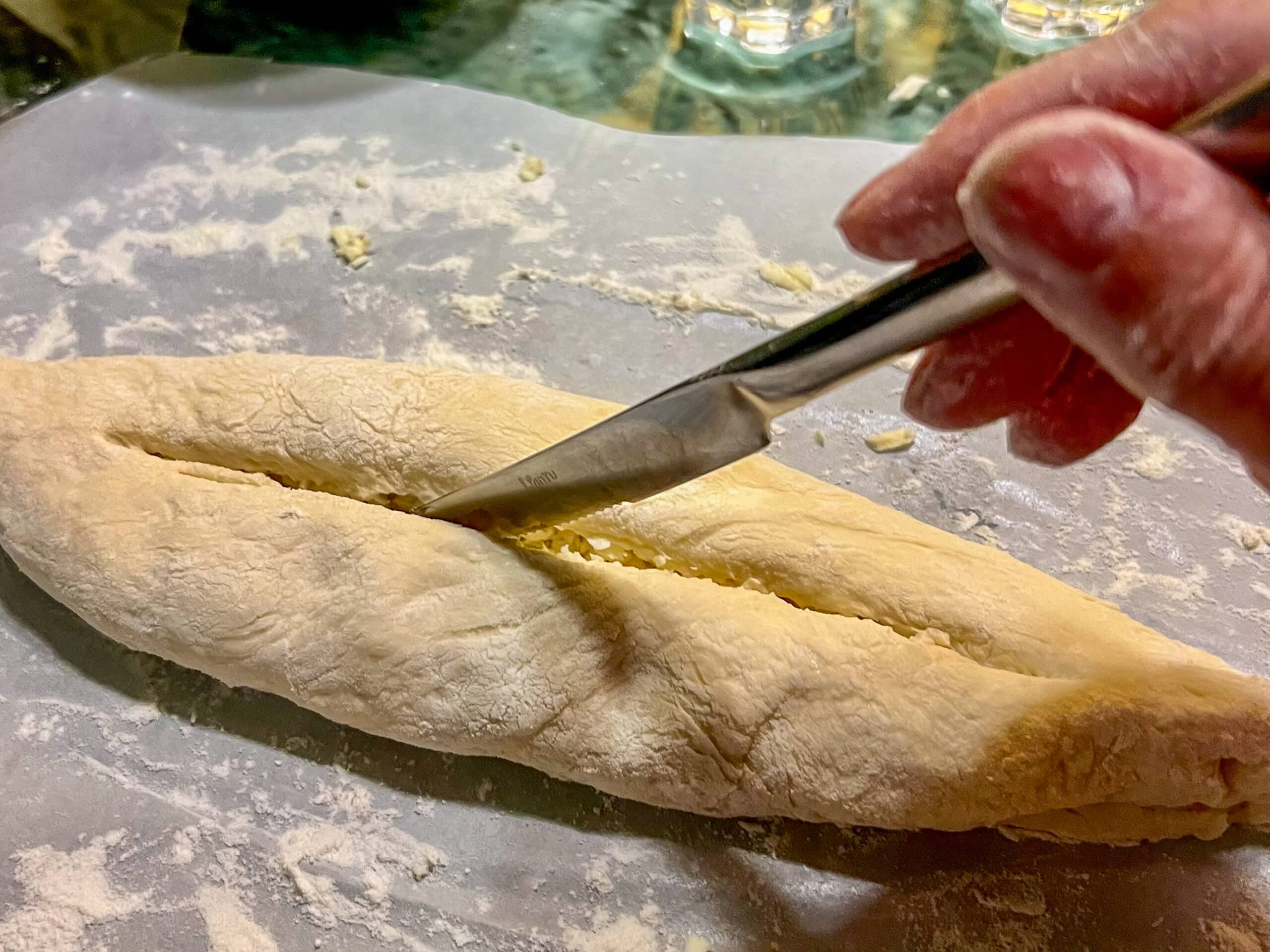
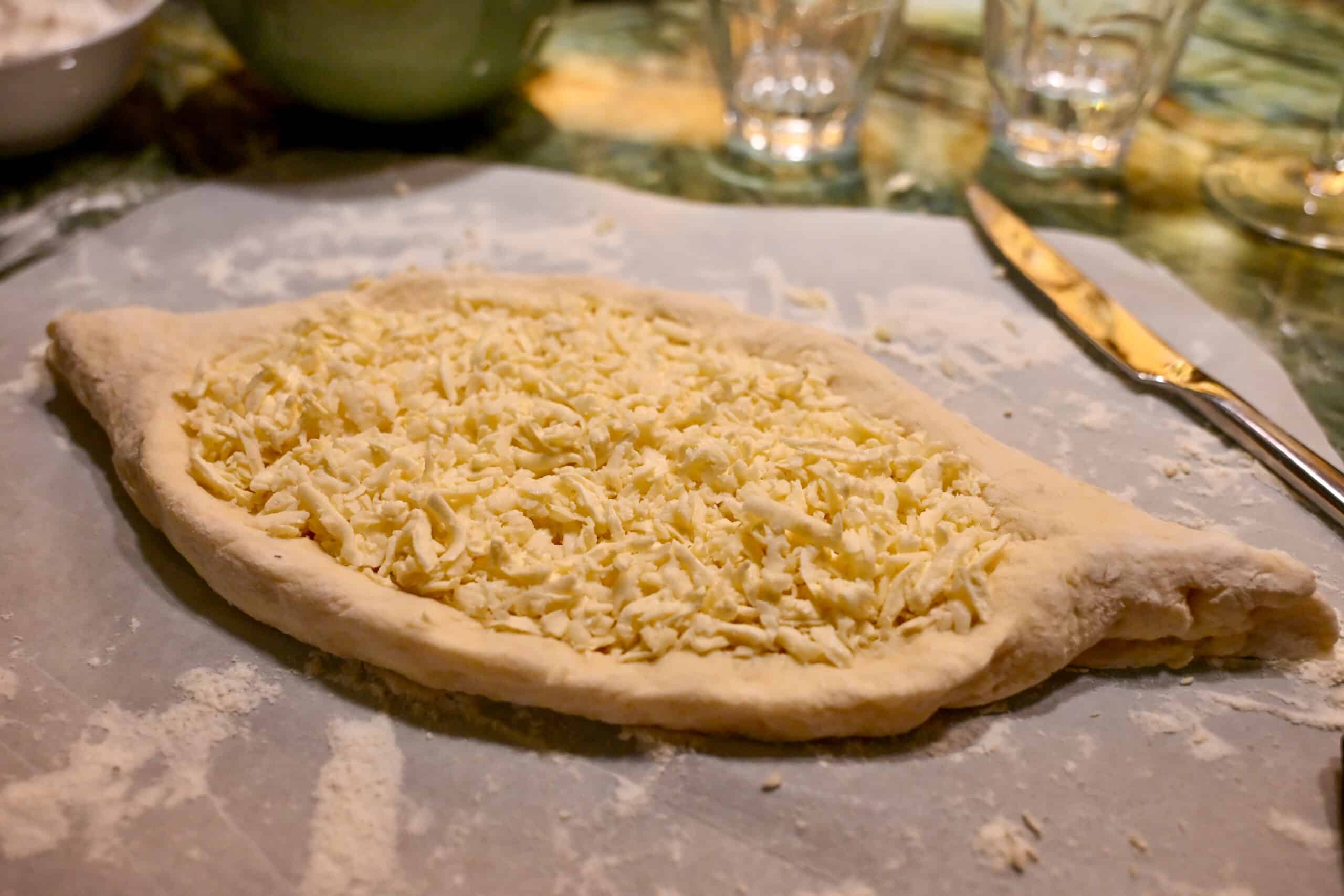
After kneading the dough for the Khachapuri, and rolling it into a circle, we loaded it up with a layer of cheese, before pulling up the sides and sealing the bread in the shape of a Cornish Pasty. Then, we flipped it over so the seam was on the underneath, before flattening the cheese-filled dough down and moulding it into the shape of a boat, before adding even more cheese on top. Some people add a runny egg yolk to the top of the khachapuri which symbolises the sun.
Khachapuri remind me of the Peinirli (boat shaped pizzas) we sampled on the Greek Street Food Tour in Athens. Peinirli originated in Türkiye and were brought back by Greeks fleeing Türkiye. So, Georgian Khachapuri are another version of this, with their own spin on it.
Georgian Khinkali are dumplings, traditionally filled with a mix of beef mince, onion, chilli pepper, cumin and salt, sometimes with the addition of herbs such as parsley or coriander, and a little water or stock.
The beef is cooked inside a parcel of dough which is shaped like an old-fashioned money bag. To make the bag you need to pleat, or softly fold, the dough to make a pocket, before nipping it together at the top to ensure that no juices or filling can escape during cooking. Vegetarian versions with a filling of vegetables such as mushrooms or cheese.
Once cooked, the Georgian Khinkali should be eaten plain, or simply with a little black pepper. Use your hands (never cutlery) to pick up the khinkali. You are then encouraged to suck out the juices as you take your first bite out of the khinkali taking care not to spill it on yourself – maybe not ‘first date’ food. The top twist of the khinkali is not eaten as the dough is too thick here.
Phil tried Khinkali at Klike’s Restaurant near the Parliament building, an underground restaurant once a KGB cellar used for torture and interrogation (but don’t let that put you off!). We made our Georgian Khinkali in slightly safer surrounds, at St Bunny as part of our small group Cookery Course.
The dough had already been prepared for us, meaning that we could concentrate on getting the ‘folding’ right to ensure that the beef mince mixture wouldn’t escape during cooking. There is an art to correct folding which was fun to practise, particularly after a couple of glasses of wine!
Chakapuli is a Georgian Stew traditionally made with lamb and plums, plus whatever wild herbs you have in your garden. The plum sauce is known as Tkemali including plums, garlic, chili peppers, and the herbs. Georgians love Tkemali and add it to lots of dishes, therefore its nickname is ‘Georgian Ketchup’.
You can however make Chakapuli with other meats – veal is very popular, but beef and chicken are also available. Phil tried a lamb based Chakapuli cooked on an open fire in the Svaneti mountains with Chef Baghdoshvili.
We tried a chicken version with tarragon herbs at the Rooms Hotel Kazbegi which was delicious. Vegetarian versions are possible, for example, with mushrooms.
Whereas Georgian Khinkali were devised as a ‘portable food’ for shepherds and farmers working in the mountains, Chakapuli is the perfect home-cooked meal at the end of a hard day’s work.
Phil headed to Littera Restaurant to sample modern Georgian cooking from the kitchen of Chef Tekuna Gachechiladze, the ‘Godmother of Georgia’s Culinary Revolution’. The restaurant aims to offer refined versions of traditional Georgian comfort foods, working with seasonal, quality ingredients and cooking them very well. Tekuna was happy to acknowledge influences from outside Georgia, but added:
Chef Tekuna Gachechiladze, Littera“It doesn’t matter who did it first [the Greeks, the Turks],
It matters who does it the best – the Georgians!”
Phil sampled a dish of Kakhetian pink tomatoes with slices of peaches and topped with pistachios and a soy ginger sauce which looked mouth-wateringly good. Then, he moved on to a Chakapuli made with mussels rather than meat. No heavy Georgian Khinkali mountain food here!
Safe to say, Littera went to the top of the wish list for our visit to Georgia, and after booking our flights, it was the next element of our trip that we booked via Littera’s Instagram account.
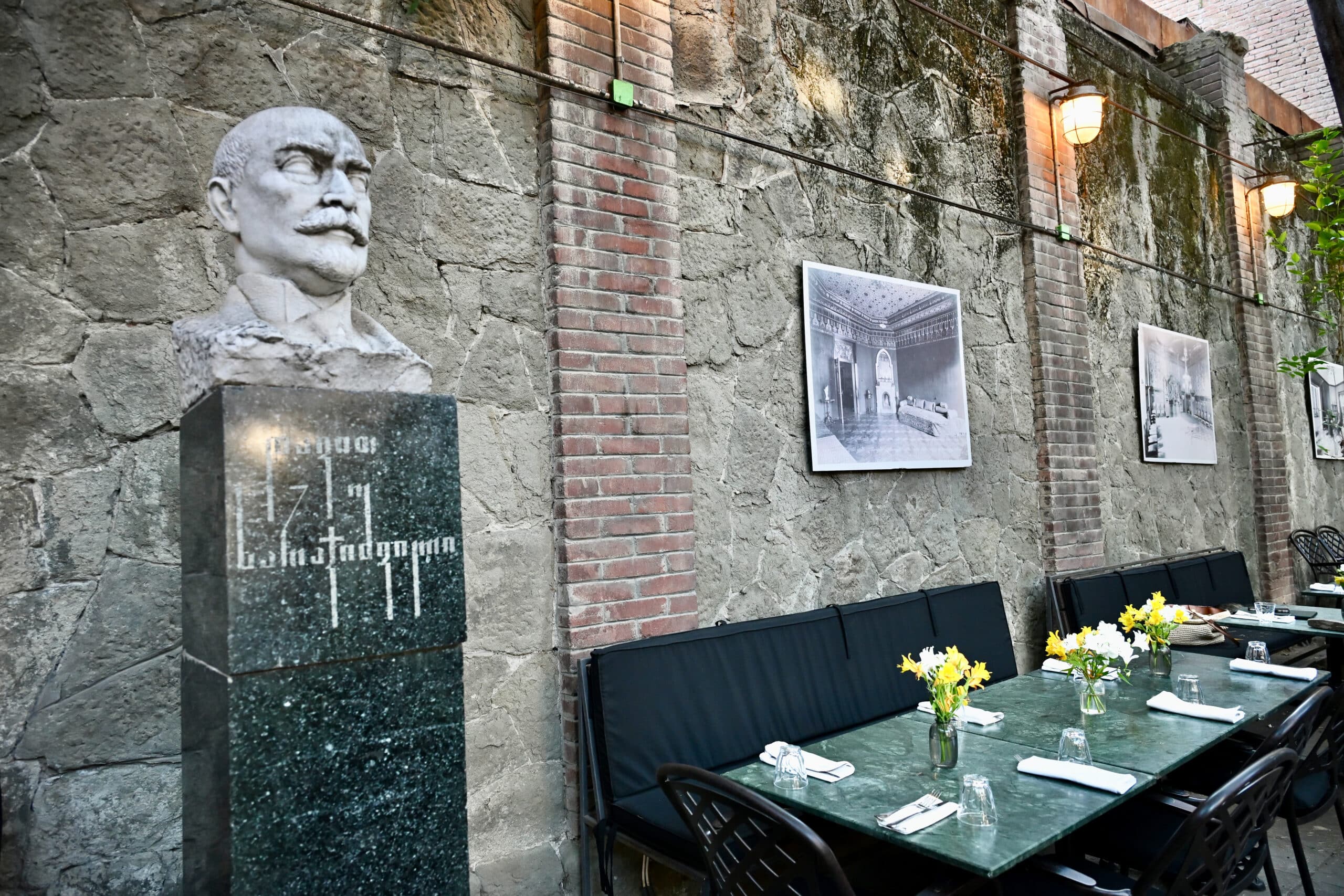
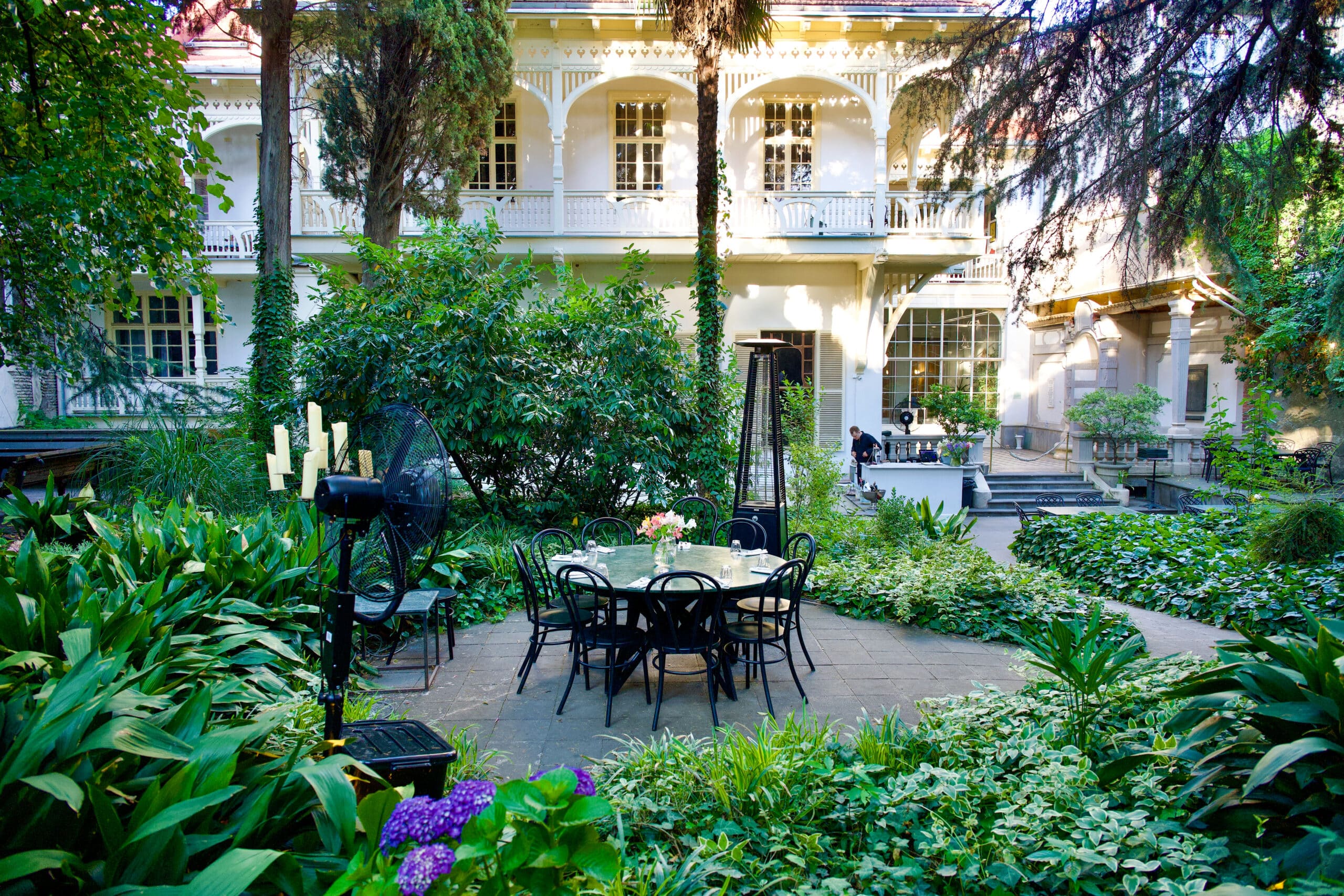
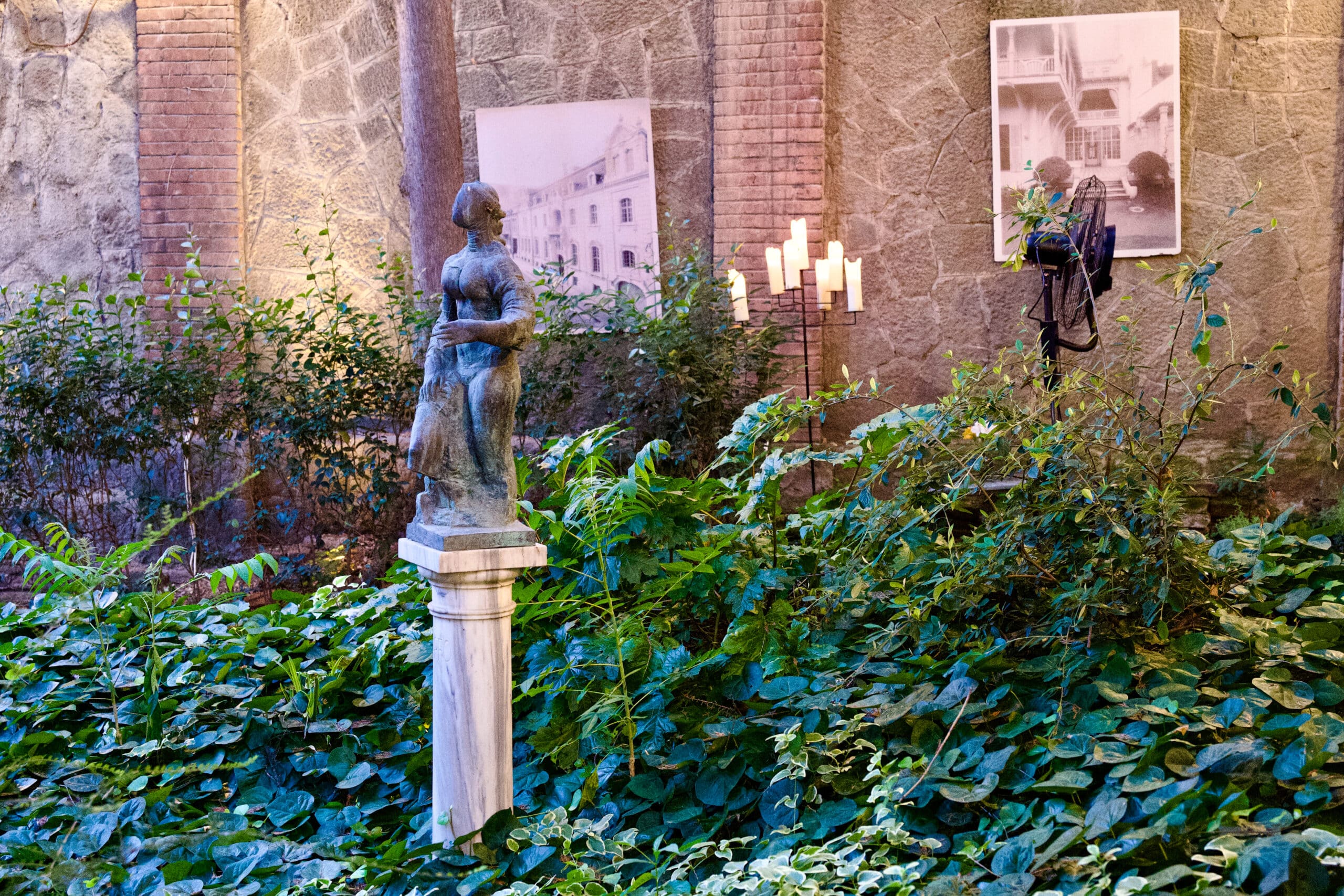
Our visit to Littera did not disappoint. We booked a table for 7pm when it was still light and enjoyed sitting outside in the peaceful gardens at the back of the Writer’s House of Georgia – a mansion used as a meeting and workplace by Georgian writers during the Soviet era, hence the name Littera.
The environment was perfect, as was the food (although sadly the tomato and peach salad wasn’t on the menu). Our choices included:
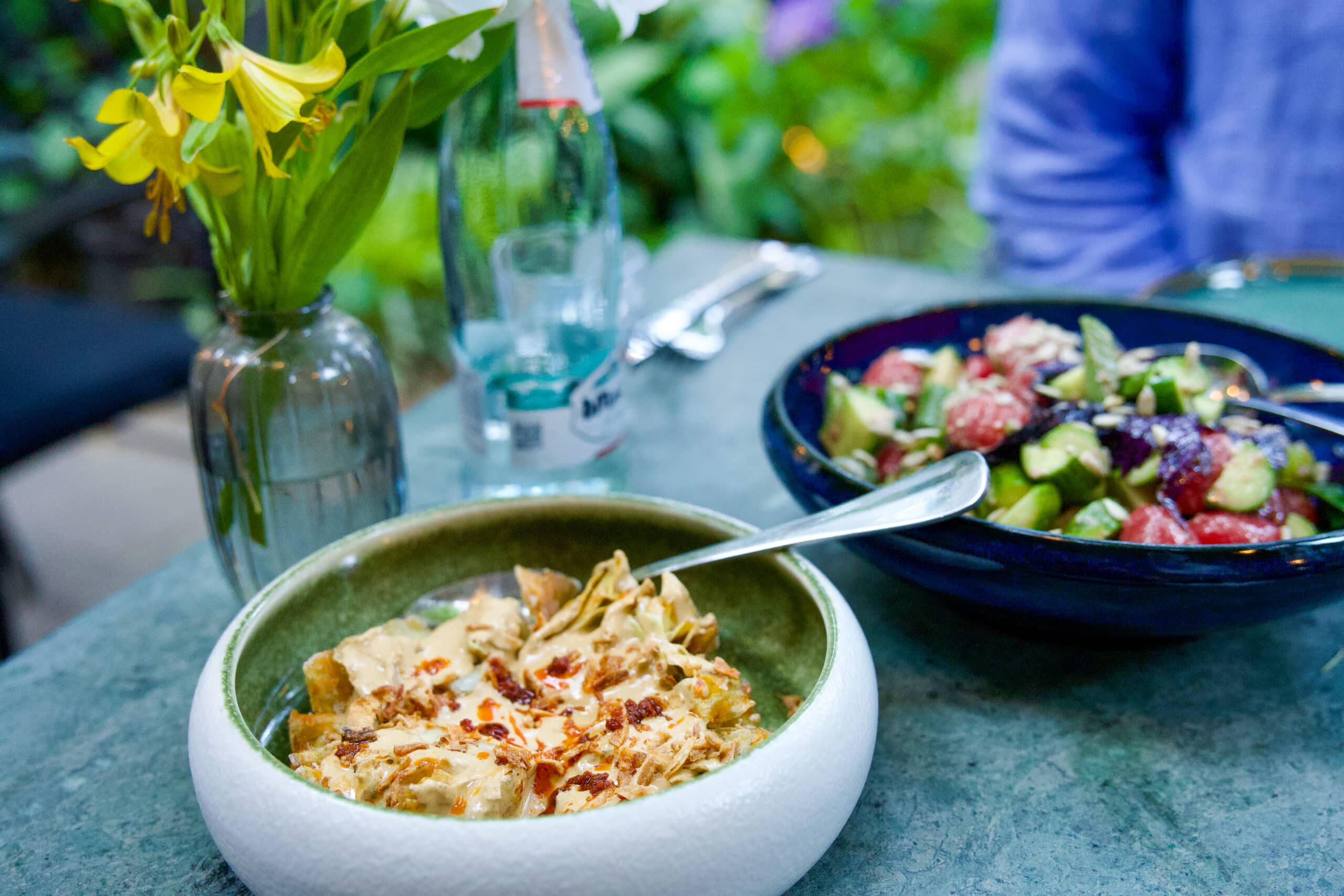
Smoked eggplant Pkhali (like an aubergine pate or dip) and crispbreads.
Crispy fried artichoke with Bazhe (creamy nutty sauce) and Red Adjika (vibrant, spicy ‘salt’).
Baked Salmon with black miso sauce and Filet Mignon with Georgian Truffle Sauce mains.
Portions allowed room for a Passion Fruit Pavlova, washed down with a glass of one of the nicest wine I’ve ever had – Tvishi Special (2024)from Giuanni Winery, a semi-sweet wine with notes of pears, perfect for desserts.
As the light dimmed, candles were lit throughout the garden which looked magical. A large group on the table next to us (a mixture of Brits and Georgians) spent the night engaging in the Georgian tradition of making toasts, and lots of them, which was fun to watch.
Phil headed to the Kakheti Wine Region for harvest time. He tried his hand-picking grapes at the family run Teliani Valley Winery and learnt about the traditional method of Georgian wine production using clay pots called qvervi; a process recognised by UNESCO.
We also visited the Kakheti Wine Region but stayed at the Giuanni Winery for our vineyard experience. We travelled to Georgia in June so could not partake in the harvest, however we also learnt about qvervi and the amber wines that the traditional process produces – where the orange colour comes from the grape skins left on the grapes during fermentation; there is no actual orange in the wine!
The tomatoes are so good in Georgia that it makes you wonder what you are eating by the same name back in the UK. You’ll find Georgian Tomato and Cucumber Salad on pretty much every restaurant menu, and we couldn’t get enough of them. Sometimes it’s served with a walnut sauce, and other times with a regional speciality.

After his outdoor meal in the mountains with Chef Baghdoshvili, Phil was given his first shot of Chacha, the Georgian version of Grappa. Chacha is made by distilling the leftover grape skins and sediment from the traditional qvervi wine making process, creating a potent spirit, usually 48% (and much higher).
Chacha can be very smooth, or incredibly rough. On our drive to Kazbegi in the Greater Caucasus mountains, we passed lots of locals selling home-made Chacha in plastic bottles at road-side stalls. I am guessing this might not be the smoothest Chacha available, but you never know!
I started on Day One, ordering a Chacha after my evening meal and can confirm that they differ grateful in quality. That said, it did work very well as a digestif, particularly after a heavy helping of Georgian Khinkali, however one is enough!
Phil went for Georgian wraps at an eatery called Tamtaki, which looked great, but we couldn’t fit into our itinerary. After his meal with the two Chefs, mother and daughter duo, they visited a recommended ice-cream shop called The Cone Culture and sampled ice-creams with inventive and seasonal flavours.
Our ice-cream highlight was sampling ice-cream with wine sauce at Cafe Medea in Sighnaghi. It had to be tried whilst we were staying in the Khaketi Wine Region. Whilst I was sceptical about the pairing, it worked quite well with the sweetness of the ice-cream offsetting the tannins of the red Sapervi wine.
Another use for grapes is in the production of Churchkhela, long candle-like sticks of nuts on strings dripped in grape must or fruit juice. For example, in eastern Georgia, they make a condensed juice from the must of local grapes thickened with wheat flour, which the strings of nuts are dipped into before being hung up to set.
Whilst Phil didn’t showcase Churchkhela in his programme, you will see them all over Georgia, in the shops and hanging in lines on local stalls by the roadside. Our guide on the Tbilisi walking tour told us to “avoid the green ones” as they are less natural that the red, brown or orange ones. The only reason they are green is due to the addition of food colouring.
So, you’ve slurped your Georgian Khinkali, filled up on Khachapuri, fallen in love with Georgian tomatoes and sampled some Chacha, what else should you try?
Our walking tour guide insisted that we should try the local speciality of eggplant with walnut sauce and sprinkle of pomegranate seeds. We did, and it was very tasty, with a distinct Middle Eastern feel to it.
We sampled this potato dish during lunch at Okro’s Wines and it was superb. We tried the vegetarian version of roast potato chips/chunks topped with fried onions, peppers and mushrooms. So simple, but so effective – it was a great way to prepare for a generous wine tasting!
One of the travellers we met on our Walking Tour of Tbilisi had stayed with a host family who invited him to dinner and served Ojakhuri which he said was superb.
Georgian hospitality is very warm and generous, and they have a proverb that:
Georgian proverb“Guests are a gift from God!”
So, if you’re travelling in Georgia and you’re invited to dinner by locals, accept the invitation immediately as you can be guaranteed a wonderful meal and insight into Georgian food and culture.
It’s safe to say that you can eat extremely well in Georgia. If you want to eat something traditional then try Georgian Khinkali. If you want something cheap or lunch on the go, then grab some freshly baked Khachapuri to fill you up until dinner time. However, if you want to eat more healthily in the evening, you can avoid the bread and stick to kebabs or barbecued meats with salad – a tomato and cucumber salad of course!
Wash everything down with a glass of Georgian wine, surprisingly good mineral water, and maybe even a Chacha or two.
Somebody Feed Phil was a great inspiration for our visit to Georgia – I wonder where he, or we, will go next?
Thank you so much for reading my blog. For more stories, itineraries, and advice, check out my Related Posts and sign up to receive my blogs by email.
If you have a blog-related question, please do ask in the comments box below and I'll try to help.
A little request: if you use my photos, please credit Love Travel Planning on your social media or give me a shout out on Instagram @lovetravelplanning as I am growing my website. Huge thanks.
Join thousands of travelers looking for inspiration from our FREE Planet Travel newsletter!
Your step-by-step framework for stress-free, unforgettable trips — from first idea to final itinerary.