There is a red wine in our local shop which has the most beautiful label, and it happens to be a fantastic Georgian wine called Bedoba (‘Day of Luck’) made from Saperavi grapes. The wine flies off the shelves as soon as it arrives, meaning that you need to be quick to get hold of it. So, when planning a trip to Georgia, I hoped to visit the Bedoba Winery in the Kakheti Wine Region. Although this wasn’t possible, no problem, we found plenty of other great Georgian wines along the way.
Despite the fact that Armenia has the oldest winery in the world, Georgia is the Cradle (birthplace) of Wine because archaeological finds date clay pots used in Georgian wine making back to 6,000 years BC – meaning that the Georgians have been making wine for over 8000 years!
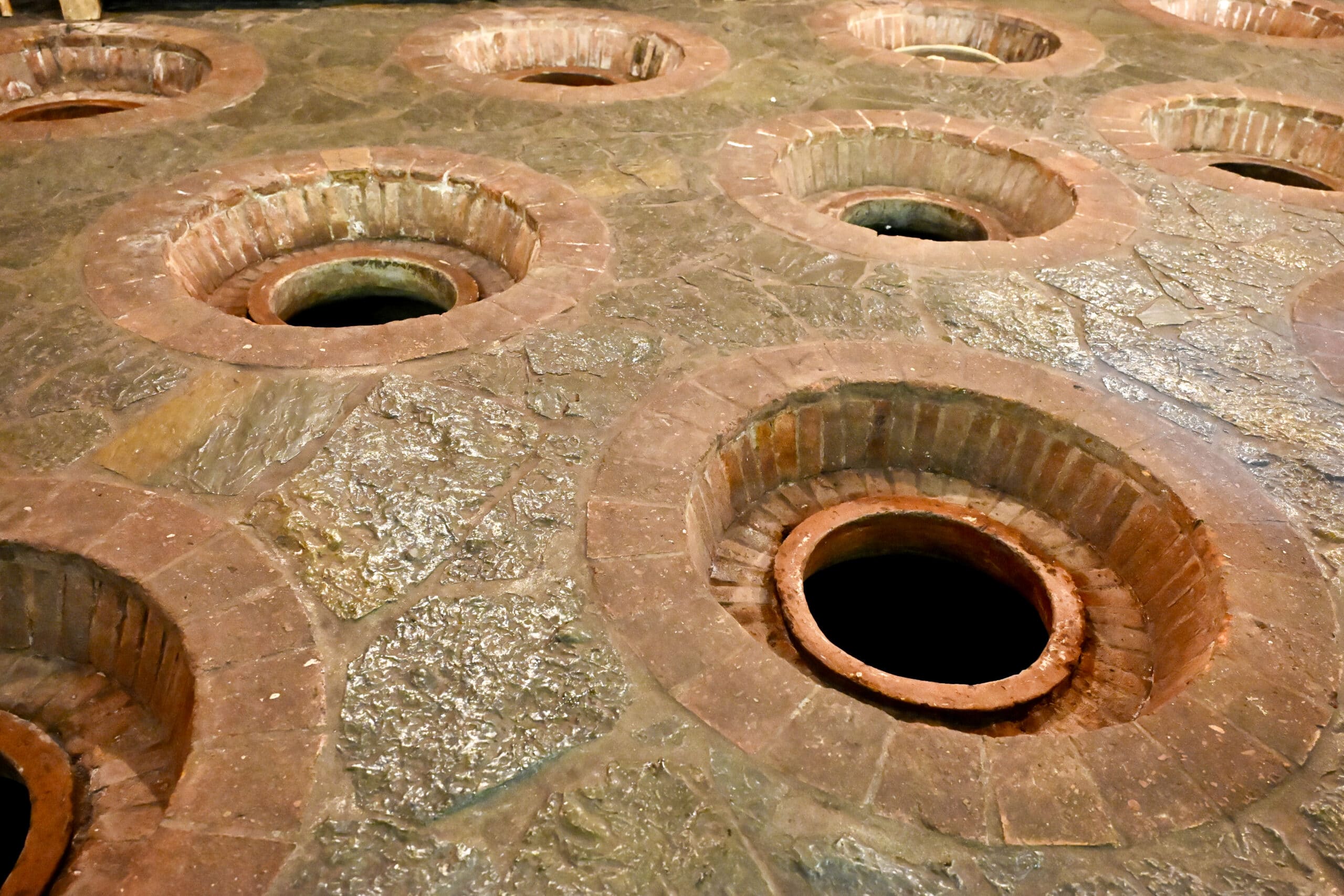
Traditional Georgian wine making involves putting the grapes in Qvervi, oval-shaped clay pots which are buried underground whilst the fermentation process is taking place (weeks to months as required). Fermentation takes place using the yeast which exists naturally on the skins of the grapes. This produces natural, organic wines by a process recognised by UNESCO. Traditional qvervi are usually lined with beeswax.
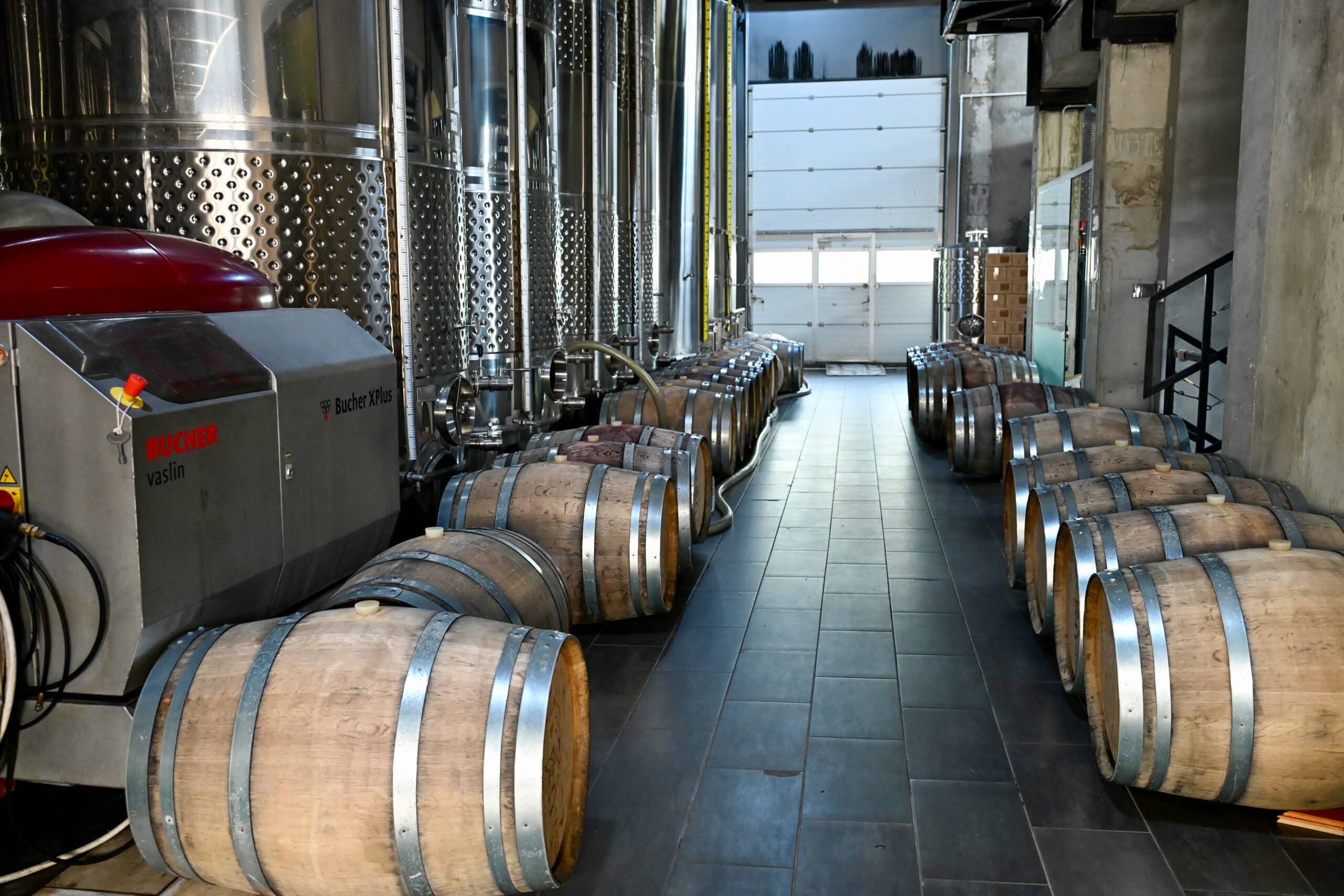
Smaller vineyards continue to use solely the manual qvervi method, whereas larger producers may also use European methods of winemaking, where wines are fermented in steel vats and then stored in wooden barrels.
Georgia produces wonderful amber wines from white grapes (varieties such as Rkatsiteli, Kisi or Khikhvi) which gain their lovely orange glows from the grape skins which left on during fermentation. The longer the grapes are left in the qvervi, the deeper the amber colour. By comparison, during the European wine making process, the skins are separated from the liquor and only the juice is fermented.
Georgians distil the leftover grape skins to make Chacha, their version of grappa. The quality of Chacha varies greatly; some are much smoother than others, but all are very strong, 48% proof or higher. Chacha is not for everyone, but I think it makes a great digestif!
Georgian wines carry the name of origin such as the village, district, or region (appellation). They are usually a blend or two or three different grape varieties, and with over 500 indigenous grape varieties Georgia produces a wide variety of wines.
Georgia enjoys an optimal climate and terroir for wine-making: mild, frost-free winters and warm sunny summers. In addition, the Black Sea provides moist air across the county, contributing to the best conditions for grape growing.
Exports are increasing and wine tourism is big business in Georgia. Imports to the UK, by way of example, are surging as more bottles are being made available to the market. In 2024, 400,000 litres were imported to the UK (a 72% increase on the previous year).
There are 5 wine regions in Georgia, but the Kakheti Wine Region is the largest, and premier, Georgian wine-producing area accounting for 70% of national wine production. The other wine regions are: Imereti, Kartli, Racha-Lachklumi and the Black Sea Coastal Zone.
The Kakheti Wine Region is divided into smaller hubs, the main one being Telavi, and another more picturesque one being the hilltop town of Sighnaghi. The region is known for its Saperavi wines, Georgia’s staple red.
The Kakheti Wine Region can be easily accessed from Tbilisi – it’s approximately 2 hours to Telavi or to Sighnaghi.
A visit to the wine regions is a popular day trip from Tbilisi and so there are many tour operators offering tours of the wineries. You can book a group tour or a private tour depending on your requirements. Get Your Guide has lots of options to choose from:
If you’re travelling under your own steam on a road trip, you can easily move around the Kakheti wine region to sample some fabulous Georgian wines. Read on for ways to fall in love with Georgian wines on your trip…
The Georgians are generous with their wine samples, so you really need to rule out booking a tasting session and driving afterwards. Agree to be the designated driver or look at other alternatives.
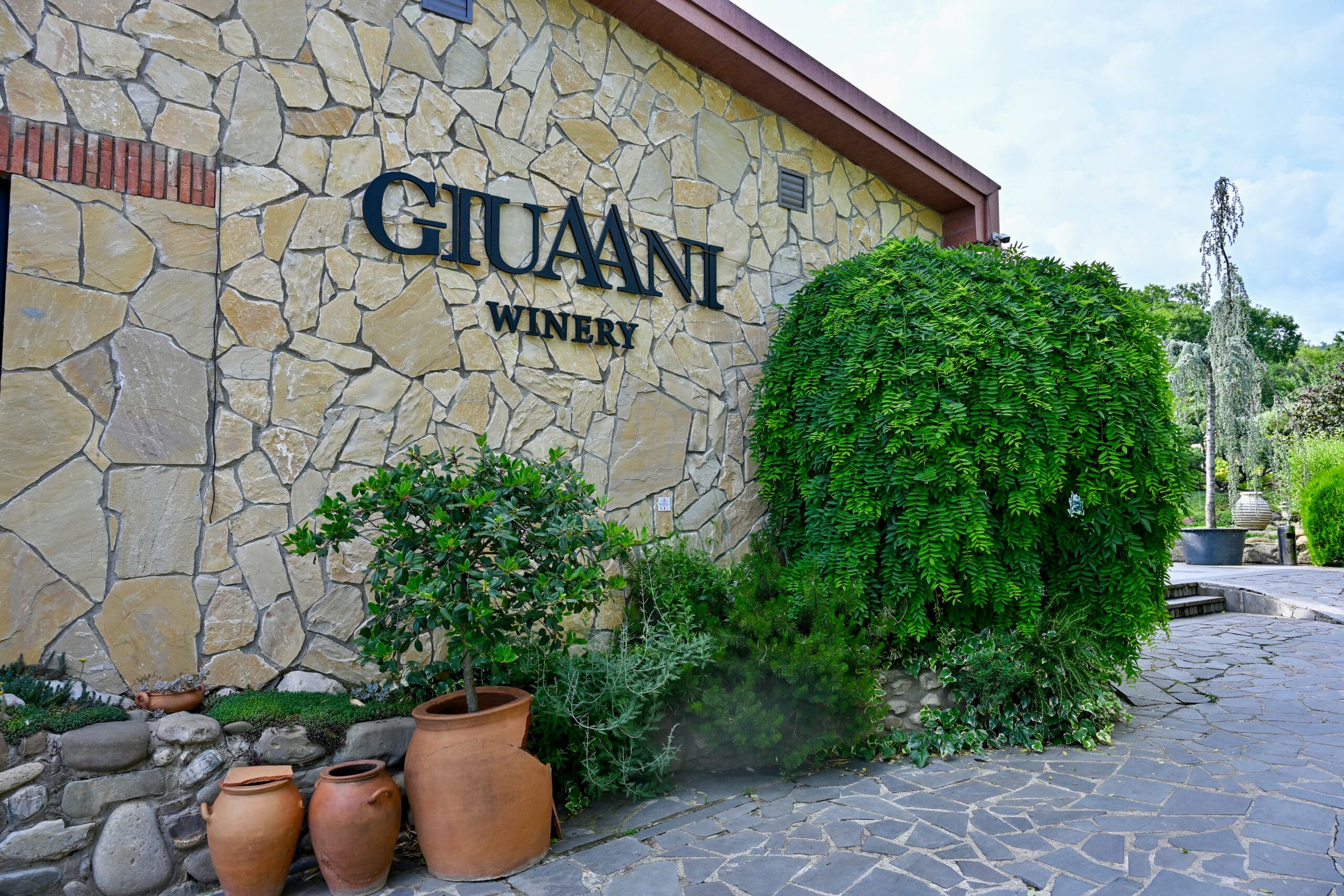
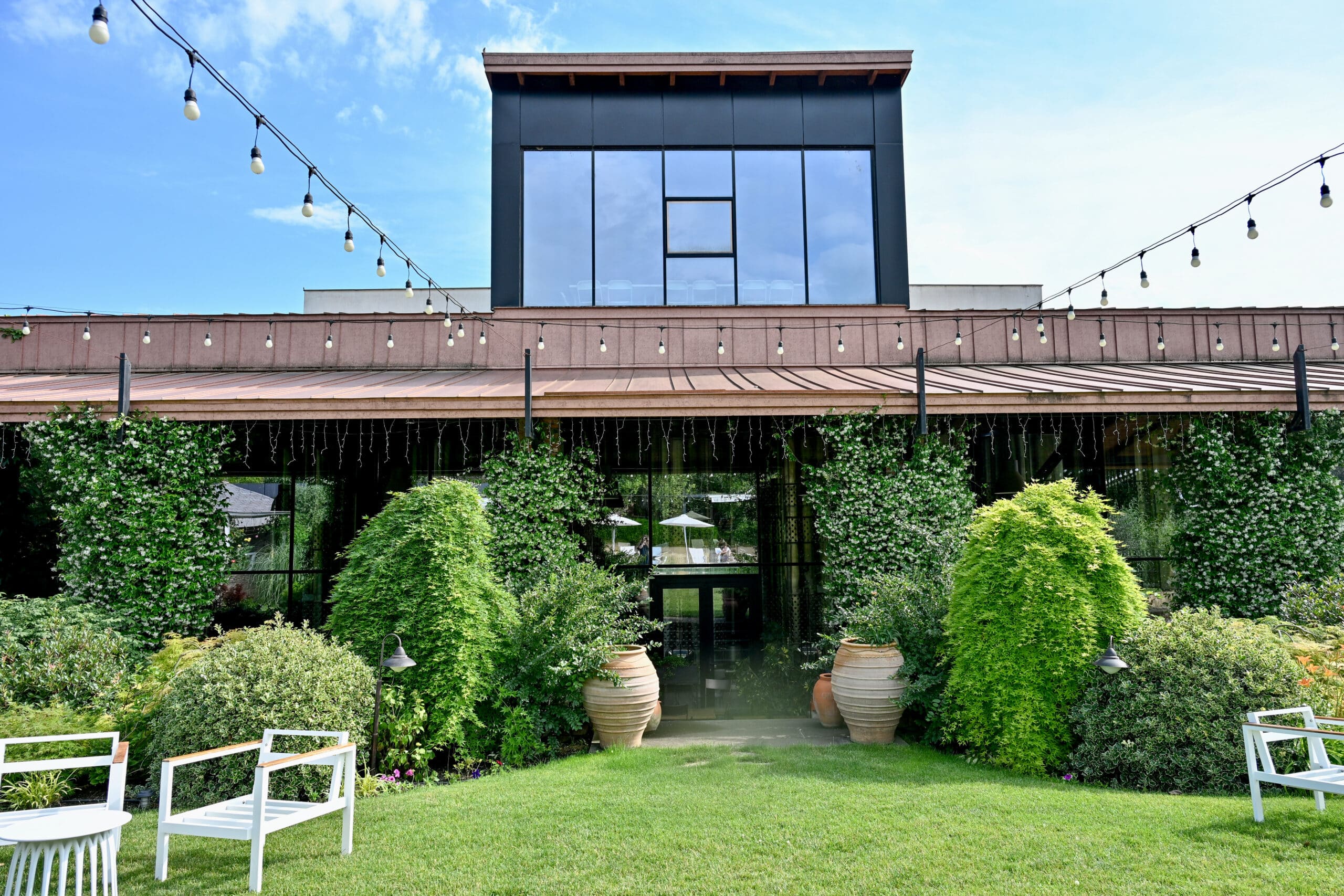
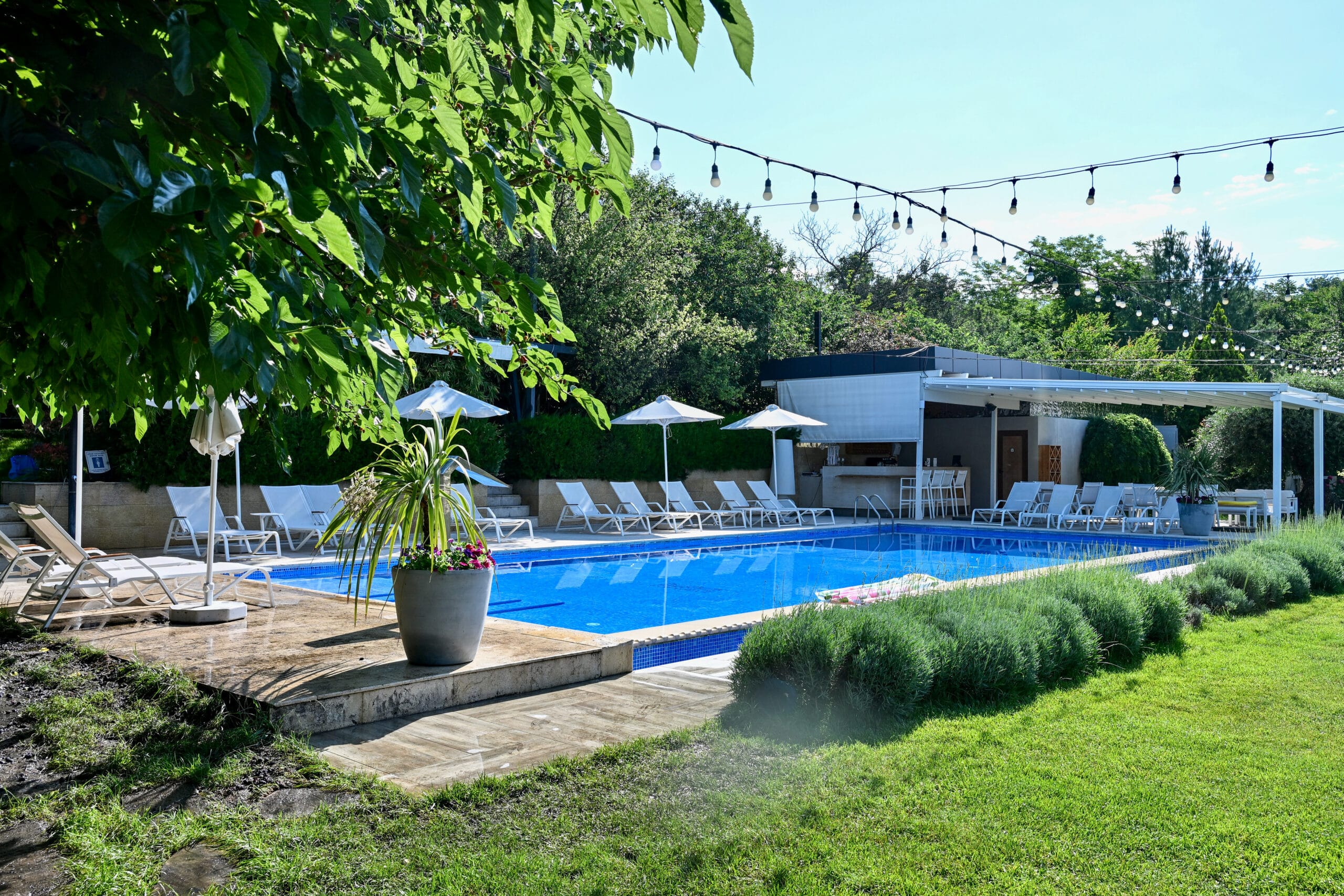
The Giuanni Winery is in the ancient village of Manarvi in the Kakheti Wine Region, about 1 hour’s drive from the centre of Tbilisi. The winery comprises a cluster of buildings, some modern and some rustic, set around a lovely pool area in pretty gardens.
If you stay overnight at the Giuanni Winery, then after your wine tasting experience, you can enjoy a leisurely dinner in the outdoor restaurant overlooking the pool and winery. The atmosphere was chilled and peaceful, and the food very good. There was a rather dreamy, rustic ambiance about the winery, which felt a million miles away from the traffic of the city!
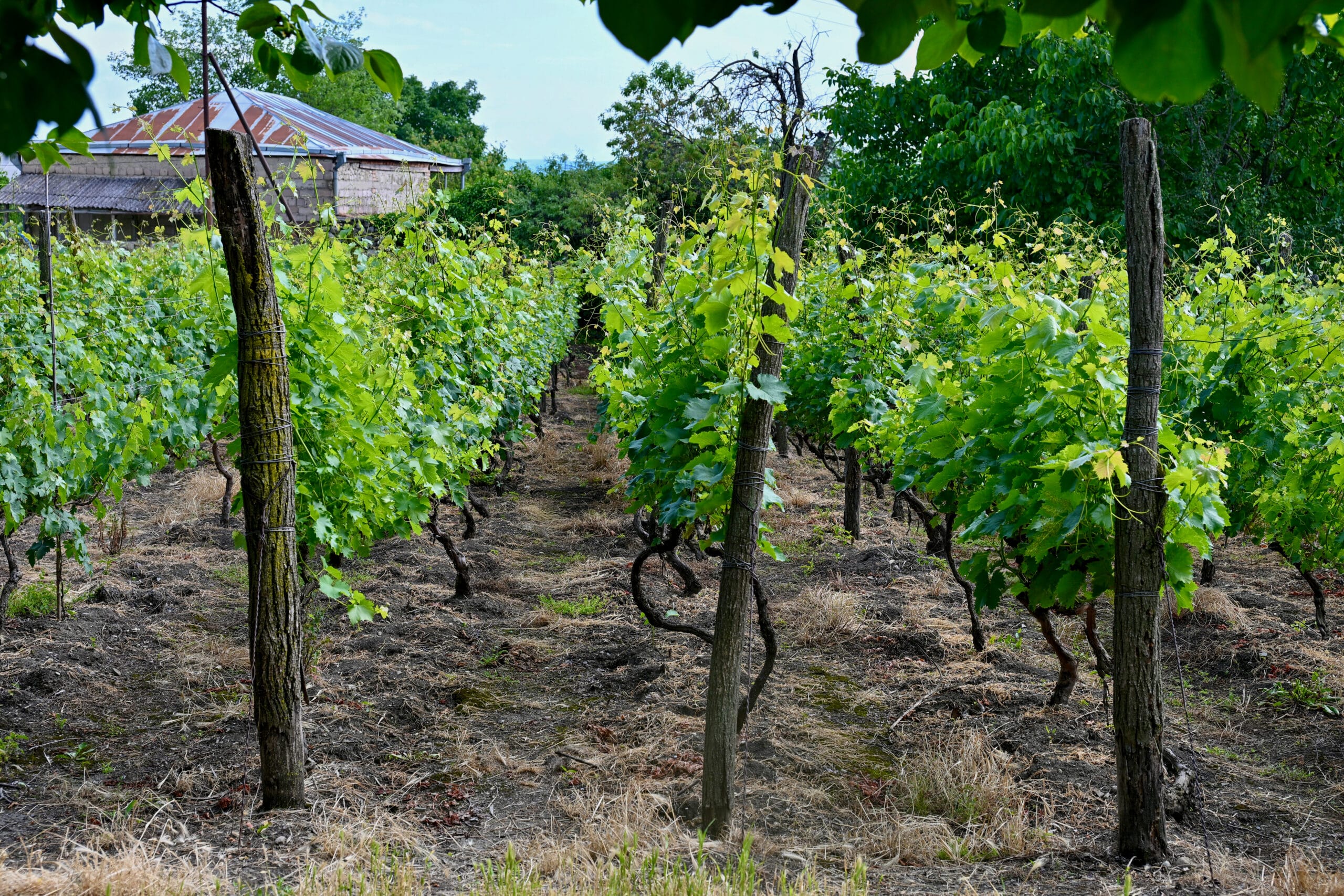
Tour of the winery – when you book a wine tasting session at the Giuanni Winery, your activity starts with a tour of the winery site and the wine production area. Our guide, the winery’s Sommelier, showed us the vines outside and talked about the grapes cultivated.
The Giuanni Winery make some wines using traditional Georgian methods, and others using European methods. For their traditional process, the winery puts the grapes in the qvervi, which are then stirred manually with a long stick every 3 hours throughout the day and night, for one month. They are then left to ferment for a further 5 months (6 months in total). They use their clay pots for up to 30 years each.
For those made by the European winemaking process, the grapes go into the macerator to remove the grape skins, seeds and stalks. The resultant liquid is then placed into steel vats; some put in oak casks to age; others go straight out to sellers.
Wine tasting – having sampled a Giuanni wine at Restaurant Littera in Tbilisi, I was looking forward to this as the wine was had was delicious!
Giuanni make around 500,000 litres of wine from 30 acres of vines, using a mixture of Georgian and European production methods.
We tried 4 wines and 1 chacha. The wines included a crisp Manarvi white wine (good with salads and fish), an amber wine, Saperavi red and Tvishi, my semi-sweet wine from Littera (still as good, second time around).
Okro’s Winery has a restaurant towards the top of town in Sighnaghi. As a result, the top-floor balcony at the restaurant has incredible views over the Alasani Valley.
We booked a wine tasting experience via Get Your Guide and then contacted Okro’s to ask if we could book a table for lunch beforehand, which was arranged for us. This was a shrewd move, to line our stomachs before a very generous wine tasting!
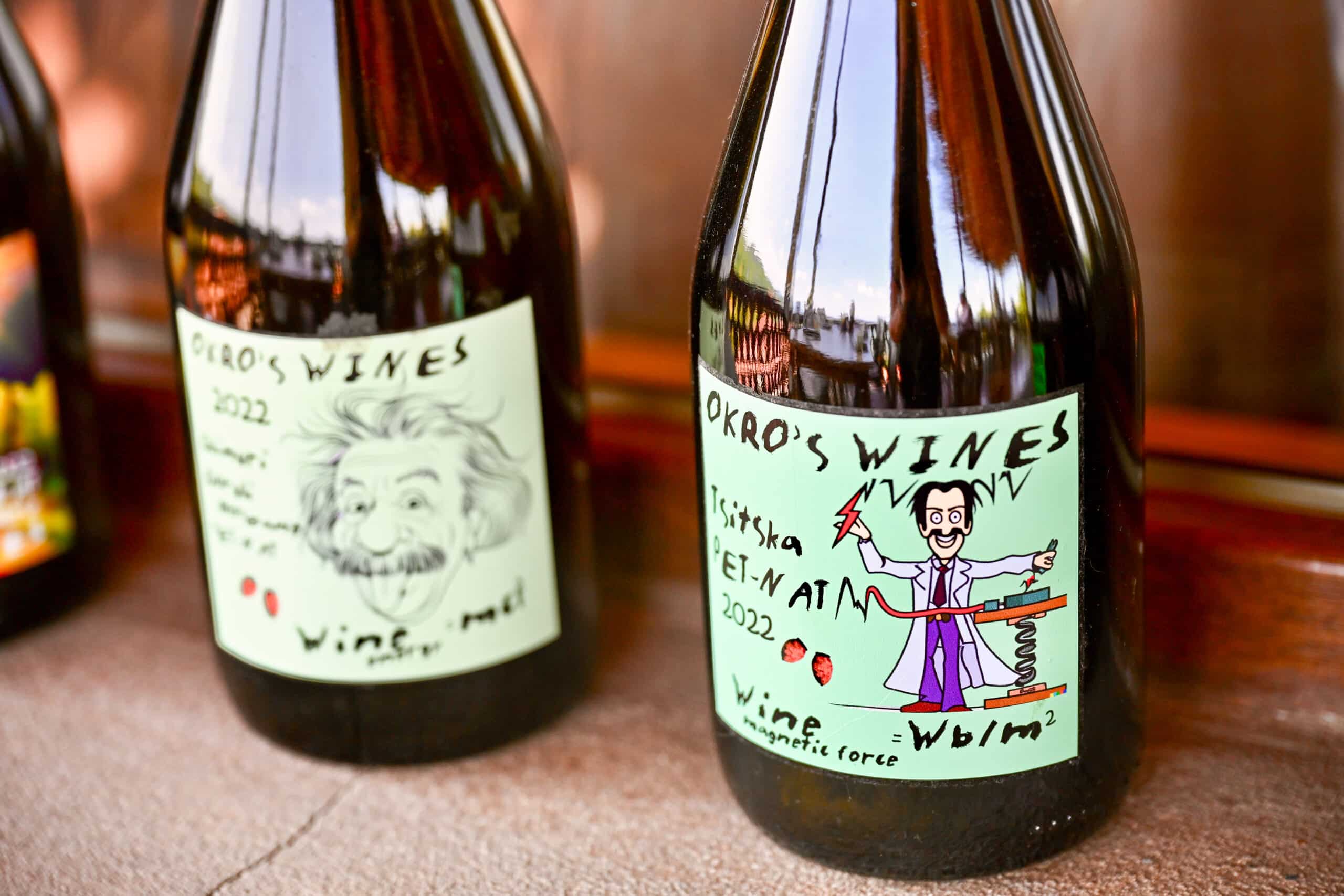
Our tasting was led by Jane, the owner of Sister’s Wines, who talked passionately about how her brother, John, had set up Okro’s Wines (Okro meaning ‘gold’). And how she had been inspired to follow his lead and set up Sister’s Wines. John was previously a physicist which is reflected in some of the labels for Okro’s Wines, and Jane was previously a political scientist. She summed things up nicely when she said,
(Jane, Owner of Sister’s Wines).“I didn’t make anyone happy doing political science,
but I make everyone happy with wine.”
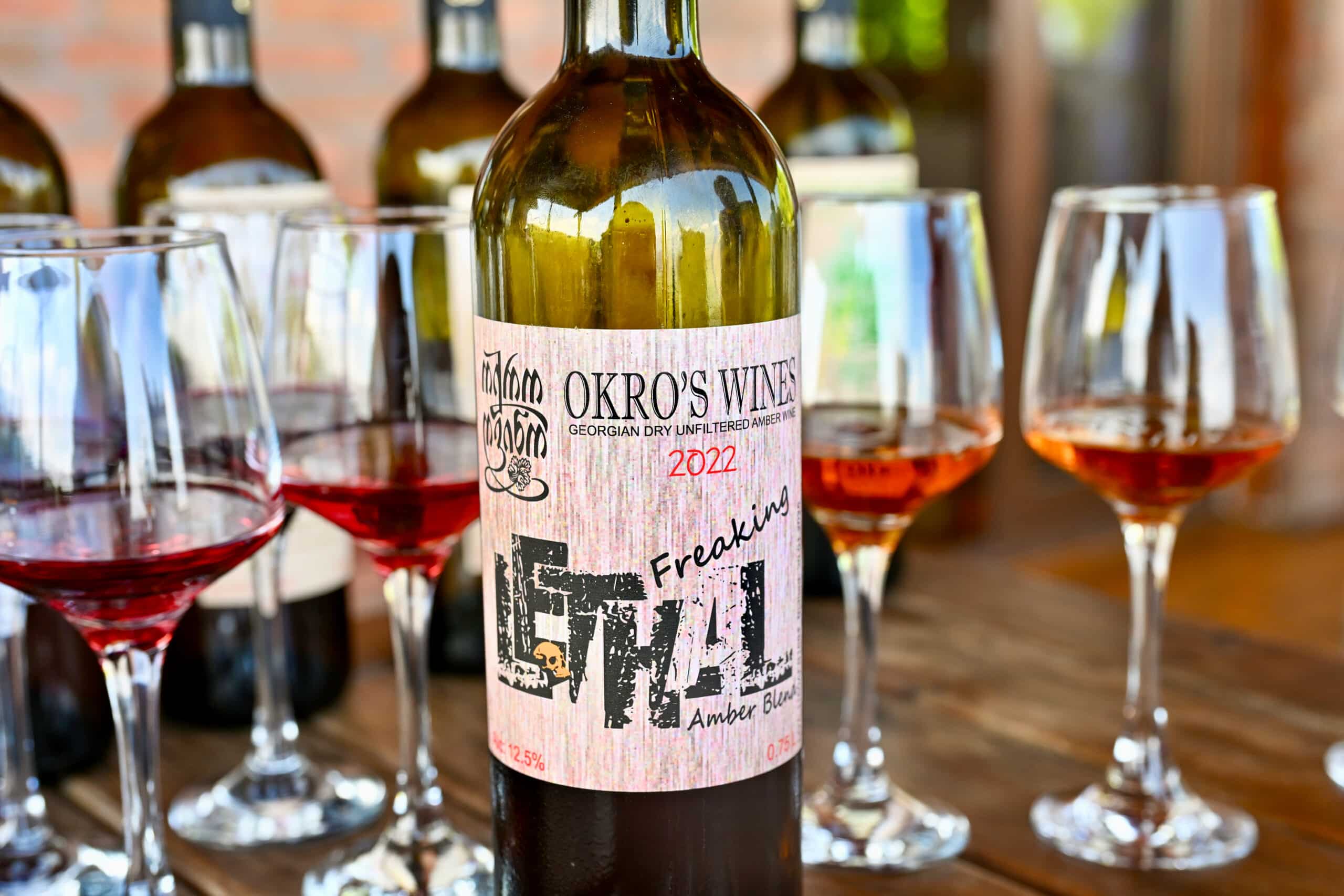
All the wines produced by Okro’s and its sister vineyard, Sister’s Wines, are organic, natural wines with no nasties (sulphates) used in the wine production.
There were 5 wines set out for our wine tasting, but Jane kept disappearing and producing bottles so in total we tried 9 wines, and a shot of 78% proof Chacha. For this reason, we were grateful for the hearty lunch we had enjoyed before the tasting session.
Note – Lunch at Okro’s Winery was cash only.
We’d seen the Pheasant’s Tears Winery and Restaurant on several food and travel programmes, including Anthony Bourdain’s Parts Unknown, and Jamie Oliver’s Jamie Cooks: Georgia, so on a visit to Sighnaghi, it was at the top of our list.
The owner, John Wurdeman, is an artist as well as natural winemaker and describes the Pheasant’s Tears as being…
(John Wurdeman, Pheasant's Tears)“More than a winery,
it’s about songs, art and heritage.”
Sometimes, the winery hosts folk dancing and singing events, so if your timings coincide, this will make a memorable experience unmissable!
The Pheasant’s Tears restaurant is located at the bottom of the hill in Sighnaghi, with indoor seating and an outdoor courtyard lined with bottles of wine on the walls.
We booked a table by contacting the winery via WhatsApp but didn’t book a wine tasting as we visited on the same day as the Okro’s Wines tasting. However, it’s all very casual and if we’d wanted to add a tasting on to our meal, that would have been okay. The food and wine were all delicious. My humble aubergine salad was fantastic, and the waiter said that it is a favourite dish which has been offered for 16 years on the menu – when it works, it works!
There are many different wineries you could include on your visit to the Kakheti Wine Region so google a few and see which ones call to you. Suggestions include:
Sighnaghi Estates- winning Georgian cuisine, wine and stunning views.
KT Wines – one of the leading wine producers in Georgia.
Teliani Valley Winery - as featured on the Netflix series 'Somebody Feed Phil'.
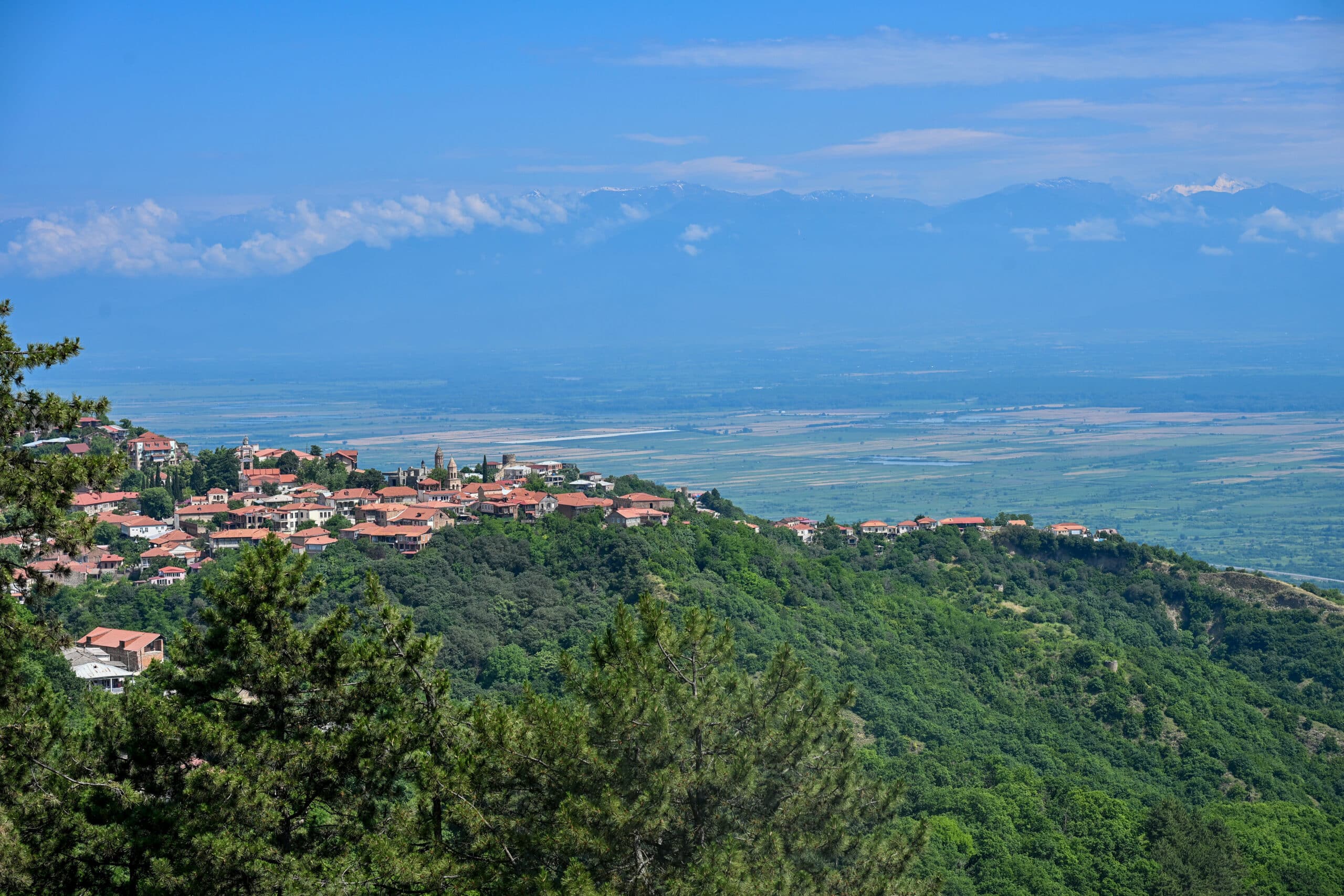
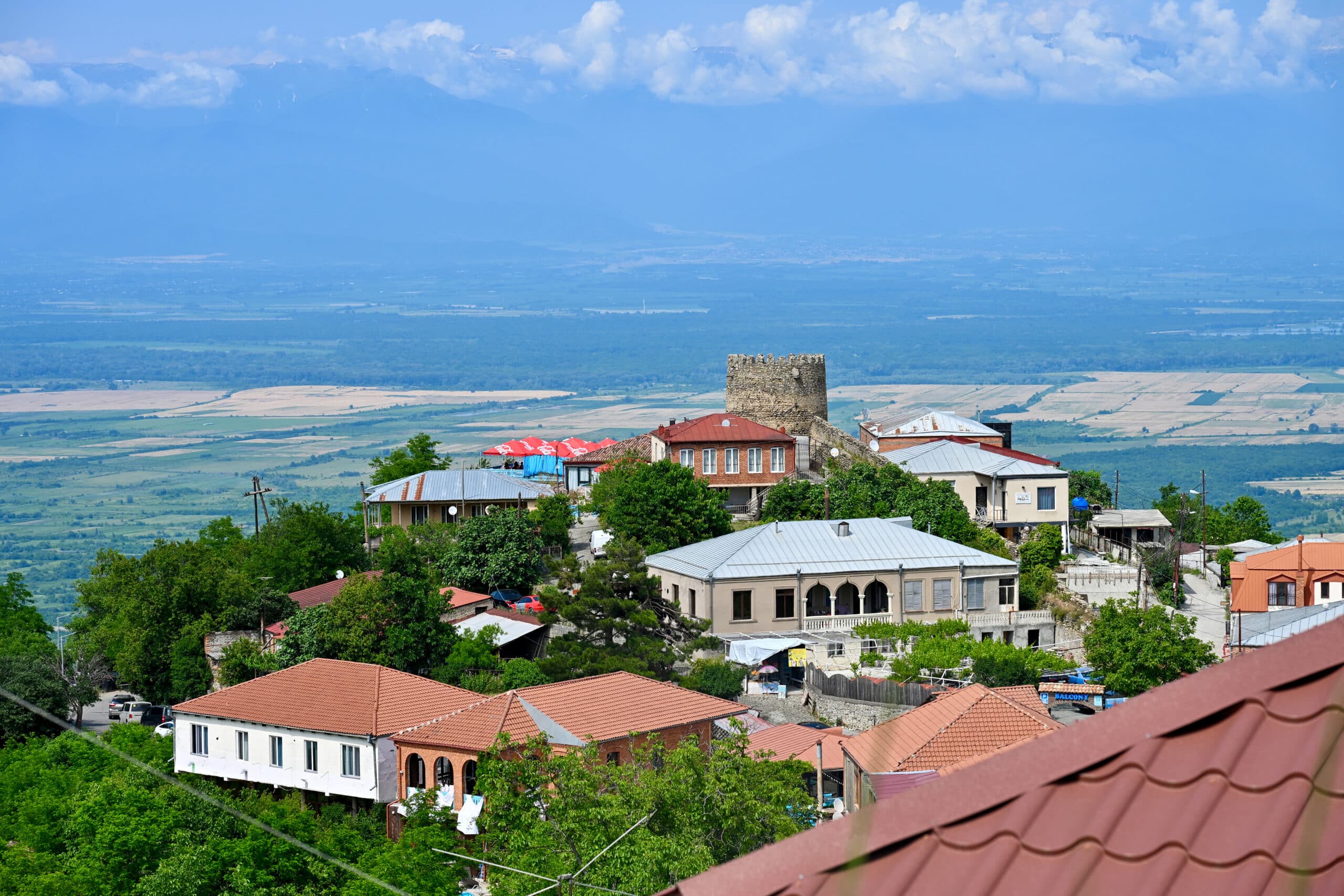
Before you leave the Kakheti Wine Region, make sure to spend time in Sighnaghi, the very pretty hill-top town which gives Italian vibes with terracotta roofs clustered together on rocky hillsides overlooking sweeping valleys, in this case the Alasani Valley. If you want to base yourself anywhere in the Kakheti Wine region, this is as good a place as any.
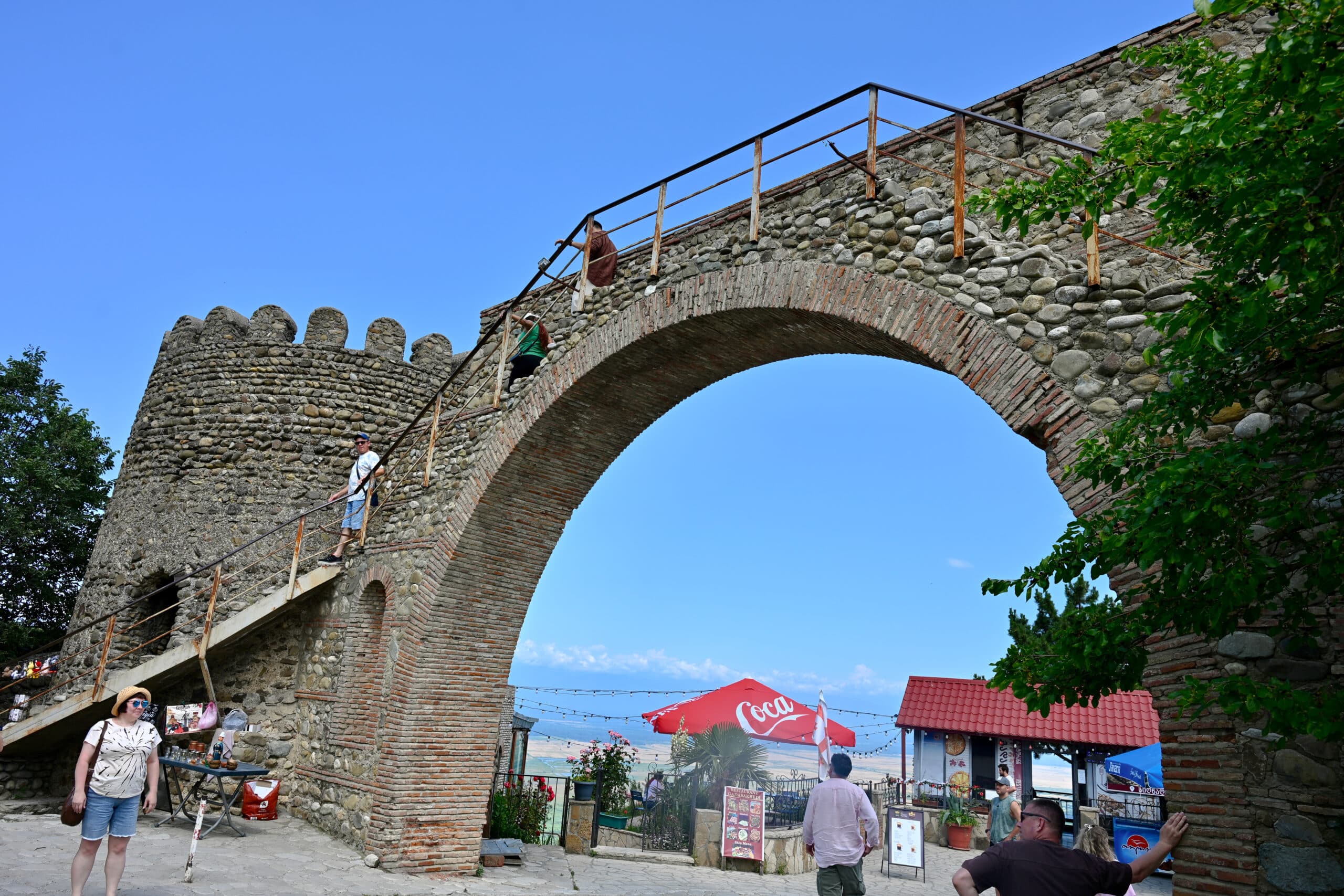
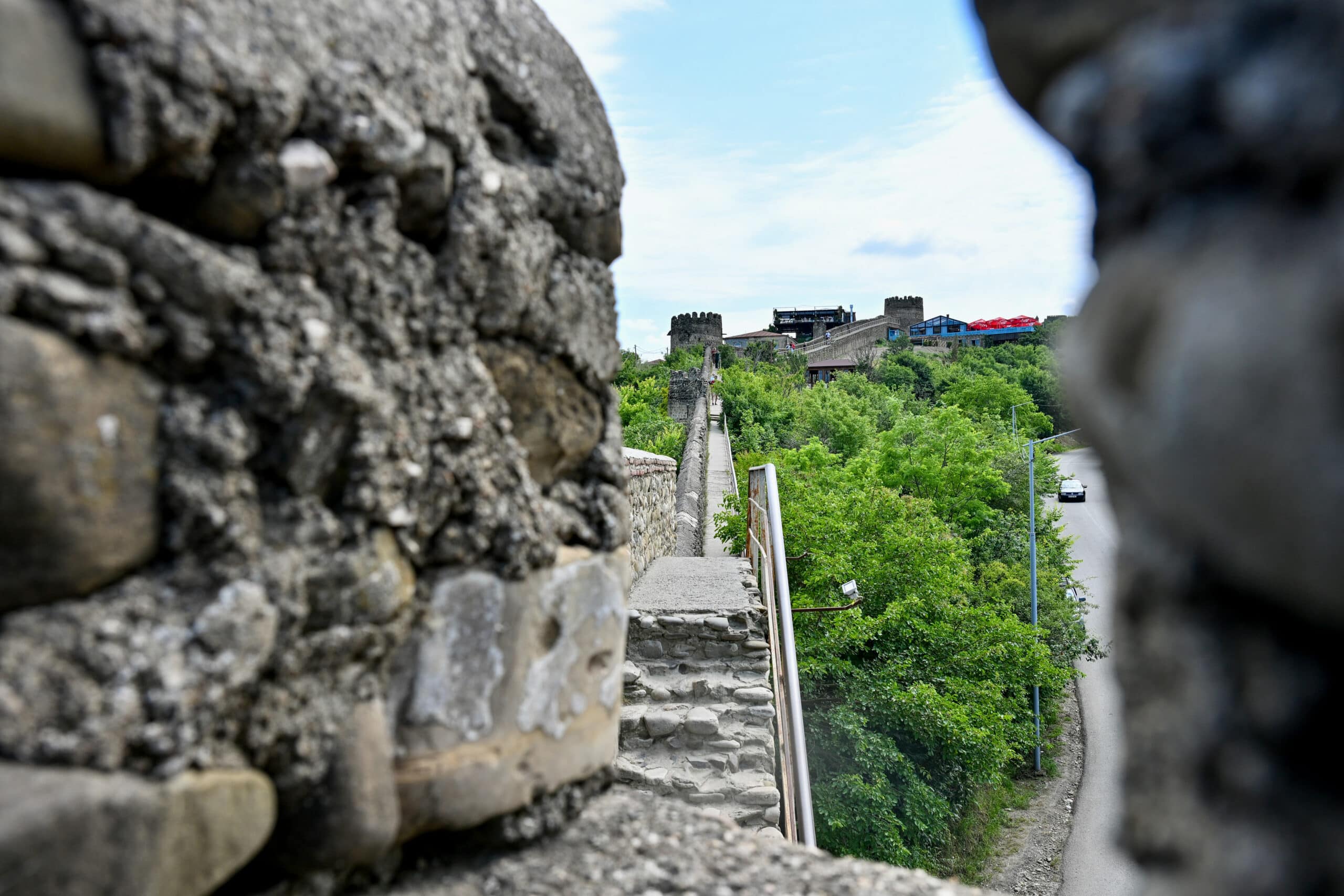
This elevated town is surrounded by 4.5 km of Medieval city walls which encircle the cobblestoned centre. There are 23 watchtowers around the fortifications and 5 gates in the walls, some of which you can climb and access the walls for even better views. The walls were built in the 18th century under the orders of King Erkele II who ruled the Kingdom of Kakheti and wanted to protect the settlement. The walls reminded me of the defensive walls at Ston, Croatia.
Sighnaghi is quite small and so it doesn’t take long to explore. There is parking at the bottom of the hill, from where you can walk up through a shady, tree-filled park, to the top of the town for the best views. As you pass though the park, check out the extensive WWII memorial carved on the wall to the right-hand side.
Once at the top of the hill, stroll along the road straight ahead and admire the views from the terrace. There are several cafes to stop and grab refreshments, such as Terrace Panorama and Café Medea selling ice-cream with wine sauce, a specialty of the town.
If you want something more substantial, then head to nearby Terrace Kisi for great Barbecue options and sweeping views over the valley.
Either way, after you have refreshed, head down the cobbled street towards the Sighaghi City Gate, and beyond, down the narrow street lined with craft and souvenir stalls selling everything from carpets to slippers and traditional Georgian hats. Pass the church on the way down the hill and continue until you reach the Sighnaghi Walls with a gatehouse you can ascend to access the fortifications.
LuAZ Car Tour – if you fancy a bit of fun after your wine tasting, you might be able to pick up a short tour of the sights in a LuAZ car, an ex-Soviet vehicle. Our driver took us to the Alazani Valley Viewpoint which we might have missed without the tour and also to the City Walls.
Sighnaghi was given the nickname of the City of Love in the 2000s as part of a tourism marketing campaign. This was based on the proposition that Sighnaghi has a Wedding Hall and 24/7 Registry Office allowing you to get married at any time of the day, just like Las Vegas!
The Bodbe Monastery Complex is set on a hillside, overlooking the Alazani Valley, in carefully manicured gardens.
This Georgian Orthodox Church complex is closely connected with to the country’s adoption of Christianity. It is a major pilgrimage site and as a result gets very busy, so try to visit as early as possible.
Legend has it that King Mirian III had a dream in which four stars flew across the four mountains of Georgia, and one of the rays fell on Bodbe. St Nino, a 4th century female missionary, went to Bodbe to put a cross on the place where the star had fallen but never left; she lived in a tent on the exact spot until she died (circa 338-340 AD). St Nino was buried where her tent stood. Today, you can pay your respects at her tomb inside the church built around it.
Also, if you visit Mtshketa on your visit to Georgia, you can make a stop at the Jvari Monastery to see where St Nino erected the St Nino’s Cross. This was the cross which was hidden in the Gergeti Trinity Church high up in the Caucusus mountains during times of trouble in Georgia.
The Holy Spring and Chapel – down a steep trail from the monastery you will find St Nino’s Holy Spring in a small brick building. On one side is a pool where you can dress in a white shirt /shroud to get anointed in Holy Water, then don’t wash the shroud afterwards.
Note – if you thought the journey down to the Holy Spring was long, wait until you are ready to reclimb the hill!
As you are leaving Sighnaghi, or passing through the village of Nukriani, look out for a wooden picnic area by the side of the road by a sweeping bend. Park up and head down into the picnic area, walk for a few minutes until you exit the trees into a clearing.
Hopefully you will find the 1970s Soviet-era sculpture, ‘Peace’ by Nugzar Manjaparashvili which looks like a flying lady. She is a little weather beaten but still impressive, and in a great position overlooking the valley.
The Kakheti Wine Region is a beautiful area of Georgia to visit, with memorable views of sweeping valleys and vineyards.
Being so close to Tbilisi, you can easily visit in a day, however, we enjoyed staying over in the region for a couple of nights and relaxing into the slower pace of life whilst falling in love with Georgian wines.
We thought it was great that all the wines on the menu were Georgia; not a foreign wine in sight. Not many places in the world simply stick with their own produce, because it’s so good!
I will be looking out for more Georgian wine back in the UK.
Thank you so much for reading my blog. For more stories, itineraries, and advice, check out my Related Posts and sign up to receive my blogs by email.
If you have a blog-related question, please do ask in the comments box below and I'll try to help.
A little request: if you use my photos, please credit Love Travel Planning on your social media or give me a shout out on Instagram @lovetravelplanning as I am growing my website. Huge thanks.
Join thousands of travelers looking for inspiration from our FREE Planet Travel newsletter!
Your step-by-step framework for stress-free, unforgettable trips — from first idea to final itinerary.