Warsaw was our first destination in Poland, the first half of a double city break, before heading to Krakow. It felt important to spend time in the country’s capital city and begin our Polish journey here. Warsaw is a city on the rise from near destruction in World War II. It has literally been rebuilt from the rubble of the bombings, recreating its historic Old Town, whilst finding a new vibe for the more modern parts of the city. It has a lot of history to tell, but also a new face to promote to visitors.
Apologies for the lack Polish language symbols on my blog.
Warsaw Chopin Airport is 9km south of the centre of Warsaw. It’s easy enough to take a taxi from the airport, and costs between 40 and 60 PLN (9 to 14 Euros).
There are also frequent buses and trains to the city centre, if preferred. Train lines S2 and S3 run to Warsaw Central station, take 30 minutes and only cost a few PLN.
Walking – whilst the centre of Warsaw is flat and walkable, the wider city is spread out, for example, it’s 14km from the Old Town to the Wilanow Palace (former Royal summer palace). If you split your time into zones, or districts, then you can happily explore on foot. However, if you plan to zip around the city between different areas, then you might need to consider other options.
Buses and trams – are the best way to get around if you plan to explore beyond the centre. There are two train lines, but the stations are quite spread out and so might not be located where you need them.
Taxis – use BOLT and UBER for taxi bookings.
One day a week the entrance to the museums is free in Warsaw, for example, the Warsaw Uprising Museum has free entrance on a Monday.
We booked accommodation for three nights, but as our flight arrived at 5.00pm on Day One, then technically we only had 48 hours in which to explore. My advice would be to give yourself at least 3 full days for exploration, if possible.
For more practical details of travelling to Warsaw, and where to stay, check out my blog Travel planning a double city break in Poland.
Warsaw is so rich in history, that it’s almost impossible on any Warsaw city break to visit without considering some of the history which has affected and shaped this capital city. Rather than dip in and out of different historical periods, I found it useful to arrange our itinerary in line with the key historical periods and history – to ‘go with the flow’ of the history.
Day 1 – Learning about the oldest parts of the city
Day 2 – World War II and Soviet-era history
Day 3 – Gardens and Palaces
| Day | Morning | Lunch | Afternoon | Evening |
|---|---|---|---|---|
| 1 | Café Bristol / Walking Tour | Pierogies at Gosciniec | UNESCO Old Town and Castle | Vistula Boulevards |
| 2 | Warsaw Uprising Museum | Food Town at Norblin Factory | Palace of Science and Culture / Neon Museum | Polish Vodka Museum & Tasting / Zrodlo |
| 3 | Saxon Gardens / Lazienki Gardens | Restaurant Belvedere | Wilanow Palace | Local – Spacca Napoli |
Feel free to move things around to suit your preferences.
What better way to start a day of sightseeing, than with a breakfast at an iconic Warsaw location. Open since 1901, Café Bristol has Viennese Art Nouveau interiors, serving excellent coffee, cakes and pastries. Pablo Picasso is said to have left his signature on one of the plates in the cafe as he enjoyed it so much. So, if it’s good enough for Pablo, then it’s good enough for us!
For your first morning on a Warsaw City Break, book a walking tour to help get orientated and start your learning journey about the city from expert locals.
Alternatively, if you prefer to explore under your own steam, then follow this self-guided tour of the highlights:
The Royal Way (Krakowskie Przedmiescie) is the historical route from Warsaw Old Town to the King’s summer residence at Wilanow. This self-guided walking tour only tackles a small portion of this 11 km (6.8 mile) route, but packs in a lot of the highlights.
Many of the walking tours start at this statue (erected in 1830) of the famous scientist Nicolaus Copernicus (1473-1543), who proved that the earth revolves around the sun. The statue stands in front of the Polish Academy of Science (or Staszic Palace).
For more Science – if you love science then make sure to pay a visit to the Copernicus Science Centre in Warsaw.
Walking towards Warsaw’s Old Town, on the other side of the road from the Copernicus statue, you’ll come to the Church of the Holy Cross. This church’s claim to fame is that it houses the heart of classic composer, Fryderyk Chopin, Warsaw’s favourite Son. His heart is enshrined in a jar within the second pillar to the left of the knave in the church. There is an epitaph to Chopin to note its position.
Chopin lived for a period at the Czapski Palace next to the Church of the Holy Cross. You can visit the Chopin Family Drawing Room, a recreation of where he composed early works and performed his music.
For more Chopin – visit the dedicated Fryderyk Chopin Institute located in the Ostrogski Palace to learn more about his life and see some of his original manuscripts. Try to visit around 5.00pm each day, when young musicians play Chopin’s music. One thing’s for certain, you can’t really ignore Chopin on a Warsaw city break!
The pavement bench near the Czapski Palace which is covered in carved music notes of Chopin’s music. You can press a button on the bench to hear some of his music.
Cross back over the road from the Holy Cross Church and walk to towards the Old Town until you reach the main entrance to Warsaw University. Chopin’s father taught French at the Warsaw Lyceum, which was housed inside the University buildings, hence young Chopin also spent a lot of time here.
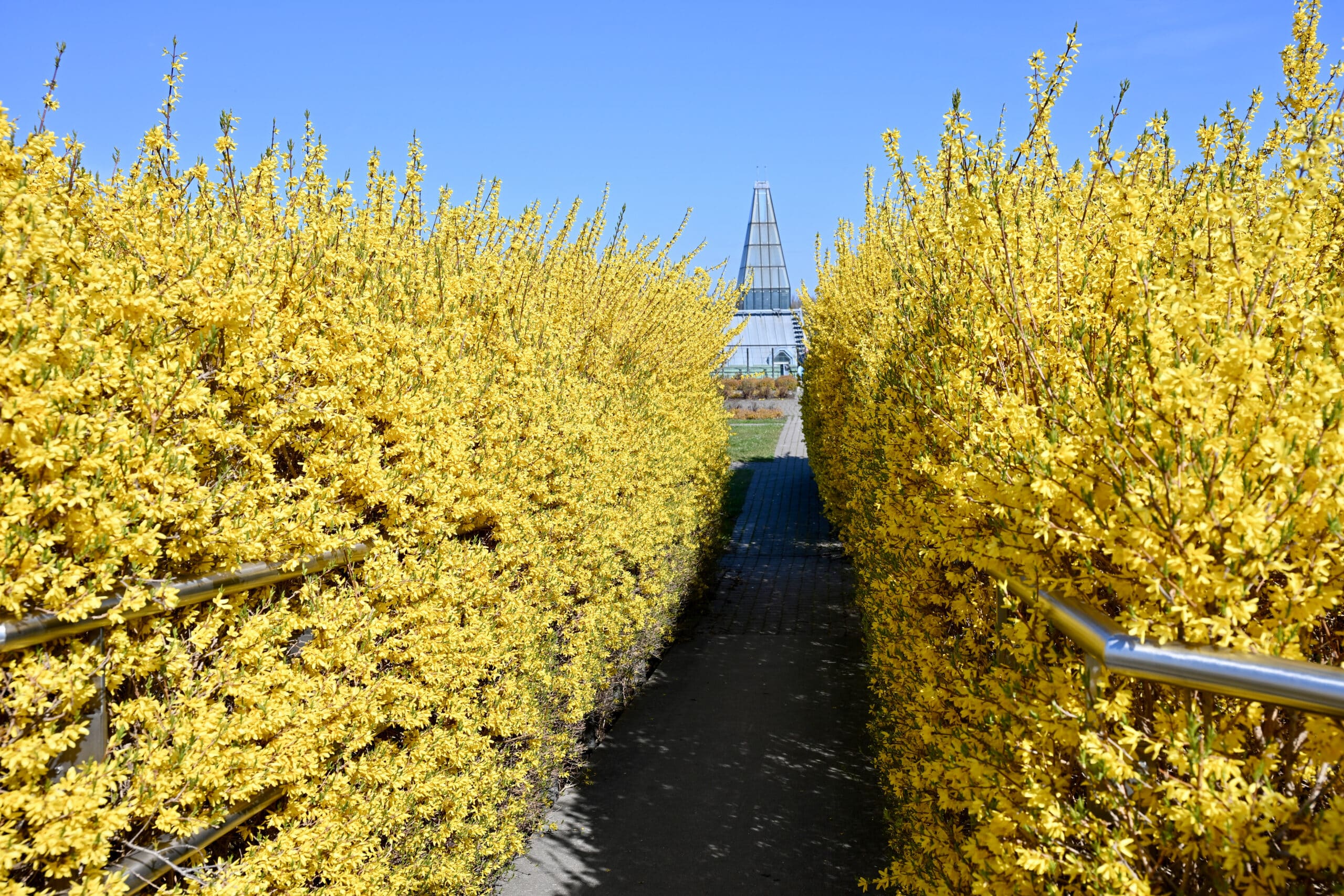
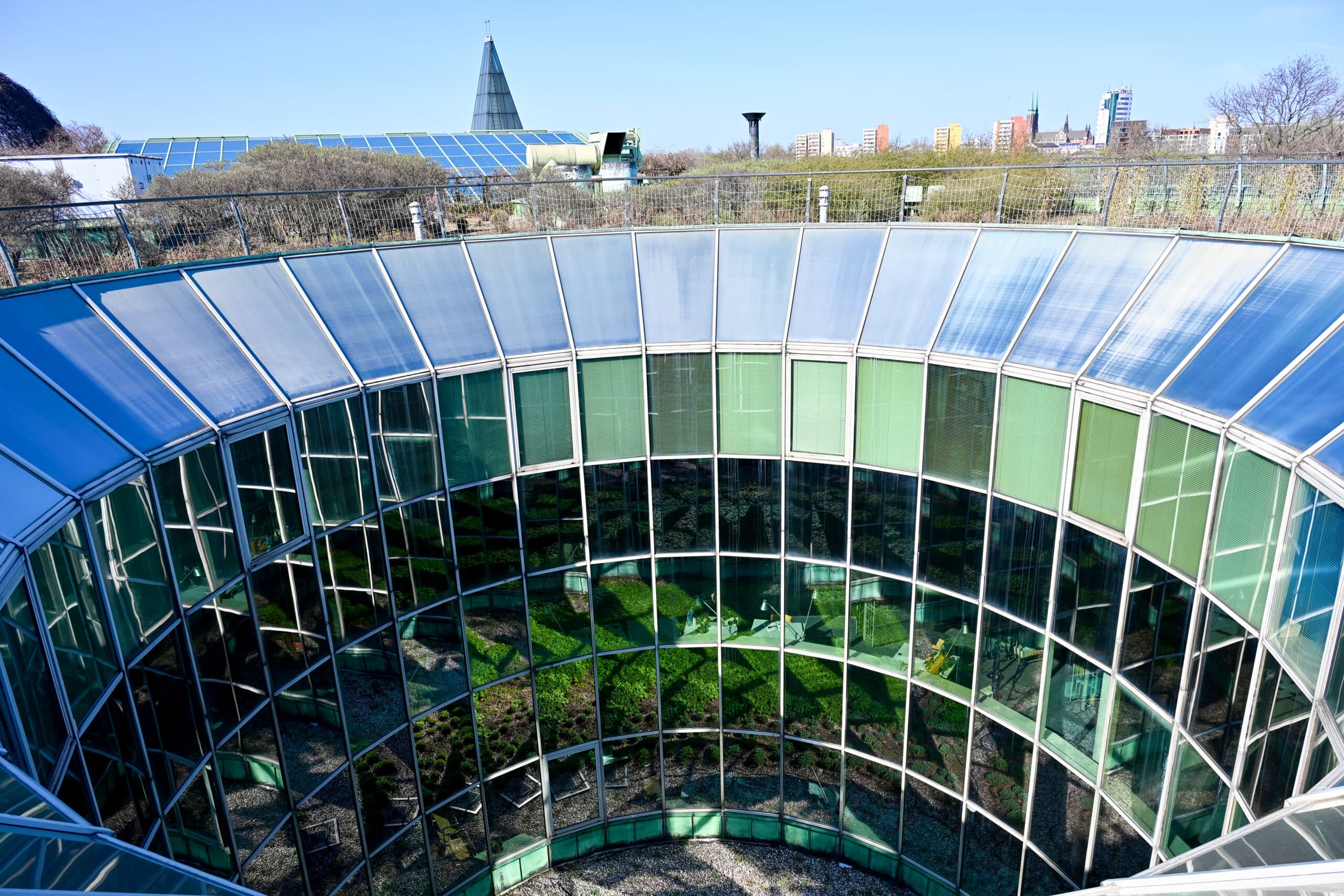
University detour – a 13-minute walk east towards the river brings you to the Warsaw University Library with a lovely 2000 square meter rooftop garden (photos below) offering lovely views over the Vistula River. It’s a peaceful spot to take a restful break from sightseeing. Open between April and October. Enter from the river side of the building.
The Presidential Palace stands next to Café Bristol on The Royal Way. These are the only two buildings on this road which were not destroyed in the WWII bombings. Apparently, Café Bristol was protected by the Nazis as its officers drank and stayed there and used a tunnel linking it to the Presidential Palace to get to work during the time they occupied the building.
Before this, Chopin is said to have given his first performance in the Presidential Palace at the age of 8. An equestrian statue of Prince Josef Poniatowski, a Polish military officer who served in the French Revolutionary and Napoleonic Wars, stands in front of the Palace.
Marie Sklodowska was born in Warsaw in 1867, leaving Warsaw for Paris when she was only 19 to help her sister who had got into debt living in France. Marie married a French man, taking the surname of Curie.
Marie Curie was the first woman to win the Nobel Prize and, even better than that, she was awarded 2 Nobel Prizes in total, the most for any woman. You will see a plaque on a building to the right-hand side of the road commemorating where she once conducted some of her earliest experiments.
So, it’s not all about Chopin on your Warsaw city break!
St Anne’s Church marks the official start of The Royal Way (or end, depending on which way you are walking), just before the start of Warsaw’s Old Town. The church escaped major damage during WWII. It has a bell tower standing separately to the church, but more on that later…
Warsaw initially started life here as a settlement built around a Castle Tower in the 14th century, and grew from there, eventually extending north beyond the city walls. Sadly, virtually everything in this area of Warsaw was flattened and destroyed by the bombings of World War II.
The Old Town (Stare Miasto) was later reconstructed, using as much of the original brick as possible, salvaged from the rubble of the destroyed city. The reconstruction is so accurate, that it was given UNESCO World Heritage Site status. If you didn’t know it was a reconstruction, you would never guess this was the case – it’s seriously impressive and very pretty.
Castle Square is an attractive large square in front of the Royal Palace (see below) which hosts Christmas markets in winter and jazz music in the summer months. At the top left of the square, you will see a tall 22-meter column with a statue on top.
Statue of King Sigismund III Vasa – this is the King who initiated the move of Poland’s capital from Krakow to Warsaw in 1596. The King moved the capital because Warsaw was geographically more central in the Polish-Lithuanian Commonwealthwhich existed at the time; it also put him closer to Sweden (his father was Swedish) and the Baltic Sea trade routes.
From Castle Square you can walk through the Old Town streets full of different architectural styles reflecting the stages of the city’s development (all rebuilt of course).
Just off Castle Square, St John’s Cathedral stands on the site of an earlier wooden version. Its Gothic shape came during postwar reconstruction. It has lovely angels on the doors.
All roads in the Old Town end up at the stunning Old Town Market Square full of colourful tenement houses – practically everyone is rebuilt apart from a row of 3 buildings (a trio of yellow, pink and green houses) which had recently been fire-proofed just before the WWII bombing raids and therefore managed to survive.
In the centre of the Old Town Market Square is a mermaid statue known as Syrenka – a fierce mermaid brandishing a sword (see Cover Photo). Syrenka is a symbol of the city. The original statue is in the Museum of Warsaw. If you have time on your Warsaw city break,then the Museum of Warsaw gives a fascinating overview of the city’s history.
Before stopping for lunch, walk out of the top of the market square until you reach the Barbican Walls so that you can see the outer perimeter of the Old Town.
Whilst there are plenty of places around the Old Town Market Square to grab a bite to eat and watch the world go by, an alternative suggestion is to retrace your steps to The Royal Way and drop into Gosciniec to try classic Polish dumplings – Pierogi.
It’s a very casual eatery where you can sit outside if the weather’s good. We tucked in to a ‘Polish cuppa soup’ (chicken noodle), followed by a variety of pierogi (boiled and fried), and pork goulash with fried potato cakes. When in Poland!
Once you’re nicely refreshed, then it’s time to tour the Royal Castle and admire its reconstructed grand rooms. The undeniable highlight is the room of 22 Caravaggio paintings. These paintings were invaluable as a reference guide for the reconstruction of the city after WWII bombings, so that the rebuilt buildings were as historically accurate as possible.
Make sure to work off some pierogi calories by climbing the 150 steps of the bell tower of St Anne’s Church for superb views over the Old Town rooftops. Note that the Bell tower stands separately to the church.
If you wish to continue exploring what Warsaw has to offer, then from St Anne’s Bell Tower, you can easily walk down to the Vistual Boulevards which are full of restaurants and bars, some floating on the Vistula River (15 minute walk).
Alternatively, you might be feeling full of history sites and facts by now, so maybe think about heading back to your hotel and eating locally for a low key night.
We enjoyed a meal at Spacca Napoli, around the corner from the IHG InterContinental Hotel. Whilst not Polish, it was a good neighbourhood Italian, perfect for the end of a tiring day of sightseeing or late arrival day meal.
There was a funny moment when my Son, who has a severe nut allergy, showed the waiter his Polish translation Allergy Card, and the waiter replied to say that he couldn’t read the Polish as he was from Bologna!
You can’t escape the impact of World War II on a Warsaw city break, and the city is full of excellent museums detailing the different historical periods. However, on a short Warsaw city break, you can’t visit them all, so you might need to choose between some of the main ones, for example, between the Warsaw POLIN Jewish Museum and the Warsaw Uprising Museum.
The Warsaw POLIN Jewish Museum is an impressive museum offering an insight into 1000 years of Jewish history in the city of Warsaw. By 1939, there were 375,000 Jews in Warsaw; only New York City had a larger Jewish population. The POLIN sits at the heart of the old Warsaw Ghetto, the area where the Jews were forced to live during the German occupation of the city. There is a permanent exhibition about the Warsaw Ghetto in the museum.
The Monument to the Ghetto Heroes by Nathan Rapoport (1948) is located outside the POLIN Jewish Museum and commemorates the Ghetto Uprising in 1943 by Jewish people contained in the Warsaw Ghetto against Nazi efforts to transfer them to concentration camps.
Note – this is a different uprising to the Warsaw Uprising which took place a year later in 1944 (see below).
The Warsaw Uprising Museum traces the build up to, and events of, a night in August 1944, when an uprising was initiated to try and take back control of Warsaw from the Germans. Polish insurgents built barricades using paving slabs and used underground sewers as communication channels.
They hoped that Allies would come to assist them, but the allies did not come. In fact, Stalin ordered his Red Army generals not to assist, even though Russian troops were waiting just outside the city. After 63 days of fighting, the insurgents were forced to surrender. Around 200,000 Poles (including 16,000 insurgents) were killed during the fighting.
The Warsaw Uprising Museum is housed in a former tram power station, with 5 floors of exhibits and a huge life-sized reproduction of a B-24 J Liberator plane (used to drop supplies to the insurgents) at its centre.
From the moment you set foot through the doors the museum is totally immersive – dark, cramped, noisy and claustrophobic (on purpose) with the sound of a heartbeat pulsing and gun shots firing. It’s on the verge of being over-stimulating, but that’s the point – to begin to recreate the pressure cooker feeling and danger in the city at the time of the uprising.
There is a lot of information to take in and to get the best out of your visit, it might help to know something about the Warsaw Uprising before you go. That said, it is an excellent museum to explore on your Warsaw city break.
Strangely, the Warsaw Uprising Monument is not located near the Warsaw Uprising Museum so don’t expect to see it here – you’ll find it 45-minutes’ walk away in Krasinski Square.
The Warsaw Uprising Monument features in a scene from the 2024 award-winning film ‘A Real Pain’ starting Jesse Eisenberg and Kieran Culkin. So, if you’re planning a trip to Poland, then try to watch this before you visit.
Note – there is a third monument in Warsaw commemorating those who fought and died in WWII. The Monument to the Heroes of Warsaw commemorates everyone who died due to the war between 1939 and 1945. This comprises a tall column with a reclining lady on top, raising a sword above her head; it is nicknamed ‘the Warsaw Nike’ as it resembles the Nike swoosh shape.
The Norblin Factory (Fabryka Norblina) is just a short walk from the Warsaw Uprising Museum in the Wola District making it a good spot for lunch on your Warsaw City Break, and good place to decompress after difficult history lessons.
Originally the Norblin Factory made metal goods (bronze and silver-plated items), but today offers a buzzing space full of restaurants, multiplex cinema, a brewery, and Food Town, Warsaw’s largest food hall.
Food Town has retained many original features such as iron tracks on the floor previously used for moving goods.
Walk off your lunch on a 15-minute walk east to the Palace of Culture and Science (PkiN) sitting proudly in the middle of a smart park area. This building was given to the city of Warsaw in 1955 by the USSR. This was during the period when Poland was an independent communist state but operating under heavy Soviet influence – effectively a satellite state of the USSR. The Soviet era of Poland ran from 1944 to 1989.
The Palace of Culture and Science is often referred to as an ‘unwanted gift’ and debate still rages as to whether it should be knocked down or not.
All that said, the Palace of Culture and Science is a very impressive building and fine example of brutalist architecture, designed on the grand scale of other Soviet-era skyscrapers. It has 3,288 rooms and is one of the tallest buildings in the city at 237 meters tall, visible throughout the cityand difficult to avoid on any Warsaw city break. If you want to explore the interior architecture then you need to book a guided tour through the Tourist Information Office, located in an office around the bottom of the tower.
Enter the Palace of Culture and Science from Marszalkowska Street (the building has several entrances) and go down the steps to the Lower Ground Floor. Take the elevators from the Lower Ground Floor up to the 30th floor Observation Deck for great views over the city.
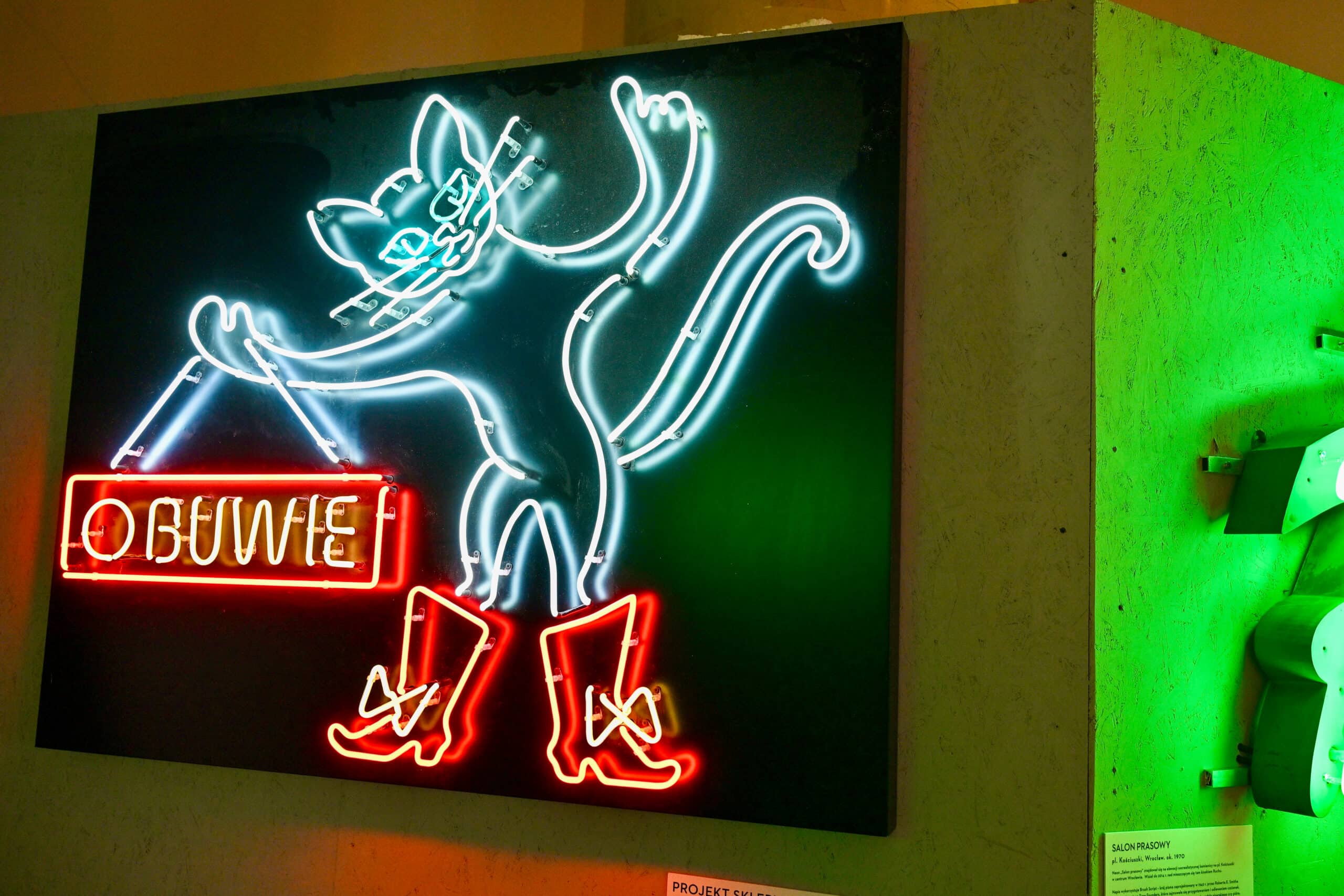
After admiring the views on the Observation Deck, head to the Neon Museum on the 4th Floor, also located inside the PKiN.
This is the first and only Neon Museum in Europe, ‘dedicated to the documentation and preservation of historical Cold War era neon signs’. The museum’s collection of historic signs was started in the early 2000s and today there are around 100 signs on display in the museum. These pieces of electrographic art were seen as ‘bright spots’ in an otherwise drab communist Warsaw cityscape and were much loved as a result.
This reminded me of the Neon Museum in Las Vegas, although the neon signs in the museum were displayed outside in the Neon Boneyard.
The PKiN mega structure is also home to a Technology Museum, theatre, multiplex cinema, cafes, offices and residential accommodation.
Outside the PKiN, you can find the Honorary Grandstand on which Soviet-era dignitaries stood to watch soldiers and tanks parade in front of them in Parade Square.
By now, you might like to let off some steam after a day of heavy war history on your Warsaw City Break, so what better way to do this than on a tour of the Polish Vodka Museum, with vodka tasting. Book your visit in advance through Get Your Guide, then take a taxi across the river to the Praga neighbourhood.
The Polish Vodka Museum is in the redeveloped Koneser Factory where vodka was once distilled and flagship brands – Luksuscwa and Wyborowa were produced.
Our tour was very informative and enjoyable, with an entertaining English-speaking guide. She talked about the history (yes more history!) of vodka, the different varieties, it’s production and branding.
Polish Vodka Museum“Vodka makes everything better. (It was) perceived as an item of universal household application – ingredient of paint, varnishes, inks, stain remover, insect repellent…even used as fish bait" .
There is an impressive display of vodka bottles towards the end of the tour, some of which are very old indeed. At the end of the tour, we sat around a table in a special tasting room and sampled 4 types of vodka, before having an opportunity to purchase favourites from the shop.
If you want to carry on with your vodka journey, there is a bar on the 3rd floor with an outdoor terrace and views over the trendy industrial redevelopment of shops, restaurants and galleries. The whole Praga area is enjoying a period of gentrification although it still feels grittier and more creative than that the Old Town areas, with artists’ studios and large pieces of street art.
Our vodka tasting set us up nicely for dinner at Zrodlo, small but perfectly formed restaurant in Praga. It has a cool retro décor with orange paint, warm wood and lots of plants. The food was very good, and the wine choices even better (‘See you in Hell’). It’s in the Michelin Guide and working towards a star.
If you have a third day to enjoy on your Warsaw city break, then plan to spend time in the gardens and palaces of Warsaw as the perfect anecdote to the city’s heavy war history.
In the centre of town, between the Palace of Culture and Science and Warsaw’s Old Town, you’ll find the Saxon Garden (Ogrod Saski). This was the city’s first public park.
Bordering Saxon Garden is the large ceremonial parade ground known as Pilsudski Square which is the location of the city Tomb of the Unknown Soldier. Try to time your visit right to catch the Changing of the Guard ceremony, on the hour of every hour, each day.
Then head to Lazienki Park to enjoy a picturesque stroll through the park, searching for the key sights, such as the Palace on the Isle, White Pavilion, and Chopin Monument. There are free concerts at the Chopin monument at 4pm on Sundays, from May to September.
Lazienki Park is a good 30-minute walk from the city centre, and so you might want to grab a taxi to the park entrance or take the Line 116 bus – then you can save your energy for sightseeing in the park, all 76 hectares of it. The park was designed for a nobleman back in the 17th century and extended by Poland’s last monarch and became a public park in 1918.
Wilanow Palace is a former royal palace, built between 1677 and 1696 for the King of Poland and Grand Duke of Lithuania John III Sobieski. It was effectively his summer palace.
Book a tour of Wilanow Palace (‘Warsaw’s Versailles’) through Get Your Guide and explore the Royal Apartments, Baroque interiors and palace gardens.
Hopefully by the end of your Warsaw City Break, you will feel more knowledgeable about the trials and tribulations which this capital city has endured.
As well as being impressed with the incredible reconstruction of the Old Town, I particularly enjoyed the mix of old and new in Warsaw. Being a sucker for a factory revamp and industrial architecture, I loved the vibe of the Norblin Factory and Koneser Factory where the Polish Vodka Museum was based. Annoyingly, I discovered too late that there is another such redevelopment called the Elektrownia Powiśle, just around the corner from the Warsaw University Library building – next time!
Warsaw felt safe, spacious and a little bit cool – somewhere I would be happy to explore further.
Thank you so much for reading my blog. For more stories, itineraries, and advice, check out my Related Posts and sign up to receive my blogs by email.
If you have a blog-related question, please do ask in the comments box below and I'll try to help.
A little request: if you use my photos, please credit Love Travel Planning on your social media or give me a shout out on Instagram @lovetravelplanning as I am growing my website. Huge thanks.
Join thousands of travelers looking for inspiration from our FREE Planet Travel newsletter!
Your step-by-step framework for stress-free, unforgettable trips — from first idea to final itinerary.