


We visited Seville in November and enjoyed some glorious sunny weather for most of the week; however, sadly it was raining on our last day. Whilst Seville is a wonderful city to enjoy outdoors, with bright yellow and white painted buildings, oranges in the trees, and horse and carriage rides, there are also some great things to do if the weather takes a turn for the worst, starting with a trip to the wonderful Triana Market.
Table of Contents
Barrio de Triana (Triana Neighbourhood)
The Barrio de Triana sits on the east banks of the Guadalquivir River, across the Triana Bridge (or Puente de Isabel II bridge), easily accessible from the rest of the city. It is a working-class area of Seville with lots of character. We found it less touristy than other areas of Seville – like the Spanish equivalent of Trastevere in Rome (LINK).
The neighbourhood has lots of history and, due to its location on the Guadalquivir River, the area was home to many of the sailors who sailed from Seville to the continent of America when it was discovered.
Triana is known as the birthplace of Flamenco and over the years has produced some famous flamenco singers, guitarists and dancers, and also bullfighters. Funnily enough we spotted one of the flamenco dancers from the show we watched at the Museo del Baile Flamenco, just going about her business the day after the show.
The area has also been a hot spot for potters and the production of Azulejos tiles (ceramics with blue painting designs) and other pottery, so it is a fascinating area to wander around and explore. However when it’s raining…
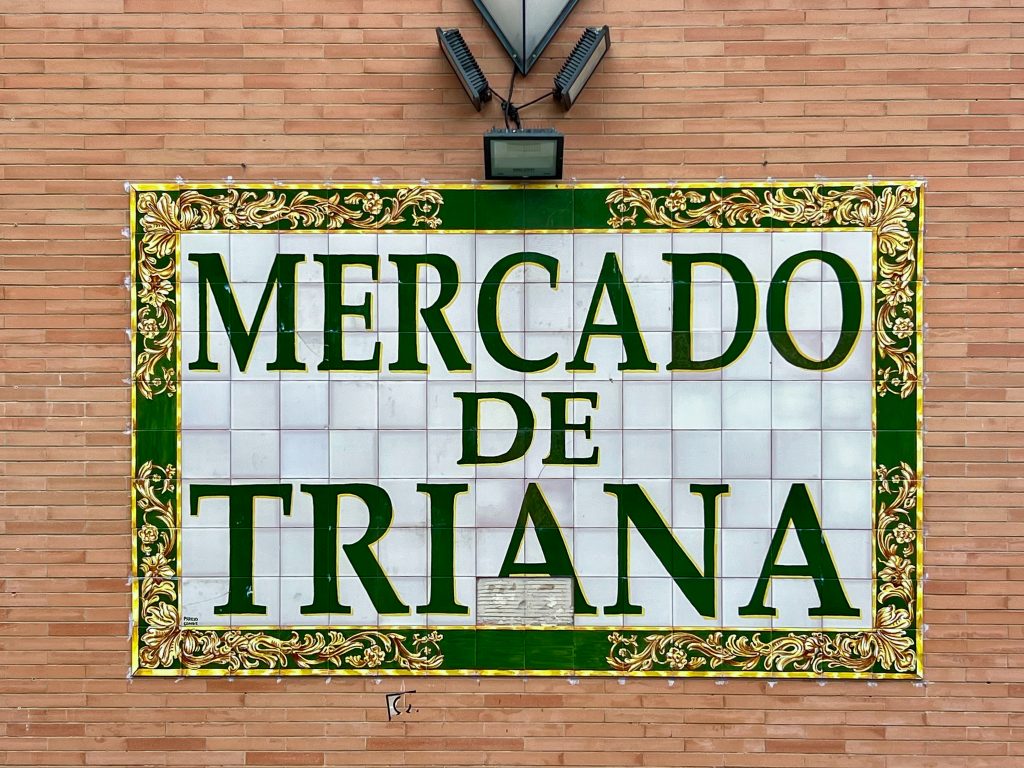
Triana Market (Mercado de Triana)
This lively covered market was opened in 2001, replacing the original one from 1823. It is built on the foundations of the Castle of St George (Castillo de San Jorge) which was linked to the Spanish Inquisition – you can visit the Museum of Castillo De San Jorge which is located directly next to Triana Market.
Triana Market has over 100 food stalls (fruit, veg, meat, fish, crafts) and small eateries, which operates daily from 9.00am until 2.00pm (except on Mondays). Locals will come early to pick up their fresh produce and so try to visit early to catch the real buzz of the market.
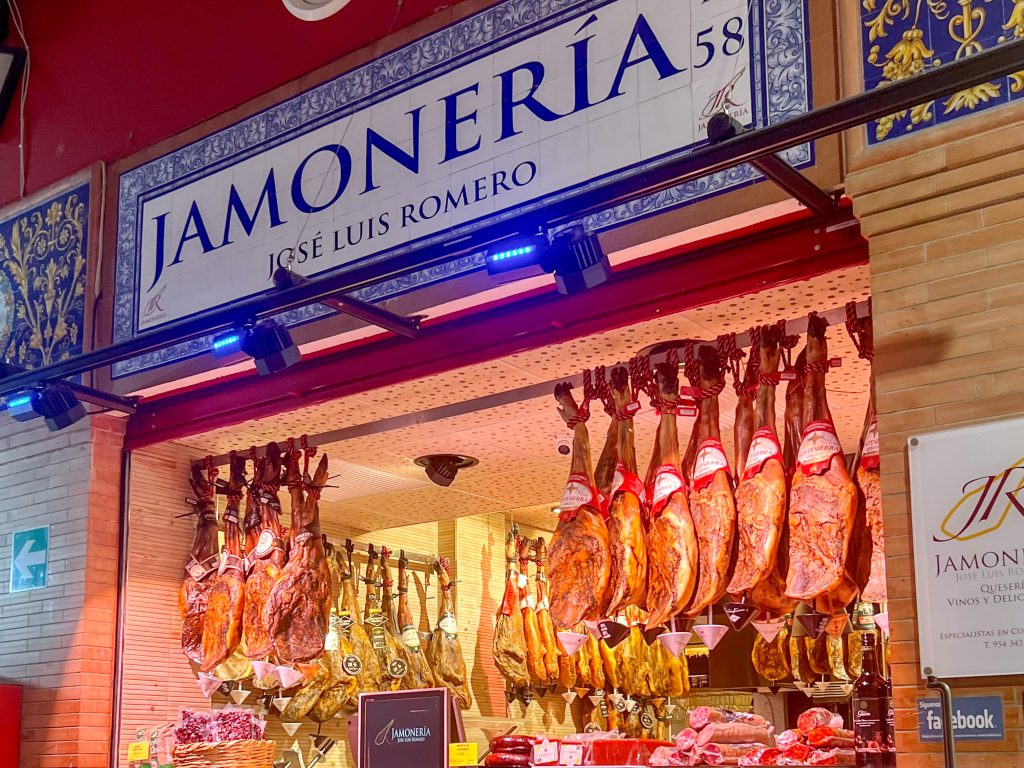
We arrived for 9.00am to grab coffee and a pastry from one of the stalls. Whilst eating breakfast along with the locals and watching the world go by, we witnessed a local man buy a live langoustine (small lobster) and eat it whilst it was still moving – not for the faint hearted!
Taller Andaluz de Cocina (cookery school)
We had pre-booked a Spanish Cooking Class at Taller Andaluz de Cocina inside Triana Market via Get Your Guide.
The Cookery School takes up 2-3 stalls with the sides of the stands left open to the public, so people can watch the cooking action as they pass by. Obviously, we hadn’t known it would be raining when we booked so the timing of it worked out quite well.
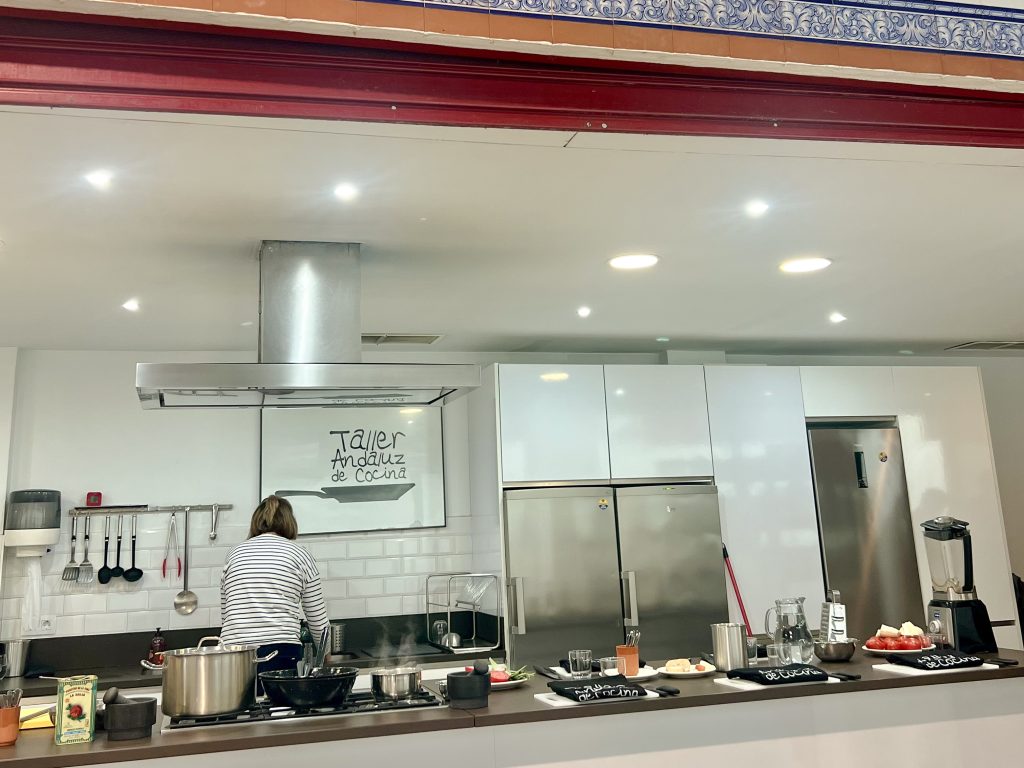
Our cooking session started with a tour of the market by one of the team, to explore the foods that we would be using in the cooking – saffron, pimentos pepper, olive oil, and other local produce such as iberico jam and sherry. The cookery school enabled us to get a discount on any products that we wanted to buy.
Then we got to work on the following dishes:
- Salmorejo – a delicious cold creamy tomato soup (which uses no cream!).
- Espinacas con Gababzos – spinach with chickpeas made super tasty with Pimenton pepper and cumin.
- Authentic Paella – with no chorizo, fish or onion in sight.
- Granita style pudding – lemon sorbet, mint and cava blitzed together. Delicious!

Our hosts offered us Sangria whilst we were working, so we had to be careful not to overdo it as those knives were very sharp!
I would highly recommend this course and the Cookery School. The leader was excellent and we thoroughly enjoyed the communal cooking experience and learning how to make authentic Spanish dishes.
Tile and ceramics shopping
Behind Triana Market is a cluster of lovely tile shops which you can explore to pick up some ceramics or tiles as souvenirs.

Museum of Ceramics (Centro Cerámica Triana)
You will also find the Museum of Ceramics (Centro de la Ceramica), a museum about the craft and the industrial processes used in making the tiles and ceramics. It is housed in a former Ceramics Factory with exhibits over two floors. The featured photo is of the crazy Ceramics Museum facade!
Interesting to note that almost any tile that you see throughout the city, including those from the stunning Plaza de España will have been made here in Triana.
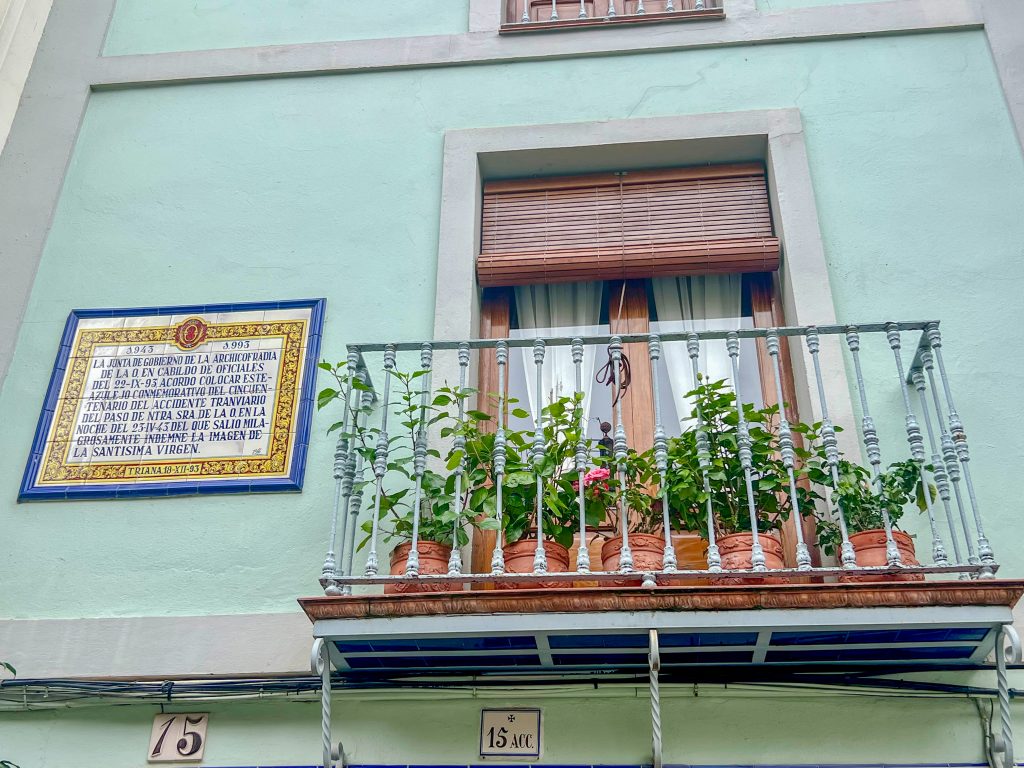
Siesta time!
As sangria had been consumed during our cookery course, we decided to return to the hotel for a siesta and prepare ourselves for a Tapas Bar Crawl in the evening.
If, however, you wish to keep exploring the Barrio (and it’s not raining), then you could visit the:
- Santa Ana Church (1276) – apparently children who are baptised here will received a good flamenco voice!
- La Capilla de los Marineros Church – the Chapel of the Sailors has a statue of the Virgin Esperanza de Triana which is carried across the city to Seville Cathedral during Semana Santa (Holy Week) during April.
Tapas Bar Crawl
Calle Betis
You could start your tapas bar crawl on the colourful boulevard of Calle Betis which runs along the Guadalquivir River and is filled with restaurants and bars, venues with lively music. Whilst it promises great views in the evening, sadly for us it was not the case because of the rain, so we will return another time!
We headed further into the barrio and made stops at:
- Bar El Tejar – a convivial bar for drinks
- Bar Las Golondrinas on Antillano Campos – notable for its Pintas de Solomilo (grilled pork loin), but don’t miss the radishes or the funny toilet in the corner of the room with a big window so you could see in!
- Abaceria El Mercader de Triana – a lovely little tapas bar with delicious modern and traditional dishes and a very hospitable host.
- There were others but these were our favourites on our tapas bar crawl.

Book a Flamenco Show in Triana
As the home of flamenco, we should have booked a flamenco show in Triana, but decided not to as we had been to one at the Museo del Baile Flamenco in the Santa Crus area and it felt too soon to repeat the experience.
However, Teatro Flamenco Triana and Baraka Sala Flamenca in Triana come highly recommended if you want to end your day in Triana with a dance show.
So, with a bit of luck, you won’t even notice that it was raining on your day in Triana!
Thank you so much for reading my blog, I hope you found it useful?
For more stories, itineraries, and advice, check out my Related Posts and sign up to receive my blogs by email.
If you have a blog-related question, please do ask in the Comments box and I’ll try to help…
Request please – if you use my photos, then please credit Love Travel Planning on your social media or give me a shout out on Instagram @lovetravelplanning as I am growing my website. Huge thanks.
Enjoy your travels!


Leave a reply
You must be logged in to post a comment.