Rated 4.5 out of 5
Blue sky in background. Green trees with yellow coloured oranges sin the bottom left. Moorish style tower in the left.

Seville City Break With Friends: 10 Reasons To Love It & What To Know Before You Go

If you’re visiting Seville for the first time, you’re in for a treat! You’ll discover a beautiful city with heaps of history, stunning architecture, incredible food and strong traditions. It’s also very easy to explore and find your way around.

We spent four nights in Seville in November, two couples on a city break with friends, and it’s now my favourite Spanish city. Here’s how we spent our days, with links to the full guides for each one, plus ten good reasons to love Seville and some practical information to help you plan your visit.

⚡ Overview

Four nights is a lovely length for a first Seville city break. Spend a day walking from Plaza de España to the Setas, a day on the Alcázar, the Cathedral and Barrio Santa Cruz, a day by the river with a flamenco show in the evening, and a day across the river in Triana, with tapas every night.

Table of Contents

Things to do in Seville: Our 4 day itinerary

There are so many things to do in Seville that it’s hard to know where to start. This is how we split our four days, with the big sights spread out and plenty of time for coffee, siestas and tapas.

Our four days in Seville with friends, from Plaza de España to the tapas bars of Triana.

  1. Day 1

    A self-guided walk to the Setas

    Morning

    Parque de María Luisa and Plaza de España

    Lunch

    On the walk

    Afternoon

    Through the centre to the Setas

    Evening

    Dinner at El Rinconcillo

    Jump to day 1 details

  2. Day 2

    The Alcázar, the Cathedral and the old town

    Morning

    Guided tour of the Real Alcázar and Seville Cathedral

    Lunch

    Tapas at Casa Morales

    Afternoon

    Barrio Santa Cruz and shopping

    Evening

    Dinner at Sobretablas

    Jump to day 2 details

  3. Day 3

    Convent biscuits, the river and flamenco

    Morning

    Biscuits at San Leandro, the bullring and the Torre del Oro

    Lunch

    Lunch overlooking the river

    Afternoon

    Siesta

    Evening

    Flamenco show at the Museo del Baile Flamenco, then tapas at Bar Estrella

    Jump to day 3 details

  4. Day 4

    Triana, a cooking class and a tapas trail

    Morning

    Cookery course at Triana Market

    Lunch

    In Triana

    Afternoon

    Ceramics museum and tile shops, then siesta

    Evening

    Tapas trail in Triana

    Jump to day 4 details

Rain on the forecast? Save Triana for that day. The market, the cooking class and the ceramics museum are all indoors.

Day 1: A self-guided walk from Plaza de España to the Setas

We spent our first full day on foot, which is the best way to get your bearings. We walked through Parque de María Luisa to the tiles and canal of Plaza de España, then made our way through the centre to the giant wooden ‘mushrooms’ of the Setas, before dinner at El Rinconcillo, the city’s oldest bar. Our self-guided Seville walking tour has the full route, with timings and a map.

Day 2: The Alcázar, Seville Cathedral and the old town

We’d booked a guided tour of the Real Alcázar and Seville Cathedral for our second day, then spent the afternoon exploring the narrow streets of the old town, with tapas at Casa Morales and a spot of shopping. For something different, we had a sit-down dinner that evening at Sobretablas. Read more in our guide to Barrio Santa Cruz, the Cathedral and the Alcázar.

Day 3: Convent biscuits, the river and a flamenco show

Day three started with a hunt for the convent biscuits at San Leandro. Then we headed down to the river to visit the bullring and the Torre del Oro, with lunch overlooking the river. After a siesta, we went to a show at the Museo del Baile Flamenco, followed by more tapas at nearby Bar Estrella.

Day 4: Triana, a cooking class and a tapas trail

It rained on our last day, so we crossed the river to Triana for a cookery course inside Triana Market, then the ceramics museum and tile shops. After another siesta, we finished the trip with a tapas trail around Triana’s bars. See our guides to Triana Market and our cooking class and the best tapas in Seville.

Why visit Seville? 10 reasons to love it

1. Seville oranges

Although I’d heard of Seville oranges, for some reason I hadn’t expected to see oranges hanging in the trees all over the city. There are tens of thousands of orange trees lining Seville’s streets and squares.

When we visited in November, the oranges were still yellow and unripe. They ripen over the winter, filling the air with a wonderful citrus scent, and the city’s teams pick them in the winter months. In spring, the blossom (azahar) takes over.

If you visit when the oranges are falling off the trees, don’t be tempted to eat them, as they’re very bitter, which is why they make excellent marmalade!

Interestingly, we learnt on our cooking course at Triana Market that the Spanish don’t really eat bitter marmalade like the Brits, preferring to use the oranges for oils, perfumes, cooking and orange wine. At least we get the exports in the UK. I love Seville and I love marmalade, yum!

2. Seville yellow

So many buildings in Seville are painted a deep yellow, a colour rooted in the history and culture of the city, and also the central stripe of the Spanish flag.

The colour is said to represent warmth, joy and energy, and I think it does. You instantly feel happier or more energised when surrounded by such a strong colour, which makes many of the buildings very striking.

Red and yellow painted church with religious painting on the outside. White clouds and blue sky
Buildings painted the colours of the Seville flag

3. UNESCO heritage and Moorish architecture

Seville has three buildings in the city centre that together make up a UNESCO World Heritage Site:

The Real Alcázar: The royal palace complex, with gardens made to resemble paradise on earth.

Seville Cathedral and the Giralda: The world's largest Gothic cathedral and its bell tower.

The Archivo de Indias: The General Archive of the Indies.

Looking upwards through a Moorish arch to the pale blue sky beyond. A row of arches is visible around what appears to be a square
Looking into the Patio de las Doncellas, Real Alcatraz, Seville

For centuries, Seville was ruled by the Moors, Muslims from North Africa who brought their own style of architecture to the region. When the Christians took over, they kept some of the buildings and Moorish features, which you can still see in the city, for example:

The Alcázar: It cleverly combines Christian and Islamic architecture in a style known as Mudéjar.

The Giralda: The Cathedral's bell tower was once the minaret of the city's mosque, with a Renaissance bell chamber added on top.

The Torre del Oro: Another Moorish structure, in prime position on the Guadalquivir River.

The Alcázar was particularly beautiful and is a ‘don’t miss’ on any trip to Seville. Our guide to Barrio Santa Cruz, the Cathedral and the Alcázar has the details.

4. Terrific tiles

There’s a long tradition of ceramics in Seville, mainly centred on the working-class neighbourhood of Triana, which has been a hotspot for potters and for making azulejos (painted ceramic tiles) for centuries.

Islamic tiles are known for their geometric shapes and key colours of green, black, blue, white and yellow. The later Christian tiles made in Triana showed people, places or plants rather than geometric patterns, and used other colours too.

You’ll see tiles all over the city, such as at the stunning Plaza de España and in the Alcázar. If you want to know more, visit the Centro Cerámica Triana, the ceramics museum in Triana. The tiles are a reason to love Seville, and to love Spain!

Red brick building with a row of tiled blue and white balustrades in the middle
Coloured ceramics and tiling all over the city

5. A walkable city

You can take a boat trip on the Guadalquivir River, ride in a horse-drawn carriage, or catch the metro or tram, but the best way to explore Seville is on foot, and it’s a very walkable city.

My self-guided walking tour of Seville is a great introduction to the main sights, leaving plenty of time for coffee and ice cream stops.

6. Flamenco fun

Flamenco is said to have been born in the Triana neighbourhood of Seville, so there are lots of excellent flamenco bars where you can see a show. The intensity of the dancing and the guitar playing is something else. Even if you can’t understand the Spanish to know what they’re singing about, the performances are still very powerful and go beyond words.

We saw a show at the Museo del Baile Flamenco in Santa Cruz, where you can also learn about the history of this dance art form, with a glass of sangria!

7. Tapas treats

Seville is awash with top-quality tapas, so make sure you try a few tapas bars on your trip and sample lots of different dishes.

There are so many options that you could make it a full-time project for your time in Seville. Have fun joining the locals and ‘tapear’, going from bar to bar for drinks and tapas. Here are the best tapas bars in Seville we tried.

White rectangular plate on a table top, filled with a heap of fried green padron peppers
Delicious padron peppers!

8. Rooftop bars

There are many rooftop bars in Seville, the perfect place to catch a breeze at the end of a hot day and enjoy the views over the city. We visited the rooftop bar at the Casa de Indias hotel, which has a lovely view over the Setas de Sevilla (the ‘mushrooms’).

Another noteworthy rooftop bar is Pura Vida Terraza, on top of a hotel right beside the Cathedral, overlooking the Giralda.

9. Convent biscuits

Several of Seville’s convents sell biscuits and sweets baked by the resident nuns, which you can buy at certain times of the day.

There’s a rather secretive way of buying them. You place your money on a revolving wooden hatch, turn it round, wait, and then hopefully the hatch revolves back to reveal your biscuits.

We succeeded in buying biscuits this way at the Monasterio de San Leandro, near Plaza de San Ildefonso, on our third morning.

10. Perfect to visit with friends

Seville is a great place to visit with friends, as eating tapas-style is very sociable and perfect for sharing. Add sunset drinks at one of the rooftop bars and you have a wonderful evening for chilling and chatting with friends. For more excitement, add a flamenco show or take a flamenco lesson for a few laughs.

Other ideas include sharing a horse-drawn carriage for a tour around town, joining a bike tour of the city or taking a paella cooking class in Triana Market, as we did. There are plenty of experiences to share with your friends, make great memories and help you love Seville!

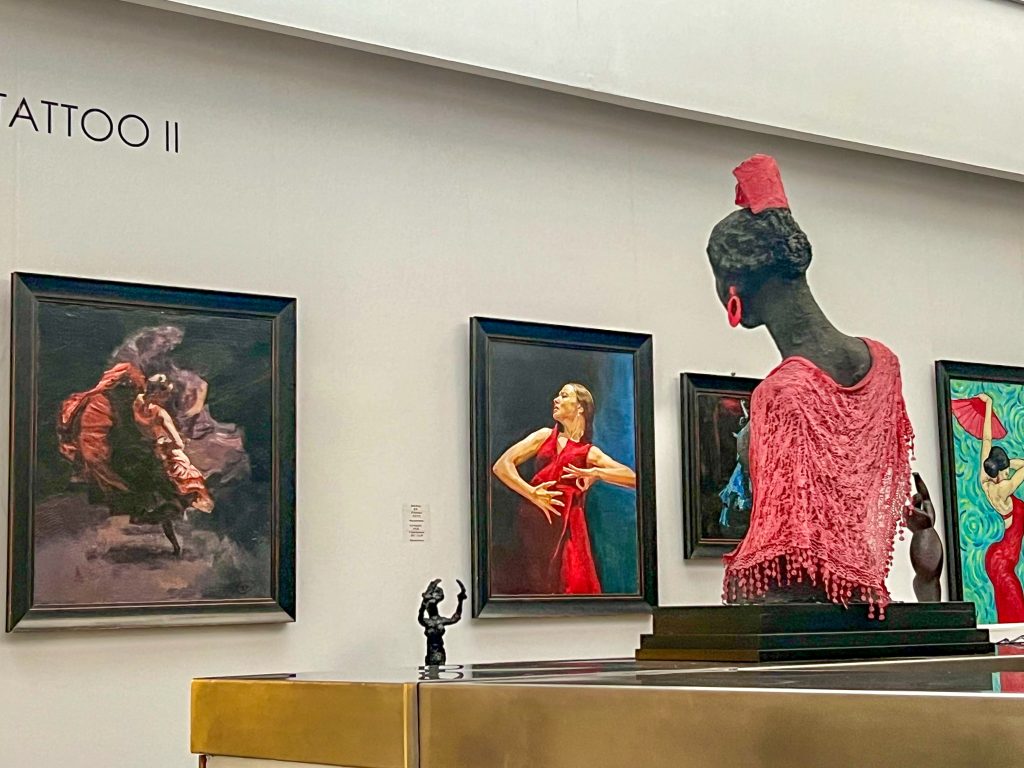
View of museum exhibits which all feature flamenco scenes on the paintings on the wall. To the right hand side is a sculpture wearing a pink lace shawl (looking away from the camera)
Exhibits at the Museo del Baile Flamenco

Where is Seville?

Seville lies in southwest Spain, inland on the banks of the Guadalquivir River rather than on the coast. It’s the capital and largest city of Andalusia, the large southern region that also includes Córdoba, Granada, Málaga and Cádiz. The Atlantic, around the Bay of Cádiz, is about an hour and a half away by road.

  • Time zone: Spain is one hour ahead of the UK all year round (GMT+1 in winter and GMT+2 in summer).

How far is Seville from Córdoba, Granada and Madrid?

Santa Justa, Seville’s main station, has trains to all of these. Journey times vary by service, so check the operator’s website.

Córdoba: About 90 miles by road, with trains taking around 45 minutes to an hour.

Granada: About 160 miles by road, with trains taking around two and a half to three hours.

Málaga: About 130 miles by road, with trains taking around two hours.

Cádiz: About 75 miles by road, with trains taking around an hour and a half.

Jerez: About 55 miles by road, with trains taking around an hour.

Madrid: About 330 miles by road, a drive of around five hours, or about two and a half to three hours on the high-speed AVE.

How to get to Seville from the UK

A direct flight to Seville Airport (SVQ) takes about two hours 45 minutes to three hours. Flights run from London Gatwick, Heathrow, Stansted and Luton, and from Birmingham, Bristol, Manchester, Liverpool and Edinburgh. Which airline flies from which airport can change, so check the airline’s website.

Flying into Málaga is the usual fallback, as more UK airports serve it. The train from Málaga María Zambrano to Seville Santa Justa takes about two hours. Check the operator’s website for a connection that fits your arrival.

Seville Airport to the city centre

The airport is about six miles east of the centre. The EA airport bus, run by Tussam, stops at Santa Justa on its way to Plaza de Armas and takes about 35 to 45 minutes. A taxi from the rank outside arrivals takes about 15 to 25 minutes, depending on traffic.

Arriving by train at Santa Justa

Trains from Madrid and the other Andalusian cities arrive at Santa Justa, on the edge of the old town. The Cathedral is just over a mile away, a flat walk of around 25 to 30 minutes, or a short taxi ride.

When to visit Seville

Seville has distinct seasons, but if you don’t like it too hot, avoid the summer, when temperatures regularly climb well above 35°C (95°F), which makes city sightseeing hard work.

The shoulder seasons of spring (March to May) and autumn (September and October) bring milder weather, although it should still be sunny and warm.

Seville in November

We visited in the first week of November and enjoyed several sunny days (no coat required) and one rainy day, which we spent in Triana. It was a lovely time for a city break, warm enough for walking without the summer heat.

Seville's festivals

Two festivals bring the city alive with people and events, although it will be busy. They are Semana Santa (Holy Week, in March or April) and the Feria de Abril (the April Fair, usually a couple of weeks after Easter). If you visit during the Feria, consider wearing a traditional flamenco-style dress to avoid being the odd one out! Check the dates for the year you’re travelling, as both move with Easter.

Getting around Seville

We found the city very walkable, but then our hotel was right in the centre, near most of the sights. If you need a break from walking, Seville has a tram, a metro line and buses, so it’s easy to get around.

Is Seville a walkable city?

Yes. The historic centre is compact and almost flat, so most sights are a short walk from a central hotel.

Santa Cruz: Right beside the Cathedral and the Alcázar, which are only a couple of minutes apart.

The Setas: About 10 minutes' walk north of the Cathedral.

The river and the Torre del Oro: About 10 minutes' walk west.

Triana: About 15 minutes away, across the Puente de Isabel II.

The cobbles in Santa Cruz are uneven, so wear shoes with a good grip. In November the sun is much gentler than in summer, but the sunny lanes can still feel warm in the middle of the day.

Using the tram and metro in Seville

The MetroCentro tram is a single short line, run by Tussam, from Plaza Nueva out towards Nervión. It doesn’t run to Santa Justa station. The most useful stops for visitors are these.

Archivo de Indias: For the Cathedral and the Alcázar.

Puerta de Jerez: For the river and the Torre del Oro.

Prado de San Sebastián: For city buses and the north side of Parque de María Luisa.

San Bernardo: For Metro line 1 and local trains.

Seville has just one metro line, Line 1. It crosses the river at Plaza de Cuba, stops at Puerta de Jerez and Prado de San Sebastián, then runs out through Nervión. It doesn’t go to the airport. Check the operator’s website for routes and tickets.

Seville buses for visitors

Tussam’s circular bus lines, C1 to C4, loop around the edge of the centre, and the C5 takes a short route through the middle. You can pay for a single journey on the buses and the tram with a contactless bank card, and rechargeable travel cards are also sold. The metro is a separate network, so check how to pay on its own website.

Taxis, bikes and boat trips

Taxis: Seville's white taxis wait at ranks and can also be hailed in the street.

Sevici bikes: The city's bike share has docking stations across Seville and cycle lanes along the river.

River boat trips: Trips on the Guadalquivir leave from near the Torre del Oro and last about an hour.

Horse-drawn carriages: These usually wait by the Cathedral and at Plaza de España.

Check each operator’s website before you go.

In closing

Final thoughts on a Seville city break

There were so many reasons to love Seville, and it's my favourite Spanish city so far. Did I mention that you can pop into the churches to seek sanctuary from the heat and admire the art? Or hear the clip-clop of the horse-drawn carriages around the streets?

If you're planning your own trip, start with our self-guided walking tour on day one and build the rest around the Alcázar, Triana and a few good tapas bars.

Next time, I might visit for the Feria and dust off my dancing shoes!

Love Travel Planning
Thank you for reading

I hope you found it useful

Thank you so much for reading my blog. For more stories, itineraries, and advice, check out my Related Posts and sign up to receive my blogs by email.

If you have a blog-related question, please do ask in the comments box below and I'll try to help.

📸

A little request: if you use my photos, please credit Love Travel Planning on your social media or give me a shout out on Instagram @lovetravelplanning as I am growing my website. Huge thanks.

Enjoy your travels! ✈️
Get Planet Travel

Join thousands of travelers looking for inspiration from our FREE Planet Travel newsletter!

Thanks! Check your inbox to confirm.

FREE GUIDE

The Platinum Travel Planning Roadmap

Your step-by-step framework for stress-free, unforgettable trips — from first idea to final itinerary.

FREE GUIDE

The Platinum Travel Planning Roadmap

Your step-by-step framework for stress-free, unforgettable trips — from first idea to final itinerary.

Get Planet Travel

Join thousands of travelers looking for inspiration from our FREE Planet Travel newsletter!

Thanks! Check your inbox to confirm.