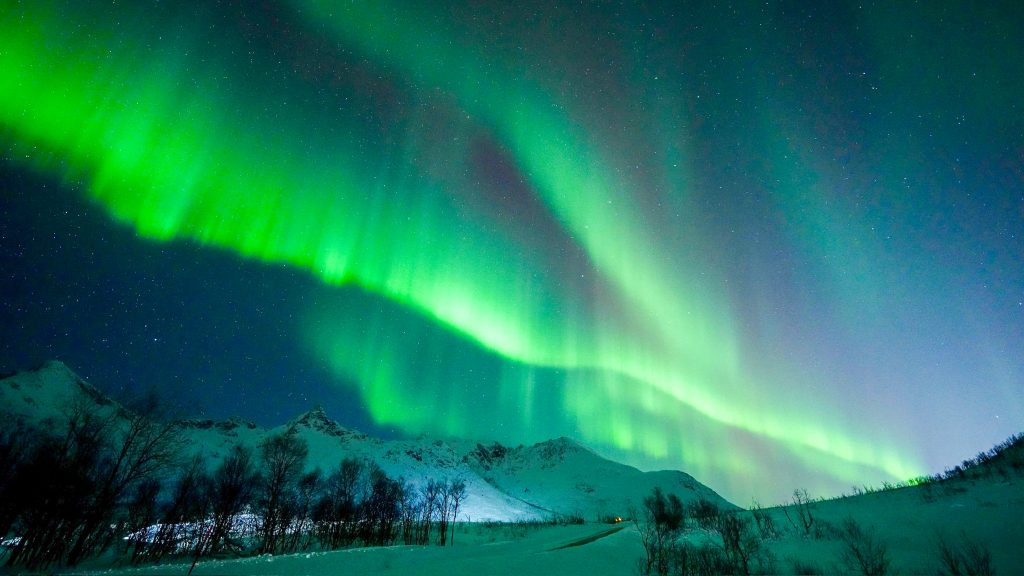
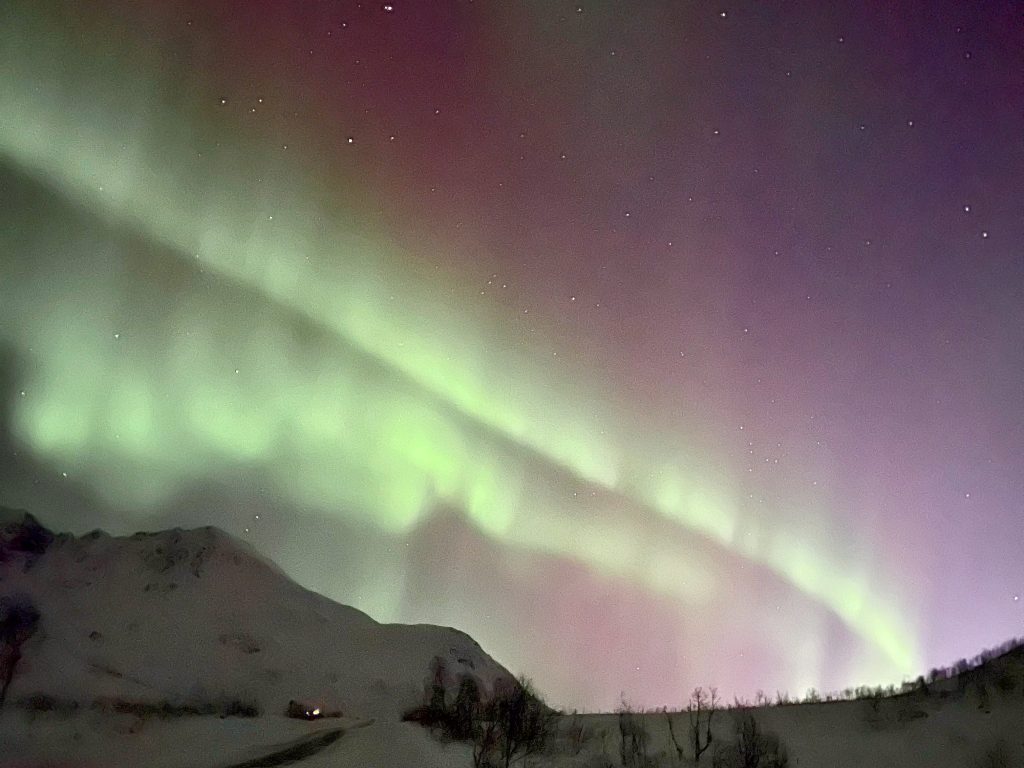
Seeing the Aurora Borealis, the Northern Lights, is on so many bucket lists. The lights had appeared briefly and faintly over our home in the UK not long before, but it felt like a taster, and it left me wanting to see them somewhere like Tromsø, one of the best places in the world for Aurora tourism and Northern Lights photography tours. But was a Tromsø Northern Lights tour worth it?
This is part of our guide to planning a winter city break in Tromsø to see the Northern Lights.
Yes. Our Northern Lights tour with Arctic Breeze found the Aurora within half an hour of leaving town, and the lights grew stronger all night. Choose a tour with a photographer as your guide. Your phone sees more than your eyes do, and the professional photos are worth having. Book it for your first night, so you have spare nights if the sky is cloudy.
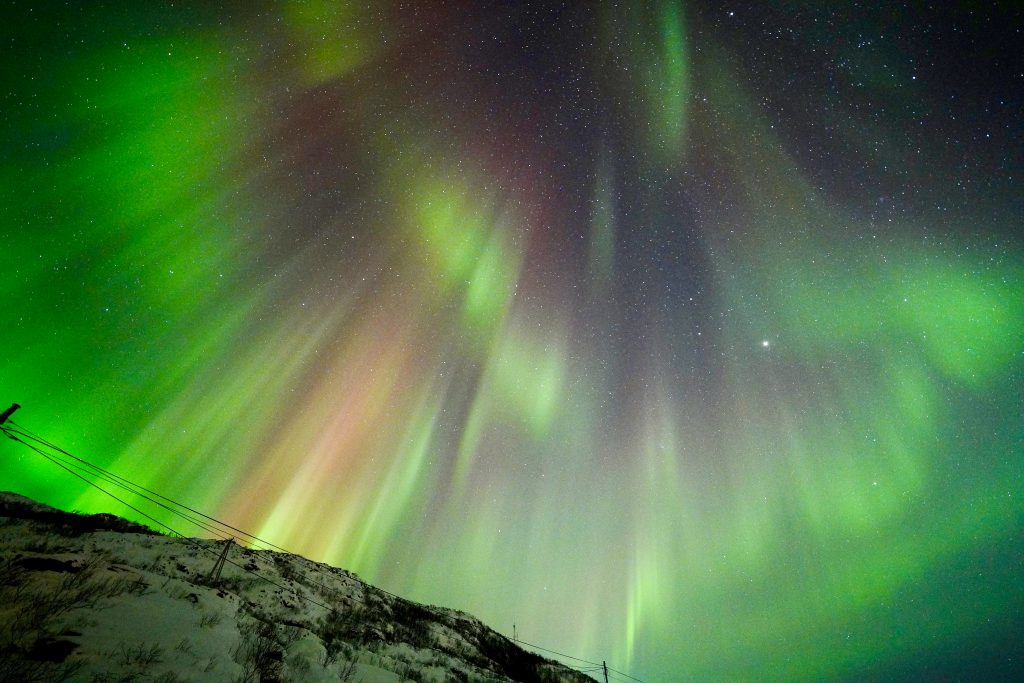
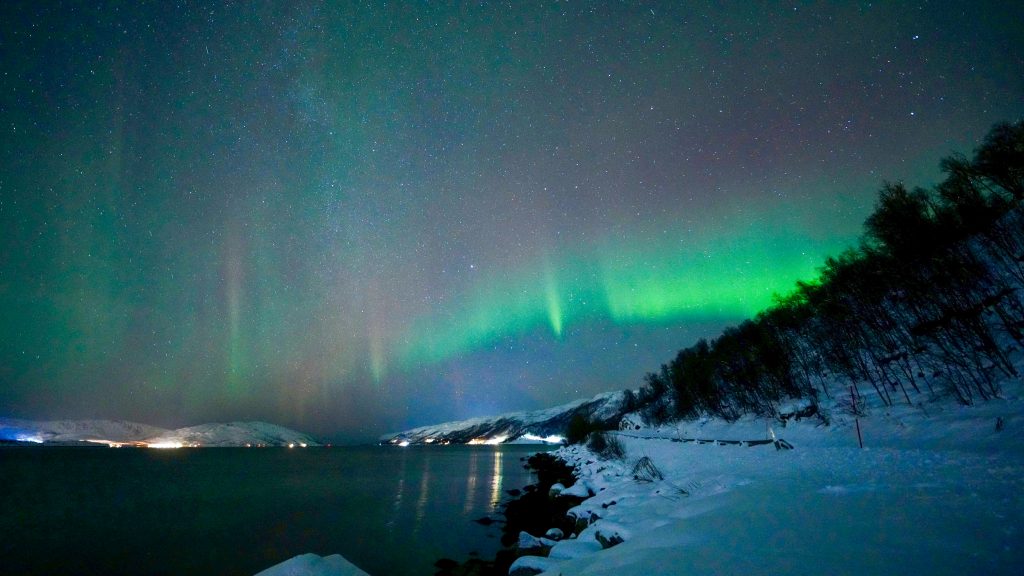
Photo credit: The featured photograph and the photos credited to Oskar were taken by Oskar of Arctic Breeze, Tromsø.
Tromsø is regularly ranked one of the best places in Europe, and in the world, to see the Northern Lights. It’s all about latitude. At around 69°39′ north, Tromsø sits well over 300km above the Arctic Circle, hence its nickname, the Gateway to the Arctic. As a result, Tromsø has built up a whole industry of Aurora tourism, including Northern Lights photography tours.
The Aurora appears near both poles, as the Northern Lights (Aurora Borealis) in the northern hemisphere and the Southern Lights (Aurora Australis) in the south. The lights are elusive and can be hard to see with the naked eye, which makes them even more special when you do. Before you try to photograph them, it helps to know what you’re looking at.
I’m not a scientist, so I’ve followed the Royal Observatory Greenwich’s explanation:
Solar storms: Storms on the surface of the sun throw out huge clouds of electrically charged particles.
The magnetic field: Some of those particles are caught in the Earth's magnetic field and pulled down into the atmosphere towards the North and South Poles.
The light show: The particles collide with gases in the upper atmosphere, which give off coloured light.
Different gases give off different colours, so the mix of oxygen and nitrogen in the atmosphere produces different colours in the Aurora:
Green: From oxygen, the colour you're most likely to see.
Purple, blue and pink: From nitrogen.
Red: From oxygen very high in the atmosphere.
The rarest: Reds and purples are the least common colours to see.
The Aurora usually appears as wavy patterns or flowing curtains of light. The shapes you might see include:
Arcs and bands: Thin green strips, often stretching across the horizon. Bands are like arcs with more curves, and they're usually a sign the lights are waking up.
Drapes: Several arcs moving fast in curtain-like waves, sometimes with pink and purple at the edges.
Rays: Vertical streaks of light, like searchlights, which form when solar activity is high.
Spirals: A rare shape that curls into a rotating pattern, usually during strong solar wind.
Corona: When the lights seem to shoot out in every direction from overhead, like a crown, the Aurora is right above you.
If you see more than one shape in a night, geomagnetic activity was strong.
Did you know there’s an Aurora oval? Neither did I until this trip. It’s a band at roughly 65 to 72° north where auroral activity is most frequent. Tromsø sits in the middle of it, which is why it’s one of the best places to see the Northern Lights, along with Abisko in Sweden and Finnish Lapland. As the Earth turns, Tromsø moves under the oval through the evening and into the early hours.
The Aurora usually looks better through a camera lens than to the naked eye. The lights can look faint in the sky and then intense on your screen, because our eyes don’t see colour well at night. Sometimes you’ll be doubly lucky and see them clearly with your own eyes too.
Northern Lights photography is also a skill in itself, so if you want decent photos, join a tour with a professional photographer.
There are lots of Northern Lights tours in Tromsø, and they fall broadly into two types:
Dedicated Northern Lights tours: You're driven around, safari style, to find the Aurora.
Northern Lights experiences: Aurora viewing combined with another activity, such as husky sledding or a visit to a Sami reindeer farm.
If your goal is to see the Northern Lights and come home with good photos, I’d choose a dedicated Northern Lights safari. There are two kinds:
Tours with a photographer as your guide: The guide photographs the Aurora, and you in front of it if you'd like, and helps you set up your own camera.
Photography workshops: Tours designed to teach you how to photograph the Northern Lights yourself.
We booked the first kind, the Arctic Breeze Northern Lights tour with photos through GetYourGuide.
We were sent good information about what to bring, including several warm layers, hats, gloves and winter boots, hand and toe warmers, water and snacks. Some Northern Lights tours ask you to bring your passport in case they chase the Aurora into Finland, but ours didn’t.
They also suggested colourful clothes, like a bright jacket, hat, scarf or earmuffs, which look good in photos in front of the Northern Lights.
Our meeting point was outside The Dock 69°39 hotel in the early evening, where a host of guides in orange GetYourGuide jackets were waiting with clipboards. We were allocated our guide and photographer, Oskar, boarded the minibus and headed out of town.
We were asked to wear our seatbelts, in case of ice on the road or wildlife wandering out in front of the van.
Take your coat off in the van. A tip we picked up on our Tromsø fjords tour is to take off your outer coat, hat and gloves in the minibus so you don’t overheat. If you start to sweat, you’ll get much colder when you go back outside.
The foot and hand warmers in our gloves and boots were a blessing when we were standing in the snow watching and photographing the lights. Thermal suits were available in the van for anyone who needed them, though we didn’t. For more on keeping warm, see our guide to what to wear in Tromsø in winter.
We drove for about 30 minutes into the countryside while Oskar watched for signs of the Aurora and checked the latest activity updates.
We stopped somewhere in the countryside (I’ve no idea where) and piled excitedly out of the van. At first we couldn’t see anything, then a faint tower of pale green light appeared. Through our phones and cameras, the Northern Lights looked much stronger.
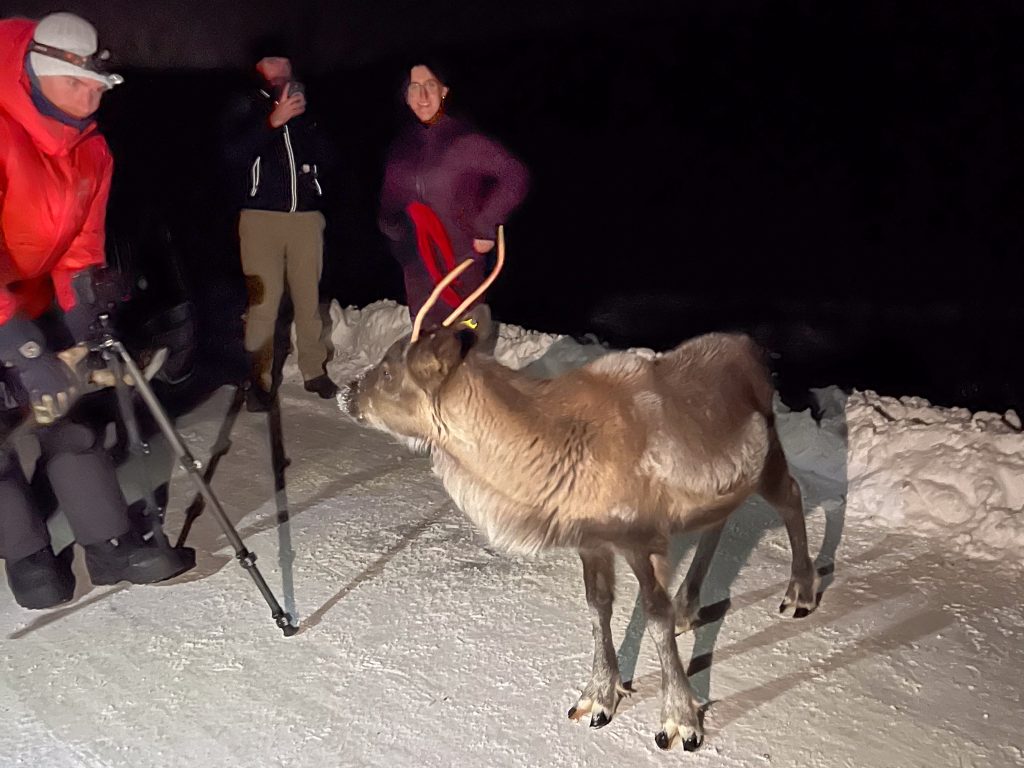
We were all so busy looking at the sky that we didn’t notice two special visitors had joined us, a mother reindeer and her calf. Both had antlers, which told Oskar they were female, because the males shed theirs in early winter. He explained they had wandered over from a nearby Sami reindeer farm, hoping for snacks. What a bonus!
Oskar set up his camera and photographed the Aurora for us, then asked who wanted their picture taken in front of the lights. There was plenty of time for several photos through the evening, and it was all very relaxed.
The beauty of having a professional photographer on the tour is that you’re far more likely to leave with good shots if the lights appear. I’m so glad we did a photography tour, because taking photos on your phone, or long exposures on your camera, is tricky and not foolproof.
We made three or four stops during the evening, and the Northern Lights grew stronger as the night went on. Later in the evening we had an incredible light show, with arcs, drapes and rays. At one point I put my camera away and just stood under the lights and soaked them in, because it was so magical.
At our last stop, Oskar lit a campfire at the back of the van and handed out hot chocolate and cookies. It was wonderful to stand around the fire and warm up under the dancing green lights.
By the next evening, Oskar’s photos were ready to download, free, via a link on the Arctic Breeze Instagram page. We were delighted with them, a lovely memento of a special evening.
Everything worked well, and I’d highly recommend this Northern Lights tour with Arctic Breeze. Our guide was great and the minibus was comfortable. Thank you, Arctic Breeze!
If you’d like to take your own photos too, here’s what worked for us.
Turn off the flash and Live mode: Neither helps at night.
Use Night mode: The iPhone switches it on in the dark, and you can lengthen the exposure.
Experiment with the exposure: Try anything from 2 to 10 seconds and see what you capture.
Keep it still: Hold your phone as steady as you can, or better still, rest it on something or use a mini tripod.
For a DSLR or mirrorless camera:
Lens: Use a wide-angle lens if you have one.
Tripod: Set the camera up on a tripod facing the lights.
Manual mode: Oskar's settings were ISO 6,400 at f/1.6 with a 2 to 3 second shutter speed.
Slower lenses: Not everyone has such a wide-aperture lens. If yours is f/2.8 or slower, use a longer shutter speed to compensate (try 4, 6, then 8 seconds) until you find the right combination for your lens and the light.
A tripod: Essential for long exposures.
A head torch: So you can see your camera settings in the dark.
A spare battery: Batteries drain fast in the cold.
As a natural phenomenon, there are no guarantees you’ll see the Aurora, but you can tip the odds in your favour:
Visit Tromsø in the Northern Lights season, from around late September to March.
Even better, go between late November and mid-January, when the sun doesn’t rise and the skies are at their darkest.
More nights means more chances. Our 3-day Tromsø itinerary builds this in.
Book your Northern Lights tour for your first night, so you can rebook if you miss out. Choose one you can cancel at short notice, as many on GetYourGuide allow.
If snow or rain is forecast, there’s likely to be cloud. Consider moving your tour to a clearer night.
Cloud can clear quickly, and it can be cloudy in Tromsø but clearer in the countryside. Honestly, there’s a degree of luck involved.
The lights don’t appear at a set time, and they change in shape, colour and strength through the evening, so don’t give up if they start faint.
Be ready to see the Aurora at other times too, such as from the plane window as you fly into Tromsø in the evening. My daughter saw them on our approach late at night. Book a window seat on the left-hand side for the flight in!
In closing
The thing that surprised me most was that the Aurora was clearly visible over the city at night when we were in town. You're always told the lights are only visible away from light pollution, so I wasn't expecting to see them downtown, let alone from the rooftop of our hotel.
So keep your eyes on the skies, because you could be lucky at any moment in Tromsø. For everything else about planning your trip, see our guide to a Tromsø Northern Lights city break.
Happy Aurora hunting!
Thank you so much for reading my blog. For more stories, itineraries, and advice, check out my Related Posts and sign up to receive my blogs by email.
If you have a blog-related question, please do ask in the comments box below and I'll try to help.
A little request: if you use my photos, please credit Love Travel Planning on your social media or give me a shout out on Instagram @lovetravelplanning as I am growing my website. Huge thanks.
Join thousands of travelers looking for inspiration from our FREE Planet Travel newsletter!
Your step-by-step framework for stress-free, unforgettable trips — from first idea to final itinerary.