Published:
Next article
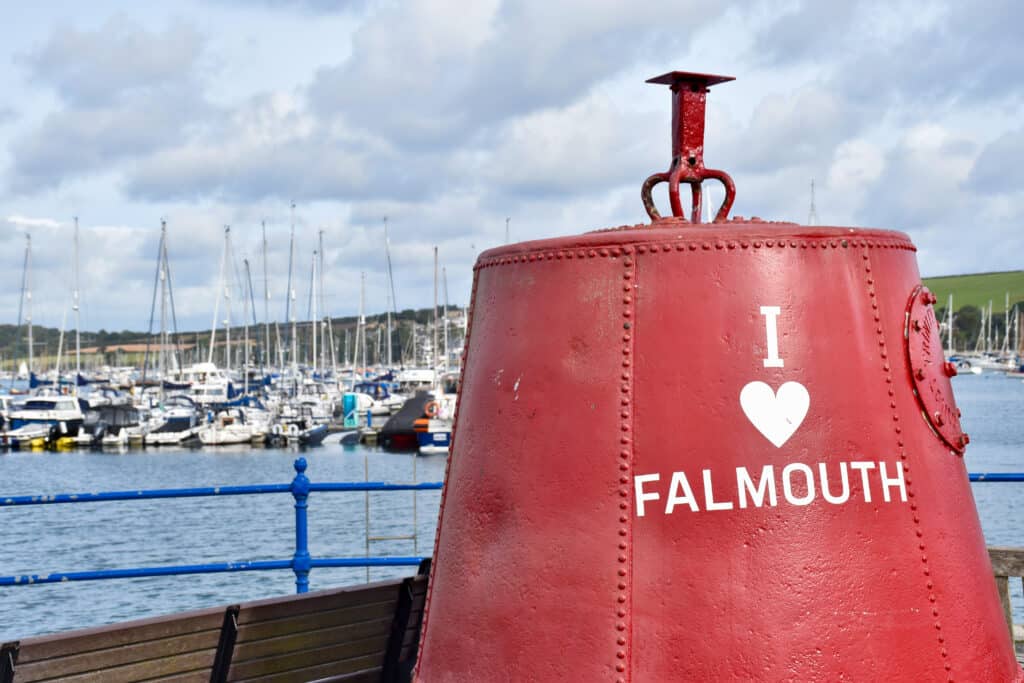
What stood out to me as we drove into Falmouth for the first time, were the palm trees and sub-tropical plants outside the houses and lining the roads into town. Something so simple immediately put me in a good mood, one which only improved when I saw the golden sand beaches, bunting draped high streets, and beautiful views across the Fal River estuary. The palm trees and golden beaches of Falmouth have lent themselves to the town’s nickname of ‘Falifornia’ and when the sun is shining, there’s no finer place to be. The magic of Falmouth can quickly get under your skin. Read on to explore what you can do when you visit Falmouth.
Firstly, before you visit Falmouth, be aware of its fascinating history, to set the context for your stay:
The town of Falmouth dates to around 1613 and was originally known as Smithwick meaning ‘head of the creek’ referring to the town’s position at the mouth of the River Fal. The Celtic for this name is Pny-cwn-cuic so Falmouth became known as ‘Penny-come-Quick’ and there is a pub in Falmouth of the same name which dates to the mid 1700s.
In terms of names, we found a second Falmouth on a road trip in Coastal Maine, USA. Apparently there is also a Falmouth in Jamaica…so that’s o the list!
Postal packet ships are the boats historically used to carry mail, messages, and cargo along scheduled routes around the world. Due to its strategic position at the ‘head of the creek’, in 1688, Falmouth became the main packet station for the British Empire and ships carried the country’s mail to and from up to 43 countries, including Spain, Portugal and the Americas.
As a result, Falmouth was the most important communications hub in Britain for over 160 years. During this time, no mail left England other than via Falmouth. Without this input from the town of Falmouth, London would not have been as informed about what was happening elsewhere in the rest of the world.

Falmouth has the 3rd deepest natural harbour in the world, and the deepest natural port in Western Europe. This helps explain why Falmouth was a good base for the postal packet ships; it makes Falmouth strategically very important, and very attractive to those with boats:
King Henry VIII – built matching Tudor castles, Pendennis Castle and St Mawes Castle, on either side of the mouth of the River Fal estuary to help protect the harbour from any potential attacks.
Charles Darwin – Charles Darwin anchored his ship, HMS Beagle, in Falmouth on 2 October 1836, at the end of her famous voyage around the world.
Robin Knox-Johnston – arrived in Falmouth on 22 April 1969 after the first-ever solo, non-stop circumnavigation of the world.
Dame Ellen Macarthur – chose Falmouth as her final stop on record breaking trip in 2005 when she became the fastest sailor to sail around the world non-stop and single-handed.
To learn more about the town when you visit Falmouth, consider booking a guided walking tour, such as this on Get Your Guide:
The Falmouth of today is a bustling, lively town, full of activities to keep you busy on a visit. Here are some ideas to help you plan a fantastic Falmouth trip:
There’s no escaping the water when you visit Falmouth – whether it’s taking a ferry ride to a stop along the estuary, booking a sightseeing boat trip, or hiring a sailing boat for the day, there are boats everywhere. You can sit on the quayside watching the boats going back and forth across the estuary and up the river Fal, or even better, you can catch a boat and experience the water yourself.
Taking a ferry is both a great way to get to another place in the area and do some sightseeing along the way. There are lots of interesting ferry routes leaving from the centre of Falmouth and so make sure to include one when you visit Falmouth:
Ferry to St Mawes – a super day trip from Falmouth is take the short ferry crossing (around 20 minutes) over to St Mawes on the other side of the estuary. St Mawes has a very different vibe to Falmouth and feels much more ‘yachty’. Make sure to walk to St Mawes Castle, visit the gorgeous sub-tropical Lamorrah Gardens, and book a leisurely lunch at the Idle Rocks Hotel. Note – ferries leave for St Mawes from two piers in Falmouth town centre, The Prince of Wales Pier and the Quarter House Pier.

Ferry to Flushing – the ferry to flushing, or Flushing Ferry as it is known, leaves from The Prince of Wales Pier in the heart of Falmouth and heads across the River Fal to the pretty village of Flushing where the captains of Falmouth’s Packet Ships once lived. The ferries leave every half an hour in Summer and only take 10 mins. Once in Flushing you can simply explore the village or use it as a springboard to explore the Roseland Peninsula with a walk to Mylor Harbour and its beach.
Ferry to Trelissick Gardens – Enterprise Boats offer a service to Trelissick (45 minutes) which you can use to access the beautiful Trelissick Gardens (National Trust gardens) set over 30 acres and providing wonderful views over the river. After a stop at Trelissick, you can continue by boat (10 minutes) to the river village of Malpas or simply return to Falmouth.
Ferry to the historic Pandora Inn – this ferry doesn’t run every day but if you are lucky, and the sun is shining, then it is a wonderful 45-minute trip from The Prince of Wales Pier in Falmouth to the 13th century Pandora Inn sitting on the Restronguet Creek. Enjoy your lunch outside on the pontoon before taking a stroll and returning to Falmouth

If you want to explore the Roseland Peninsula, but need to take your car for whatever reason, then you can drive out of Falmouth to Feock (25 minutes) and line up to catch the King Harry Ferry to Philleigh on the Roseland Peninsula. The ferry only takes 5 minutes to cross the river, but cuts off a large detour which you would otherwise need to drive.
Other than the ferries, you can use the Falmouth Water Taxi, book special summer cruise events, and even use the Falmouth Park and Float service to avoid taking your car into the centre of town. As mentioned earlier, there’s no escaping the water when you visit Falmouth!
If you want to splash out, then you could book a private boat tour through Get Your Guide:
Alternatively, you could book a wildlife tour in the hope of spotting some dolphins, such as:
For more information about taking ferries (passenger and car) and water taxis, check out the website: www.falriver.co.uk
Fal Mussel Card Visitor – if you are planning on using the ferries a few times when you visit Falmouth, then consider purchasing a Fal Mussel Card (the Visitor version) to save money on your boat trips.
The National Maritime Museum is a purpose-built wooden building on the harbour with 5 floors of artefacts and information presenting the story of Cornwall’s maritime history. With an impressive array of boats hanging from the main hall roof, it reminded me of the WA Maritime Museum in Fremantle, Western Australia, which has a similar display in its main hall.
At the top of the museum is a 360-viewpoint called the Look Out, and at the bottom of the museum in the Tidal Zone you can look out to see underwater. Note – no dogs are allowed.

Outside the National Maritime Musuem, you can see which ships are using the harbour. When we visited, a large cruise ship was docked in Falmouth harbour right behind the Maritime Musuem; you might also see naval ships and super yachts as well as smaller sailing boats.
Falmouth is still an active fishing community, and the harbour area is always bustling.
To find out more about the Tudor period of Falmouth, visit King Henry VIII’s circular Pendennis Castle built on the headland above Pendennis Point. The Castle is managed by English Heritage and dogs on leads are allowed throughout the site, including the café.
Pop into the castle itself and imagine sitting in front of large open fireplaces with the wind and elements battering the windows on a blustery day. Learn about the castle fortifications and their role in protecting the natural harbour.


Check out the collection of weapons and artillery on display from the period when Pendennis Castle was used for military operations in WWII; it was decommissioned in 1956. Make sure that you check out the donated collection of political cartoons from the WWII period drawn by George Butterworth. He published these cartoons daily during the war and managed to offend Hitler by his drawings and end up on his ‘hit list’.
There are cannons all the way around the castle walls from which the views from the castle grounds over the Fal Estuary and western beaches. On a day you can look across the estuary to the sister castle – St Mawes Castle – which you can visit on a ferry from Falmouth Harbour.

For more amazing views when you visit Falmouth, walk down to Pendennis Point from the Castle. Drop down onto Castle Drive and walk around the headland to Pendennis Point enjoying views across to St Anthony’s Lighthouse across the estuary mouth, and then Falmouth Docks as you head around towards Falmouth town.
Look out for the Coastguard Station, opened in 1981, which oversees the largest Search and Rescue region in Europe (660,000 square miles) Often there is a coffee and ice-cream van at Pendennis Point.
For a slice of local life, set your alarm clock and head out early for a beach walk, or a morning swim, before the tourists even think about venturing own to the beach. Doubtless you will need to warm up afterwards, but a hot chocolate will help. Don’t forget to pack your DryRobe or towel robe!
When you visit Falmouth, you will notice that most of the town centre sits on the eastern side of town overlooking the Fal Estuary, whereas the west side of town overlooks Falmouth Bay; this is where you’ll find the four main beaches of Falmouth:

Castle Beach is a thin strip of shingle beach which appears at low tide and completely disappears at high tide. There is a slipway which leads down to a concreted platform above the beach, with a row of colourful beach huts and a container cafe which sells great food options including sourdough toasties. Castle Beach has good rockpools at low tide and you might also catch sight of a shipwreck of the WW1 U-boat, UC-92. Castle Beach is a good place to try snorkelling as the water is usually very clear and there is a well-regarded PADI diving centre, DiveUK, operating from here.
Gyllyngvase Beach or ‘Gylly Beach’ is the shining star of Falmouth’s beaches and has award-winning Blue Flag status. It offers a wide stretch of golden sandy beach between two large sections of rocks, perfect for rock-pooling.

The beach is sheltered and the waters generally calm, which makes it popular for sea swimming and other watersports such as paddleboarding and paddling; you can hire equipment from Blu Paddle Co and Gylly Adventures on the beach. It has a lifeguard in the summer months.
Gylly Beach is well served with food options as there is a Coop just behind the beach for picnics and barbecues on the beach; the casual Gylly Café take-away on the beach; and more formal Gyllaghvase Beach Café with indoor restaurant and extensive outdoor decked area. There are usually some mobile outlets (converted horseboxes) parked behind St Mary’s Gardens next to the beach, including a great bagel seller and coffee box.

Just over the headland from Gylly Beach is the smaller, but equally as charming, Swanpool Beach – surrounded on both sides by the headland and backed by the Swanpool Nature Reserve. There is a lovely row of beach huts along the edge of the beach and the Swanpool Beach Café directly on the beach, serving snacks throughout the day. The Beach House is a more formal restaurant sitting on the rocks overlooking the beach, however it also has casual bar and food outlet called the Cool Box with outdoor seating below the restaurant.

Maenporth is the beach furthest away from Falmouth town centre; a 3.4 mile walk each way, but you will be rewarded by making the effort as the beach is lovely. Where Gylly Beach can often be full of university students and/or senior school kids, Maenporth has a more family-friendly feel about it, helped along by soft sand and shallow water – perfect for your youngsters when you visit Falmouth. The Cove at Maenporth is the perfect place for dinner after a day on the beach and with panoramic views overlooking Falmouth Bay.
Please note that there are seasonal dog restrictions on the Falmouth beaches. For more information check out my blog about Dog-friendly Falmouth.
There are two beach saunas in Falmouth, which can be very welcome if you are sea swimming on a cold day, or out of season. Visit Kiln at Gyllyngvase Beach or Escape to the Sauna on the harbourside at the Greenbank Hotel.
As mentioned in my introduction, the sub-tropical plants were one of the first things that struck me about Falmouth. Apparently, as well as mail, the postal packet ships also brought tropical plant life back on board when they returned to Falmouth, and many of these plants have thrived here.
Falmouth has a temperate maritime climate, influenced by the Gulf Stream, with mild winters where temperatures rarely drop below freezing. This has allowed exotic plants such as palm trees and ferns to thrive, despite not officially having a sub-tropical climate.
St Mary Gardens, Gyllyngvase Beach – these gardens just behind the beach are very pretty and full of tropical plants which make you feel like you are abroad; even the trees behind the gardens look exotic.

Lamorran Gardens, St Mawes – these sub-tropical gardens are easily accessible when you visit Falmouth by taking the ferry to St Mawes. The gardens are a 15-minute walk towards St Mawes Castle and beyond, up the hill. The result is that the gardens stretch down the hillside about the village and offer a tropical oasis in the middle of a traditional old fishing village.
Trebah Gardens – Trebah Gardens are a ‘must see’ on any visit to Falmouth. They are a 15-minute drive outside of town but well worth the effort of visiting. You can easily spend half a day exploring this 26-acre sub-tropical paradise and 4 miles of plant filled paths leading down the hill to a private beach on the Helford River. They are blissful.
If you’re looking for a town with large chains and well-known brands, then Falmouth might not hit the spot for you – it doesn’t even have an M&S! However, if you love independent shops and coffee bars, then Falmouth will serve you very well.
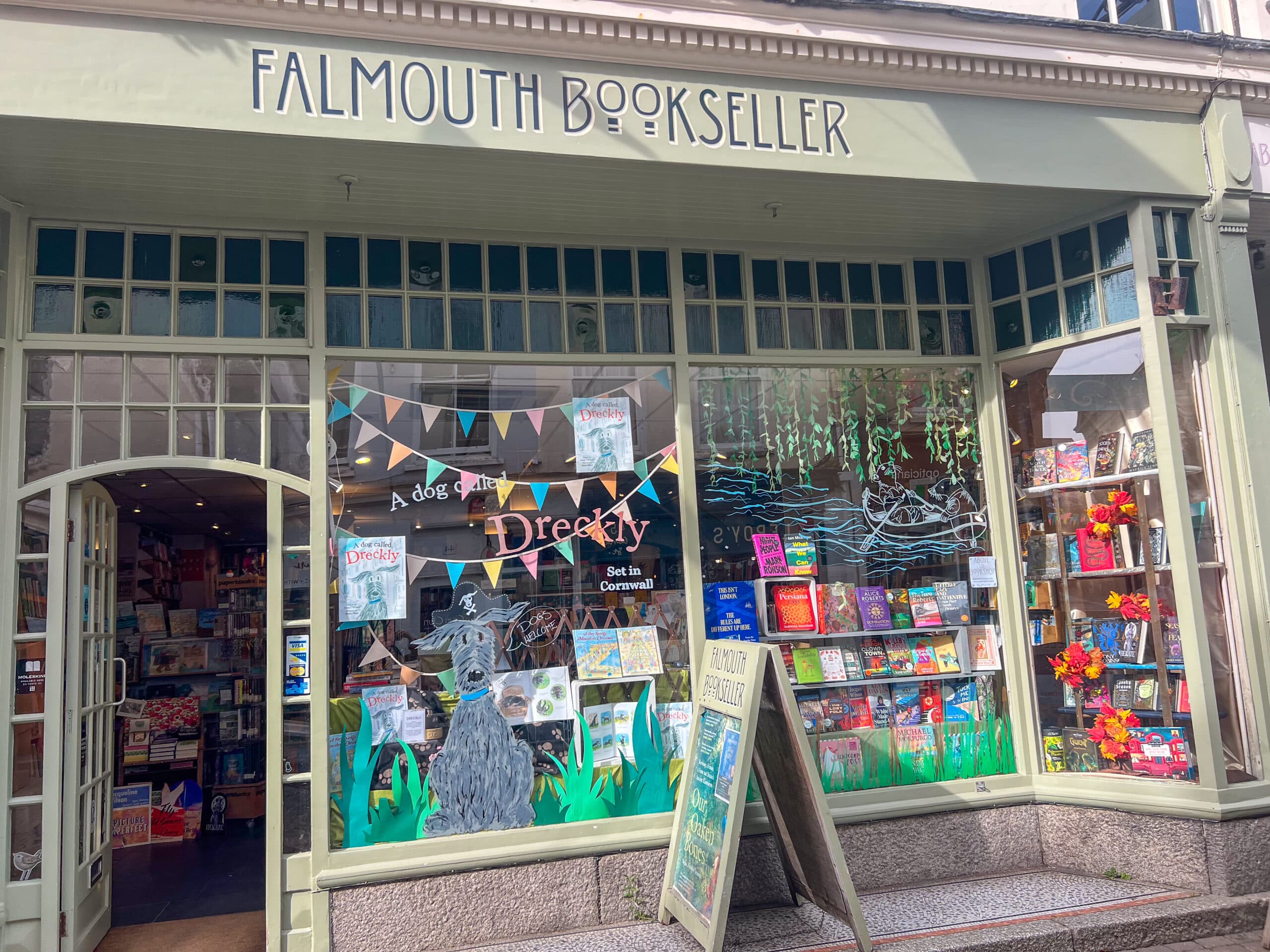
In fact, Falmouth seems to have a disproportionate number of indie outlets lining the roads which run parallel to the waterside and tucked away amongst the cobbled lanes filling the town. Here you’ll find gift and craft shops, jewellery designers, homeware stores, vintage clothes, surfing apparel shops, antiques, and the lovely Falmouth Bookseller.
Unsurprisingly, many of the outlets sell coastal themed items – photos, paintings, ceramics. Check out Cream Cornwall for the best selection of Cornish designed mugs, or the lovely Willow and Stone lifestyle store.
There are a few chain shops, such as White Stuff, Sea Salt or Finisterre for coastal clothing for all weathers – essential if you arrive without a cagoule.
After all that shopping then you might be ready for some refreshments and Falmouth wins here as well, as it is packed full of tempting places to eat and drink – too many to list here. You will certainly not go hungry in Falmouth and in fact may struggle to choose between Cornish pasty outlets, bagels, fresh crab sandwiches, fish and chips, pub lunches with a view over the water.
If you just want to grab a coffee, then Beacon Coffee gets a special mention!

Cornwall more broadly has a tradition of attracting artists, due to the quality of the light and the colours of the water and stunning sea-scape scenery. For example, St Ives is home to the Tate St Ives and the Barbara Hepworth Gallery which demonstrate how important Cornwall is as a creative community.
Falmouth is no exception and has attracted well known artists, including J.M.W. Turner who visited in 1811 during a tour of Cornwall and produced a series of dramatic drawings and water colours of the harbour and Pendennis Castle. John Singer Sargent also visited Falmouth, in 1905 to paint his friend Charles Napier Hemy, a fellow artist. This portrait is on display at Falmouth Art Gallery.
Having grown up with Henry Moore’s sculptures on display in Leeds, I was excited to learn that Henry Moore also spent time in Falmouth – in the summer of 1937, he spent a month in Falmouth with a group of Surrealist painters including Roland Penrose, Max Ernst and May Ray seeking inspiration. So, artists have always loved Falmouth!
An additional reason why Falmouth has an indie vibe is because it is a university town, with around 6,000 students from a combination of Falmouth University and the University of Exeter (Penryn Campus). Falmouth University, originally Falmouth School of Art in 1902 until 2005 when it was granted university status, offers many art-related courses and attracts a lot of student creatives to the town.
So how can you get creative when you visit Falmouth?
Falmouth Art Gallery – start your art explorations in Falmouth with a trip to the Falmouth Art Gallery housed in a wonderful, listed building to find John Singer Sargeant’s painting of his friend. As well as an annual programme of rotating exhibitions, there are permanent collections including Women Artists in Cornwall, The Surrealists in Cornwall and the RCPS Tuke Collection.
Old Town Hall Gallery & Museum of Art – an eclectic collection of art and antiquities which is free to visit, but is self-funding so generates funds through the sale of cards and other items in the museum.
Beside the Wave Gallery – this gallery aims to represent Cornwall’s finest emerging and established artists. It launched in 1989 and offers a programme of exhibitions focussing on different local artists.
The Poly – this multifunctional building is a live arts venue, cinema, art gallery and community pottery. When I looked at the workshops available at The Poly, it was clear how varied and extensive the programme of creative events is, offering workshops in zine making, block printing on fabric, costumed life drawing (pirate themed!) and painting with oils, to name but a few.
Pottery making workshops – pottery workshops at a variety of levels (for beginners, intermediates and advanced), pottery throwing classes and drop-in sessions are available at The Poly Pottery. Also check out the workshops at EOT Ceramics at Argal Farm outside Falmouth town.
Pottery painting at Star Glazers – if you just want to paint a ceramic souvenir when you visit Falmouth, drop into Star Glazers to enjoy a therapeutic hour creating something pretty which will remind you of your holiday.

Inspire Makers – an artisan gallery displaying the work of over 60 Cornish artists and makers of jewellery, ceramics, textiles, wall art, and stationery. As well as the shop and gallery, Inspire Makers offers workshops such as Beginners Jewellery Courses and Seaglass Jewellery Workshops run in conjunction with Porth Jewellery.
I’m sure that this is just the tip of the iceberg in this wonderfully creative town. You can see the talent on display in the local shops, galleries and at the craft stalls which regularly crop up around Falmouth, for example, alongside the Falmouth Food Festival, or the Falmouth Oyster Festival.
Falmouth is a very busy town with exciting events taking place throughout the year – this town likes to party and can give Edinburgh Festival a run for its money, in spirit anyway! Some of the festivals that you can experience include:
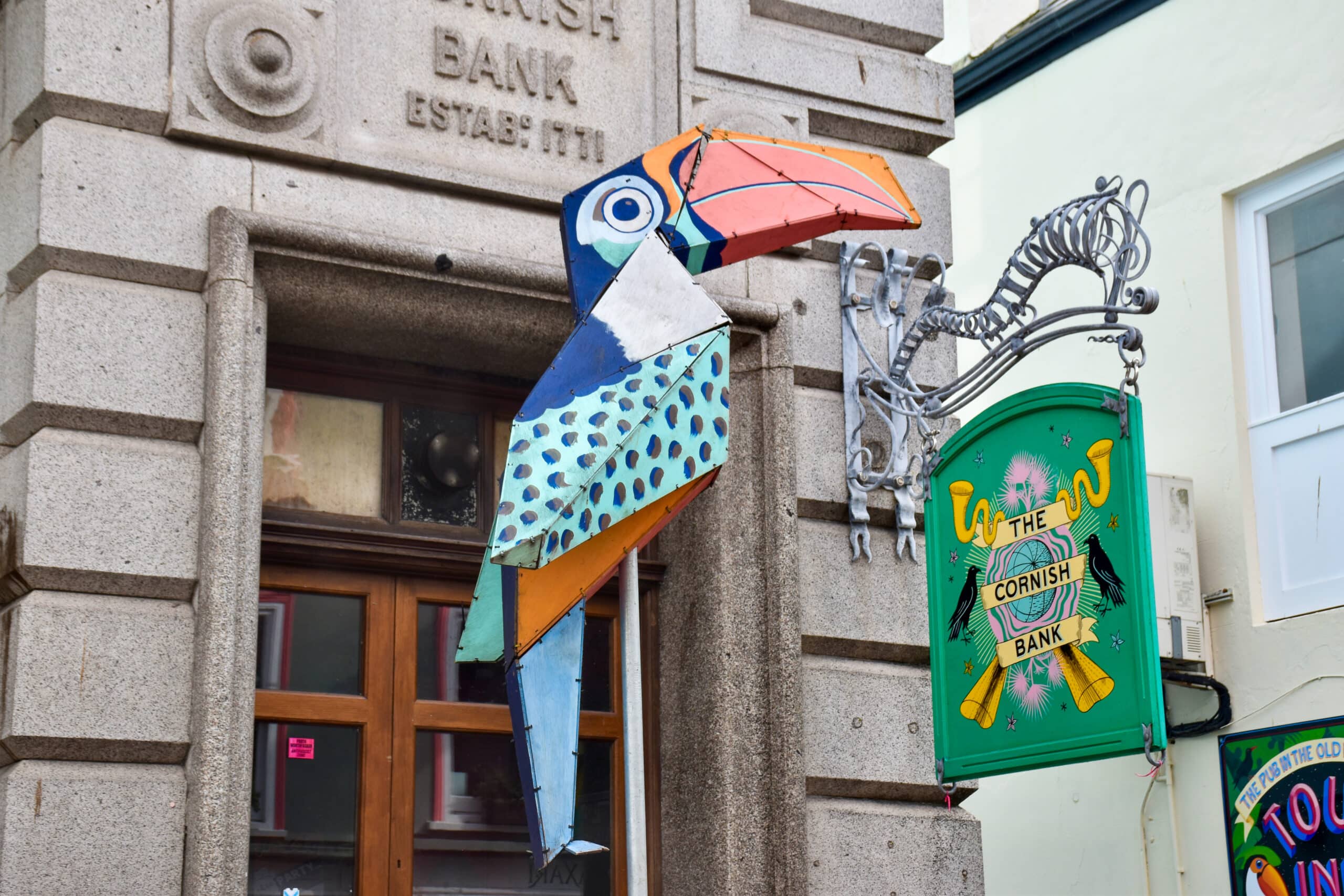
Wanderfal – two-day festival run by grassroots venue The Cornish Bank and offering live music and performances across a range of venues in Falmouth (March)
Fishermen’s Friends Festival – three-days of music and entertainment hosted by the se shanty singers the Fishermen’s Friends just outside the town centre (May Bank Holiday)
Falmouth Food Festival (May Bank Holiday)
International Sea Shanty Festival – with 70 sea shanty groups playing from across the world at the Princess Pavillion, Cornwall’s largest indoor music venue (mid-June).
Falmouth Classics – 3-day regatta of racing (mid-June).
Falmouth Folk Festival – enjoy songs and ballards from well-regarded folk singers and bands (July).
Falmouth Week – 10-day event with sailing races, parades, live concerts and family entertainment (August)
Falmouth Oyster Festival – celebrate local oysters at the start of the dredging season (October)
Falmouth Book Festival (October)
Falmouth Tall Ships Race – a magnificent tall ships race from Falmouth to Spain sometimes takes place but is not an annual event.
Whilst this is not necessarily an exhaustive list, it does illustrate the variety of events on offer for when you visit Falmouth.

Whilst Falmouth is stunning in the warm, summer months, the festival programme helps to make Falmouth a year destination. In addition, outside of the summer tourist season, Falmouth still has lots of buzz and activity, helped along by its creative residents and student population.
Falmouth across the seasons:
Summer – the sweet spot in Falmouth, perfect for beach lovers and for those wanting to enjoy a summer festival; the trade-off being that it’s the busiest time of the year.
Autumn – the water is warmest for sea swimming at this time of year, as it has been heated up all summer. Visit for the Falmouth Oyster Festival and bracing sea swim.
Winter – Cosy up on a wellness break at one of the Spa hotels, or warm up at a sauna on the beach followed by a pint in a traditional pub overlooking the water.
Spring – Cornwall is stunning in the spring, with flowers on the headlands and the sun brightening up the water, highlighting its gorgeous turquoise colours. A great time to walk the coastal paths and blow the cobwebs away on the beaches with your dog, before the summer beach restrictions kick in.
To be honest, you can visit Falmouth at any time of year and enjoy a wonderful break. However, with some insight into the events on offer, you can start planning to get the most out of your visit to Falmouth.

Hopefully, this blog highlights what a wonderful place to stay Falmouth is and how you can use it as a base from which to explore the Lizard Peninsula, Helford Passage River, and West Cornwall.
Beyond the main sights, the full joys of ‘Falifornia’ unveil themselves with time – finding a quiet cove, a café tucked away off the main drag, or a pub with a waterside view. Yes, the main drag of shops in Falmouth can be busy with day trippers and holidaymakers, so try to get off the beaten track and explore beyond the obvious. Slow down and take time to soak in the views and fresh sea air.
Enjoy!
Thank you so much for reading my blog, I hope you found it useful?
For more stories, itineraries, and advice, check out my Related Posts and sign up to receive my blogs by email.
If you have a blog-related question, please do ask in the Comments box and I’ll try to help…
Request please – if you use my photos, then please credit Love Travel Planning on your social media or give me a shout out on Instagram @lovetravelplanning as I am growing my website. Huge thanks.
Enjoy your travels!

New to our website? Learn to create the perfect travel plan: