We arrived in Denmark on our road trip from Perth towards Esperance, and our first evening involved a close encounter with grey kangaroos on the lawn outside the place we were staying. It is a good way to start anywhere.
What we did not expect was how much the town itself had to offer. Denmark turns out to be a small, arty community with galleries, a bakery that wins awards for its pies, over twenty wineries within reach, and a herd of elephants sitting in the sea just down the road.
Denmark’s highlights are Elephant Rocks and Greens Pool in William Bay National Park, the Valley of the Giants Tree Top Walk half an hour west, the wineries scattered through the hills, and a very good pie in the middle of town. Two days is comfortable, one is a squeeze.
Denmark sits on the Denmark River where it empties into Wilson Inlet, on the Rainbow Coast in Western Australia’s Great Southern region. About 5,000 people live there.
From Perth: Around 415km, so roughly four and a half hours.
From Albany: 55km east along the South Coast Highway, under an hour.
From Walpole and the Valley of the Giants: Around 55km west.
From William Bay National Park: Just 14km west of town.
There is no train, so you will need a car. That is not a hardship, because half the pleasure of Denmark is the driving between the beaches, the forest and the cellar doors.
Not real elephants, sadly. Elephant Rocks.
William Bay National Park is about ten to fifteen minutes west of Denmark town and it is the reason most people come. We parked up and set off on foot to find the rocks, a cluster of granite boulders shaped by the wind until they look exactly like a herd of elephants huddled together, all of them facing away from the ocean.
The water around them, and in the neighbouring inlet at Elephant Cove, was a pale green and startlingly clear. It is one of those views that does not really translate to a photograph, though everyone tries.
The park had a significant upgrade after our visit. There are now 182 standard parking bays across Greens Pool and Elephant Rocks along with disability, motorcycle, long vehicle and coach bays, which is more than double what was there before. New accessible toilets and change rooms have gone in at three locations. Parking used to be the pinch point in school holidays, so this is a real improvement.

From Elephant Rocks you can walk around the headland to Greens Pool, and you should.
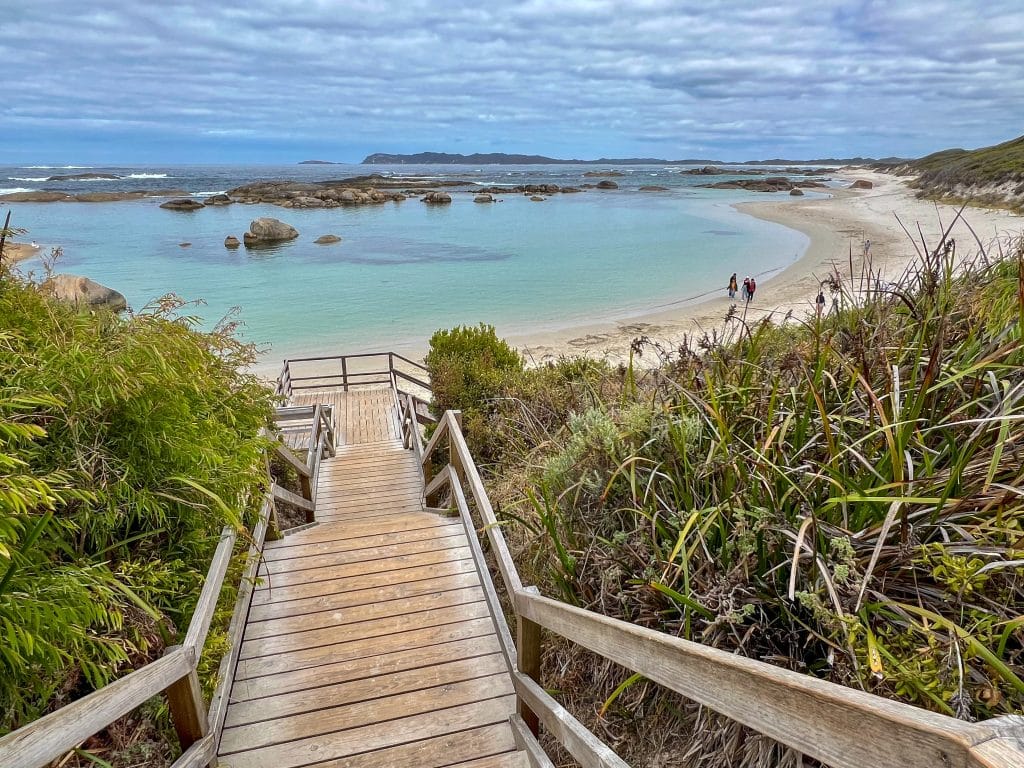
Greens Pool is a sheltered bay protected from the open ocean by a ring of granite, which turns it into a natural swimming pool. The water really is the pale green the name suggests, and it looked very inviting, although it was on the chilly side the day we visited. The eastern end near the access steps is the calmest and best for swimming.
From there you can keep going on paths and boardwalks for as long as your day allows. A newer 2.6km shared walking and cycling trail now links Elephant Rocks to Waterfall Beach, with the first 200 metres wheelchair accessible. We did not have this on our visit but it came up in our research and it looks like the obvious way to see more of the park on foot.
If you want more beaches, Denmark is not short of them, and the names alone are worth the drive: Madfish Bay, Waterfall Beach, Lights Beach, Peaceful Bay, Ocean Beach and Parry Beach. Lights Beach is the dog friendly one. Ocean Beach is where the surfers go.
This is the one we would go back for, and the one we would tell you not to skip.
The Valley of the Giants Tree Top Walk is at Tingledale, between Denmark and Walpole, around 55km and 40 minutes west of town. A 600 metre steel walkway carries you up to 40 metres above the forest floor, level with the crowns of the red tingle trees. It sways very slightly as you walk, which is apparently by design and does take a moment to get used to.
Underneath it, the Ancient Empire boardwalk is a 550 metre loop at ground level winding among and sometimes straight through red tingles that are 400 years old. Entry to the Ancient Empire and the Discovery Centre is free.
The practical bits:
Prices: $21 adult, $10.50 child aged 6 to 15, $15.50 concession, $52.50 family of four. Under fives go free.
Opening hours: Daily 9am to 5pm with last entry at 4pm, extended to 6pm between Boxing Day and 26 January.
Booking: Not needed. You can buy on the day at the ticket office.
Accessibility: The Tree Top Walk takes wheelchairs and most prams, and there are wheelchairs and strollers to borrow at no cost. About 500 metres of the Ancient Empire loop suits all abilities, with 150 metres of steps on the rest.
I have now written several blogs about our road trip through Western Australia without once mentioning Australian pies, which is an oversight, because they are a staple here.
The Denmark Bakery in the centre of town sells award winning pies and is as good a place as any to find out what the fuss is about. There is a proper range of beef and gourmet options. Be warned about the Vinda Roo, which we could not bring ourselves to order having spent the previous evening bonding with kangaroos outside our accommodation.
There are cakes too, including the famous lamington, a light sponge covered in chocolate and desiccated coconut. For me it was the spitting image of a pudding we used to get for school dinners. Serve it with custard and the flashback would have been complete.
Denmark’s main street is Strickland Street, and it is small enough to walk end to end in half an hour, or considerably longer if you are the browsing type.
The town has a distinctly artsy vibe. Alongside the boutique clothing and surf wear you will find games at Tiny Treasures, secondhand and new books at Tea House Books, and crystals, incense and the like at Sacred Tree. There are no traffic lights, the paving is decorated and the telegraph poles are painted, which tells you most of what you need to know about the place.
For coffee, Ravens came up repeatedly in our research as the local specialty roaster doing breakfast, brunch and lunch, and Pepper & Salt is the fine dining option if you want to make an evening of it. The Denmark Arts Markets run three times a year at Berridge Park if your timing is lucky.
If you did not drink enough wine in Margaret River, Denmark has you covered. There are over twenty wineries in the area, including The Lake House, Rockcliffe, Harewood Estate, Forest Hill Wines, Ducketts Mill Wines, Singlefile Wines and Castelli Estate.
We decided to give this a miss, having already visited Voyager Estate in Margaret River a few days earlier. Looking back, that was a hasty decision and I would do it differently next time.
If you would rather not drive between cellar doors, there are guided options. Singlefile Wines run a two hour “A Sense of Place” tour and tasting bookable through GetYourGuide from around $99, which is a neat way to do one winery properly rather than three badly.
There is also a full Food and Wine Tour of Denmark WA running around six and a half hours from about $199 if you want the day handed to you.
Denmark is not only about wine either. Boston Brewing Co does craft beer with live music, Denmark Heritage Cider Co and Bartholomews Meadery cover the other bases, and there is now a distillery at The Dam. None of these we tried ourselves, but they were all recommended in local guides.
If the beaches have not worn you out, Denmark has some short walks that pay off well for the effort.
Monkey Rock: A 4km return walk with a big view east over Wilson Inlet from the top. The most recommended walk in the area after the national park itself.
Harewood Forest Walk: A gentle 1.3km trail about ten minutes from town, through very tall trees.
The Denmark Heritage Rail Trail: Follows the old railway line and takes in the heritage rail bridge, easy going and good on a bike.
The Bibbulmun Track: The nearly 1,000km walking trail from Kalamunda to Albany passes right through Denmark, so you can walk a section of one of the world's great long distance trails and be back for lunch.
We managed the beaches and the town rather than the trails, so these come from local guides rather than our own boots, but they are the ones that came up again and again.
Our next destination was Bremer Bay, a two hour twenty minute drive from Denmark, so we broke the journey with two stops on the way.
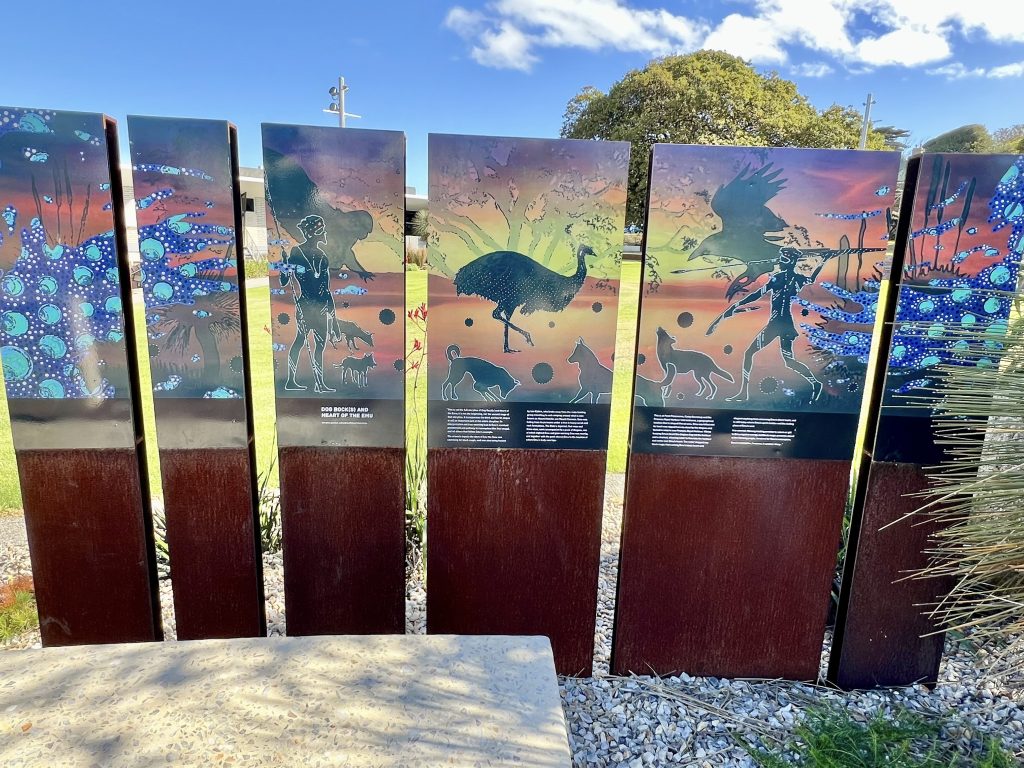
Torndirrup National Park sits west of Albany, about 40 minutes from Denmark, reached by taking Frenchman Bay Road around the huge bay. This is the country of the Mirnang people, descendants of an ancient culture in which storytelling passes on important knowledge and belief, including the dreaming stories that explain how the spirits of the ancestors passed to their descendants. One of those stories is told at The Gap and there is a sign at the viewing platform explaining it.
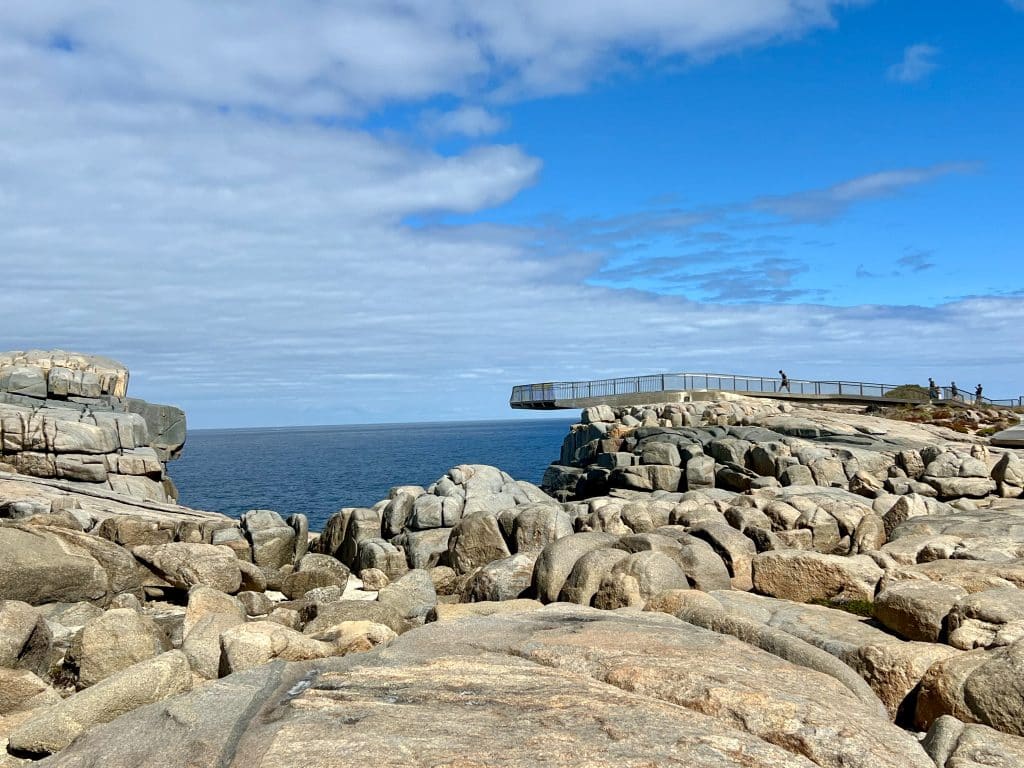
The Gap is a rectangular inlet cut into the granite cliff that turns incoming swell into explosive wave crashes, sometimes 40 metres up. The viewing platform hangs 40 metres above the water and cantilevers more than 10 metres out from its last point of contact, with grated floor panels so you can see straight down. It is not for everyone.
A short boardwalk away is The Natural Bridge, a large granite arch spanning the water between two headlands. Both have accessible pathways from the car park.
This coast gets king waves that have swept people off the rocks. Stay on the boardwalks and platforms, however tempting the photograph looks.
If you have longer, the Blowholes are a 1.6km return walk from their own car park and are at their best when the swell is up. You will usually hear them before you see them.
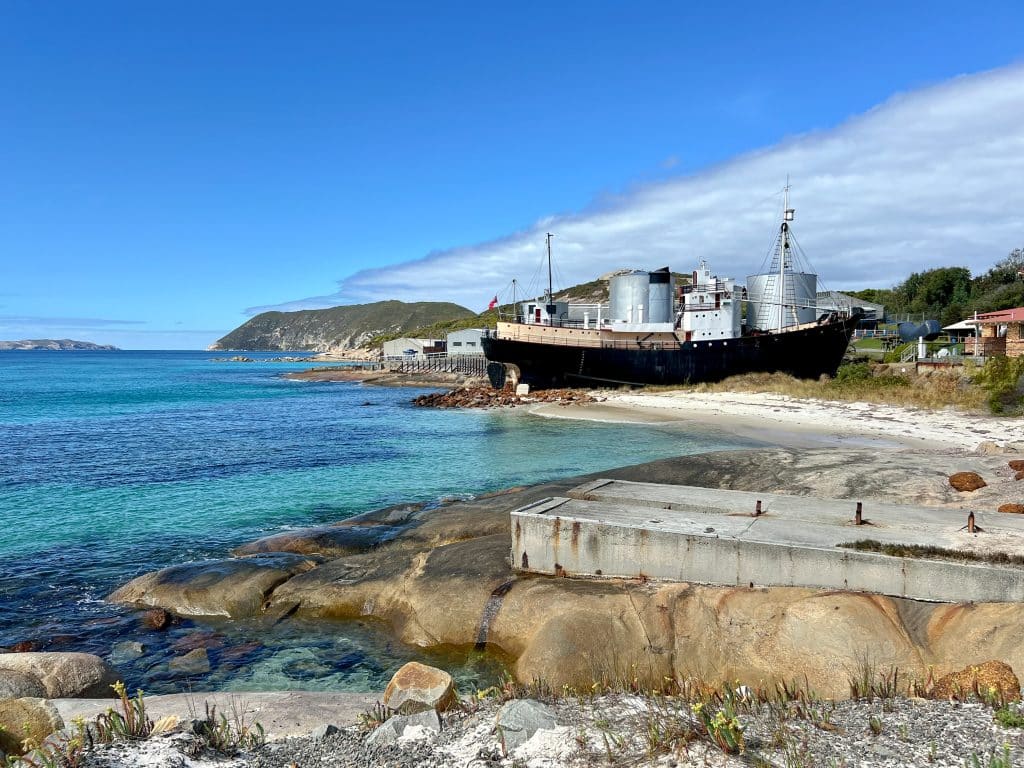
Albany’s Historic Whaling Station is nine minutes from The Gap on the other side of the headland.
Whaling operated here until as recently as 1978. I did not have the stomach for it and admired the view over the bay while my husband went in. He said the exhibits were hard hitting and difficult to look at, so take that as a word of caution. The processes described are barbaric.
Then into Albany itself, the oldest European settlement in Western Australia. The city centre is full of low rise wooden buildings with balconies and, unexpectedly for somewhere this remote, more traffic than we saw anywhere else on the holiday. There are murals around town and a small park with indigenous statues and paintings about the seasons. The main shopping street runs down to the waterfront with lovely views over the bay.
Albany has a bit of an attitude, and a long running rivalry with Perth. It received the first European settlers, Perth grew faster and took the title of state capital, and Albany has not entirely let it go.
If you want to go deeper, the National Anzac Centre is a modern museum dedicated to the Australian and New Zealand soldiers of the First World War, and the replica Brig Amity covers the maritime side.
Entry tickets to both the Anzac Centre and the whaling station can be booked ahead through GetYourGuide, from around $18 and $26 respectively, and there is a 3.5 hour Gap and Natural Wonders tour from about $94 if you would rather not drive Frenchman Bay Road yourself.
In closing
Two full days is our answer.
Day one covers William Bay National Park properly: Elephant Rocks, a swim at Greens Pool, the walk through to Waterfall Beach, then back into town for a pie and a browse along Strickland Street. Day two takes you west to the Valley of the Giants in the morning and a cellar door or two in the afternoon.
One night is doable if you are passing through on a bigger road trip, but you will end up choosing between the beaches and the trees, and that is not a choice anybody should have to make.
Denmark surprised us. We arrived expecting a stopover between Margaret River and Bremer Bay and left wishing we had given it another day.
Thank you so much for reading my blog. For more stories, itineraries, and advice, check out my Related Posts and sign up to receive my blogs by email.
If you have a blog-related question, please do ask in the comments box below and I'll try to help.
A little request: if you use my photos, please credit Love Travel Planning on your social media or give me a shout out on Instagram @lovetravelplanning as I am growing my website. Huge thanks.
Join thousands of travelers looking for inspiration from our FREE Planet Travel newsletter!
Your step-by-step framework for stress-free, unforgettable trips — from first idea to final itinerary.