The Great Gatsby, the novel and the films, was my introduction to America’s Gilded Age, and to the incredible wealth that came from heavy industry and the railroads in the late 19th century. So on our road trip from Long Island to New England, I was keen to see the Newport mansions, built as summer showpieces in the Gilded Age. As we found out, though, there are plenty of things to do in Newport, RI beyond the big, opulent houses.
Newport was the third leg of our New England road trip itinerary, after Mystic, Connecticut. We spent two nights there one weekend in July.
The best-known Newport mansions are The Breakers, The Elms and Marble House, all on or near Bellevue Avenue and run by the Preservation Society of Newport County. Visit one or two, walk the Cliff Walk past the back of the others, then spend an evening on the water. Newport is the sailing capital of America, and summer weekends sell out, so book ahead.
Rhode Island is the smallest state in America, but one of the most densely populated, with around 1.1 million people. It borders Connecticut to the west and Massachusetts to the north and east.
Its two best-known cities are Providence, the state capital and home of Brown University and the Rhode Island School of Design, and Newport. We’d have liked to see both, but we had to choose. Newport won for its Gilded Age credentials, because it was where many of the country’s richest industrialists built their summer homes.
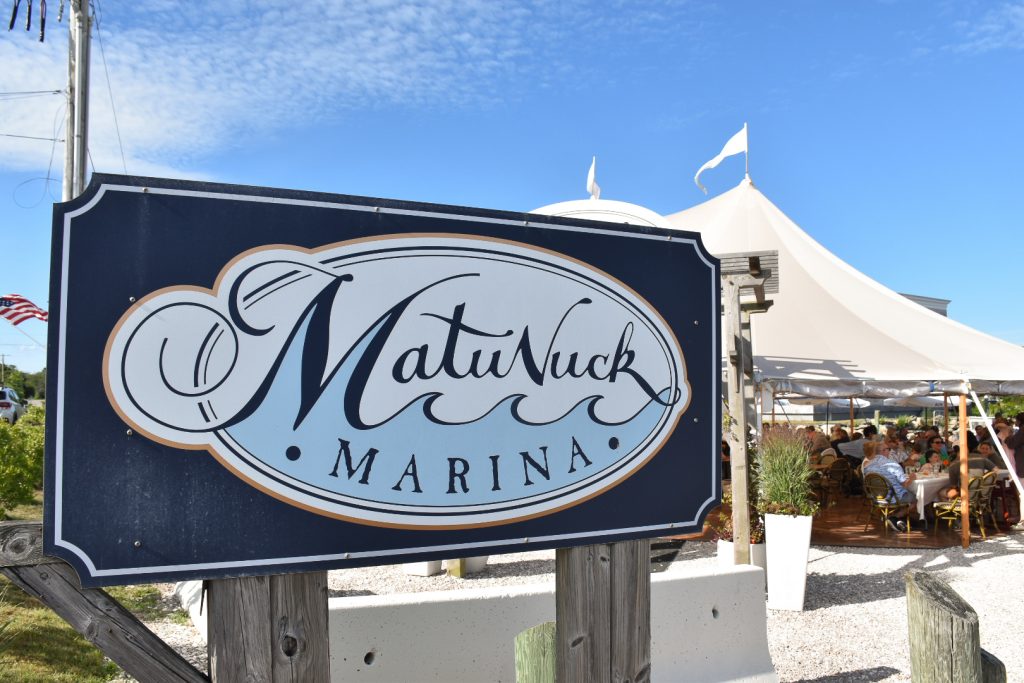
Our first stop in Rhode Island was the Matunuck Oyster Bar, about 40 minutes’ drive east of Mystic on the way to Newport. It’s become a local institution, serving oysters from its own oyster farm, which you can tour.
The restaurant had been damaged by a fire not long before our visit, so that summer it was serving from a big marquee across the road, overlooking the marina and the salt ponds. Check how it’s operating before you go. We’d booked a table, which is wise, because I don’t think there was a spare seat, even at 4pm. The local oysters got the seal of approval from Richard, and so did the grilled lobster and fries from me.
From Matunuck, it’s about half an hour into Newport, over the Jamestown Verrazzano Bridge and then the impressive Claiborne Pell Newport Bridge.
In the late 19th century, if you’d made a fortune from America’s great industrial expansion, Newport was the place to show it off, with a huge mansion to “summer” in, away from New York City. These Gilded Age mansions were known, rather wryly, as “cottages”, despite their enormous size.
The term comes from Mark Twain and Charles Dudley Warner’s 1873 novel, The Gilded Age: A Tale of Today. Its idea was that a thin layer of gold covered up serious social problems, as wealth piled up in the hands of a few. Historians later used it for the decades of rapid growth after the American Civil War, roughly the 1870s to around 1900.
Eventually there was a wider backlash against such extreme wealth, and the summer cottages fell out of fashion. They were also very expensive to run, so as family fortunes dwindled, many were closed, sold or knocked down.
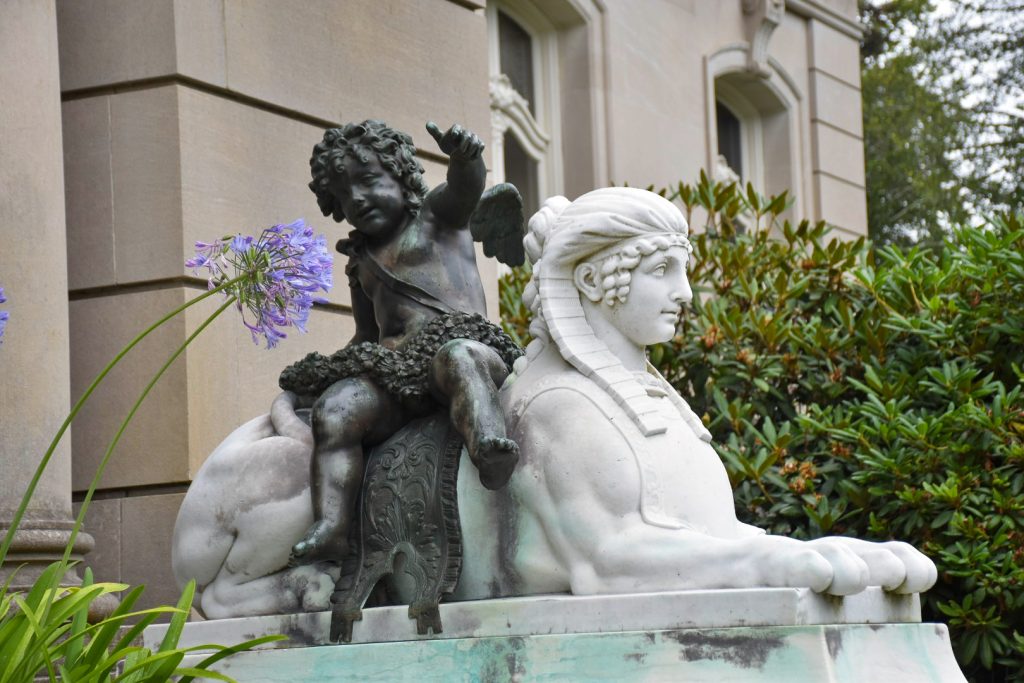
Several of the most important have been saved and are cared for by the Preservation Society of Newport County, including The Elms, The Breakers, Marble House, Rosecliff, Chateau-sur-Mer, Kingscote and the Isaac Bell House. Several appear in the HBO series The Gilded Age, and signs point out the rooms used in particular scenes.
If you’d like to plan ahead, a Newport Mansions ticket for one or two houses can be booked on GetYourGuide.
The Elms was the summer home of Edward Julius Berwind, a Philadelphia coal magnate, and his wife, Herminie. It was modelled on the Château d’Asnières outside Paris and finished in 1901. It was saved by the Preservation Society only a few weeks before it was due to be demolished.
When it was built, people thought The Elms was too close to Bellevue Avenue, with too little garden at the front. But that meant passers-by could see its opulence from the road, while the showstopper gardens were saved for guests at the back.
Each of the Newport mansions had a housewarming party when it was finished. For The Elms’ party in 1901, the house was filled with rose trees, orchids and lotus flowers, and there were trained monkeys on the lawns to entertain the guests (no comment!). With its weeping beech trees and paths lit with fairy lights, the garden must have looked stunning.
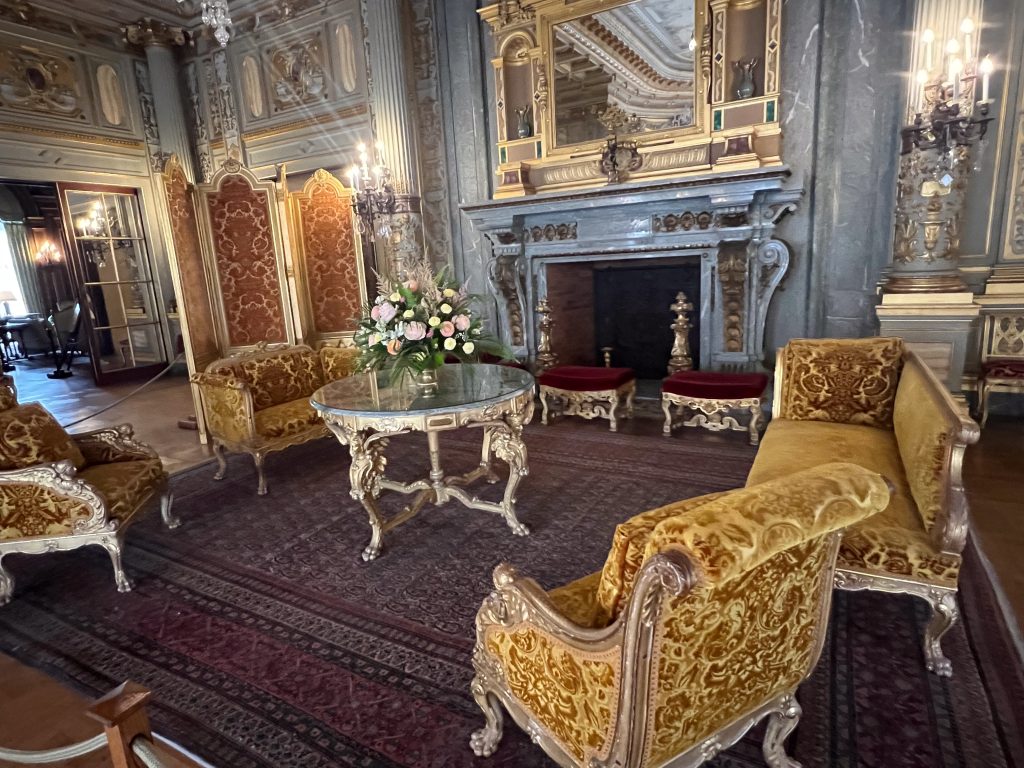
The Elms has all the classic features of a Gilded Age mansion. Steps lead up to a grand entrance and ballroom, and there’s a formal drawing room, library, breakfast room, butler’s pantry with a dumbwaiter, a silver safe, the main kitchen, and separate bedrooms for Mr and Mrs Berwind. Mrs Berwind had the bigger bedroom, because Mr Berwind was in New York during the week, and she ran the household from her room, managing the servants and preparing for guests and parties.
We didn’t take a guided tour of The Elms. Instead we used the free audio app to hear about each room, which worked well.
The Breakers is the grandest of the Newport mansions. It was designed by the American architect Richard Morris Hunt in Italian Renaissance style for Cornelius Vanderbilt II and his wife, Alice, heirs to the Vanderbilt steamship and railroad fortune.
An earlier house on the site burned down in 1892. When the new house was built, the boiler room was put well away from the main house, under the grounds.
If you’d like to see what it took to run a house this size, book the Beneath The Breakers tour. It starts in the boiler room, on the edge of the grounds, and leads you through the service tunnel to the house. It gives a fascinating insight into how they built this giant of a house in just over two years.
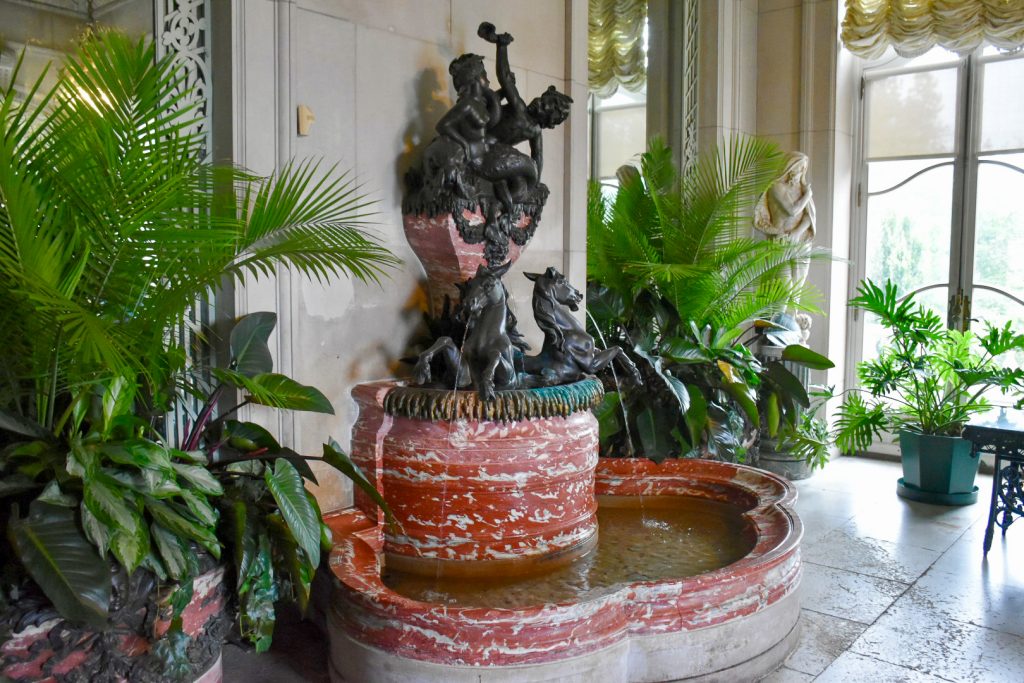
Back in the main house, you can explore the over-the-top rooms. My highlights were the tiled billiard room (very pretty) and the Upper Loggia, a semi-outdoor sitting room looking out over the Atlantic.
The bath has four taps, two for hot and cold fresh water and two for hot and cold salt water.
If you have time and the weather is good, walk the 3.5-mile Cliff Walk along the shore in front of the Newport mansions. Start at the Forty Steps on Narragansett Avenue and walk south past The Breakers and many more, including:
Rosecliff (1902): It appears in the 1974 film of The Great Gatsby, High Society and True Lies.
Marble House (1892): Look out for its Chinese Tea House at the end of the garden, where Alva Vanderbilt (yes, another one) held rallies for women's right to vote.
Only some of the houses are still easy to see from the path, as some are hidden by trees or under restoration. Look out for the QR codes along the route, which tell you about the houses you pass.
Finish at The Waves and walk up Ledge Road to catch the trolley bus back along Bellevue Avenue to your car. Check how to pay before you go, because the trolley was cash only when we visited.
Wear trainers with a good grip, because part of the path crosses rocks. If it’s wet, the rocks can be slippery, so be flexible about when you go.
To rest your legs, take the scenic 10-mile Ocean Drive around the coast, stopping at, or looking out for:
Fort Adams: One of the largest coastal forts in the US, and home to the Newport Folk and Jazz festivals.
Hammersmith Farm: Jacqueline Kennedy's childhood summer home, where she and John F. Kennedy held their wedding reception. It's privately owned and not open to the public.
The Ocean Cliff Hotel: In one of the best spots in town. You can have a drink on the lawn in front of the hotel even if you're not staying, with incredible ocean views.
Brenton Point Lighthouse: In Brenton Point State Park.
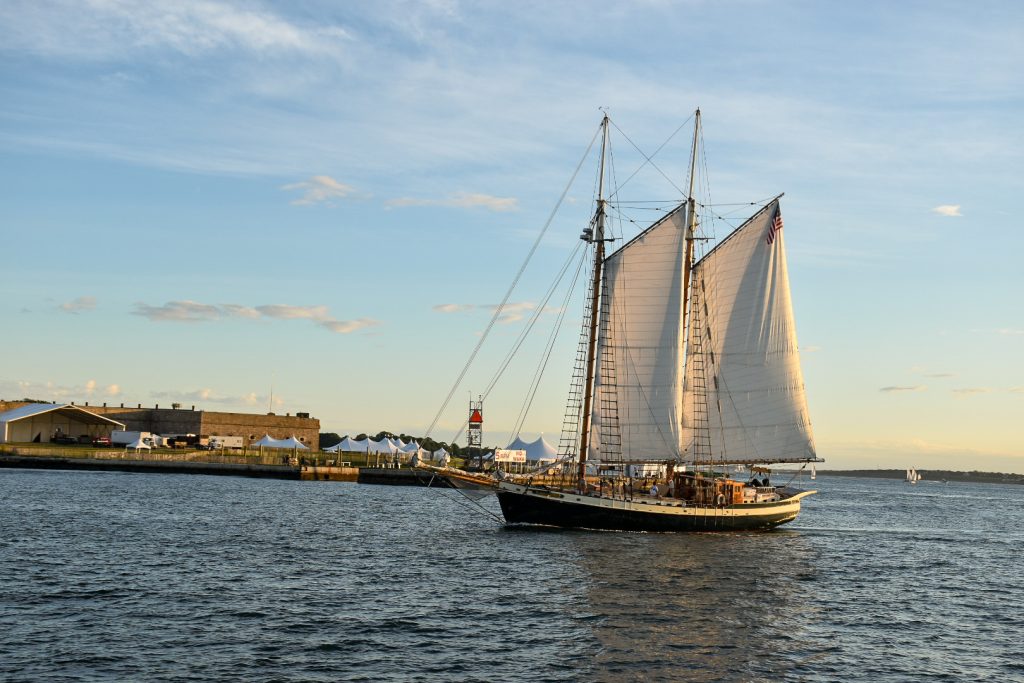
Newport sits on Aquidneck Island, sheltered by Narragansett Bay, which makes it a perfect sailing base, and it’s often called the sailing capital of America. At the Sailing Museum you can learn how sailing grew as a sport, and about the America’s Cup, the oldest international trophy in sport.
Newport hosted the America’s Cup from 1930 until 1983, when the Australian yacht Australia II won and ended the New York Yacht Club’s 132-year winning streak. Australia II is now on display at the WA Maritime Museum in Fremantle, Western Australia.
Newport sits on Aquidneck Island, sheltered by Narragansett Bay, which makes it a perfect sailing base, and it’s often called the sailing capital of America. At the Sailing Museum you can lWe’d hoped to take a sailing boat out at sunset, but every one had sold out for the weekend evenings we were in Newport. If sailing is your thing, book well ahead. The Newport Champagne Sunset Sail is on GetYourGuide and on our list for next time.earn how sailing grew as a sport, and about the America’s Cup, the oldest international trophy in sport.
Newport hosted the America’s Cup from 1930 until 1983, when the Australian yacht Australia II won and ended the New York Yacht Club’s 132-year winning streak. Australia II is now on display at the WA Maritime Museum in Fremantle, Western Australia.
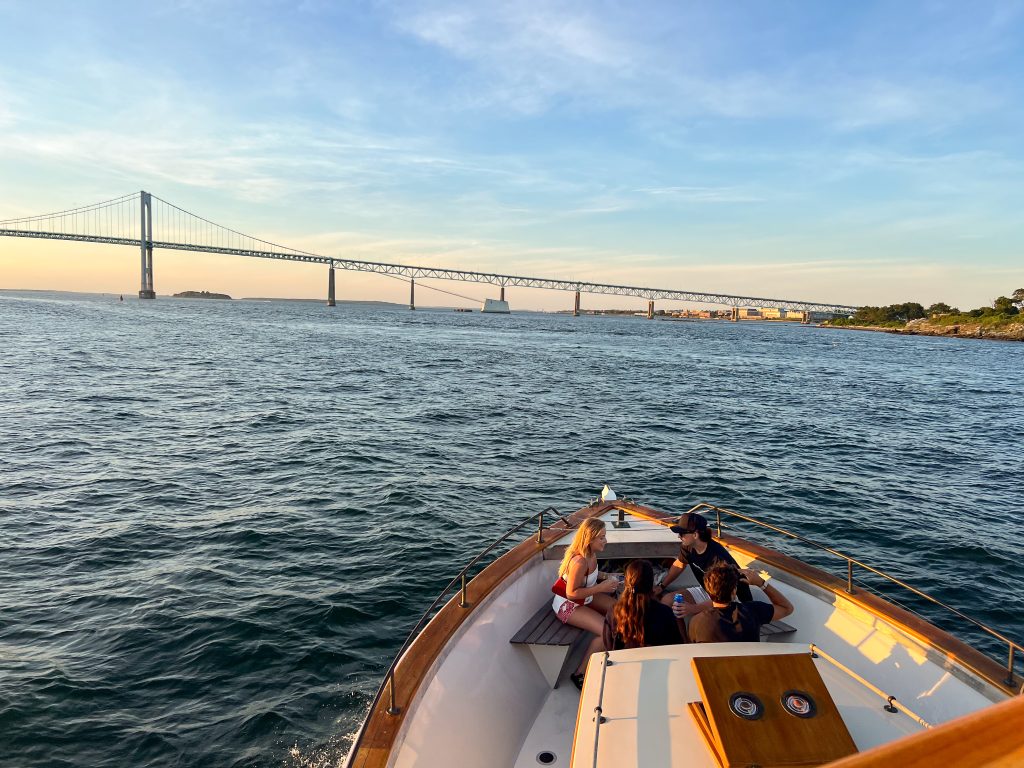
Instead, we booked the Gansett sunset cruise of Newport Harbor directly, after reading great reviews, and it turned out to be the highlight of our time in Newport. You can pre-order drinks when you book, which helps on a small boat with only a couple of crew, and as the sun starts to dip, they hand round a glass of fizz to toast the sunset. Gansett also runs a morning mimosa cruise of Newport Harbor, which you can book on GetYourGuide.
The boat leaves from Bowen’s Wharf, and you’re soon whisked away from the noise of the wharf to the quiet of the water. We loved spotting all the different boats as the skipper’s live commentary pointed out lighthouses, islands and some very expensive yachts moored in the deep-water marina. It was informative and light-hearted.
We cruised under the Newport Bridge, which we’d driven over earlier that day, and watched the sun drop behind the Goat Island Lighthouse, which made for some fabulous photos. I’d recommend it for a lovely evening!
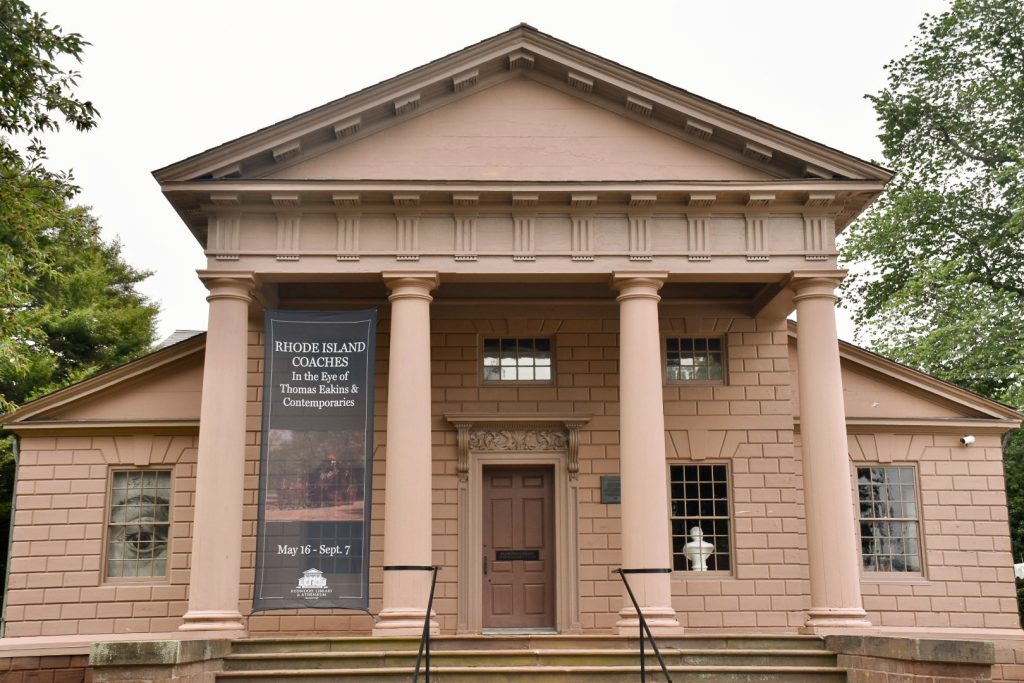
Bellevue Avenue was once the address in Newport, and it’s lined with many of the mansions. It also has several other places worth seeing:
The oldest lending library in America still in its original building, opened in 1750.
Housed in the John N.A. Griswold House, designed by Richard Morris Hunt (of The Breakers fame) in 1864, and an art museum since the early 20th century.
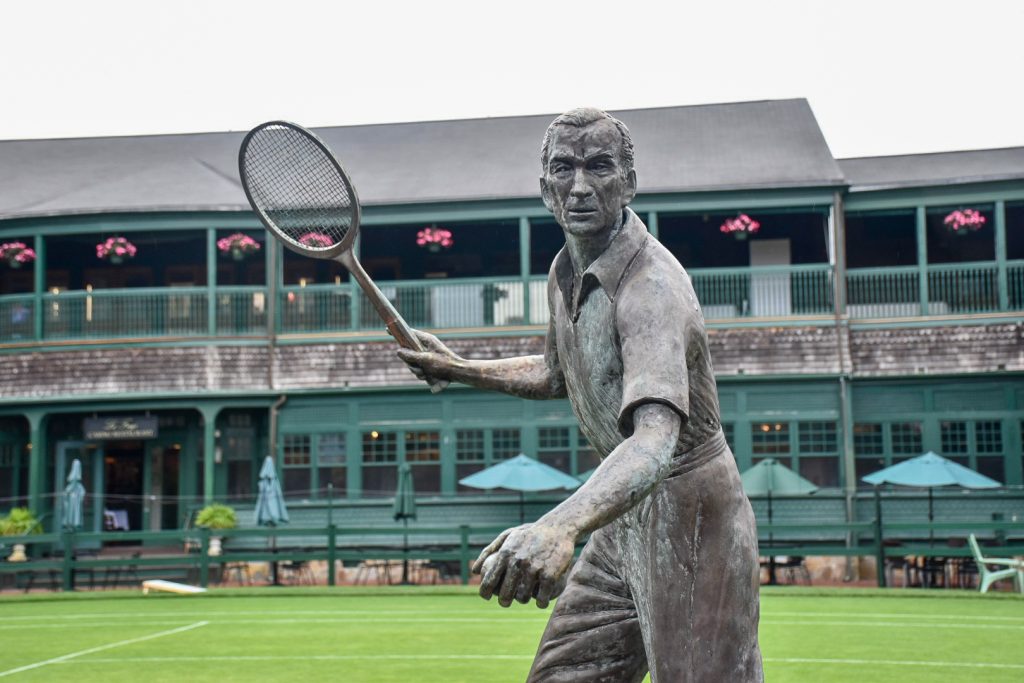
In the Newport Casino, built in 1880 as a social club (not a gambling house) for Newport’s summer elite. The first US national tennis championships were played here from 1881. We arrived before the museum opened, but the outdoor grass courts were open to wander round, with old wooden stands and a statue of the British tennis player Fred Perry.
Next door to the tennis museum, with changing exhibitions of rare cars. It had just opened a Porsche exhibition when we visited. One of us went in, while the other sat on a wall outside for a rest!
Our daughter found this one on TikTok. It’s famous for its flavoured matcha and lunches. The queue on Thames Street was long, but the blueberry matcha was worth the wait.
For lunch on the go, pick up a lobster or crab roll from Luke’s Lobster near Bannister’s and Bowen’s Wharf. We had the crab roll, and it was delicious.
A Newport institution, known for its clam chowder. We had a good meal there, though not the chowder. The mussels were delicious.
Serving New England food, and it looked very popular. We’ve earmarked it for next time.
A two-minute detour from Luke’s Lobster takes you to Pelham Street, one of the first streets in America to be lit by gas, thanks to a local inventor in the early 1800s.
We booked Newport at short notice, so we relied on Booking.com to find somewhere. It led us to a guest house called Gilded, which was perfect for two nights. There was a warm welcome, comfortable beds, colourful, spacious rooms, a 24-hour tea and coffee station and a decent breakfast, all within a 10-minute stroll of the centre. Perfect if you’re passing through.
Newport felt like a summer city, perhaps because of all the boats and the open-air restaurants on the wharves. We arrived on a weekend in July, and the town was in full swing. It felt much busier than Long Island, and noisier, with hen and stag parties singing in the bars on the Saturday night. Sunday was quieter.
The Newport Folk Festival (where Bob Dylan famously “went electric”) and the Newport Jazz Festival both take place in summer and attract big names, so check the dates when you plan.
If you visit on a summer weekend, book the things you really want to do in advance, from sailing trips to mansion tours such as Beneath The Breakers, because numbers are limited.
Previous leg: Mystic, CT. Next leg: The Norman Rockwell Museum and the Berkshires
In closing
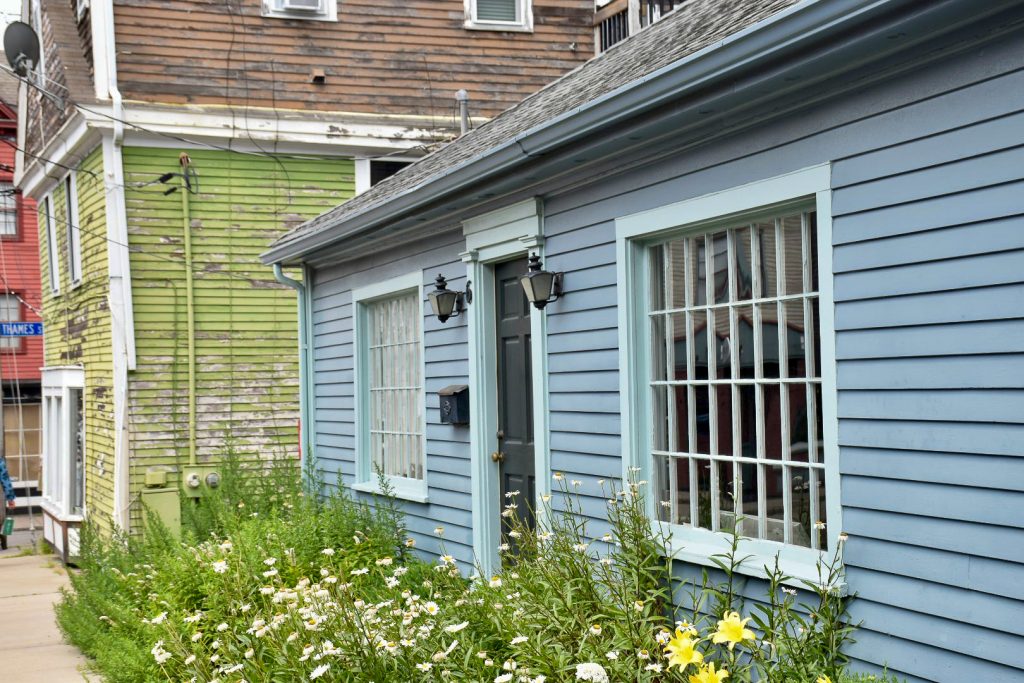
The Newport mansions are as over the top as you'd hope, but my favourite memory of Newport is the sunset cruise, toasting the sun as it dropped behind the lighthouse. Away from the noisy bars on the wharves, you'll find quiet streets of pretty, colourful clapboard houses that are a joy to wander.
Newport was once a centre of the 18th-century slave trade, and we didn't see much acknowledgement of that in the places we visited. We didn't make it to Hunter House (1748), where the Preservation Society says it tells the story of the enslaved people who lived and worked there, but it would be my first stop next time. Book your mansion tours and boat trips ahead, then let our New England road trip itinerary take you on to the Berkshires.
You don't need a boat to love Newport, but it helps!
Thank you so much for reading my blog. For more stories, itineraries, and advice, check out my Related Posts and sign up to receive my blogs by email.
If you have a blog-related question, please do ask in the comments box below and I'll try to help.
A little request: if you use my photos, please credit Love Travel Planning on your social media or give me a shout out on Instagram @lovetravelplanning as I am growing my website. Huge thanks.
Join thousands of travelers looking for inspiration from our FREE Planet Travel newsletter!
Your step-by-step framework for stress-free, unforgettable trips — from first idea to final itinerary.