
Published:
Next article
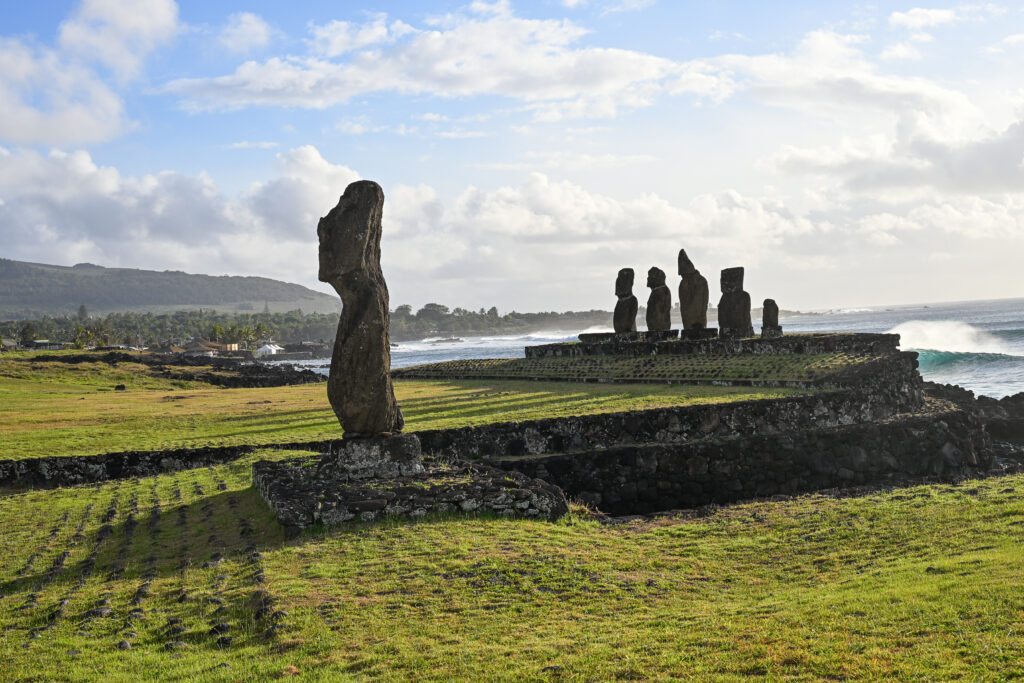
A bucket list trip is a ‘once in a lifetime travel experience’ to a destination that someone dreams of seeing in their lifetime. Rapa Nui (Easter Island) was one such destination for me – a remote island, not easily accessible from the UK, and filled with moai, mystery and intrigue. Having read about this UNESCO heritage site, seen photos of the incredible moai at sunset, met the ‘stolen’ moai at the British Museum, and even bonded with ‘Dum Dum’ in the Night at the Museum movies, a trip to Rapa Nui was high on my travel wish list.
However, as Rapa Nui is not just around the corner, a good plan is required. Here’s how to make it happen.
No one knows exactly when Rapa Nui was first discovered by humans, but it is largely thought that Polynesian explorers discovered the island somewhere around 800 AD, giving it the name Rapa Nui. Rapanui are the indigenous people of the island.
The Rapanui also referred to the island as ‘the navel of the world’ (Te Pito O Te Henua), perhaps because of it was the centre of their world, away from other civilizations and surrounded by thousands of miles of Pacific Ocean. There is a magnetic stone on the island, which legend suggests represents the actual navel ‘from which all life sprang’.
The name Easter Island was given to the island by the Dutch explorer Jacob Roggeveen when he arrived at the island on Easter Sunday 1722.
Signage for the island will often include the Spanish version of Easter Island, Isla de Pascua. This follows Rapa Nui being annexed by Chile in 19888, where Spanish is spoken. Today it is still a Chilean territory, and the Rapanui are Chilean citizens.
For more information about the history of Rapa Nui, check out my blog which gives an overview of the island’s turbulent history.

Rapa Nui (Easter Island) is one of the world’s most remote inhabited islands. Despite being a Chilean Territory, it’s a Polynesian island in the South Pacific, 2,300 miles west of Chile and 1,300 east of the Pitcairn islands in the Pacific Ocean. This remoteness means that you are unlikely ever to be ‘just passing’ and so a special effort is required to visit, which is one of the factors making it a bucket list trip.
Rapa Nui is a small triangular island measuring only 64 square miles,14 miles at its longest point – a tiny speck of land in the huge expanse of the Pacific Ocean which covers a third of the world’s surface.
The island was created by volcanic eruptions, with three main volcanoes appearing at each corner of the island’s triangle:
In total, there are 55 dormant volcanoes on Rapa Nui (Easter Island).

A bucket list trip to Rapa Nui (Easter Island) takes a lot of forward planning, but your efforts will be more than rewarded. The following sections aim to help you plan a successful trip to Rapa Nui (Easter Island), full of incredible memories.
As a visit to Rapa Nui (Easter Island) is not cheap once you add up the costs of airfares, accommodation costs, tours of the island and other activities, then it is perhaps best kept for a solo or couples’ trip.
In our case we visited Rapa Nui (Easter Island) as part of a longer trip to the Chilean Lake District, and we did this as our first Empty Nester trip once our youngest had gone to university.
We met several other Empty Nester couples on the trip who were travelling on Grand Tours of Chile and/or South America more broadly. The most common stops seemed to be: Santiago – Rapa Nui – Atacama Desert – Punta Arenas (Patagonia).
So, Rapa Nui (Easter Island) is easy enough to combine with other destinations in Chile and South America.
Rapa Nui (Easter Island) is a Bucket list trip for sure due to its remoteness, cost of visiting, and uniqueness. Best known for the human-form statues (‘moai’) found scattered all over the island, and the mysteries which surround them:
You can meet the moai in the Rapa Nui National Park which is a designated UNESCO World Heritage Site. So, if you love history, archaeology and a good mystery, then this is the place for you.
However, a word of caution, you might leave with more questions than you arrived with…

Rapa Nui (Easter Island) is subtropical, located at a latitude of 27 degrees south, well below the equator. It has a mild climate and tends to be cooler than other Polynesian islands, with some degree of rain throughout the year.
High Season (October to April) – during this period there is one flight each day to the island, and less rain than at other times of the year. Expect comfortable temperatures between 20-25 degrees.
We visited in the first week of November and enjoyed lovely dry and sunny days – not too hot, and perfect for sightseeing.
Low Season (May to September) – during this period there are fewer flights each week, meaning that you will have less flexibility about when you arrive and leave. It is likely to be cooler and wetter, with July being the wettest month. The trade-off is that there will be fewer crowds which can be a benefit when visiting the moai sites of the Rapa Nui National Park.
Festival time – there is a large festival called the Tapati Rapa Nui Festival which takes place in February each year. If you want to visit at this time, you will need to book ahead as the whole island and flights get booked up very quickly.

Chances are that meeting the moai on the island will be a priority for you on your bucket list trip to Rapa Nui (Easter Island). There are nearly 1000 moai on the island and, whilst you don’t need to see them all, you can manage to see a lot of them if you pick the right combination of tours.
That said, whilst you can race around the island trying to see as many moai as possible, my advice would be to slow down, take your time and enjoy your remote environment – sit with the moai and soak in the spiritual side of the island. Rapa Nui really got under my skin, and I think this is because we allowed ourselves some unscheduled time to explore more slowly.
Apparently, the average length of stay on the island is just 3 days, although if you can stay longer you’ll have a better experience.
I certainly wouldn’t recommend visiting the island for any shorter length of time, partly because of the length of the flight to get there, and partly because you will barely scratch the surface of this fascinating place and leave frustrated. Also, if it’s a bucket list trip then you’ll want to make the most of Rapa Nui when you get there.
4 nights / 5 days on the island gives you a nice amount of time to get a good overview of Rapa Nui (Easter Island):
I would have quite happily spent another couple of days on the island, if time had allowed.

UNESCO has recognised the Rapa Nui National Park as a cultural treasure since 1995. The Rapa Nui National Park covers over 7,000 hectares of the island, which is 16,628 hectares large – so the National Park covers nearly half of the island.
There are over 900 moai, 300 ceremonial platforms (‘Ahu’) and lots of other special archaeological sites from Rapa Nui history and culture within the Rapa Nui National Park. This means that spending time in the Rapa Nui National Park will form an important part of your bucket list trip on the island.
To visit the Rapa Nui National Park it is mandatory to:

You can buy your tickets to the Rapa Nui National Park in advance on-line at: www.rapanuinationalpark.com
Alternatively, there is a ticket office for the Rapa Nui National Park in the Airport Arrivals Hall. However, it’s worth noting that when you arrive at the airport it is likely to be very busy; you’ll be confronted by musicians, dancers, chickens, people taking photos of the plane on the tarmac and hotel guides welcoming you with flower garlands. There is a lot going on and so buying tickets for the Rapa Nui National Park may be the last thing on your mind at this point. It’s much easier to buy them in advance as part of your bucket list trip preparations.
A third way to buy your Rapa Nui National Park tickets is at the National Park Headquarters office on the main street of Hanga Roa. As opening hours are a bit hit and miss, again it is just easier to have bought them online in advance of your bucket list trip.

Rapa Nui National Park ticket information:
Cost – Rapa Nui National Park tickets cost around £77 or 100 USD for non-Chileans (Adult 2026 prices).
Duration – tickets last for 10 days from the first day of park entry.
Digital or paper tickets – you can carry a digital copy or paper copy of your Rapa Nui National Park ticket. If you print off your ticket and carry a paper copy, then the Park Rangers will stamp your ticket for you as you arrive at each site which makes a lovely souvenir.
Copy of your passport – each area of the Rapa Nui National Park has its own ticket desk, and you will be required to show your ticket on arrival. Also carry a copy of your passport with you when you visit the Rapa Nui National Park sites, although we were never asked for our passport details when we visited.
Signing in – your guide will help sign you in with the park Ranger. They will record your name, hotel and ticket details. They also record the name of your guide who takes responsibility for you whilst in the park.
Repeat visits – you can visit the sites as many times as you like, apart from the 2 sites of Ranu Raraku and Orongo, which only allow one visit per National Park pass.
As you make your way around the island visiting the various National Park sites, you will no doubt meet curious free-roaming horses who will come to say hello. This reminded me of a recent trip to the Canada Badlands and Prairies where the horses did the same.

When we visited Rapa Nui (Easter Island) in November 2025, there were a couple of sites which you could visit without a guide, and without showing your Rapa Nui National Park tickets, including:
The Tahai Complex – located just outside the town of Hanga Roa, there is a collection of moai and ceremonial platforms which are perfect to visit at sunset. In fact, don’t miss the sunset here as it’s one of the nicest things to do on your bucket list trip.
Hanga Piko / Hanga Roa – there are several moai to spot between the two ports on the island, which include: Ahu Riata (Hanga Piko), Ahu Mata Ote Vaikava (on the road between Hanga Piko and Hanga Roa), Ahu Tautira (central Hanga Roa) and Ahu Hotake (central Hanga Roa).
Ahu Huri A Urenga – standing inland and on its own, this moai has 4 hands.
There are several ways to organise your guided visits to the Rapa Nui National Park. Book your tour through:
Once you start looking at tours, you’ll see that they all cover pretty much the same ground as there is an informal tourist circuit on the island. The main tour themes include: meeting the moai, visiting the quarry where they were made, exploring the cult of the Birdman competition, time at Anakena Beach, sunrise and sunset tours, and hiking tours.
If you are short of time on your bucket list trip, then look for a Highlights tour, or book a Full-day tour to see as much as possible.
However, if you have the luxury of time, select Half day tours or tours which get off the tourist circuit. Taking full-day tours can be exhausting and lead to ‘information overload’ so taking half day tours might leave you with more gas in the tank for evening activities or booking activities outside of the Rapa Nui National Park.
Top line – book tours to suit the time you have, your energy levels and travel style.
When visiting the Rapa Nui National Park, you should be respectful of the rules which can be found listed on: www.rapanuinationalpark.com
Most visitors will naturally follow national park rules – keeping to the designated paths and respecting the artefacts (not touching or climbing on them) – but it’s always good to cast your eye over the rules, just to be fully informed. There are fines in place for those stepping out of line!

LATAM airlines – currently LATAM Airlines are the only airline flying to Rapa Nui and flights leave from Santiago, Chile.
Internal flight – this is a domestic flight as Rapa Nui is a Chilean territory.
Availability – as mentioned before, there is one flight a day to Rapa Nui during high season, but fewer flights each week out of season.
Flight time – the flight is 5.5 hours long.
Upgrade ballot – if you book an economy seat, in the run up to your flight you may receive texts from LATAM asking if you want to enter a ballot to upgrade your seats to Business Class. To do this, you need to enter a bid. We tried this but heard nothing more, so that process remains a mystery!
Saving money on flights – apparently, it can be cheaper if you book your flights to Rapa Nui through a Chilean website, rather than from the UK. We didn’t realise this at the time of booking, so the theory is not tried and tested by us.
Build in buffer time – if you are flying to Rapa Nui shortly after arriving in Santiago, Chile, from abroad, then allow some buffer time between your flights, just in case your international flight form the UK is delayed. The last thing you want is to miss your flight to Rapa Nui on your bucket list trip!
Our strategy on arrival in Santiago, Chile, from the UK, was to stay in the city for 2 nights to acclimatise to our new time zone, before flying on to Rapa Nui. As the flight to Rapa Nui left early in the morning, we made the logistical decision to stay in an airport hotel rather than in the centre of Santiago, which worked well.

The LATAM flight experience – although the flight was very comfortable, there wasn’t much to see from the plane windows apart from ocean and clouds for 5 hours. However, as we came into land, there were lovely views over the island, and all the passengers clapped the safe landing which was sweet. The best views are from the left-hand side of the airplane.
The world’s most remote airport – your flight to Rapa Nui (Easter Island) lands at Mataveri International Airport (IPC), which is the World’s most remote airport – 2,336 miles from Santiago in mainland Chile.
Arriving at Mataveri International Airport is like stepping back in time. When you disembark, you are allowed to hang around on the tarmac to take photos of the plane and enjoy the welcome entertainment from Rapanui musicians and dancers in front of a sign saying IORANA, Hello or Welcome in Rapanui. No crowd control was required as we were the only plane on the runway; no health and safety risk from other planes taking off and landing – quite a change from the Heathrow experience!
Any regular readers of my website will know that I love a road trip, however you do not need to hire a car on Rapa Nui. It’s a small island, you can explore the town of Hanga Roa on foot, and you’ll be in tour guide transport when you visit the Rapa Nui National Park and moai sites.
Taxis were easy enough to book, should you require one.
As Rapa Nui (Easter Island) is such a special place which needs protecting, then try to book eco-friendly accommodation if you can. We stayed at Hotel Hare Uta which has good eco-tourism credentials:
Hotel Hare Uta was featured in an article in Wanderlust Magazine about visiting Rapa Nui. We booked Hotel Hare Uta on Booking.com, but via the BA Shopping Portal to earn Avios points on the booking.
I would thoroughly recommend the hotel, as the personal service was great – currently they only have 9 rooms, although I believe they are building more. The Rapanui word “Hare” means ‘home’, which felt very fitting for a hotel still run by one of the four families to greet the first commercial flight to the island in 1968.
Hotel Hare Uta offers private tours of the island and so we spent our days exploring the moai with excellent guides provided by the hotel. Although the tours were not cheap, in the spirit of making the most of our bucket list trip, we signed up and found them worthwhile.

Luxury option – if you want to push the boat out even further then Explore Rapa Nui is regarded as the premier, luxury hotel on the island. It is an all-inclusive hotel offering premium tours and facilities. This is available to book on the Mr & Mrs Smith website.
I believe this is the accommodation used by the National Geographic specialist trips which look eye-wateringly expensive. Look out for the National Geographic branded airplane at the airport if it’s in town!
Budget option – if you want to book something more reasonable then the Tahai Tai Hotel was recommended to me. Only 5 minutes from the airport, it has a nice pool and has evening traditional dance shows.
Even the budget hotels and hostels on Rapa Nui will have guides that you can book, or recommendations of tour guides, who can show you around and help with access to the National Park sites, so there is something to suit every budget.
Alternatively, you could book a budget hotel and then use a platform such as Get Your Guide for multiday tours of the island:
Book early – book your accommodation on Rapa Nui (Easter Island) as early as you can, because accommodation is limited, to get what you want. It is a very small island and tourist numbers are growing, so don’t miss out on what you want by leaving the accommodation bookings late.
Tourist numbers to Rapa Nui are now as high as 150,000 visitors per year, in contrast to a population of only around 8,000. As a small island with limited resources, the impact of tourism can be significant. As well as booking some form of eco-friendly accommodation, here are some additional ways to restrict the impact of your visit:

Our check of the Foreign and Commonwealth Development Office (FCDO) website before booking a bucket list trip to Rapa Nui (Easter Island) did not highlight any areas of concern. However, I would always advise checking before you book so that you are fully aware of any potential issues.
For British Nationals travelling on a full, valid passport (as at November 2025):
Passports – your passport should have an expiry date after the day you plan to leave Chile.
Visas – UK citizens can enter Chile for up to 90 days without needing a specific visa.
Make sure you double check what is required before travelling as the requirements can change.
Chilean PDI Entry Document (Policia Investigones de Chile) – when you enter Chile, you’ll be issued with a flimsy piece of paper which must always stay with your passport whilst you are in Chile (including Rapa Nui). This is the Chilean PDI document which is issued at passport control – DO NOT LOSE THIS!
When your passports at checked on arrival at hotels, Reception staff will look to photocopy your PDI document as well alongside your passport.
Rapa Nui Entry Form (RFU) – in the two weeks before travelling to Rapa Nui, you are required to complete the on-line Rapa Nui Entry Form which you find at the following website: https://ingresorapanui.interior.gob.cl/
You will be asked for your accommodation details and your flights details on the form, which is free to submit. Once you have completed the form, you will receive an email summarising the information you have submitted – PRINT THIS OFF and keep it with your passport for entry to Rapa Nui (see below).
Advice – diary date to complete the RFU two weeks before you fly.
At Santiago Airport, as you proceed to security, you will notice a special queue for those people travelling to Rapa Nui (Easter Island). When you join this queue, the security team will check the printout of your pre-completed Rapa Nui Form (RFU) against your passport details. Don’t forget it or you will not be allowed entry to Rapa Nui!

Take out the best insurance that you can afford to cover you in case of an accident or illness. Given Rapa Nui’s location, you are likely to be a long way from home which makes for an expensive trip in the unlikely event that might need to be repatriated – one of my guidebooks cited the cost of an air ambulance to Santiago as being a pricey $60,000 US dollars (and that was a few years ago). So, check what insurance coverage you would have for this scenario, just in case.
Vaccination requirements – no special requirements, you just need to be update with your usual basic vaccinations.
Malaria – Rapa Nui is not a malaria area, although there is a risk of Dengue Fever to take measures to prevent bites, particularly during the day.
This was the situation when we travelled to Rapa Nui in November 2025. Please double-check the current position with a specialist Travel Clinic at the time of booking your trip.
Spanish is the main language spoken on Rapa Nui (Easter Island) alongside a traditional Rapa Nui language. In addition, English is widely spoken to support the main industry of tourism on the island.
The main currency on Rapa Nui (Easter Island) is the Chilean Peso (CLP).
US dollars are usually accepted in tourist areas (hotels and restaurants) and sometimes preferred. However, you will get the best exchange rates by using pesos.
Having a stash of cash is a good idea for tips and souvenir purchases in smaller shops which might not accept credit cards.
We found it incredible that, having flown between 20 and 26+ hours in total to reach Rapa Nui (Easter Island), the time difference was the same as if we had just flown to New York!

When you’re packing for a bucket list trip to Rapa Nui (Easter Island), be aware that the island has a subtropical weather system; you should be prepared for all weathers.
Overall, the vibe is very casual on the island and most people exploring the Rapa Nui National Park are wearing breathable outdoor gear – we lived in our walking trousers and top layers (for the duration of the trip). In addition:
The ‘go to’ guidebook on Rapa Nui (Easter Island) seems to be: A Companion To Easter Island by James Grant-Peterkin.
Although I bought mine in the UK before travelling, I saw the book in a lot of the shops on the island, and our hotel had it in Reception. At dinner in the hotel, it became quite funny to spot guests with copies of the book in different languages. It has the best overviews of the National Park areas and moai, with just the right amount of detail.
For other reading resources and podcast suggestions, check out my blog about the Culture and History of Rapa Nui (Easter Island).
If you plan your trip to Easter Island carefully, then it promises to be a very special bucket list trip indeed.
For us, a visit to Rapa Nui (Easter Island) lived up to the dream – I have never been anywhere like it. Whilst the town of Hanga Roa felt tropical, the rest of the island felt barren and windswept with the moai adding a magical touch. Everyone we met on the island gave us a warm welcome and they were keen to share their history with us. The food was good, and after 4 days on the island, I felt both well rested, but also well informed about the history of this beautiful island.
If I would plan to return, then I would in a heartbeat….
Thank you so much for reading my blog, I hope you found it useful?
For more stories, itineraries, and advice, check out my Related Posts and sign up to receive my blogs by email.
If you have a blog-related question, please do ask in the Comments box and I’ll try to help…
Request please – if you use my photos, then please credit Love Travel Planning on your social media or give me a shout out on Instagram @lovetravelplanning as I am growing my website. Huge thanks.
Enjoy your travels!

New to our website? Learn to create the perfect travel plan: