Barossa Valley Taste the Barossa tour bus at winery

Barossa Valley Wine Tour: The Best Day Trip From Adelaide

I booked a Barossa Valley wine tour from Adelaide as somebody who enjoyed a glass of wine but could not have told you what made one Shiraz different from another. I came back with a new understanding of the process and an understanding of the Lutheran persecution which helped form the valley, which was not the outcome I expected from one day out.

⚡ Is it worth it?

A Barossa Valley wine tour is the best day trip from Adelaide if you want scenery, history and three or four proper cellar door visits without having to drive. The valley is roughly an hour north east of the city, a full day tour runs from around half eight in the morning until early evening, and you do not need to know anything about wine to get a great deal out of the trip.

Table of Contents

Day trip itinerary

The Barossa Valley wine tour itinerary

This is how the day is planned to run. Mine did not run exactly to this, for reasons I will come to, but it gives you a good idea of what you’ll experience:

8:30 to 9:30 am Varies

Pick up and departure from Adelaide

Hotel pickup in the CBD or Glenelg, or a pre‑arranged meeting point

9:30 to 10:40 am 1 hour 10

Adelaide Hills scenic drive

Drive through the hills with possible kangaroo and emu sightings

10:55 am 15 minutes

Whispering Wall, Barossa Reservoir

Photo stop and short walk

11:15 am to 12:25 pm 1 hour 10

Kies Family Wines

Cellar door tour and tasting under the pavilion

12:40 to 1:10 pm 30 minutes

Tanunda

Break, gelato and the high street

1:15 to 2:45 pm 1 hour 30

Turkey Flat Vineyards

Tasting and regional platter lunch

3:00 to 3:45 pm 45 minutes

Rosenvale Vineyards

Seated tasting with a production talk

3:50 to 4:05 pm 15 minutes

Mengler Hill Lookout

Panoramic valley views

4:15 to 4:25 pm 10 minutes

Avenue of Palms, Seppeltsfield

Photo stop

4:30 to 5:40 pm 70 minutes

Return to Adelaide

Drive back, and a snooze on the bus

Times are a guide and shift a little with traffic and group size.

What actually happened on my day:

We started late because of a no-show, which meant the Whispering Wall was dropped and the Tanunda stop was shortened and moved to after lunch. Timings shift with traffic and with the group, so treat the table as a shape rather than a schedule.

Powered by GetYourGuide

Kies, Turkey Flat and Rosenvale (the 3 wineries you visit), are all families who arrived from Prussia in the 1840s and 1850s, escaping persecution, and never left. Six, five and seven generations respectively. They came to South Australia as part of the movement which helped build Adelaide as Australia’s City of Churches.

Barossa Valley Tanunda street with church mural
Barossa Valley Tanunda street with Lutheran church mural

Getting to the Barossa Valley

Depending on where you are staying, you will either be picked up from your hotel or given a meeting point a couple of days before the tour. For my one week in Adelaide, I was staying in an Airbnb, so I got a meeting location by message beforehand.

Be on time

We had people who simply did not turn up, and did not tell the operator, which meant the guide had to chase them before we could leave. That cost the whole group the first stop of the day. If you cannot make it, tell somebody.

The coach that takes you around is small, but is quite comfortable and has AC. The group was made up of myself, a 4 person-family from London (good to have some common ground), an older couple, a younger couple, three American women and our tour guide Jacob.

Barossa Valley view from tour bus down palm avenue

Our guide Jacob, was excellent from the start – full of information, quick with a joke, and good at pulling a group of strangers into something resembling a group. He also reorganised an entire day’s itinerary on the move after the late start, and did it without any visible stress. If you get Jacob, you are in luck.

The drive runs through the Adelaide Hills, which would be worth the trip on their own. There were kangaroos on both sides of the road and a couple of emus, which, to some people on the coach, was their first taste of Australian wildlife.

Kies Family Wines

The Kies family settled in the Barossa in the 1850’s and have been growing grapes there ever since, which is six generations of the same family on the same ground. For most of that time they sold their fruit to other wineries. It was not until the mid 1980s that they opened their own cellar door and launched the Kies Family Wines label, and the first official family winemaker took over relatively recently. 

They are based in Lyndoch, in an old cottage cellar door, and their tagline about a taste of happiness is a fair summary of the place. There were also rescue kangaroos and wombats on the grounds when I visited, which I do not think is a permanent fixture but certainly did not hurt.

Barossa Valley Kies Family Wines stone cellar door with barrel sign

What Kies Family Wines are known for

They specialise in premium Barossa reds, particularly Shiraz, but the range runs much wider than that – whites, rose, sparkling and fortifieds, across close to twenty styles. The wines are fruit driven and approachable rather than austere, which makes this a good first stop for a group with mixed levels of wine knowledge:

Dedication Shiraz: The flagship, rich and full bodied, with dark fruit and spice. Several people on our tour bought it to take home.

The Guardian Shiraz: Another premium Shiraz from the same stable.

White Shiraz: Made in a rose style from red grapes. Unusual, and better than it sounds.

Sparkling Shiraz: A Barossa speciality and one of the wines the estate is best known for.

Hill Block Riesling: Crisp and fruit driven, and proof they can handle cool climate styles too.

The tasting experience at Kies

We sat outside under a pavilion at large shared tables, which made this the most sociable tasting of the day. Putting the relaxed one first is the sensible bit of programming, because it gets a busload of strangers talking to each other before anybody has to concentrate. 

At the end you are given a list and you can buy directly from the winery. Overseas visitors can arrange for a case to be shipped home, though there are export/shipping costs on top.

Interesting note on other tours

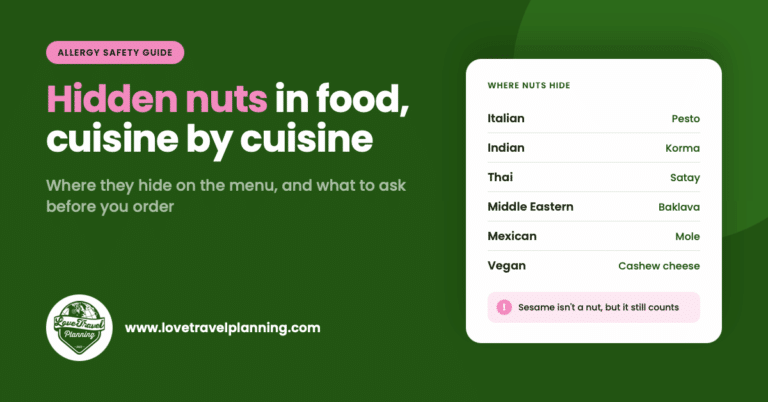
There are other tours which operate in the Barossa Valley, who also visit the Kies Family Wines vineyard, and these tours have their lunch at the in-house Kies restaurant which is called the Monkey Nut cafe. For obvious reasons, I did not want to risk my nut allergy here, and is why I chose the tour I did.

Barossa Valley wine tasting glass of rosé on table

Turkey Flat Vineyards

Turkey Flat was first planted in the 1840s by a Prussian settler who put Shiraz vines into the ground on the edge of what is now Tanunda. The Schulz family took over the property in the 1860s and have been there ever since, now into the fourth and fifth generations. 

For most of that history they grew grapes alongside running a butcher’s shop and a dairy. It was the late 1980s before the fourth generation decided to stop selling fruit to other people and make their own wine, with the Turkey Flat label properly launched at the start of the 1990s.

They also held onto some of their oldest vines through the government vine pull scheme of the 1980s, which paid growers to rip out old vineyards. A lot of irreplaceable old vine material went into the ground that period, and the growers who refused are the reason the Barossa still has what it has.

Barossa Valley winery oak barrel storage warehouse

What Turkey Flat is known for:

They work mainly with Rhone varieties, Shiraz, Grenache and Mataro,from an historic site, and they are known for old vine wines with real concentration:

Turkey Flat rose: Grenache-based, their flagship and a consistent award winner. Rose makes up a striking share of their production and they were early to the rose revival in Australia..

Grenache: Elegant and perfumed, and the wine that won them a major national trophy for a young red.

White Shiraz: Made in a rose style from red grapes. Unusual, and better than it sounds.

Shiraz: Old vine, powerful but balanced, with proper ageing potential.

Butchers Block range: A Grenache Shiraz Mataro blend, more everyday and very good value, and a nod to the family’s butchery history. .

The tasting experience at Turkey Flat

This one started inside the barrel store, which by late morning was also the coolest room available and very welcome. It was a more formal tasting than Kies, with staggered pours and a proper explanation of each wine.

Lunch followed outside on a long shared table – a generous regional platter, with wine and beer available alongside. It was sociable in the best way, and by this point the bus had stopped being a collection of strangers.

Turkey Flat handled my nut allergy well

The team at Turkey Flat handled my nut allergy very well, and there was only one thing on their platter I was advised not to eat. I had told the GetYourGuide provider See Adelaide & Beyond at booking, and they acknowledged my allergy in good timing. I didn’t feel nervous or unsafe about my allergy at any point.

Barossa Valley Turkey Flat Vineyards wine bottles display

Rosenvale Vineyards

The Rosenzweig family came to the Barossa from Prussia in the 1850s, settled at Moculta and started farming. They have been grape growers for seven generations, supplying fruit to some of the biggest names in Australian wine. 

It was only in 2010 that the sixth generation built their own winery on the family vineyard and began producing under the Rosenvale label. That makes it the youngest brand of the three by some distance, sitting on top of well over a century of vineyard knowledge. They farm several hundred acres across a handful of estates in the northern Barossa using a mix of conventional, organic and biodynamic methods.

Barossa Valley Rosenvale modern wine tasting room

What Rosenvale is known for

Small batch, terroir driven wines that express individual vineyard sites, and bold Barossa reds that push ripeness while staying fresh:

Old Vine Reserve Shiraz: The flagship, big, rich and barrel selected from old vines.

The Guardian Shiraz: Another premium Shiraz from the same stable.

Rosenzweig Shiraz: Another premium Shiraz from the range.

Grenache: Elegant, perfumed and vibrant.

Roseback Shiraz: A frequent medal winner.

The tasting experience at Rosenvale

The most formal tasting of the three, seated indoors with air conditioning, listening to a host talk properly through each wine. It was also the most impressive display of knowledge of the day.

Counterintuitively, this was the one I got the most out of. If you know nothing about wine, having somebody explain what you are tasting and why, in detail, at the end of the day when your palate has warmed up, is when it finally clicks.

Barossa Valley Rosenvale wines display and banner

The stops between wineries

In between each winery, there were non-drinking stops which helped set the scene about the Barossa Valley, and how it came to be such an important vineyard region.

Tanunda

The prettiest of the Barossa towns, and often the most photographed. It grew out of Langmeil, one of the first German villages planted here in the 1840s, and the German influence can be seen in the architecture, the bakeries and the street names.

There are stone Lutheran churches within a short walk of the high street. We only got 20 minutes because of the late start and I would happily have taken the full 30, most of it on gelato!

Barossa Valley Tanunda town centre with church steeple

Mengler Hill Lookout

Mengler Hill Lookout provided panoramic views across the entire valley. From up here, you can see vineyards on the slopes, small villages strung along the valley floor with church spires marking all the Lutheran towns. 

The Whispering Wall

The dam wall at the Barossa Reservoir, a curved concrete arc with an acoustic quirk that carries a whisper clean across the other end, well over a 100 metres away. We missed it because of our delayed start, but if your day runs to schedule, then you will not.

The Avenue of Palms

A long straight run of date palms along Seppeltsfield Road, planted by winery workers during the Great Depression. The estate could not afford to keep paying its workforce in cash through the downturn, so it kept people employed planting palms instead. 

The winery at the end of that road was founded by a Silesian emigre, which makes the avenue a neat little summary of how the Barossa Valley came to be – German family & Australian dirt.

Barossa Valley tour guide posing next to bus on palm road

Why the Barossa Valley is so special

The Barossa is Australia’s best known wine region. Vines were planted in the 1840’s with German settlers, and some of those original plantings are still produced. They survived because South Australia’s 19th Century quarantine rules kept out phylloxera, the root louse that destroyed most of Europe’s vineyards in the late 1800s. Europe had to replant almost everything onto resistant American rootstock. The Barossa did not, so a proportion of the valley is still growing on its original European roots. 

Old vines yield less and concentrate more, which is why Barossa Shiraz tastes the way it does; bold, full bodied and built to age. 

The region holds the huge names; Penfolds, Jacob’s Creek, and Yalumba among them, alongside a large number of family-owned wineries. And, even setting the wine aside, it is a beautiful part of the world – rolling vineyards, German influenced towns, good lookouts, and better food.

Barossa Valley tour bus parked at winery entrance

Is the Barossa really the best day trip from Adelaide?

Yes, and I would put it in the top handful of things I did in Australia. What made this tour work was the choice of wineries; three small family operations, each with its own personality and its own style of tasting, rather than three big-name cellar doors processing coaches. 

The group was small enough to bond, which matters if you are travelling solo. The lunch was excellent and my allergy was handled properly. And, the guide salvaged a badly delayed start without the day ever feeling rushed.

Love Travel Planning
Thank you for reading

I hope you found it useful

Thank you so much for reading my blog. For more stories, itineraries, and advice, check out our Related Posts and sign up to receive Lucy's blogs by email.

If you have a blog-related question, please do ask in the comments box below and I'll try to help.

T
Guest writer

This blog was written by Tom at Smyto Creative.

📸

A little request: if you use my photos, please credit Smyto Creative on your social media or give me a shout out on Instagram @smytocreative as we are growing this website. Huge thanks.

Enjoy your travels! ✈️
Get Planet Travel

Join thousands of travelers looking for inspiration from our FREE Planet Travel newsletter!

Thanks! Check your inbox to confirm.

Leave a reply

FREE GUIDE

The Platinum Travel Planning Roadmap

Your step-by-step framework for stress-free, unforgettable trips — from first idea to final itinerary.


FREE GUIDE

The Platinum Travel Planning Roadmap

Your step-by-step framework for stress-free, unforgettable trips — from first idea to final itinerary.

Get Planet Travel

Join thousands of travelers looking for inspiration from our FREE Planet Travel newsletter!

Thanks! Check your inbox to confirm.