


We used to treat Kew Gardens as our own back garden when we lived nearby with only a small patio for container plants at home, and what a spectacular back garden it proved to be! Armed with a Friends of Kew membership, we visited regularly throughout the year, seeing the seasons and colours change and never getting bored of our time there. Here’s what to see when you visit Kew Gardens at different times of the year.
But first, some facts about Kew Gardens…
- Royal Botanic Gardens Kew is the official name of Kew Gardens but I’ll be using the names interchangeably in this blog (sorry!).
- UNESCO World Heritage Site – dedicated to the living world and the interactions of people, plants, and fungi.
- Home to over 50,000 living plants and therefore ‘the most diverse place on Earth’.
- The Herbarium holds between 7 and 8 million species.
- The Fungarium is the world’s largest and is currently being digitalised.
- Conservation work is key at the Royal Botanic Gardens to help save endangered plant species and take good care of the live survivors (those cases now extinct in the wild).
- International network – Royal Botanic Gardens Kew has an extensive network of scientists (botanists) in the UK and overseas, as well as a large team of volunteers.
- Training – the education centre here is training the next generation of horticulturists, and offers a PhD with the Kew Plant Science programme.
- Wakehurst in Sussex is Kew’s wild botanic garden.

When you visit Kew Gardens in Spring (March – May)
Spring is a wonderful time to visit the Royal Botanical Gardens Kew, when the rotation of spring flower colours starts and the weather starts to warm up allowing for a long walk around this huge site. You can come time and time again and see different views as the bloom cycle changes.
Spring Flower Blooming Cycles
Typically, the Spring flowers will bloom around the following times:
- Magnolias (between February and March) – enjoy these gorgeous flowers near the Orangery and in the Arboretum. The pink Tulip Trees are particularly pretty.
- Daffodils (March) – spot these classic, sunny British flowers throughout the gardens and Arboretum in Spring.
- Tulips (April and May) – tulips are my favourite flowers and have inspired trips to the Netherlands to see the tulips in bloom. However, the next best thing is to look for tulips here on the Broad Walk Borders, under the cherry trees north of the Temperate House and in front of the Palm House.
- Bluebells (April and May) – follow the Woodland Walk during bluebell season for a real treat, discovering a simmering carpet of blue in-between the trees. This 37 acre site of classic woodland was donated to Kew by Queen Victoria on the proviso that it was left untamed and wilder which is a lovely contrast to the more manicured sections of the gardens. Look out for Queen Charlotte’s Cottage nestled in the woods.
- Cherry Blossom (April and May) – join in with some Hanami (Japanese flower viewing) at Kew Gardens on Cherry Walk south of the Palm House, in the Japanese Garden, and at the north end of Temperate House where you’ll be able to enjoy pretty pink and white blooms.
Explore the Victorian Palm House
When it’s chilly outdoors, this is an ideal time to head into the beautiful (and warm) Victorian Palm House to explore the lush tropical plants. Note -inside the Palm House you’ll find the air heavy with moisture and quite humid which makes it difficult to take photos inside as the camera lens steams up!
Ascend the metal spiral staircases to get a bird’s eye view of the glasshouse and fully appreciate the height of some of the palms (up to 10 meters tall). At ground level try to spot rubber trees, cacao plants and mini pineapples.


Temporary Chihuly art installation and Scooby Doo outside the Palm House
When you visit Kew Gardens in Summer (June – August)
Summer was perhaps our least visited season at the Royal Botanical Gardens Kew, perhaps because it tended to be busier with tourists? However, each summer we would typically pick at least one event from the summer series of events and spend time in the gardens on the same visit.
Picnic under the trees
One of the loveliest things to do on a visit to Kew Gardens in Summer is to do some sightseeing, then find a shady spot under the trees and set up camp for an hour or so – relax, enjoy a picnic, listen to the sounds in the gardens and watch the world go by. It’s the perfect place to rest your feet, chill out and connect with nature.
Outdoor concerts and events
During the summer months at Kew Gardens, there’s an extensive programme of live entertainment, usually including:
- Outdoor music and picnic concerts with some big name performers.
- Al fresco theatre performances for adults and children.
- One-off events such as the silent disco.
You’ll need to book early for such events as they are popular and regularly sell out. Tip – subscribe to the Royal Botanical Gardens Kew emails to keep informed about new events so you don’t miss out.
Climb the Great Pagoda
The Chinese pagoda, Great Pagoda, proudly stands at the Lion’s Gate end of Kew Gardens surrounded by avenues of trees. It was recently restored to its original 18th century design and glory, complete with the restructure of 80 beautiful carved dragons.
The pagoda can be seen towering over the trees from many angles in the gardens and makes for a striking (and unexpected) structure . If you climb the 10 storeys of the pagoda, then you will be rewarded with lovely views.
Pop into the Davies Alpine House
The Davies Alpine House provides cool and dry conditions and lots of light for an array of resilient alpine plants which like high altitude territory. This is a small, modern glasshouse in an innovative shape – almost like an alpine mountain!
As the structure has an innovative cooling system to keep the plants happy then it offers a quick way to cool off on a hot day. The Alpine House is quite small and so you’ll only need to make a quick visit (unless you really love Alpine plants!).
Carbon Garden (from July 2025)
This is the newest garden at Kew, which according to the Royal Botanical Gardens Kew website will ‘showcase the essential role plants and fungi play in tackling climate change and highlighting how our gardens will have to change in the future’. I look forward to visiting this when it’s open next time I’m in London!

Beautiful seasonal colours
When you visit Kew Gardens in Autumn (September – November)
Although it’s a tough choice, Autumn is probably my favourite season to visit Kew Gardens – when the air is crisp, and the trees are golden and red. What better place to visit than one filled with 11,000 trees!
Arboretum (‘place with trees’)
In many ways, Kew Gardens feels and looks like one huge Arboretum, although technically the Arboretum covers around two-thirds of the grounds. There are more than 2,000 species trees to admire as you stroll around tree lined avenues. If you love trees, then this is the place for you!
The largest tree is a Giant Redwood which is 40 meters tall, followed closely behind by a Mighty Oak at over 30 meters tall.
Tree top walk
To get ‘up close and personal’ with the trees, then take the lift up to the tree top walkway 18 meters above ground. This is a really lovely thing to do (assuming that you do not suffer from vertigo) and the walkway feels sturdy as it is made from 400 tonnes of weathered steel. It is lovely to see the trees from above, and get a different perspective on this quiet giants.
Victorian Waterlily House
The Victorian Waterlily House is a small, square glasshouse built around a 10-meter circular pond. It was designed specifically to house the giant waterlilies which can grow up to 3 meters wide (and can allegedly support the weight of an adult if you were allowed to try out this theory!). The waterlilies are usually available for viewing from July until October after which the Waterllily House closes until spring.
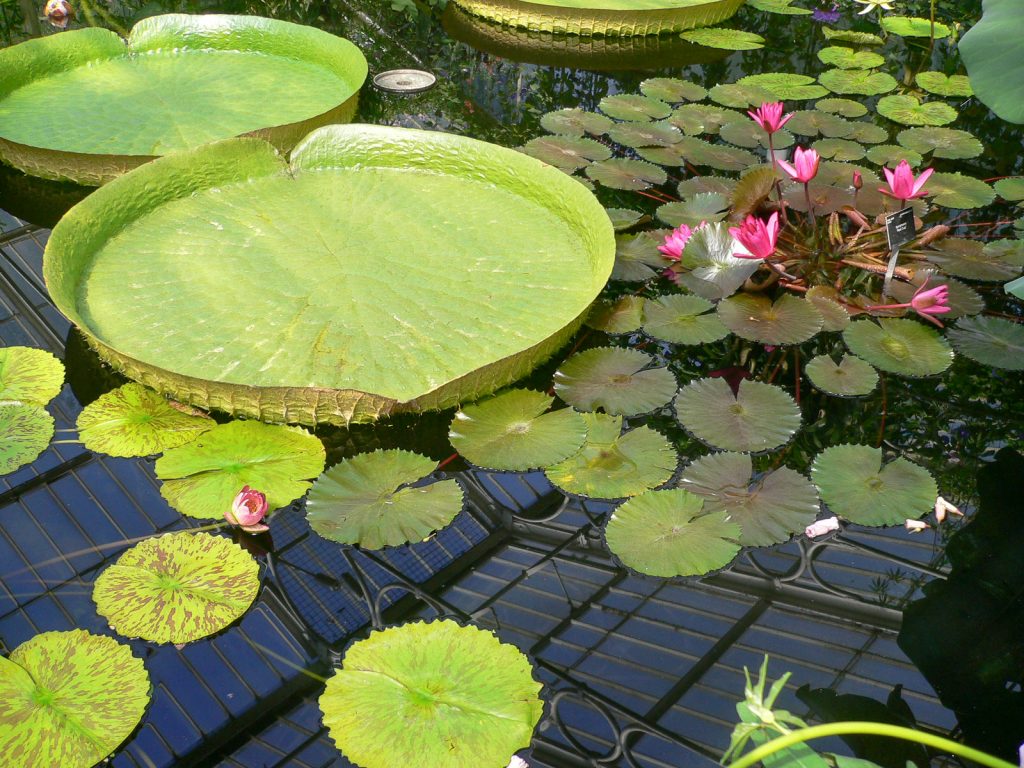
Giant waterlilies
Autumnal displays
The Autumn displays at Kew Gardens are as good as you might expect them to be, filled with pumpkins of all shapes, sizes and colour varieties. We’ve also enjoyed some amazing fungi displays over the years.

If you’re visiting with kids, then you will no doubt enjoy all the Halloween themed events and displays – check the website for details about what’s on offer.

Kew Pumpkin (one of hundreds, if not thousands!)
When you visit Kew Gardens in Winter (December – February)
The aim of the game in winter is to keep warm as you explore, so depending on the weather you might need to hop between warm spaces in the gardens, such as:
Marianne North Gallery
Pop into the on-site Marianne North Gallery to view her extensive collection of beautiful botanical art paintings.
Victorian Temperate House
Visit the stunning Victorian Temperate House which looks very smart after its 5 years restoration and is the largest surviving Victorian glass house in the world.
Inside the Temperate House are 1,200 species of plants from Asia, Australasia, America, and Africa which can’t cope with temperatures below freezing, so the temperature in the House is kept at 10 degrees all year round – perfect for warming up when visiting in winter!

The renovated Temperate House
Orchid Festival in the Princess of Wales Conservatory
The Princess of Wales Conservatory is comprised of several individually controlled climate zones suiting different types of plants, including:
- Cacti and succulents – there is an impressive array of Cacti and succulents in one of the drier climate zones.
- Giant waterlilies – as well as those in the Waterlily House, there are giant ‘Victoria Boliviana’ varieties in the wet tropical zone here at certain times of the year.
- Orchids – February is the month for the Kew Gardens Orchid Festival which gets so popular that you will need to book a timed entry spot.
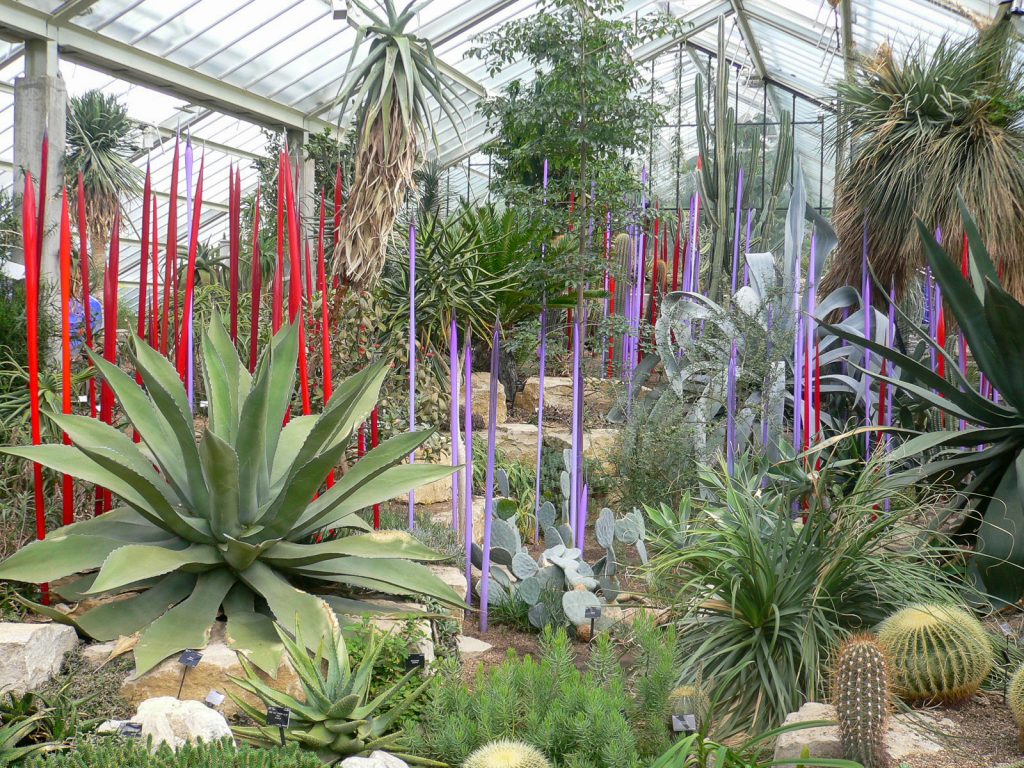
Winter Wonderland festival
The Winter Wonderland festival over the Christmas holiday period offers a number of magical experiences including an illuminated trail 2.7km long, fairground and carousel, food stalls and festive drinks (mulled wine and spiced cider), Santa ‘meet and greet’ and much more including new experiences each year. Wrap up warm and embrace the festive season.
To visit year-round at the Royal Botanical Gardens Kew
The Hive
The Hive is an incredible art installation designed by Wolfgang Buttress as a visual tribute to British honeybees. It is a large metal structure in the middle of a wildflower meadow. You can walk inside the structure and hear the hum of bees in the ‘key of C’ (the key real honeybees use). If you enter from the bottom and look up, you can see people standing on the glass above.
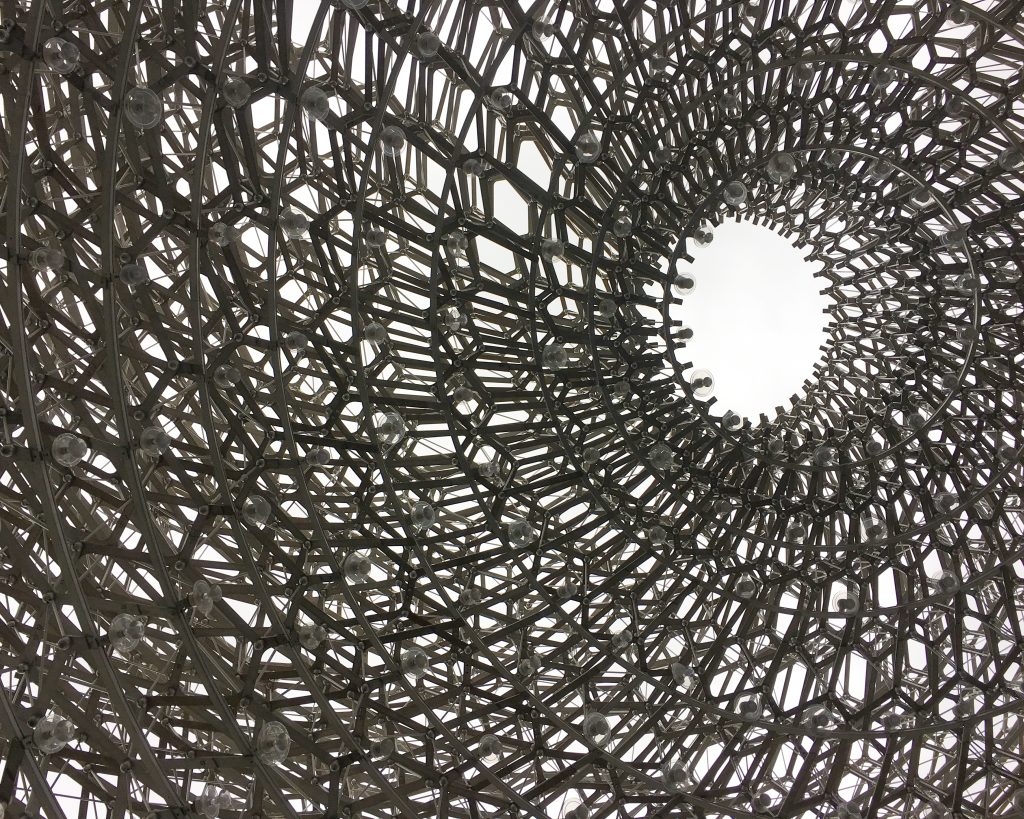


Looking up and down at The Hive
Kew Palace and Queen’s Garden
Often overlooked in favour of the natural exhibits, make sure to go inside this Historic Royal Palace which was the Summer House of King George III and Queen Charlotte in the 18th century.
In front of Kew Palace is the Queen’s Garden with a cute water statue called Boy with Dolphin. The garden is true to the plants and design of when it was first built.
Final thoughts…
The admission fees to visit Kew Gardens are quite pricey and so to get value for money you should aim to spend as much time there as possible – don’t just pop in for an hour, stay longer, explore, and soak up the beautiful surroundings.
That said, it would be impossible to get around all of Kew Garden in a day as the area is so large and there is a lot to see. Think about choosing a particular area of Kew to explore or target a specific event or installation.
However, whenever you visit, you are sure to find a place of sanctuary which allows you to connect with nature. A visit to Kew is good for the soul!
Thank you so much for reading my blog, I hope you found it useful?
For more stories, itineraries, and advice, check out my Related Posts and sign up to receive my blogs by email.
If you have a blog-related question, please do ask in the Comments box and I’ll try to help…
Request please – if you use my photos, then please credit Love Travel Planning on your social media or give me a shout out on Instagram @lovetravelplanning as I am growing my website.
Huge thanks.


Leave a reply
You must be logged in to post a comment.