Some of the best days we have had as a family have been spent at UNESCO designated sites. Walking the City Walls of Dubrovnik at golden hour, standing in front of the Moai on Easter Island, and wandering the trulli of Alberobello in Puglia.
Not all UNESCO sites are equal, and the label is not necessarily a quality mark for a good day out. UNESCO status simply means that a place matters to humanity. Some are extraordinary, while others may be underwhelming in person. Part of planning a good visit is having realistic expectations of what you will see and how busy it will be.

Some of the best days we have had as a family have been spent at UNESCO designated sites. Walking the City Walls of Dubrovnik at golden hour, standing in front of the Moai on Easter Island, and wandering the trulli of Alberobello in Puglia.
Not all UNESCO sites are equal, and the label is not necessarily a quality mark for a good day out. UNESCO status simply means that a place matters to humanity. Some are extraordinary, while others may be underwhelming in person. Part of planning a good visit is having realistic expectations of what you will see and how busy it will be.
This guide explains how to plan and visit any UNESCO Designated Site, what the three types actually are, and how to build a visit that works within a wider holiday. This sits within Stage 2 of our Platinum Planning Roadmap, as part of our holiday experiences hub.
A UNESCO Designated Site is a place recognised by the United Nations Educational, Scientific and Cultural Organisation under one of three programmes: World Heritage Sites, Biosphere Reserves, or Global Geoparks. Each programme protects something different, from cultural monuments to living ecosystems to geological landscapes. A single place can occasionally carry more than one designation.
In 2025 UNESCO marked a decade of its Global Geoparks programme, and its largest expansion of Biosphere Reserves in 20 years, making the three networks equally as important. According to UNESCO’s own figures, the organisation oversees more than 2,000 World Heritage Sites, Biosphere Reserves and Global Geoparks worldwide. As a traveller, the question should not be whether you are close to a site, it should be which ones are worth planning time for, and how
Of the three UNESCO Designated site types – World Heritage Sites, Biosphere Reserves, and Global Geoparks – World Heritage Sites are usually the one everyone associates with the brand. All three types are run by different parts of UNESCO and judged against different criteria:
Protecting places of outstanding universal value, usually cultural or natural landmarks.
Living, working landscapes that balance conservation with sustainable development.
Protecting geological heritage and using it to support education and local tourism.
Knowing the difference between the three types only matters for planning, because it shapes what experience you’ll actually have. A World Heritage Site is often a ticketed landmark with timed entry. A Biosphere Reserve or a Geopark is usually a wider region you move through, with visitor centres, trails and small towns rather than a single gate.
| Feature | World Heritage Sites | Biosphere Reserves | Global Geoparks |
|---|---|---|---|
| Focus | Outstanding universal value, cultural or natural | Biodiversity conservation with sustainable living | Geological heritage and geotourism |
| Run by | World Heritage Committee | Man and the Biosphere (MAB) Programme | International Geoscience and Geoparks Programme |
| You qualify by | Meeting at least one of 10 criteria | Showing a working three-zone conservation model | Proving international geological significance |
| Typical visit | A ticketed landmark, half a day to a full day | A region of trails, villages and nature, often days | A landscape route with geosites and visitor centres |
| Management style | Strict conservation, often timed entry | Zone, community-led, lived-in | Bottom-up, education and tourism led |
| Approx. global number | 1,248 in 170 countries | 785 in 142 countries | 241 in 51 countries |
*The approx numbers are drawn from UNESCO. World Heritage reached 1,248 sites in 170 countries after the July 2025 inscriptions. The Biosphere Reserve network grew to 785 sites in 142 countries in September 2025, its biggest expansion in two decades. The Global Geopark network reached 241 sites in 51 countries in 2026.
Because the three programmes protect different things, and a single landscape can be significant on more than one count. A volcanic region might be geologically important enough for Geopark status, ecologically important enough for a Biosphere Reserve and culturally significant enough for World Heritage. The designations are awarded separately, so the overlap is real but not automatic.
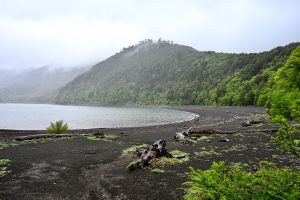
Conguillio National Park in the Chilean Lake District was a good example. It sits within the Kultraljurra Global Geopark and the Araucarias Biosphere Reserve. Uluru-Kata Tjuta and the Tasmanian Wilderness in Australia are inscribed as mixed World Heritage Sites for both their cultural and natural value. Jeju Island in South Korea famously holds all three designations at once, which is why it is so often used as the textbook crossover.
As of May 2026, we have collected all 2,274 UNESCO Designated Sites into a spreadsheet which you can download for free, and filter by designation category, country, type of site, and even check off the ones you’ve been to! You can find the full sheet below:

Treat the site as one experience within a holiday, then work through a repeatable set of decisions. Decide whether it is the headline of a day or the reason for the whole trip, check seasonality and crowds, book any timed entry early, and build in more time than you think you need. These principles hold whichever of the three designations you are visiting.
This is Stage 2 of the Love Travel Planning Platinum Roadmap, Defining the What. The work you do here directly feeds into Stage 3 (When You Go) and Stage 4 (Where You Go), because a designated site in shoulder season is a different experience from the same site in August.
We often use GetYourGuide to book guided visits and read reviews, looking for comments about the guide’s knowledge rather than just value. We also read photography forums and recent visitor reviews for advice on light and timing, because the people who care most about timing tend to give the best advice.
Go as early as you can, visit in shoulder season and pick weekdays over weekends. This is the single most consistent piece of advice we can give. The difference between arriving at a famous site at opening time and arriving mid-afternoon is the difference between having it to yourself and queuing for the same photograph as everyone else.
Overtourism is a real issue at the most famous sites, and not only for the sites themselves. The Giant’s Causeway in Northern Ireland, for example, has seen visitor numbers climb from around 600,000 a year in 2012 to over one million by 2017, with the National Trust now studying how to protect the visitor experience and the site itself.
When we visited Chichen Itza in Mexico, we arrived at the 8am opening, had a two hour tour and walked the grounds in relative calm (and a cool morning). By the time we returned to the car, more than 30 inclusive-resort hotel coach buses had arrived.
Where we can, we plan visits for May to June, or September to October in Europe. The Dubrovnik City Walls in late September are a fundamentally different experience from the same walk in August. For sites that simply cannot be visited at a quieter time, arriving at opening and visiting on weekdays makes the most meaningful difference.
Follow the specific site’s guidance, stay on designated paths, do not touch or climb structures, and leave nothing behind. For natural sites, the cumulative impact of millions of visitors is a conservation challenge, and the rules exist for reasons that go beyond inconvenience.
The more meaningful application, in our experience, is simply to slow down. The sites that get the most visits often get the least time per visitor. Spending a day or overnight in Matera, rather than 45 minutes, changes what you take away from it. We also use local guides and eat at local restaurants rather than tourist-facing chains, which keeps more of the benefit in the community that lives alongside the site.
Matera and Lubeck delivered experiences as rich as anything at the most famous European sites, with a fraction of the visitors.
The Colosseum, the Acropolis, Chichen Itza and the works of Antoni Gaudi routinely sell out for the short notice visitors in July and August.
If you have made a long journey to stand somewhere significant, the experience of actually being there is worth exploring, for at least part of the visit. So many times, we see people running to all the photo spots, skipping all the signage and not understanding the importance of the site, or what it means for the local culture.
Because we went to Chichen Itza in the morning, and were able to escape before the hoards descended, we had loads of spare time. During that day, we also visited a cenote, as well as visiting Ek Balam, which in our family opinion, was as impressive as Chichen Itza, whilst not being a UNESCO World Heritage site.
Very naturally, which is one of the most useful things about them. A designated site is rarely a holiday in itself, but it is usually a very good day (or few days) within one. How you slot it in depends on your holiday style:
City breaks and UNESCO sites are a natural pairing. Rome, Athens, Dubrovnik, Kyoto, Seville and Krakow all have World Heritage historic centres. In many cases the designation effectively covers the area you have come to see, so the site is the city break rather than an add-on. The key planning step is advance ticket booking for the sites most likely to sell out, which in European peak season means almost all the major ones.
Road trips and designated sites pair exceptionally well, because the route often passes near several sites without major detours. The important thing here is to avoid over-scheduling. Try not to avoid visiting more than one major site in a day on a road trip, because the day you rush through two becomes a checklist more than an experience. Our favourite UNESCO road trip so far was the Chilean Lake District road trip.
Coastal or beach holidays combine with designated sites well too. Dubrovnik’s Old Town sits on the Dalmatian coast. The Amalfi Coast is itself a World Heritage Cultural Landscape. Ibiza Town’s walled Dalt Villa is a World Heritage site within what most people treat as a beach destination. A coastal holiday with one or two designated day trips built in gives you the pace of a beach holiday and a handful of significant experiences for the days the pool holds less appeal.
Many designated sites work as self-contained day trips from your accommodation, especially when your hotel is not itself a designation destination. Lubeck is an excellent day trip from Hamburg. The Drumheller Badlands work from Calgary. The Giant’s Causeway is a strong day trip from Belfast.


The most famous UNESCO sites tend to be the great cultural landmarks. The Colosseum in Rome, the Acropolis in Athens, Machu Picchu in Peru, the Taj Mahal in India, the Great Wall of China and Chichen Itza in Mexico. On the natural side, the Grand Canyon, Yellowstone, the Galapagos, and the Great Barrier Reef are the household names. Several of these are also among the New Seven Wonders of the World, which is partly why they are so well known.
The famous sites are famous for a reason, but the ratio of crowd to experience at the most iconic ones has shifted over the past decade. Some of our best days have been at sites most people have never heard of, such as Matera in Puglia, or Lubeck in northern Germany. We would always pair one famous site with one quieter one on the same trip.
Yes, but only for a handful of truly remote or bucket-list sites, and even then we would build other things around them. A designated site is usually the headline of a day rather than the reason for the whole holiday, which is exactly how we treat it at Stage 2 of the Platinum Roadmap, the experience stage.
There are a few exceptions – Easter Island justified a dedicated trip for us, because it is so remote and so significant that you cannot sensibly slot it into something else. Machu Picchu, the Galapagos or a Serengeti safari work the same way. If the site is hard to reach, needs several days, and is genuinely once in a lifetime, then it earns the right to become an anchor for the trip.
The biggest are natural marine and wilderness sites, not cultural ones. The largest World Heritage Site by area is the Phoenix Islands Protected Area in Kiribati, a Pacific marine reserve that, according to Guiness World Records, covers 408,250 square kilometres, larger than Paraguay and almost four times the size of Iceland. It is also the deepest, dropping to over 6,000 metres below sea level.
Across the three designations, scale generally comes from the natural and regional programmes rather than the cultural landmarks. Biosphere Reserves and Global Geoparks are whole regions by design, and many run to thousands of square kilometres.
The smallest is the Holy Trinity Column in Olomouc, Czech Republic, a single Baroque monument inscribed in 2000. It is a 35 metre plague column on the city’s main square, and one visitor reckoned they could walk a full circuit of it in around 50 seconds. The Thracian Tomb of Kazanlak in Bulgaria is often cited alongside it, as both protect only a few square metres.
A small site can still take a good couple of hours though, and Olomouc is a quietly handsome city that rewards the trip in its own right. It is a useful reminder that World Heritage status is about significance rather than size.
Some can be excellent, while others will be tiresome. The best for young children are the natural and open-air sites where there is space to roam and explore. Kew Gardens works for almost any age, with children usually more interested in the grass, the lake and the play areas than the botany. The Giant’s Causeway with its stepping-stone basalt columns, and the Drumheller Badlands, with their dinosaur fossils , both engage younger visitors naturally.
Densely cultural sites are harder going for little ones. A morning of ancient ruins or church interiors tends to test the patience of under-sevens, however significant the place is. In our experience, the trick is to keep cultural visits short, go early before anyone is tired or too hot, and build in an ice cream or a treat afterwards.
Not necessarily – teenagers tend to switch off at sites that feel like a school trip, and switch on at the ones that have a story, a film connection, or something active to do. Matera doubles as the dramatic opening location of the Bond film No Time To Die. Chichen Itza is one of the New Seven Wonders, and has a fascinating history of Mayan warriors and an ancient ball game.
Drumheller has one of the finest dinosaur fossil collections. Our own teenagers arrived at the Alberta Badlands long past their dinosaur phase and were more interested than we expected them to be.
The most isolated UNESCO site is Henderson Island, part of the British Pitcairn Islands in the South Pacific. UNESCO describes it as having no major land mass within a 5,000km radius, an uninhabited raised coral atoll inscribed in 1988 for its untouched ecosystem and endemic birdlife. The nearest inhabited place is Pitcairn itself, around 200km away, with a population of 50 people.
Getting there is genuinely difficult and not a standard trip. You would first reach Pitcairn, which has no airport and is served mainly by the Silver Supporter cargo ship from Mangareva in French Polynesia, a voyage of around 32 hours. Mangareva is itself reached by a long flight from Tahiti.
From Pitcairn, Henderson is visited only occasionally by boat, and landing requires a licence issued by the Pitcairn Island Council. For most travellers the more realistic remote bucket-list site is Easter Island, which sits within the same South Pacific region but has flights from Santiago and Tahiti and the infrastructure to actually stay.
Every month I’m sending out either a full itinerary for a destination or some genuinely helpful packing guides – including downloadable PDF’s, accommodation recommendations and much more! Sign up for free below: