How To Plan Casual Walking Tours On Holiday

This page covers walking as a holiday experience in both its forms – the guided tour that starts the trip, and the casual self-guided walking that follows from it. City walking, history trails, coastal paths and exploring neighbourhoods. This guide sits within Stage 2 of the Platinum Roadmap, as part of the holiday experiences hub.

18% of UK adults planned a hiking or walking holiday in 2025, making it the most popular activity type in the survey. Interest in self-guided walking routes and history trails has grown particularly strongly since 2020 (AllClear Travel Insurance, 2025 Travel Trends Survey, nationally representative sample of 2,000 UK adults).

Man in checked red shirt, yellow trousers, yellow flat hat and blue cross body bag walks away from the camera next to a yellow Metro train.

How To Plan Casual Walking Tours On Holiday

This page covers walking as a holiday experience in both its forms – the guided tour that starts the trip, and the casual self-guided walking that follows from it. City walking, history trails, coastal paths and exploring neighbourhoods. This guide sits within Stage 2 of the Platinum Roadmap, as part of the holiday experiences hub.

18% of UK adults planned a hiking or walking holiday in 2025, making it the most popular activity type in the survey. Interest in self-guided walking routes and history trails has grown particularly strongly since 2020 (AllClear Travel Insurance, 2025 Travel Trends Survey, nationally representative sample of 2,000 UK adults).

Man in checked red shirt, yellow trousers, yellow flat hat and blue cross body bag walks away from the camera next to a yellow Metro train.

Walking is the most underrated experience you can do while on holiday. It costs nothing (in most cases), requires almost no planning, and can create some of the best stories you tell when you get home. The back street in Rome you found, the coastal path in Whitstable, or walking the Barrio Lastarria in Santiago.

We have a rule in the Platinum Roadmap that we apply to almost every trip we can, regardless of destination; on the first full day in a new destination, book a guided walking tour. Not a hop-on-hop-off bus, not a private driver, not a self-guided wander. A guided walking tour, on foot, with a local guide who knows the city from the inside. We book these predominantly through GetYourGuide although you can also book direct, but it has become a Love Travel Planning tradition.

Why do we do this? Well, we find a good guided walking tour on day one gives you the orientation, the context and the insider knowledge that makes everything else you do in a city or town better. You learn which neighbourhoods are worth returning to, which streets to avoid at certain times of the day, which lesser-known viewpoints the guide considers better than the famous ones, and why the history of the place looks the way it does. Every self-guided walk you do afterwards is richer for having done it.

What do we mean by casual walking on holiday?

Casual walking on holiday is not a sport or a fitness challenge. It is the decision to use your feet as the primary means of experiencing a place rather than relying on taxis, tour buses, or public transport. 

A city seen from the window of a coach or from the back of a taxi is a series of landmarks separated by junctions. The same city walking slowly, taking wrong turns, stopping when something looks interesting, following a street because the name seems worth investigating, is a completely different experience. 

Causal walking fits every holiday style; you’ll do 20,000+ steps on a city break, it’s the best way to explore a coastal town, and it’s the best way to get blood back in your legs after driving all day. It requires no gear beyond comfortable trainers, no booking beyond a rough idea of what you want to see, and no fitness level beyond being able to walk for two or three hours with breaks.

What about trail hiking and long-distance routes?

Although we do have some blogs that cover this content, this guide will focus on casual walking rather than dedicated trail hiking. A multi-day wilderness trail like the West Coast Trail on Vancouver Island requires permit bookings through Parks Canada months in advance, physical conditioning over weeks, camping equipment and wilderness navigation skills. 

Whereas everything in this guide can be planned in an afternoon once your destination is decided.

How to plan a casual walking experience using the Platinum Roadmap

A group of people walking away from the camera down a lane in-between painted wooden houses - salmon pink and blue. Trees to the right
On the walking tour along Botts Lane

Planning to walk might sound, well, a bit mad, but understanding who will be with you, the type of walk you’ll be doing, what time of day you’re doing it, and the route you’ll be taking will make sure everything runs smoothly. We’re not here to re-engineer the wheel, just a few thought exercises to help make the route more accessible for all your companions.

Stage 1: Who are you travelling with?

Walking is one of the most adaptable experiences in this guide precisely because almost any group can do it. The only variables to consider here are pace, accessibility and distance. A group with young children walks differently from a couple of newly empty nesters, but both can have an excellent walking day if the route and the expectations are set correctly from the start.

Young children

Keep distances short (under 5 kilometers), build in plenty of breaks, and choose routes with things to see along the way rather than destinations at the end. Markets, bridges, fountains, and street food are all more engaging for young children than churches and museums.

They respond best to walking with a purpose. A self-guided walk with a clear goal, the best gelato in town, the highest viewpoint in the city, the oldest part of the walls, keeps attention better than an aimless wander.

Have the most freedom, and can walk longer distances, manage heat and hills more easily. They also benefit most from the slower, more attentive pace that makes casual city walking more pleasurable.

Work best with a route that has a natural halfway point where the group can split if some want to continue and others want to find a cafe. Plan for this rather than hoping everyone has the same energy levels at the same time.

Stage 2: What kind of walking experience do you want?

Walking on holiday covers more ground than most people assume. Before you think about where you are going, it is worth knowing which type of walking experience fits the trip you are planning. 

There are two ways to do a casual walking tour, either guided, or self-guided. We tend to do a guided walking tour the first full day we have in a city, and then self-guided walking tours for the rest of the trip – unless there are multiple tour routes available. 

When we were in Dubrovnik for example, we all did a dusk City Wall guided tour, as well as a self-guided Dubrovnik old town tour, and Smyto (our guest writer), went on a Game of Thrones guided walking tour, which covered completely different ground, as well as some familiar ground as the other tours.

The initial guided tour helps set the context, the self-guided tours help you explore at your own pace:

The recommended starting point for any new destination. A local guide on foot, covering the historic centre or a specific neighbourhood, giving you the orientation and insider knowledge that makes every subsequent walk better. Book through GetYourGuide before you travel.

If you’re in a city, there may be different variations on the guided tour, like ghost tours, TV series filming locations, history, food and wine etc.

Self-guided walking tours have the advantage of allowing you to walk at your own pace, following a route you’ve planned out yourself. The downside to a self-guided walking tour is that you won’t have a walking commentary (pardon the pun) of the area, unless you have an audio guide. 

There are some travel companies or tourist boards that will give out audio guides for self-guided walking tours, but not all do.

Matching your walk to your trip type

The right walking style depends not just on what you want to do, but on the kind of holiday you are already planning. Walking slots differently into a city break, a coastal holiday, a road trip and a heritage-based short break. Here is how each one tends to work:

Walking on a city break

City breaks are the natural home for casual walking. A well-planned walking day costs nothing beyond entry to specific sites and produces better memories than any coach trip. For Rome, walking is not just the best way to see the city; it is the only way to experience the parts that matter most. You cannot understand what the Pantheon means until you have arrived at it on foot through the streets around it.

Our Rome walking guide covers five different areas, from a first-day orientation walk to dedicated half-day itineraries for the Colosseum, the Forum and Trastevere, and the Centro Storico. Each one starts and ends within easy reach of a central hotel or apartment:

For city walking outside Europe, Santiago in Chile rewards a walking tour on the first morning more than almost any other city we have visited. The Barrio Lastarria and the streets around the Cerro Santa Lucia hill combine history, street life and independent shops in a way that a taxi simply does not deliver.

Walking on a coastal holiday

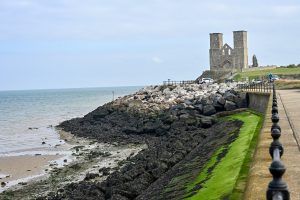
Most people on a coastal or beach holiday put themselves in an all-inclusive and spend the entire visit on the beach or the main strip. Completely forgetting that coastal walking is one of the best types of walking there is, and in the UK, one of our most desirable stay-cation activities. One of our favourites, was a walk around Whitstable in Kent, along the coastal and inland into the Kentish countryside:

Walking on a road trip

Road trips and walking intersect at specific stops rather than throughout, and those stops are often what make the broader journey memorable. A half-day on foot in the right place is enough to get properly inside somewhere rather than photographing it from the car park. 

In Canada, the Drumheller Badlands in Alberta offer accessible, visually extraordinary hoodoo trail walks that suit mixed-age groups without any preparation:

The Grasslands National Park in Saskatchewan has short trails through short-grass prairie that has barely changed since the last ice age:

The Sea-to-Sky Highway between Vancouver and Whistler has walking stops at Shannon Falls that lift it from a drive into a proper day:

Walking through history

Heritage, or history walking trails work on any length of trip, from a single afternoon to a week-long itinerary around a region. The key is treating the walk as the way to see a place rather than simply moving through it. 

Yorkshire, England, is a good example of how much a single region can hold. It is a huge county with entire cities, coastlines, moors and dales that could each justify a dedicated trip. The walking heritage alone spans Roman fortifications, Viking streets, medieval abbeys, Georgian mill towns and industrial revolution landscapes. 

Our guide to the 7 New Age Wonders of Yorkshire is a starting point for anyone planning time in the county:

Stage 3: When is the right time to go?

Causal walking is the least season-sensitive experience in this hub, as walking experiences can happen in every season. But, there are obviously a couple things to take into consideration. For a destination in hot climates, the time of day matters more than time of year. Rome in July and August at midday are unpleasant by foot. The same city at 8am before the heat builds and before the tourist volume peaks, is Bellissimo. 

Early starts and a proper rest between noon and 3pm, followed by a late afternoon and early evening walk is the best approach to destination exploring in the Mediterranean summer.

In most European destinations, the shoulder season (May to June, September to October) is the best time for casual walking experiences, as there are mild temperatures, manageable crowds and the best quality of light. Spring and autumn walking in the UK, along coastal paths and history routes, is my favourite time of the year. 

On a trip to Dubrovnik, we chose the golden hour slot in the late afternoon to do a guided walking tour. It’s one of the best memories we have of the trip, and our tour guide was very interesting. However, competition for this slot is definitely steep, so make sure you get in there early!

Stage 4: Choose your route

By Stage 4 of the Roadmap, your destination should already be decided, and walking probably won’t sway you on where to go. It determines how you experience a place once you are there. Stage 4 for walking is therefore about choosing a route rather than choosing a location. Most casual walking routes fall into one of two formats:

A circular route starts and ends at the same point, usually your accommodation, a car park or train station. Circular routes suit city walking particularly well, since most historic centres are compact enough to loop through on foot without needing to retrace steps. The Rome walking itineraries in our guides are all built on this principle – each one starts and ends within easy reach of a central base.

A point to point route starts at one place and ends somewhere different. The experience tends to feel more like a journey and less like an excursion. This option will require you to get some form of transport at the end back to your accommodation. It’s usually used as part of heritage walking, like along a river, a coastline, or historical path.

The York City Walls, for example, can be walked as a full circuit or as a point to point section between two gates, with a taxi or bus back. Our full circuit guide is at:

Luckily, you don’t need to map out these walks yourself, in most destinations, someone will have made an AllTrails route of the landmarks you are trying to see. If they haven’t, then you can create your own and share it with your family.

Stage 5: Budget for casual walking

Casual walking in most cases will be completely free. The costs are limited to comfortable footwear if you do not already own it, entry tickets for any specific sites or historic attractions along the route, food and drinks during the day, and a guide or walking tour if you choose one.

For city walking with no guide, a full day on foot in any destination is the cheapest experience to any of our others in the hub. But, some history sites (especially UNESCO Designated Sites) will charge entry, so you may need to buy tickets in advance if travelling at peak seasons.

Stage 6: Book your guided tour first, then everything else

This idea of booking the activities first, should run through your entire planning process. On GetYourGuide, you can book activities well in advance of you actually going. Provided you give at least 24 hours notice, you can also cancel the activity & get a refund if you decide not to take it – but at least you would have booked it.

In peak seasons, like summer in Europe, many guided walking tours will book up weeks, if not months ahead. In some cities, like Barcelona, the walks around Gaudi’s Houses or the Sagrada Familia have been booked up in May 2026, for July 2026 tours. 

The earlier you can commit to booking guided tours, the better – you will benefit greatly from them. If you’re going with young children however, you may wish to skip the guided tour, and do it DIY; thank me later!

Step 7: Pack for a walking day

When it comes to casual walking, almost everyone needs to protect one part of their anatomy above everything else… their feet. Well worn-in, comfortable shoes with grip are more important than anything else. A flat smooth sole on wet cobblestones, as in Rome or Dubrovnik, will send you flying. And, new shoes bought specifically for your trip, is one way to feel regret after the first 20,000 steps. Smyto, our guest writer, learnt this the hard way buying new walking books for a trip around Warsaw, never having worn them beforehand.

We are not usually in the business of recommending specific gear, but there are a few brands we have found good for our casual walking experiences on holiday:

  • Tropic feel: Waterproof and water-resistant shoes that are comfortable for city walking and dry quickly if you want to paddle in the sea. Especially handy, when trying to avoid sea urchins.
  • Salomon: A family favourite, albeit on the pricier side. Light enough not to feel like hiking boots but with excellent grip on uneven and wet surfaces.
  • Merrell: Long lasting walking boots that suit more rural and mixed terrain. Built to go the distance.
  • Brooks Running: We have not tried these personally yet, but the brand has a strong reputation as the go-to city walking trainer.

Beyond footwear, here is what we pack for a day or half-day walking:

  • Water: Considerably more than you think you’ll need, particularly in warm weather. A 1.5 litre bottle per person for a full day is the minimum. If you’re in a city, you can get more, if you’re in the countryside, you will struggle. Pack electrolyte sachets if heat or distance is a concern - the Vimto ones are a favourite.
  • Sun protection: Sunscreen, a hat, and sunglasses for any exposed route or summer city walking. Easily forgotten when leaving a cool hotel room in the morning.
  • A small backpack: For a day walk, look for something under 45 litres. One pack between two or three people is normally fine. A shoulder bag will become uncomfortable after a couple of hours, and the lack of back support makes it felt over the day.
  • A lightweight waterproof layer: Even if the forecast is clear, we carry emergency ponchos for the whole family. Weather can change quickly, particularly on coastal walks or high altitude.
  • Cash: It is 2026, but markets, street food stalls and smaller cafes in many destinations still do not take cards. When travelling, cash is still king.

Casual walking experience FAQs

How far should we plan to walk in a day on holiday?

For casual city walking, 8 to 12 kilometres is a comfortable full day for most adults with regular breaks. Beyond 15 kilometres on hard roads and pavements, most people find their feet rather than their fitness is what gives up. For coastal paths or countryside walking, 10 to 15 kilometres suits most groups who are not regular walkers.

No, walking boots are not a necessity, but you should wear appropriate footwear. The single most common mistake on a walking holiday is wearing shoes that have not been broken in. Well-work trainers or walking shoes with a grip sole are sufficient for almost all city and coastal casual walking.

For city walking, Google Maps is the one most people use and reliable for most cities – however, when Smyto was in Split, he discovered that the streets were so narrow, Google Maps did not work. In this scenario, it’s better to try and find a paper map of the narrow streets.

For coastal and countryside routes, the OS Maps app covers the UK in detail, you can also use a website called www.footmaps.co.uk, which can be helpful if you have data. Kommot is strong for route planning and discovery across Europe and North America.  AllTrails is useful for finding trail routes and reading recent conditions reports from other walkers. For discovering guided tour options at a new destination, GetYourGuide is the most comprehensive platform.

Sign up to my 'Planet Travel' newsletter!

Every month I’m sending out either a full itinerary for a destination or some genuinely helpful packing guides – including downloadable PDF’s, accommodation recommendations and much more! Sign up for free below: