


Once you’ve decided on the route for your family road trip of the Alberta Badlands and Canadian Prairies, and booked the basics – flight, car hire and accommodation – then it’s time to think about more practicalities to help your trip run smoothly.
Essential documents for Canada
Passports, visas and eTAs for Canada
Before booking, always check the entry requirements to Canada related to your nationality and the length of your stay.
As a British Citizen with a current valid passport travelling to Canada for a two-week holiday, we just needed to apply for an eTA (electronic travel authorisation) ahead of travelling. I applied for these on-line about a week before travelling but they came through within hours.
Driving documentation required for your road trip
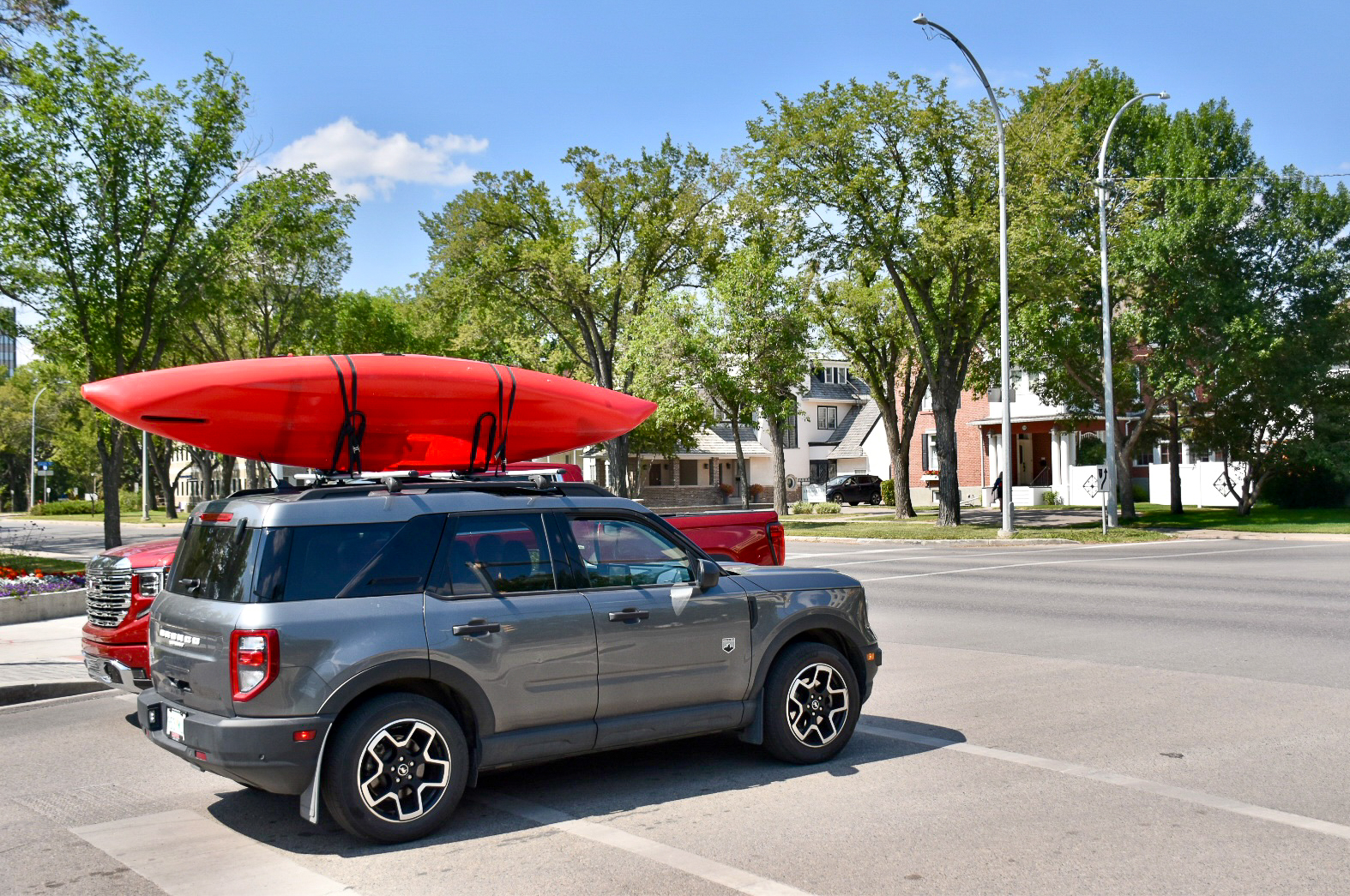
Ahead of your trip, check with your hire car company what documents they will require from you on arrival, and whether they require an International Driving Permit.
We were able to hire a car with AVIS on the provision of a full UK driver’s licence.
Travel Insurance
Take out the best insurance that you can afford to cover you in case of an accident, and to cover you for any high-risk activities which you might be participating in (such as horse riding or ATV driving!).
Driving in the Alberta Badlands and Canadian Prairies
How we found the roads in the Alberta Badlands and Canadian Prairies
We found the driving very easy and straightforward on our family road trip of the Alberta Badlands and Canadian Prairies, as the roads were well maintained and not particularly busy.
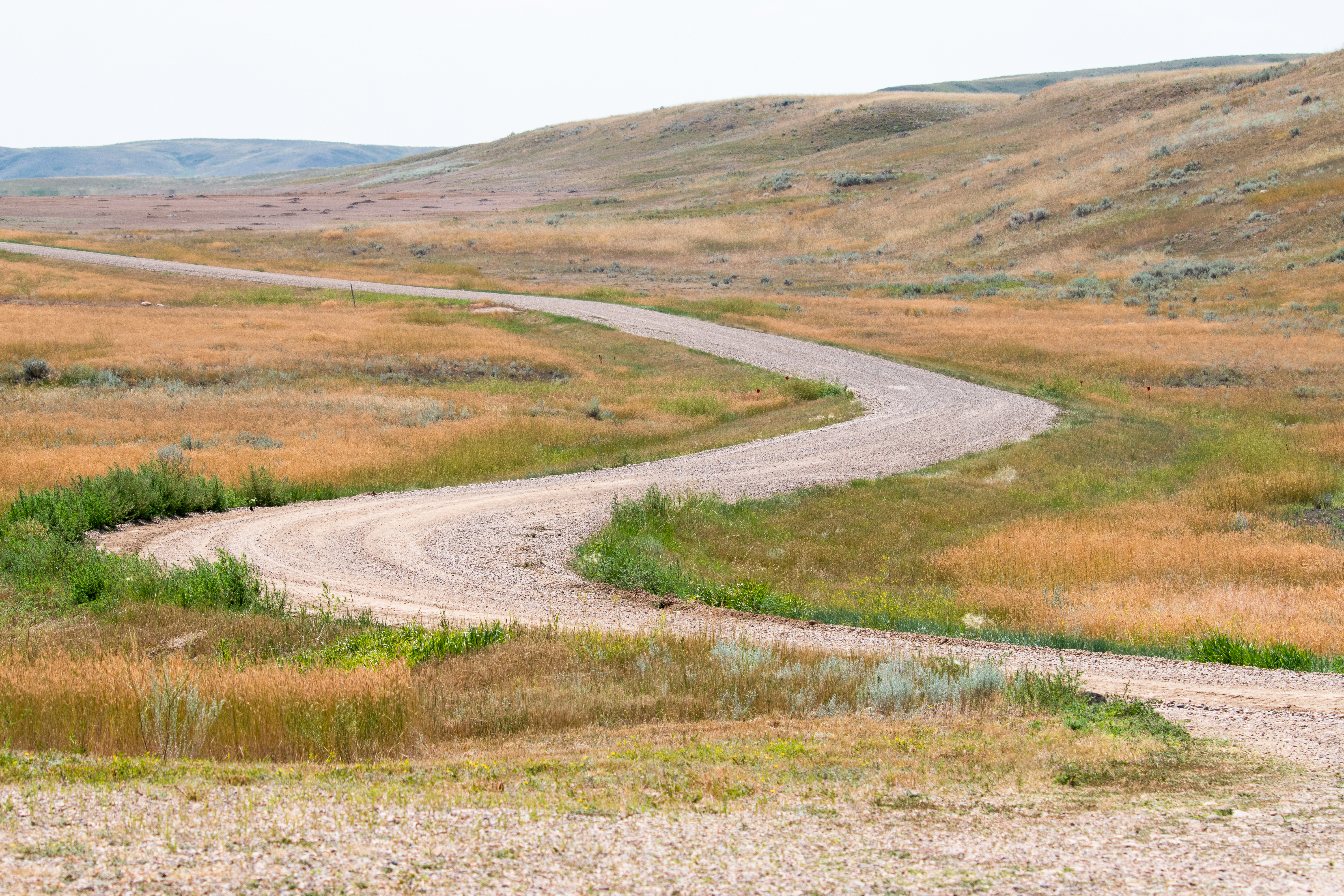
In a couple of places, such as the Cypress Hills InterProvincial Park, there were gravel or dirt roads which were only passable when conditions were dry; as we were travelling in the Summer when it was largely dry and warm, then these roads were in use, but we double checked with the locals before starting out.
We had to keep dropping into the manual car wash to clean all the bugs of the windscreen, and on one occasion sadly had to pull the remains of a small bird out of the radiator grill.
(photo credit: Instagram @evacndphotos)
Navigation tools for your road trip
Our AVIS hire car had a sat nav function, but we also travelled with a printed map as we were planning to visit the Grasslands National Park where we’d read that connectivity might be an issue. In fact, we did use our printed map when the car sat nav deactivated itself and went into ‘valet mode’ whilst we had no 4G and so were unable to check our location on Google. Be prepared!
Dangers of driving in the Alberta Badlands and Canadian Prairies
Wildlife
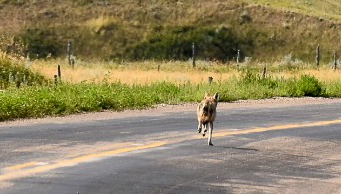
One of the main dangers of driving in the Alberta Badlands and Canadian Prairies is from animals suddenly running out into the road, mostly at dawn or dusk. We did have a coyote run straight out in front of the car but luckily it was far enough ahead not to have been dangerous.
Other drivers
Like at home, there is always the risk of danger from other drivers, for example, jumping red lights or speeding, so just take it easy, know the local rules of the road and be extra vigilant.
Weather
The weather was kind to us on our family road trip in July and August, but if you come outside of the summer season then you should be prepared for more inclement weather such as heavy rain, snow, or ice. Google the potential hazards for the time of year you are travelling in ahead of your trip.
Mother Nature
We were aware of the risk of forest fires after a dry Summer, and at the time of our travels, Jasper in the West was suffering a significant and devastating fire. As a result, there were high-risk fire signs throughout our journey reminding us not to do anything which might cause a wildfire.
There is also risk of tornados in Saskatchewan however we did not witness any on our trip.
(photo credit: Instagram @evacndphotos)
Essential health considerations for Canada
There was nothing special to be aware of in advance of our trip. I did take mosquito spray, but we didn’t have a single bite which was great.
In the Grasslands National Park, we had to be alert to two things, firstly snakes as there are ‘rattlers’ in the park and secondly, ticks in the grassy areas (more of that later).
Currency and costs in in Canada
Watch out for added taxes
We found Canada to be relatively expensive compared to Europe, and additional taxes are often applied on check-out of hotels which can push the prices right up.
Because we had stayed in self-catering accommodation for half of our trip, then we were able to manage food costs quite well be preparing our own meals. When we did eat out in restaurants the prices soon added up, however as portion sizes were generous, we could share dishes and keep costs down that way.
National Park Admission
You need to pay admission fees to the National Parks although I do not begrudge these as they need to be maintained and managed, so fair enough. Each national park has a Visitor Centre which we found to be manned by extremely friendly and helpful staff.
Everyone was super friendly and helpful!
I just wanted it noted how helpful and friendly the locals were who we encountered on our trip. Many people were fascinated about why we had chosen that route and not the more well-travelled route through the Rockies. As a result, they could not have done more to make us feel at home.
I hope you have a similar experience!
Thank you so much for reading my blog, I hope you found it useful?
For more stories, itineraries, and advice, check out my Related Posts and sign up to receive my blogs by email.
If you have a blog-related question, please do ask in the Comments box and I’ll try to help…
Request please – if you use my photos, then please credit Love Travel Planning on your social media or give me a shout out on Instagram @lovetravelplanning as I am growing my website. Huge thanks.
Enjoy your travels!


Leave a reply
You must be logged in to post a comment.