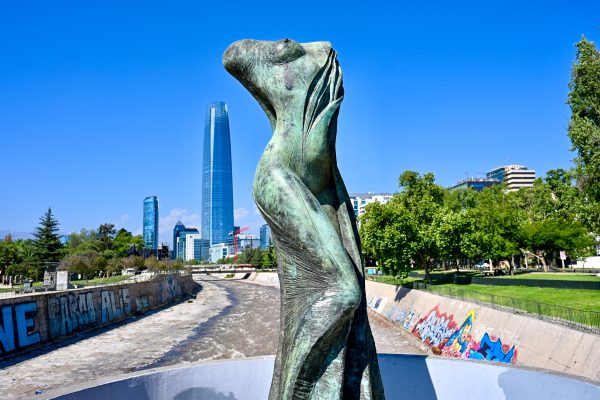
View along a half empty river bed towards modern blue skyscraper building on the horizon. Blue sky above. Green trees on the river banks. Graffiti on the concrete walls. A statue of a headless lady stands in the foreground.

Settle Into Chile With A Walking Tour Of Santiago, The Paris Of South America!

Many trips to Chile start with a stopover in Santiago, the main airport hub of this long, thin country on the western coast of South America Sometimes referred to as the ‘Paris of South America’, Santiago is an attractive city located in a valley surrounded by mountains and full of parks, boulevards and sculpturesIf you have a day in the city to acclimatise after a long flight, what can you seeOne idea is to take a walking tour of Santiago in the hands of a local for your first experience of the city.   

Table of Contents

Where is Santiago?

Santiago is the capital of Chile, with around 7 million people living in the city, out of a total population of nearly 20 million – it is the largest city in Chile, and looks large when you see it spread out across the valley at the foothills of the snow-topped Andes mountains. 

Santiago sits in the Central Region of the country which is what makes it is a good jumping off point for trips to the north or south of the country.  Most travellers we met were taking internal flights with LATAM airlines to move between destinations in Chile which are quite spread out – north to the Atacama Desert, south to Patagonia, or west to Rapa Nui (Easter Island). 

You could fly into Santiago and fly straight out to your next destination, or alternatively, fly into Santiago and take a day or two to acclimatise.  We took the latter approach and spent two nights in the city, giving us a day for the walking tour of Santiago and time to settle into our new time zone before starting our road trip through the Chilean Lake District

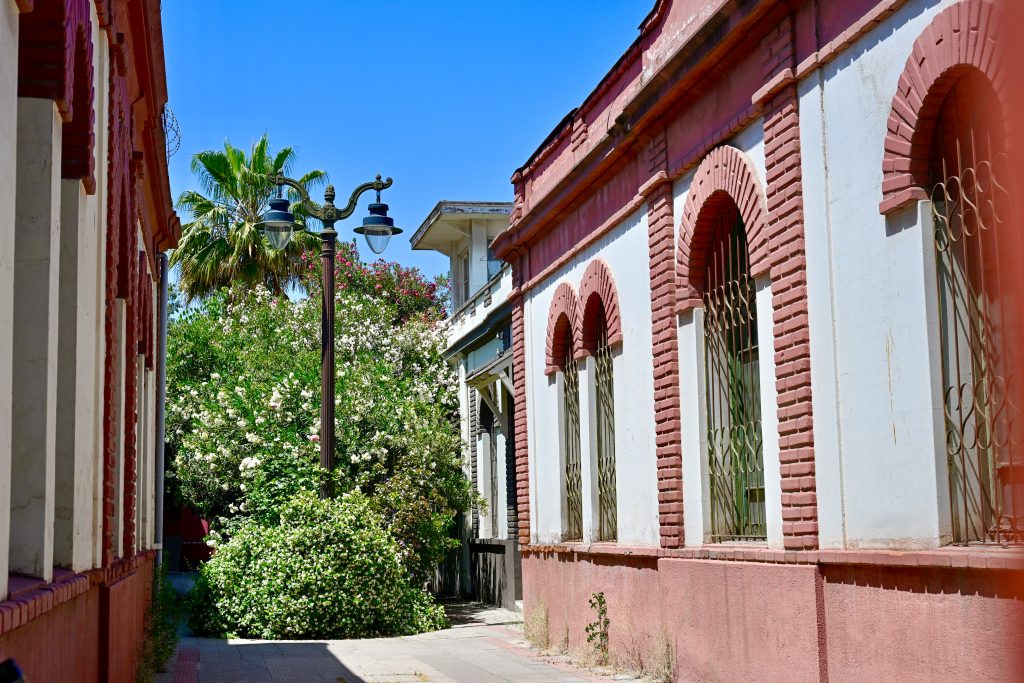
Looking between two pink and white buildings with green trees at the end of the alley. Black lamp post in the middle of the foliage. Pale blue sky above.
House in Bellavista

Deciding how to spend your time in Santiago

If you have limited time in Santiago, then it can be a good idea to put yourself in the hands of a local tour guide to help you settle in and make the most of your time.  We chose an afternoon walking tour of Santiago, so we had the morning to ‘come around’ after the long flight from the UK before exploring.   

If you have time for a full day out, you could book a tour to Valparaiso, the colourful port city about 1.5 hours away, or alternatively head into the wine regions.  We decided to save the wine regions for a treat at the end of our time in Chile.   

Powered by GetYourGuide

When looking for a suitable tour, there are lots of options to choose from, such as Politics and Cycling Tours, or Street Art tours around the city.  Alternatively, you could explore under your own steam and maybe visit one of the many museums in the city.

Walking tour of Santiago: Cable Car, Funicular and San Cristóbal 

We booked the following walking tour of Santiago – Santigo: Cable Car, Funicular and San Cristóbal – through Get Your Guide, which was a gentle, first introduction to the city. 

Powered by GetYourGuide

The meeting point for the walking tour of Santiago was outside the Art Deco theatre at the Baquedano Metro Station. Arriving early at the meeting point, we had time to pick up a coffee and soak in the sights and sounds of the area which was alive with the sounds of construction work, cars, the chatter of students coming and going from the nearby University campus, and the squawk of green parrots in the trees. 

At the designated time, we met up with our smiley young guide for the walking tour of Santiago and headed off through the Bellavista neighbourhood to see the following: 

Mapocho River

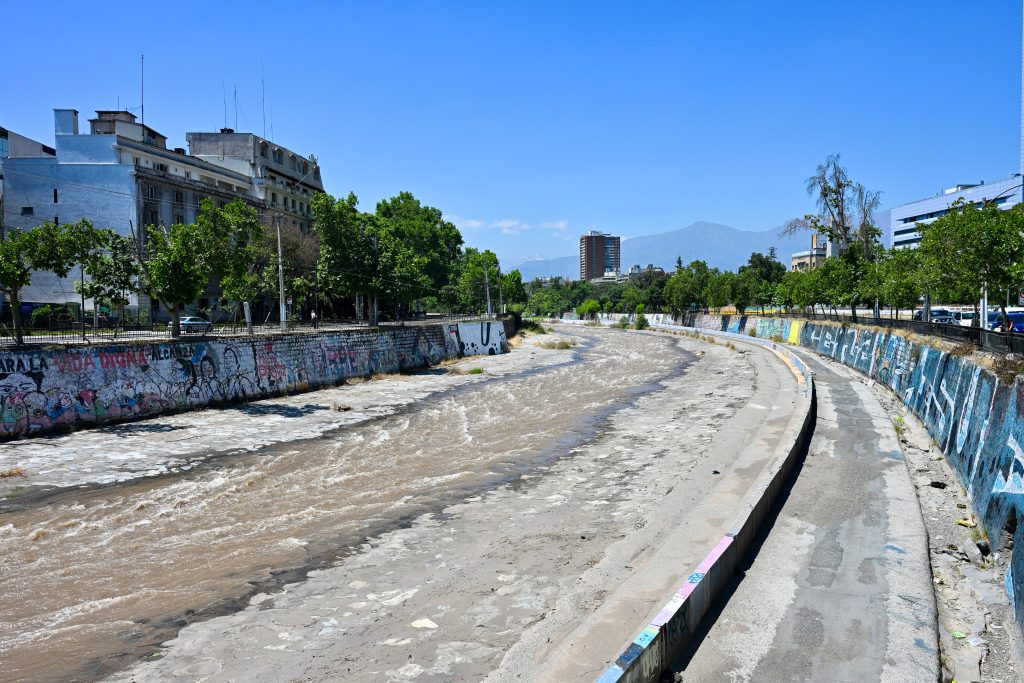
The Mapocho River runs through the middle of Santiago, and each neighbourhood of the city is being encouraged to make a feature of the riverbanks to show the area’s characterWhen we visited in early November, the river was low and did not touch the riverbanksOur guide said that it had been around one month since any significant rainfall, but at its fullest, the river races through the city against a backdrop of mountains. 

A half empty riverbed curves from the bottom left of the frame to the middle of the horizon. The river has concrete graffiti covered walls lined with trees and buildings behind. Faint mountains on the horizon. Blue sky above
The semi-dry river in November

Patio Bellavista

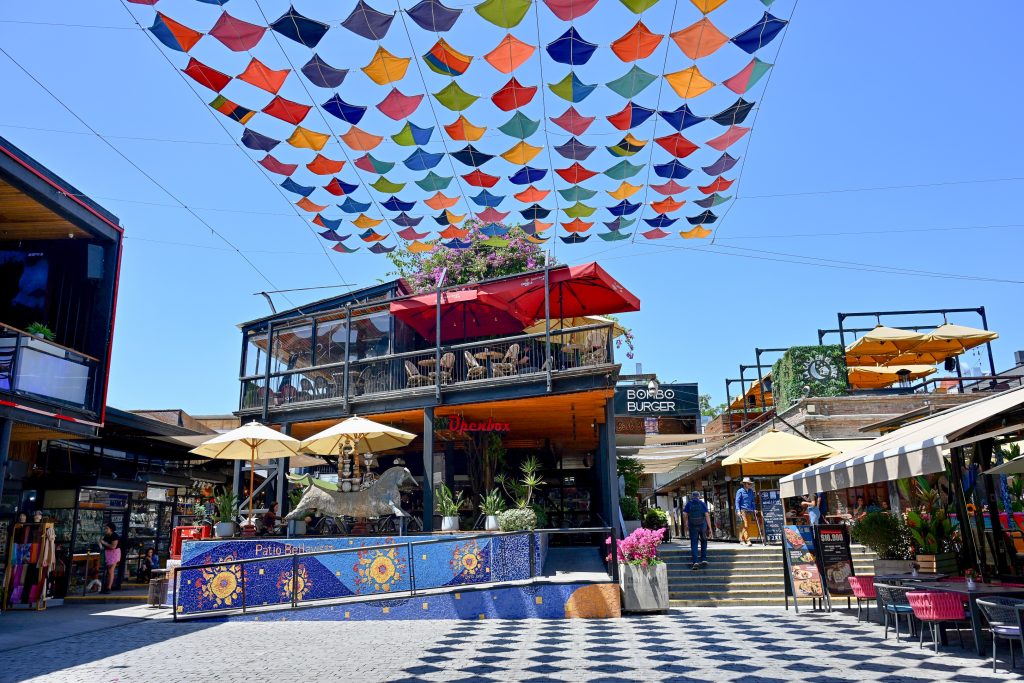
The Bellavista neighbourhood feels bohemian with colourful wall murals, and a mix of restaurants and artisan shops around Patio Bellavista, an urban renewal project from 2006.  Many of the shops at Patio Bellavista were selling jewellery made from the royal blue semi-precious stone, Lapis Lazuli, specific to Chile and Afghanistan.  

We passed through in the early afternoon when the area was relatively quiet, but I would imagine it is bustling in the evenings due to its proximity to the city’s university campuses. 

View across a modern plaza towards a two story restaurant in front. Restaurants frame the square to the left and right. Rows of flags run overhead across the square.
Patio Bellavista

Camilo Mori Square

Camilo Mori Square in the heart of the Bellavista neighbourhood is named after a Chilean painter who once had his studio here One side of the square is home to a famous Boutique hotel called the La Casa Rosa (Red Castle), built in 1923. 

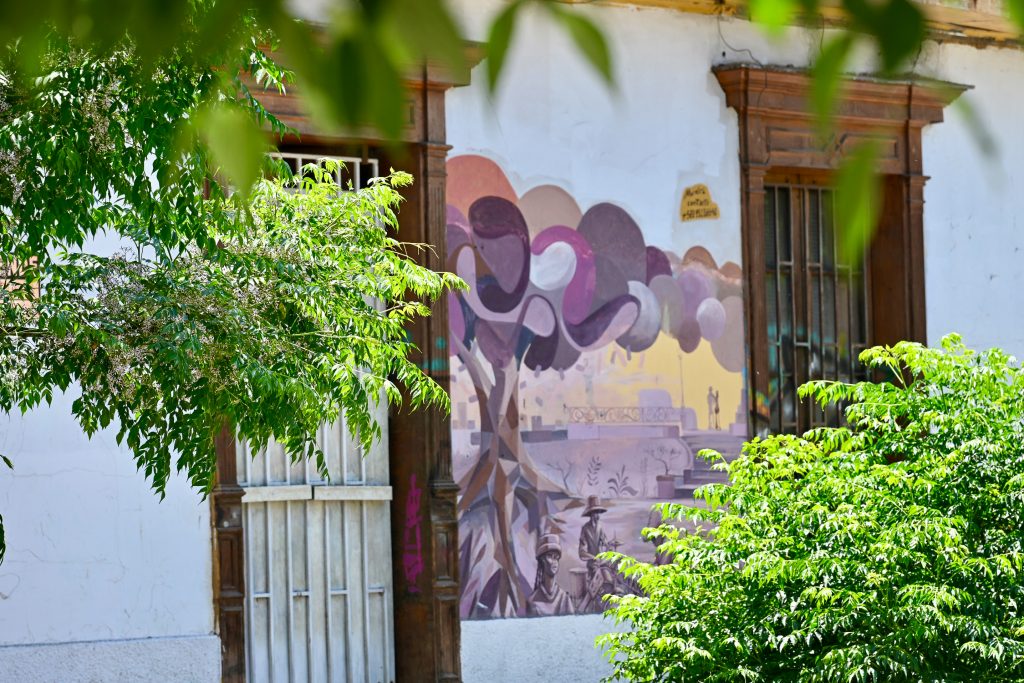
View through some foliage to the white wall of a building with two wooden windows and doorway. Inbetweeen is a pin mural of a tree and buildings.
Pretty murals in Bellavista

Pablo Neruda Museum

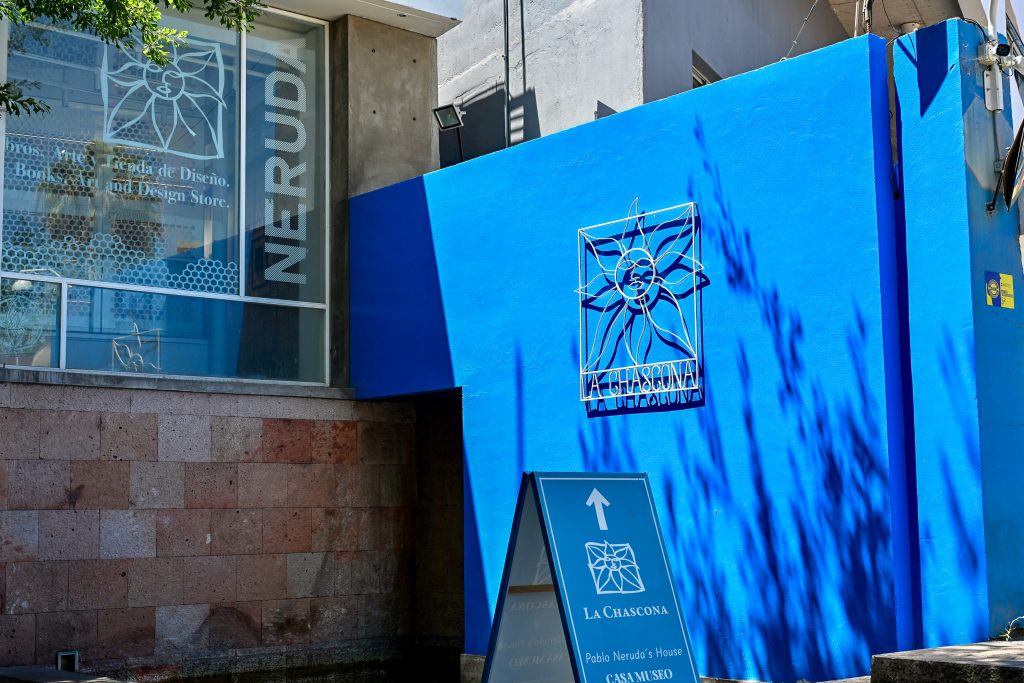
A few streets further on is the house of Nobel Prize winning Chilean poet Pablo NerudaThe house, called La Chascona, was built for, and named after, his mistress (‘lady with tangled hair’).  Neruda eventually married his mistress, and they lived in the house together which is now a museum.  

A blue painted wall fills most of the right hand side of the frame. It has a metal design saying La Chascona on ti and a sign advertising 'La Chascona, Pablo Neruda's House'. Glass window to the left advertising the Neruda museum
La Chascona, Pablo Neruda Museum

Parque Metropolitano de Santiago

The Parque Metropolitano de Santiago is a park covering 3 sq miles (7 sq kms) which was developed between 1903 and 1927It encompasses several hills including San Cristóbal, Piramide, Bosque and Chacarillas, and has been developed with trails, picnic areas, swimming pools, a zoo, and tourist cable car. 

Santiago Funicular up San Cristóbal Hill

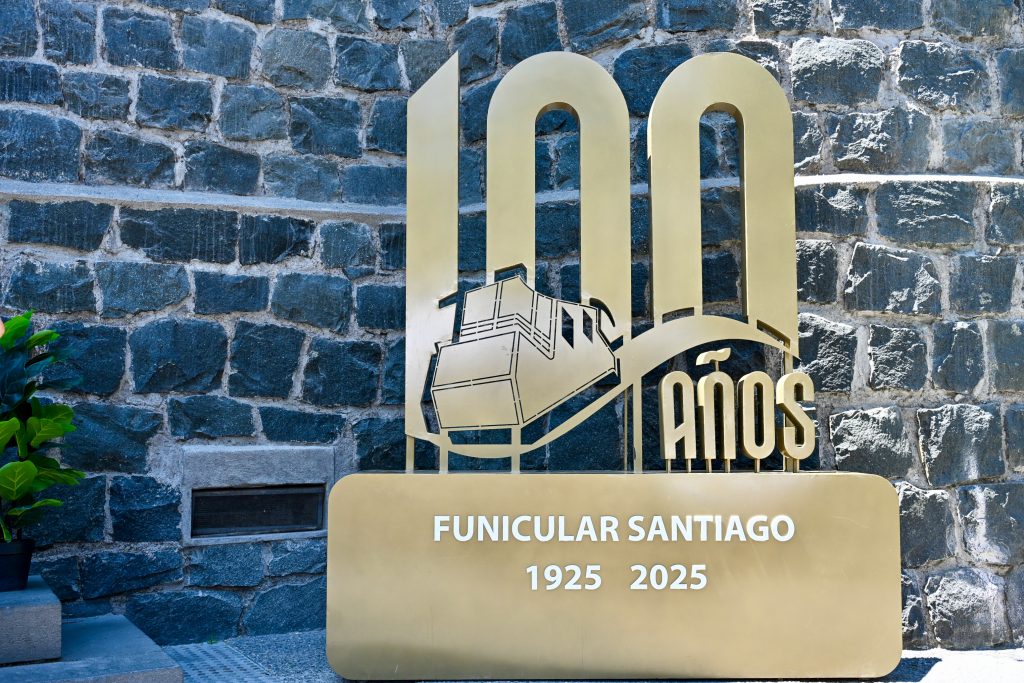
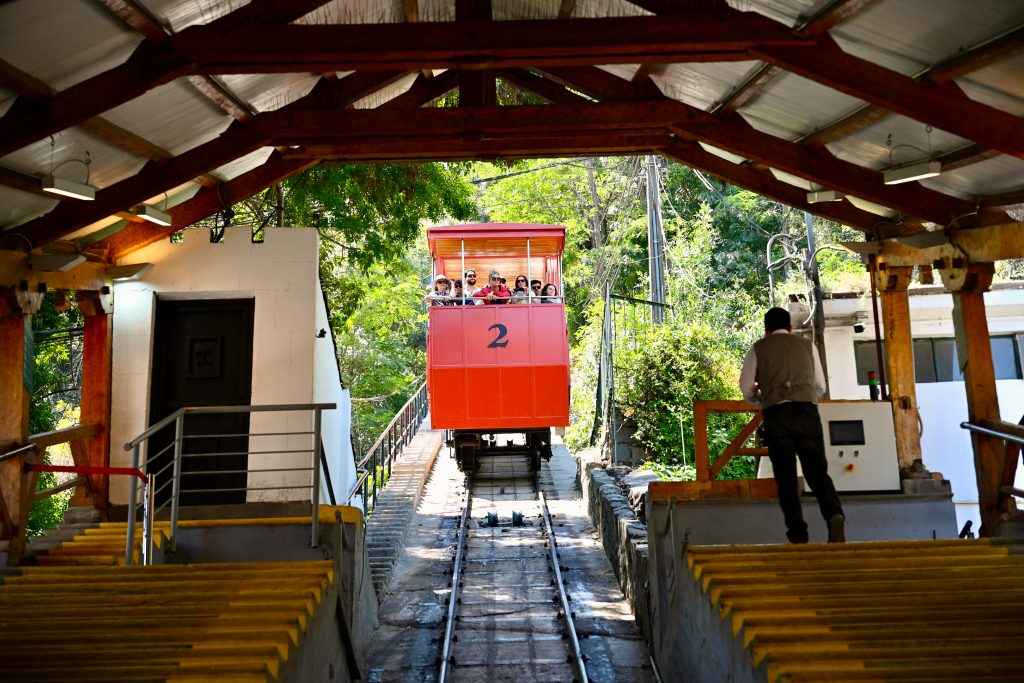
The Santiago Funicular celebrated its 100-year anniversary in April 2025.  Taking the wooden funicular up San Cristóbal Hill from the Medieval style entrance building at the bottom, brings you to a terrace offering spectacular views over the city. 

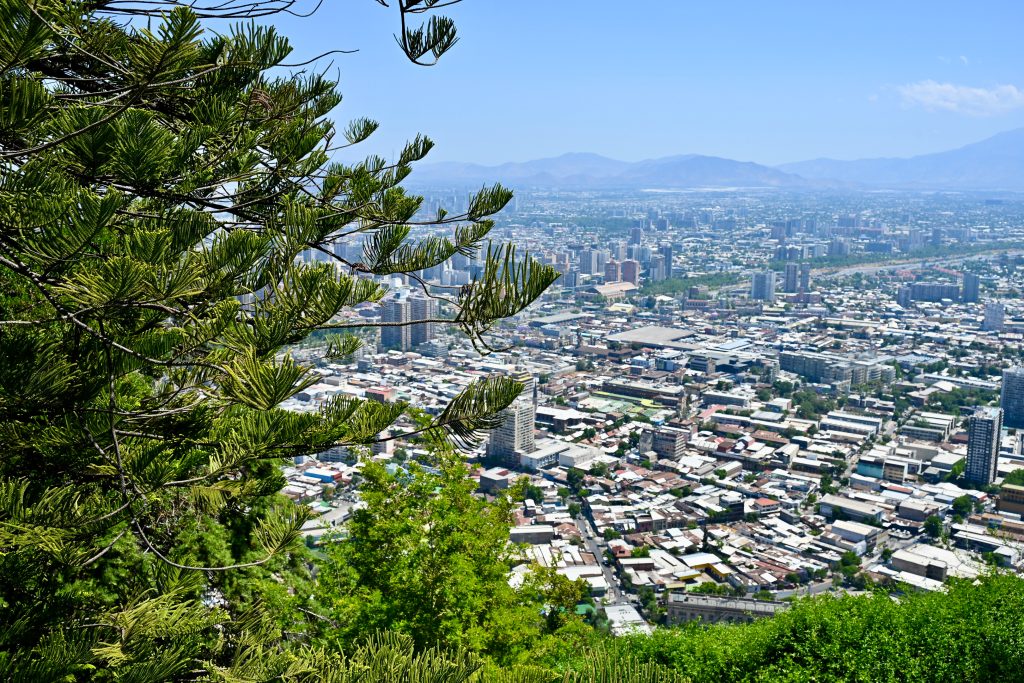
It is quite something to see the city spread out across the valley below you, backed by the snowcapped Andes on the horizon and central valley mountains close by – see featured photograph.  Our guide pointed out the 20 ‘islands’ or small hills and peaks, which were visible throughout the city from an elevated viewpoint, formed by volcano eruptions millennia ago. 

A metal sign advertises 100 Anos (years) of 'Funicular Santiago 1925 - 2025'. It stands in front of oa grey stone wall
View looking up hill from inside a wooden garage. A red funicular car is approaching the camera on rails. There are passengers in the funicular car. A conductor on the ground to the right
View looking down on a large city spread across a valley. Pine trees to the left and faint mountains on the horizon. Pale blue sky above
View of Santiago from San Cristobal Hill

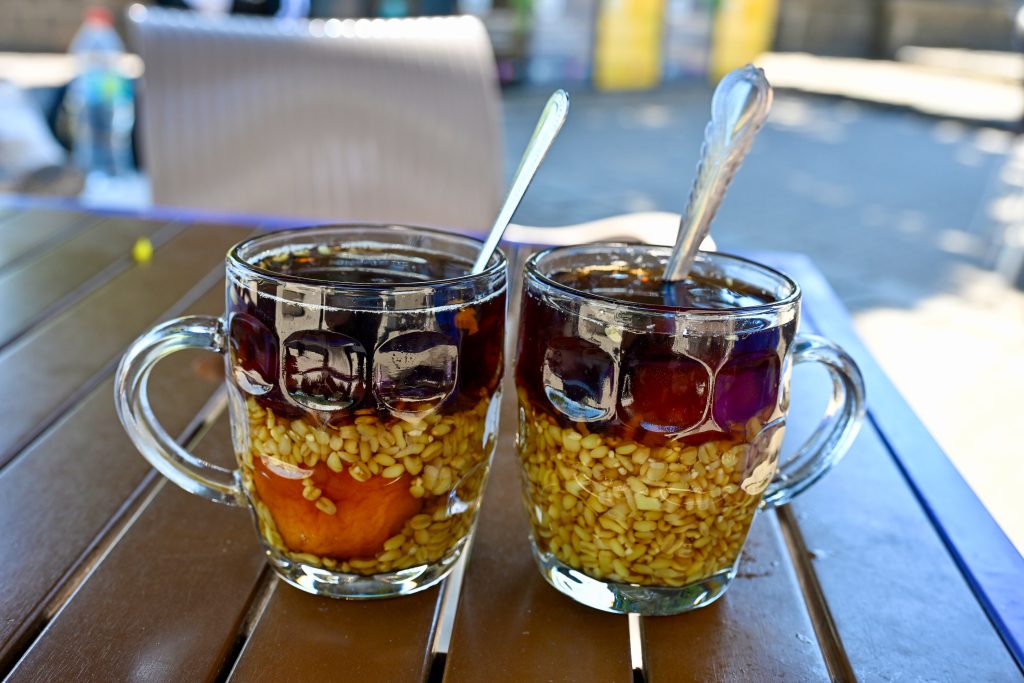
After soaking in the views, sample a traditional Chilean drink called Mote con Huesillos from the cafe on the terrace.  It is made from sun-dried roasted peaches boiled in water with whole wheat and then served cold in a pint glass.  It was like 3 meals in one – filling, tasty and surprisingly refreshing. 

While enjoying our Mote con Huesilos, a student of English approached to ask if she could practice her English with me and so we had a brief chat.  Along with the warmth of our tour guide, we were struck by the friendliness of the locals we met. 

Two pint glasses sit on a brown table in an outdoors setting. They are filled with layers of what looks like fruit, oats and a dark liquid on top. A silver spoon in each glass.
Mote con Huesilos

Statue of the Virgin

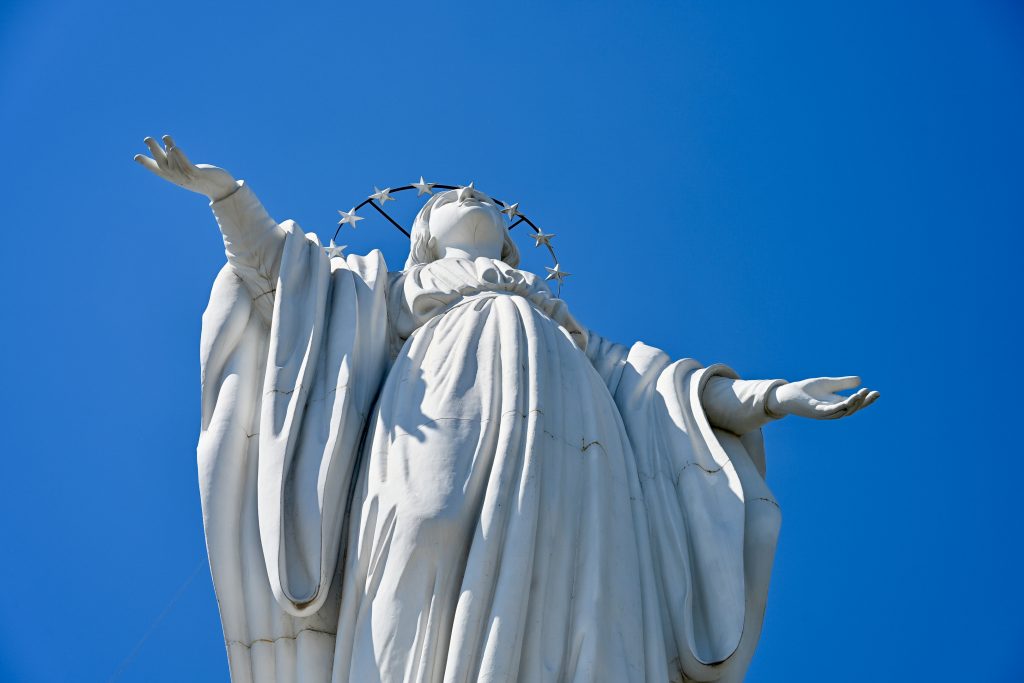
Once you have refueled on the terrace, you can walk up the rest of the hill to the top of San Cristobal Hill to see the Virgin of the Immaculate Conception statue up closeThis is a key religious site for locals and visitors, and you’ll no doubt spot a nun or two at the site and outside the Chapel on the hill. The 45 ft (14 m) Statue of the Virgin is very striking and crowns San Cristóbal Hill perfectly. It was donated to the city by France and has been blessed by Pope John Paul II.

Looking up a clear blue sky. A white figurine statue fills the centre of the frame - looks like a lady in a flowing gown with halo of stars around her head. Arms outreached to the side
Statue of the Virgin, San Cristobal Hill

Cable Car

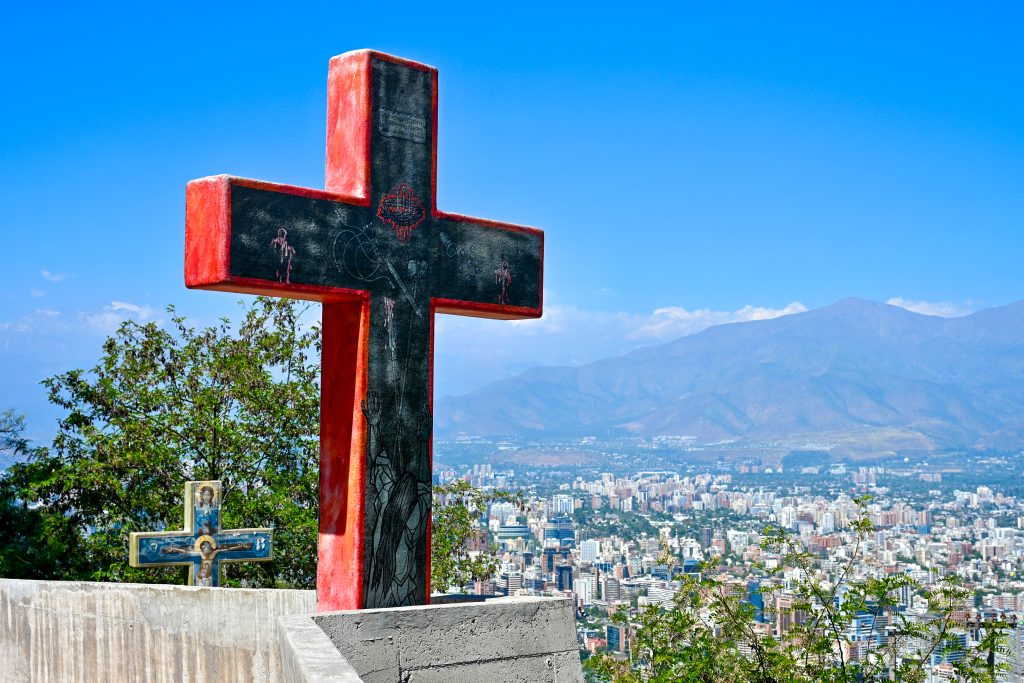
Descending the hill to the Chapel brings you to a sloped walkway leading to the cable car station behind it. The path round to the cable car is lined with colourful cross sculptures, and stunning views behind them.

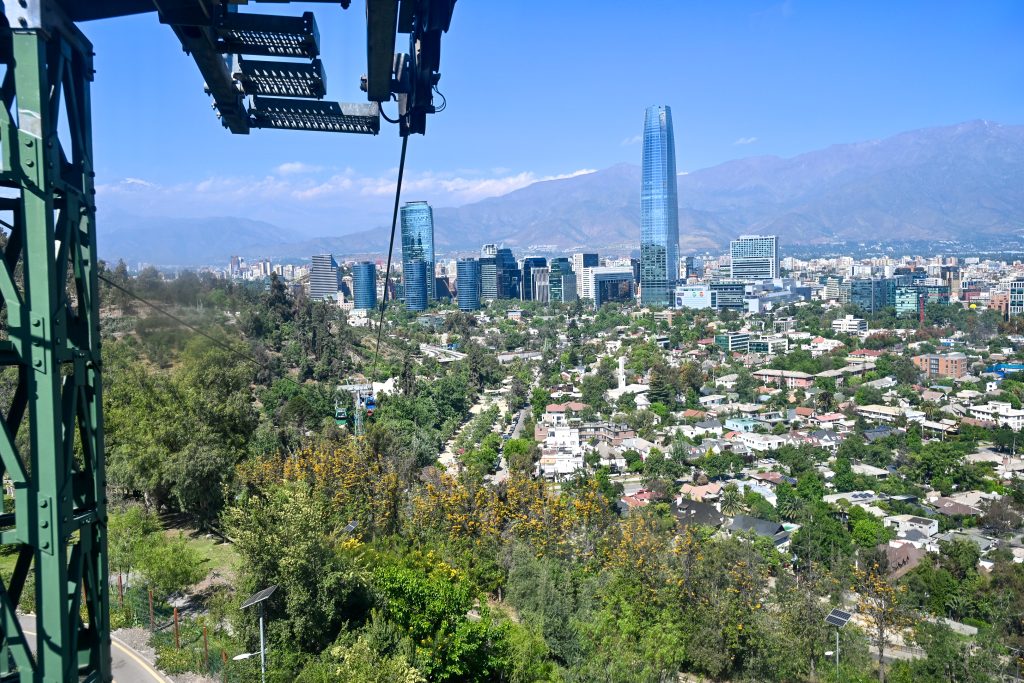
The cable car offers a ride with views down to the Pedro de Valdivia entrance to the parkAs well as the mountains, you canobserve the skyscrapers of the financial district, Las Condes As the highest building in South America, the Gran Torre Santiago skyscraper (300 meters) really stands out against a backdrop of mountains. 

Sculpture of a black cross with red trim to the left of the centre of the frame. A second cross just visible to the left behind it. To the right is a city spread out across a valley with mountains behind. Pale blue sky above
View looking down on a city scape. Cable car supports and wires to the left, green trees in the valley below. White houses to the right and cluster of modern office blocks in the middle. Mountains behind
View to the business district from the cable car

Providencia neighbourhood

From the cable car station at the bottom of the hill, you can wander through the quiet residential neighbourhood of Providencia, full of large and attractive houses with English style gardens, pop up shops and cafes. 

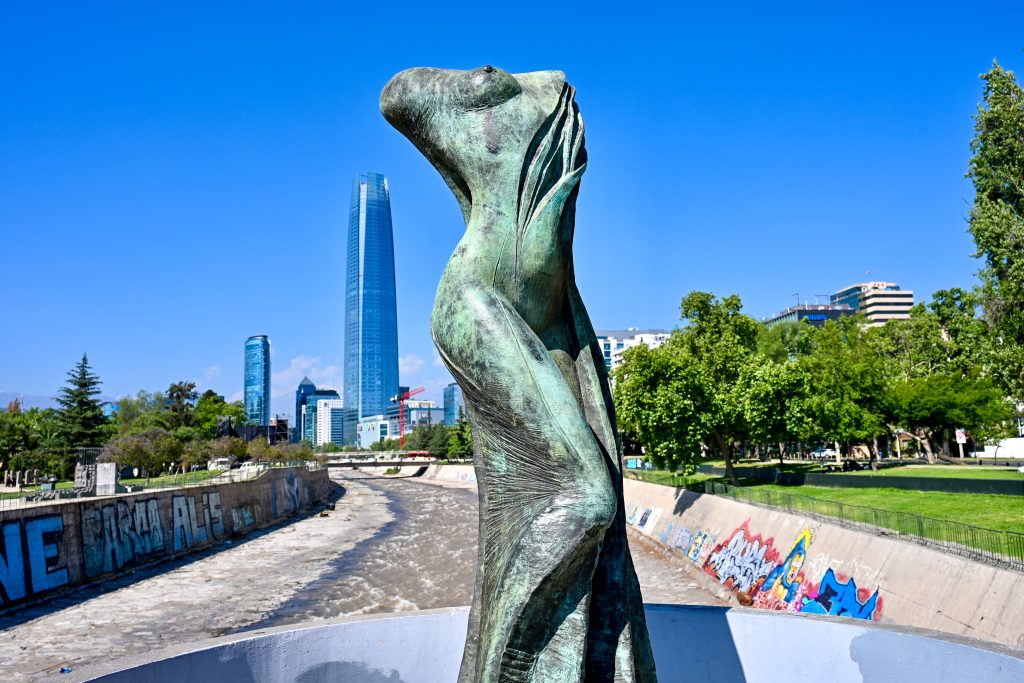
End your walk back at the Mapocho River and view the sculptures in the landscaped park called Parque de las Esculturas, developed after a massive flood in 1982. 

View along a half empty river bed towards modern blue skyscraper building on the horizon. Blue sky above. Green trees on the river banks. Graffiti on the concrete walls. A statue of a headless lady stands in the foreground.
Sculpture on the riverbank in Santiago

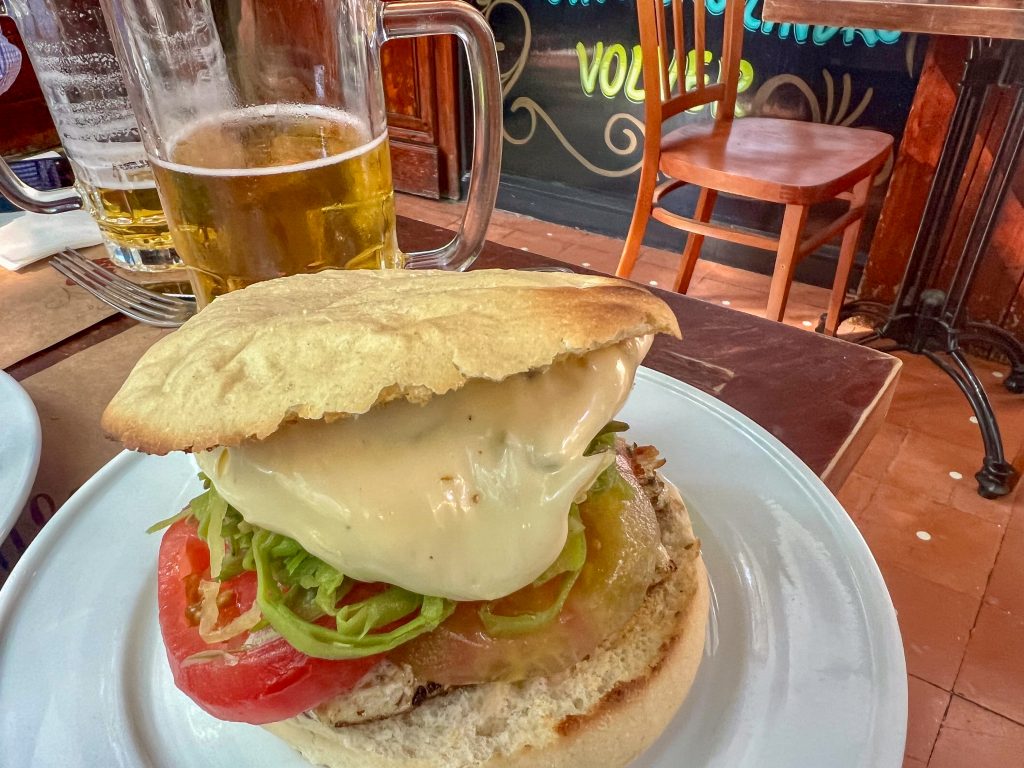
Our walking tour ended at this point, but not before our tour guide recommended somewhere for dinnerFuente Chilean (Pedro de Valdivia) which offers traditional Chilean sandwiches with fries, and a lot of mayo! 

View of a white plate sitting on a wooden table with pints of larger in the background. On the plate is a large sandwich with what appears to be chicken, tomato, green beans and cheese filling).
Chilean sandwich at Fuente Chilean

The Pisco Sour cocktail

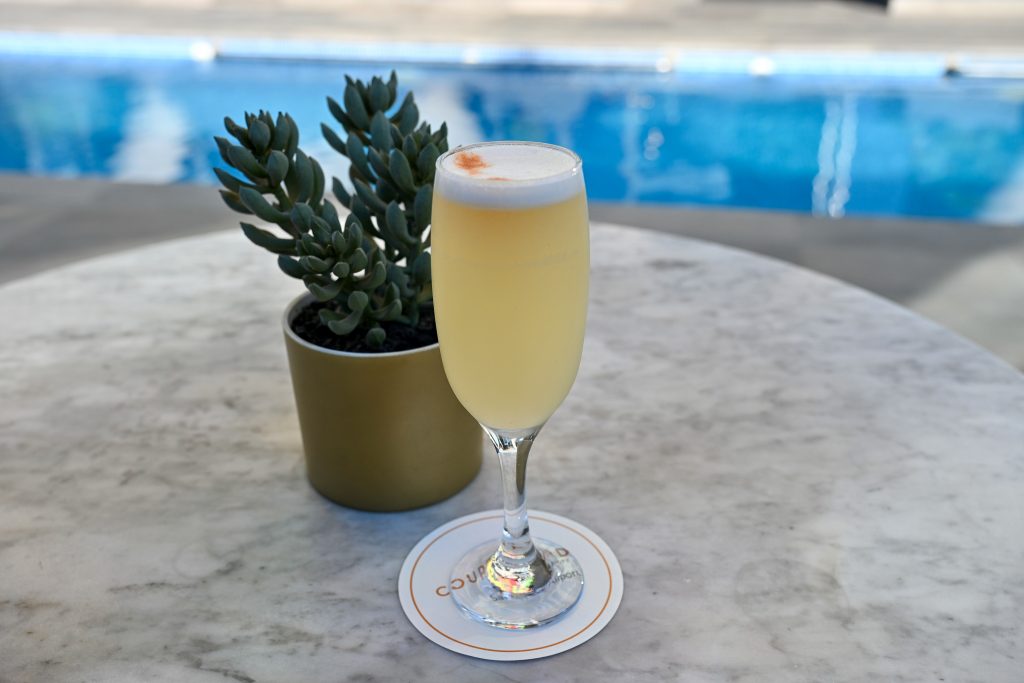
Pisco Sours are Chile’s favourite cocktails, made of Pisco (a type of Brandy), lime juice, egg white, and a simple syrup to sweeten.  As the name suggests, they are sour, but in a good way, and very refreshing in the heat and sunshine.  

Back at our hotel, we sat outside in the sunshine and decided to try our first Pisco Sour. The barman chatted to us about FIFA football and taught us some Rapa Nui words ahead of our trip to Easter Island which came in very useful.   

Note – throughout our trip to Chile, we found FIFA Football to be a great conversation starter as everyone seemed to have a favourite English Premier League football team! 

A tall glass of yellow liquid with a white frothy top sits on a white coaster on a circular marble table next to a green plant. Swimming pool behind
Pisco Sour - tick!

Where to stay in Santiago?

This large city has plenty of accommodation options, and Booking.com is a great site to identify somewhere suitable for your needs and budget. 

In our case, we took a logistical decision to base ourselves in a Santiago Airport hotel, so that we were in a convenient position for our: 

  • late arrival flight on Day One, and
  • very early departure flight to Rapa Nui (Easter Island) 36 hours later. 

Our first impressions of Santiago

We arrived at Santiago Airport late at night and caught a pre-booked courtesy bus to the Marriott Courtyard.  We were surprised to find our hotel surrounded by a tall wire fence, with a security guard sitting outside the front doors in a balaclava – why was the need for so much security we wondered? 

As we headed out into Santiago, we followed our usual precautions for visiting busy cities (London included!) – leaving valuables at home, keeping wallets and phones in inside pockets, and keeping camera equipment out of sight as much as possible.  

That said, at no point on our brief visit to Santiago did we feel unsafe or threatened.

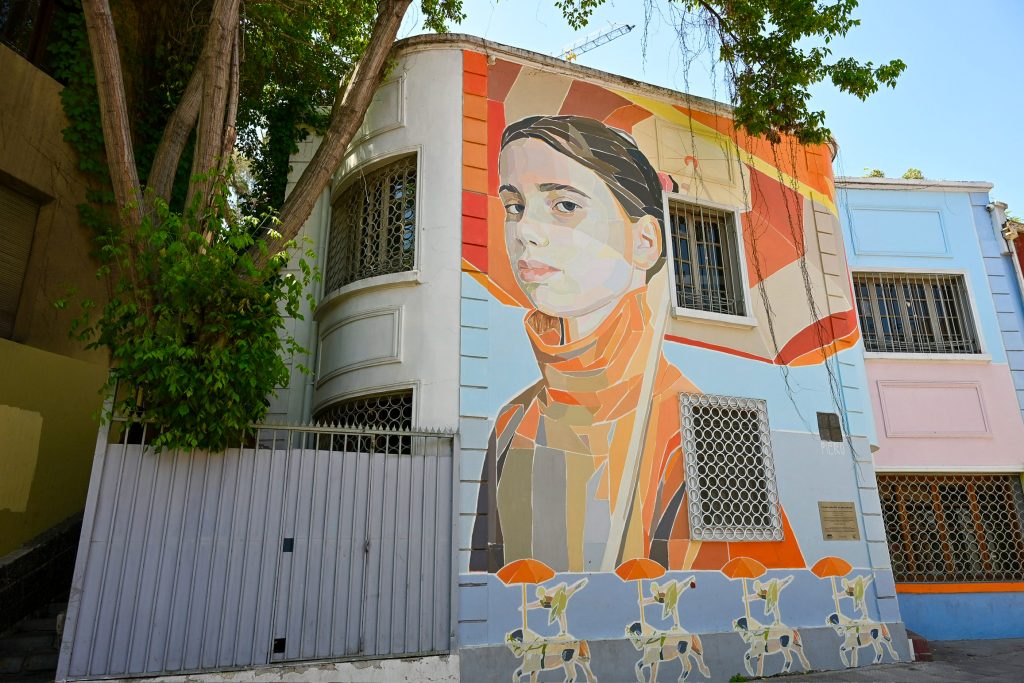
A two storey building sits in the middle of the frame. it has a large mural of a girl with brown hair, multicoloured coat and parasol, which fills the building. Tree to the left.
Bellavista neighbourhood mural

Using Ubers in Santiago

If you google ‘catching Ubers in Santiago’ you will find a mixed bag of opinions about whether they are a good idea or not.  Some information suggested that Uber is not legal in Santiago, and most people swear by them as a way of getting around.   

Our hotel Concierge said that using Ubers was fine, so we booked one to get into the centre of Santiago.  When our Uber driver turned up, he insisted that “Mr. Richard” sat in the front pf the car with him “because of the police”.   

Later, on our walking tour of Santiago, we asked our tour guide about this experience, and he explained that the police pull Uber drivers over to check their paperwork, but they are less likely to do so if they have a visible passenger.  If your Uber driver doesn’t have the documents they need, your ride may not be able to continue, which seems to be the biggest risk with Ubers.  

Final thoughts…

Whilst our day in Santiago started with slight trepidation, it ended in satisfaction.  The walking tour of Santiago really helped to dispel any concerns we might have had in advance of the trip.   

I’m not sure that I’d have chosen the nickname the Paris of South America from the small portion of Santiago that we saw, in the same way that Saskatoon in Canada didn’t say Paris of the Prairies to me, but we liked it all the same. 

The walking tour succeeded in helping us settle in and made us excited about Melipeuco and Conguillio National Park, the next destination on our Chilean road trip. 

So far to good in Chile! 

Thank you so much for reading my blog, I hope you found it useful? 

For more stories, itineraries, and advice, check out my Related Posts and sign up to receive my blogs by email. 

If you have a blog-related question, please do ask in the Comments box and I’ll try to help… 

Request – if you use my photos, please credit Love Travel Planning on your social media or give me a shout out on Instagram @lovetravelplanning as I am growing my website.  

Huge thanks. 

Enjoy your travels! 

Subscribe to my newsletter!

Stay up to date with my adventures & travels across the world.

Leave a reply