

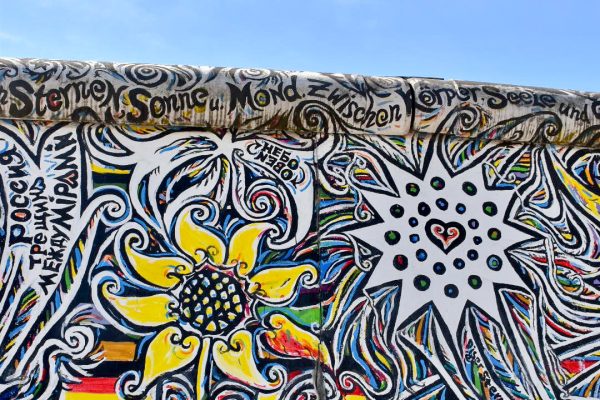
Sections of the Berlin Wall can be found all over the city. Sometimes you’ll come across a random segment of the Wall on a side street, in a garden or outside a key area like the Potsdamer Platz. However, there are many different ways to learn about the Berlin Wall and what it was like to live in the divided city during the Cold War. Here are 4 wall related ideas to explore on a Berlin City Break.
Table of Contents
Background to the Berlin Wall
The Berlin Wall was erected by the East Germans in 1961 to prevent the exodus of its citizens to the West which was an enormous brain drain after World War 2, and to help the East German powers retain control of its communist system and ideology.
Whilst West Germany slowly picked itself up after the war to become prosperous again, it was very different in East Germany with the rise of the Stasi (secret police) who spied on residents and categorised them as ‘politically reliable or unreliable’. You wouldn’t know which list you were on, but could potentially work it out if, for example, you were denied new job opportunities. Even the actions of a relative could affect your status, making you unreliable by association.
If you were found to be disloyal to the Stasi you could be forced to become a ‘little grey mouse’ and work for the Stasi against your will, or detained in prison, or worse….
As a result of the sinister atmosphere in the East, and for those families separated by the Wall, many people tried to escape to the West. As a result, the fortifications of the Wall and its surrounds had to be ramped up (see Invalid Cemetery information below) over the years to prevent escapees.
The Berlin Wall came down on 9th November 1989.

Visit the Berlin Wall Memorial
The Berlin Wall Memorial is an outdoor exhibition on Bernauer Strasse, standing on the East Berlin side of former border strip. It is now a place of remembrance giving a moving insight into the division of Berlin. Elements of the Berlin Wall Memorial include:
- Visitor Centre – this is a good place to start your visit as it explains what you will see around the Berlin Wall Memorial site and offers a short film about the Berlin Wall to set the scene.
- Section of the Berlin Wall – running along Bernauer Strasse, this section of wall is partly covered in concrete and partly exposing its internal metal posts.
- Window of Remembrance – whilst around 5,000 people escaped across the Berlin Wall, 140 did not. The Window of Remembrance is an outdoor memorial featuring the photographs of the 140 people who died trying to cross the wall.
- Documentation Centre – hosts a permanent exhibition about the division of the city (“1961-1989, Die Berliner Mauer”) and an observation tower.
- Chapel of Reconciliation – a circular place of worship and spiritual reflection made of clay stands on the site of the old Church of Reconciliation which was blown up by the GDR government in 1985. It had stood in the ‘death zone’ between East and West Berlin, inaccessible to either part of the city during the Cold War.
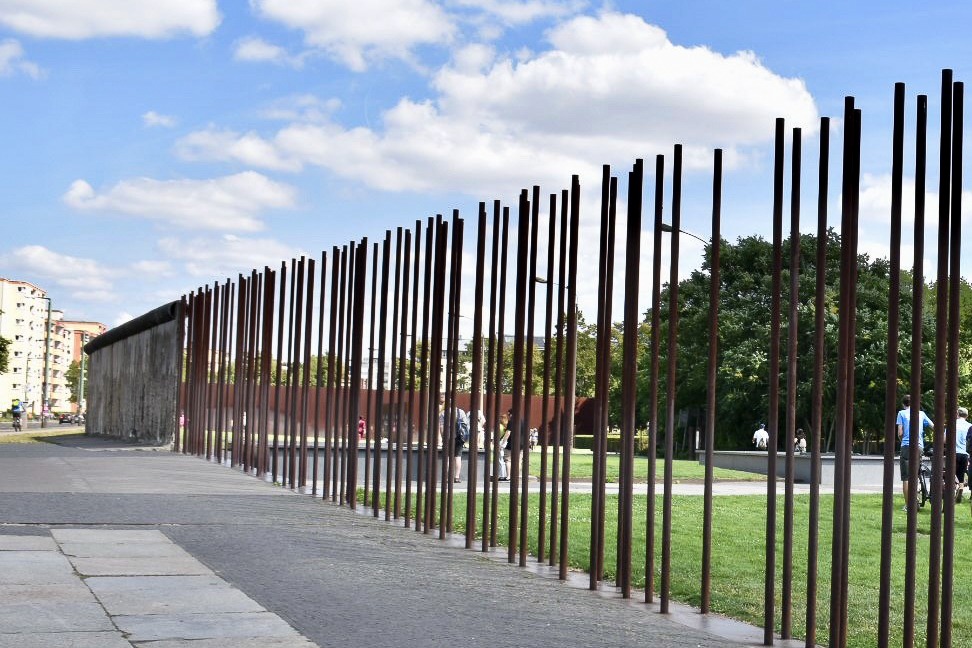
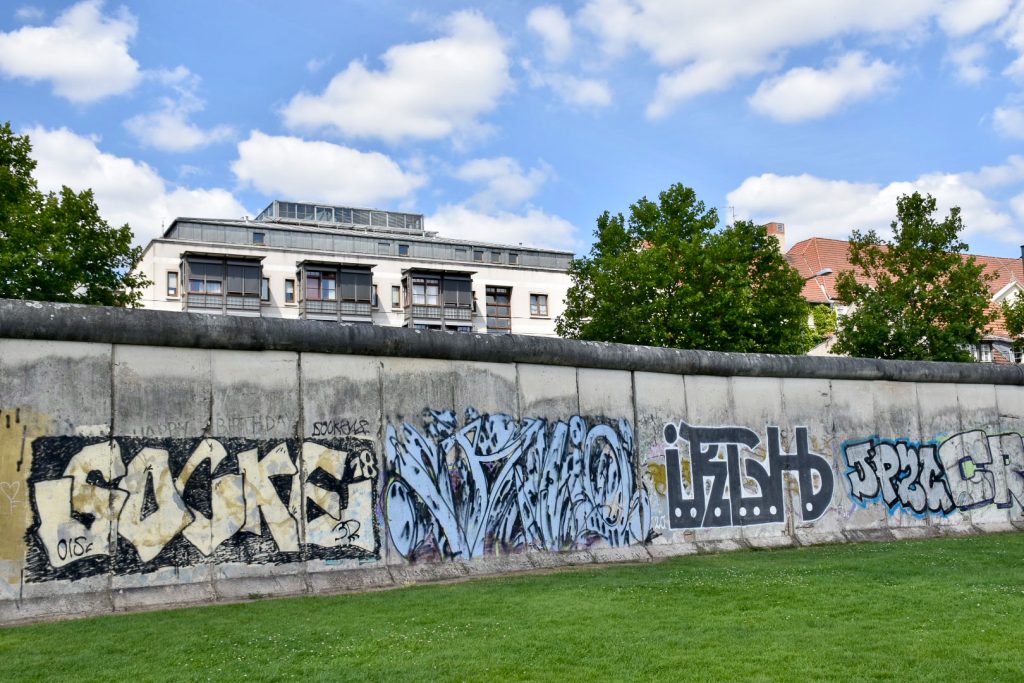
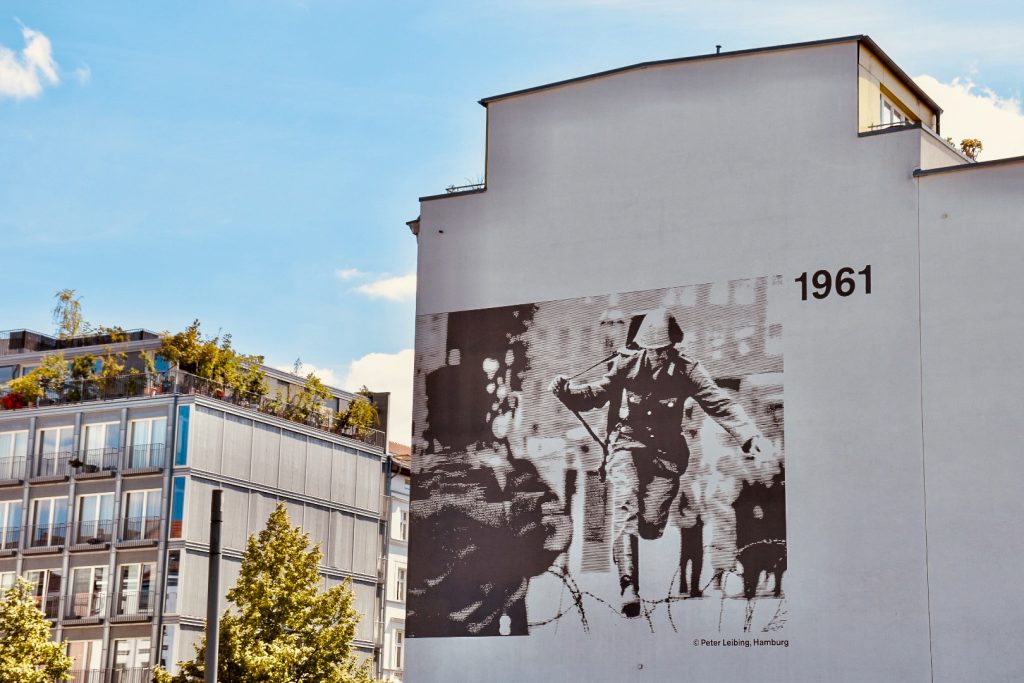
East German houses – when the Wall was erected here in August 1961 it stood directly in front of a row of houses in East Berlin. Some of the residents decided to take flight at the last minute and used ropes to climb out of their windows, whilst West Berlin firemen held sheets below them to catch them if they fell. Other residents were forced to move out and the windows of their apartments bricked over so no-one else could escape that way.
Look out for the photograph of GDR soldier Conrad Schumann abandoning his duties and jumping from East to West over the barbed wire just 2 days after the division of Berlin. The photo, displayed on the side of one of the houses, is called “The Leap into Freedom” and has become an iconic image of the Cold War.
Tunnels – over the Cold War years, East Berliners dug numerous escape tunnels around Bernauer Strasse. Eventually the Army built their own tunnels, to cut across the escape tunnels to intercept escapees. There are plaques on the floor denoting where the tunnels were and circles on the floor indicating who escaped (if the circles are on the outside of the wall) or who perished (if the circles are on the inside of the wall).
Bike the Berlin Wall
Another great way to explore the Wall on a Berlin City Break is to bike the Berlin Wall with Fat Tire Bike Tours. The company offers a range of different historical tours, but we took the Berlin Wall Tour which started at Alexandraplatz beneath the iconic Fernsehturm, an East German era TV Tower. If you arrive early, then you could pop up the Fernsehturm for spectacular views of the city.
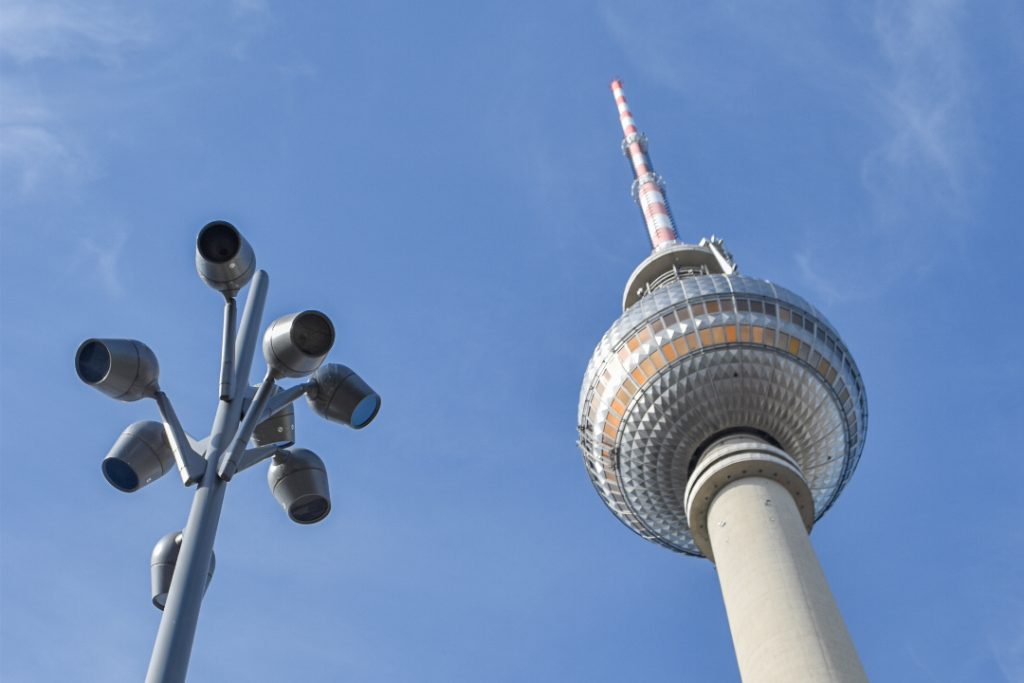
Our tour guide on the Berlin Wall bike tour was excellent and informative. Our stops included:
- Marx Engels Forum – a small park with brutalist architecture and sculpture of the fathers of communism Karl Marx & Max Engels (as larger than life figures)!
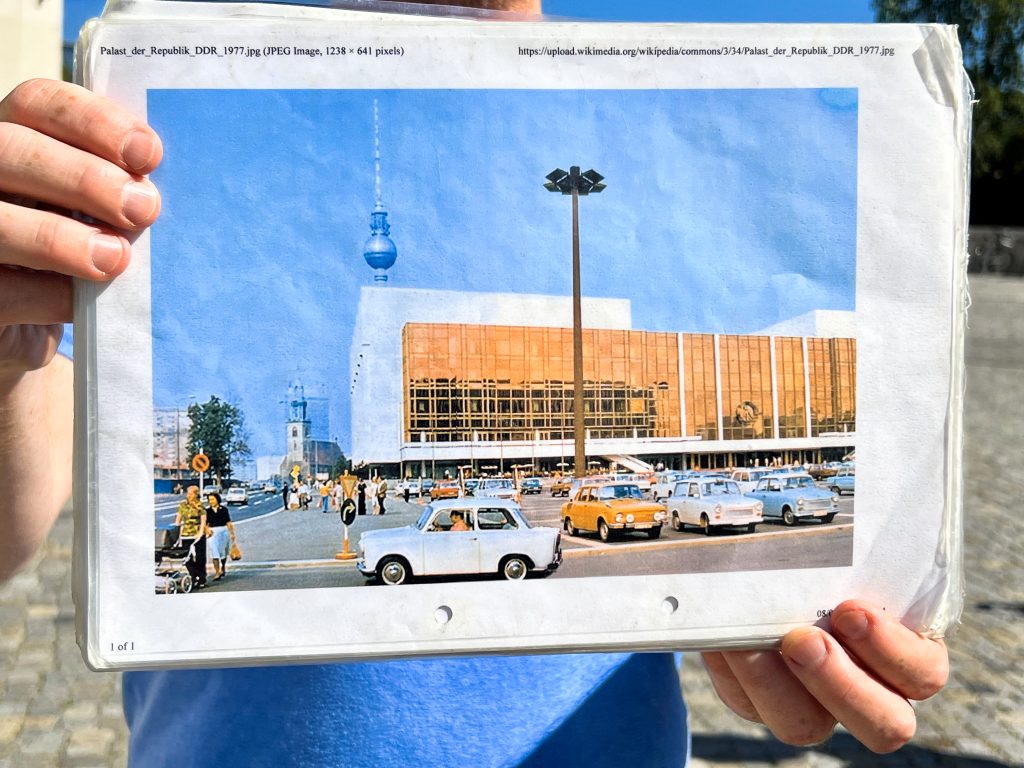
- The Palace of the Republic (Peoples’ Palace) – the site of a building that once hosted the Volkskammer, East German parliament, from 1976 to 1990. The huge building contained a range of entertainment facilities (art galleries, theatre, cinema, restaurants, beer halls, bowling alley, pool rooms, disco, gym and spa, casino, basketball court, swimming pool, and even a rooftop skating rink) along with auditoria, a post office and a police station with underground cells. Following reunification, it was demolished due to asbestos contamination and the Berlin Palace built in its place – this new building is still awaiting a purpose.
- Tränenpalast – the Tränenpalast (meaning ‘parting tears’) was the departure hall at Friedrichstrasse sation for those leaving East Germany to travel to the West on the SBahn or UBahn. It was built in 1962 soon after the construction of the Berlin Wall. Police conducted passport checks and custom officials checked people’s luggage. Only passengers travelling West could use the Tränenpalast.
- Crosses on the River Spree (behind the Reichstag) – denoting those who died trying to cross from East to West across the river.
- Invalid Cemetery – displays a plan of the wall. The inner wall on the East German side was rigged by alarms and Stalin’s ‘garden beds of sand’ (causing slow movement), spikes, ditches, and dogs (but they were too noisy). The ‘death strip’ varied from 25m to 350m wide. Some officers had snipers with a shoot to kill licence. The outer wall on the West German side had canals as additional barrier in some places. The Invalid Cemetery is where the Red Barron is buried.
- Watchtower – there were 300 watchtowers built as part of the border fortifications. Today only 3 of these survive (at Kieler Eck, Schelsischer Busch and Potsdamer Platz) following the dismantling of the Wall between West and East Berlin. The watchtower guards were recruited from Saxony rather than Berlin to avoid the guards being conflicted about taking action if they knew the escapees.
- Nordbahnhof S-Bahn station – this is a ‘ghost station’, one of three lines S and UBahn lines which ran under East Berlin to take passengers between stops in the West. When passing through these stations, the passengers would see the platforms deserted apart from soldiers or armed guards. There is an exhibition at the station.
- Berlin Wall Memorial – see above for more details.

Note – we loved the Berlin Wall Bike Tour for the information that our tour guide gave us and for visiting places which we might not have found on our own. However, we did not have time on the bike tour to visit the exhibition at Nordbahnhof or the Documents Centre at the Berlin Wall Memorial – so you might decide to return to these under your own steam and spend more time there on your Berlin city break.
Stroll along the East Side Gallery
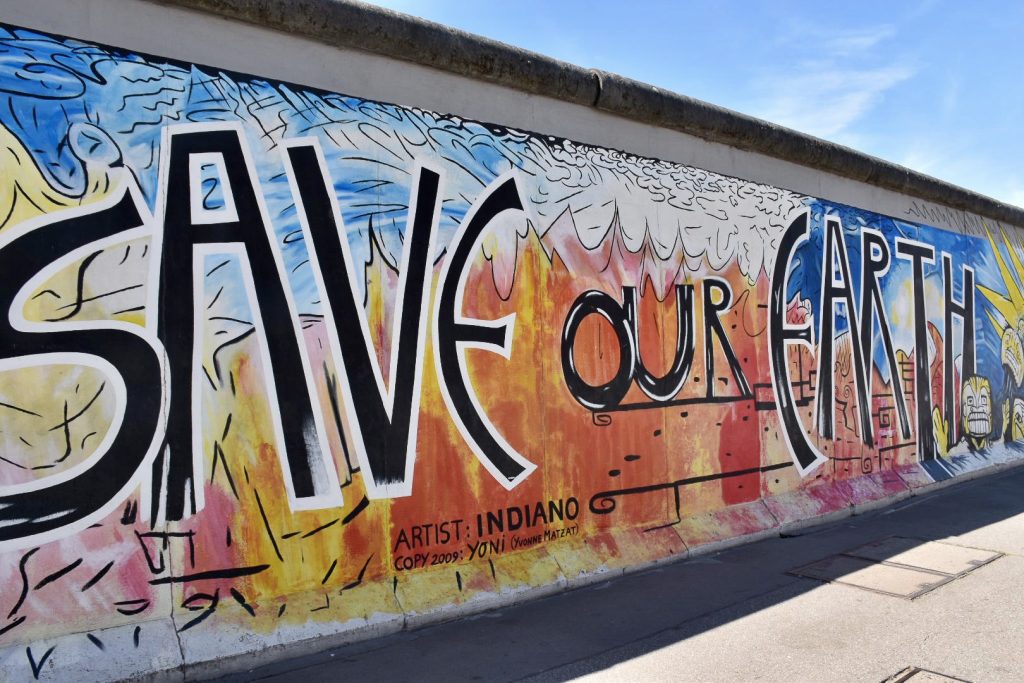
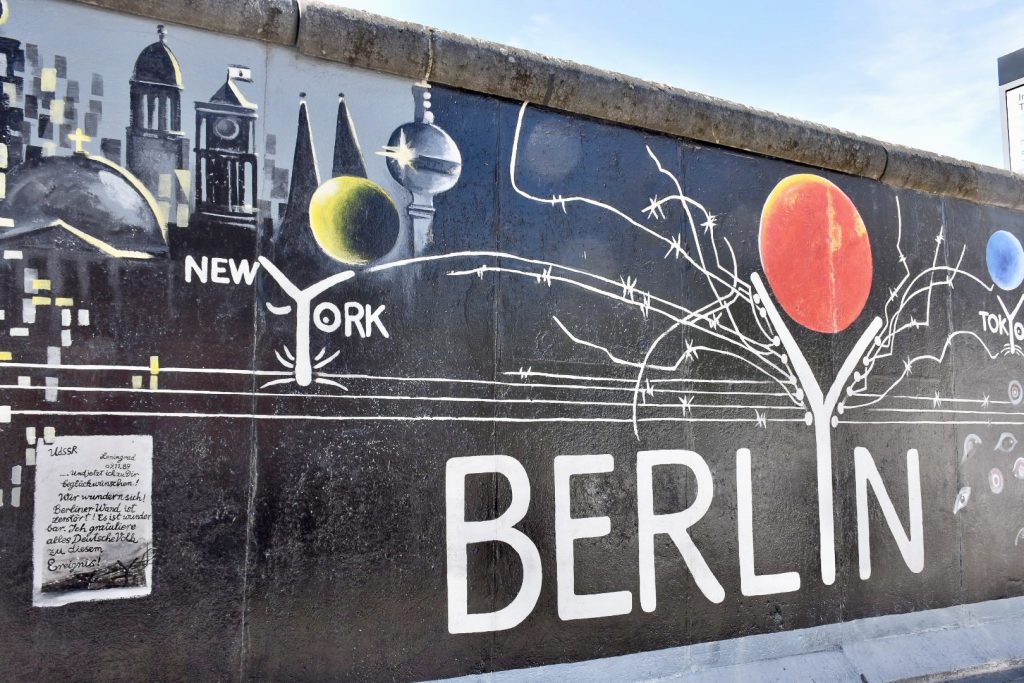
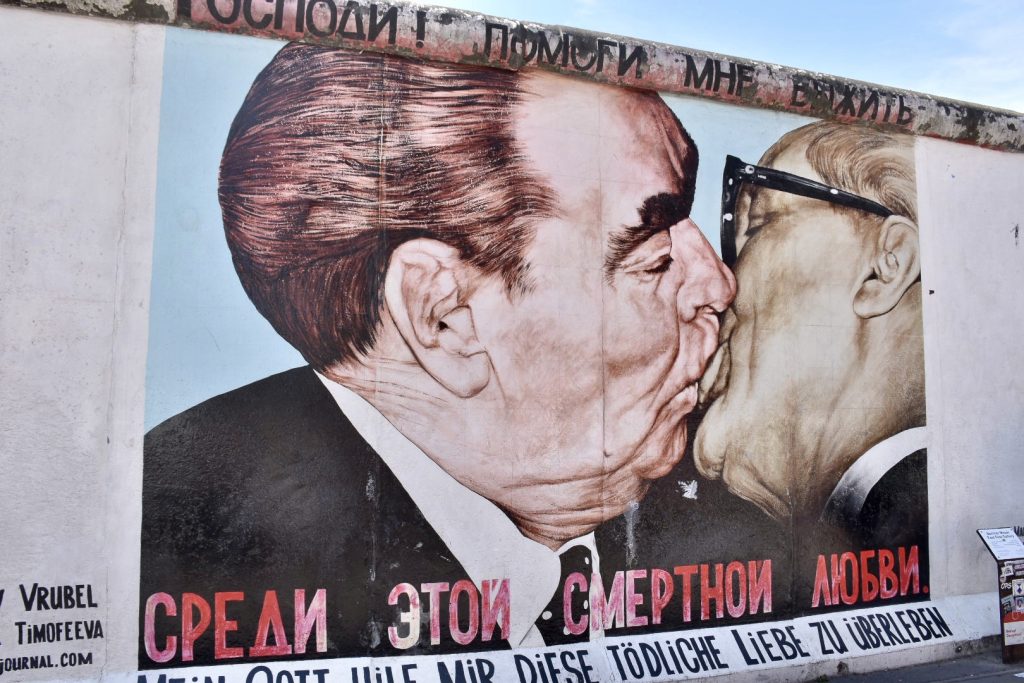
On your Berlin city break don’t miss a stroll along Muhlenstrasse to visit the East Side Gallery which features a 1.3km stretch of the Berlin Wall covered in murals (rather than graffiti). In fact, it’s the longest open-air gallery in the world!
118 artists from 21 countries have contributed to over 100 murals the walls since it opened in 1990 (now with protected status in the city). The murals are a mixed bag, many of them featuring doves and other symbols or words of peace. Look out for the two most iconic murals on the wall – “The Mortal Kiss” by Dmitri Vrubel (showing Erich Honecker and Leonid Brezhnev in a mouth-to-mouth embrace) and Birgit Kinder’s Trabant car crashing through the Wall.
The East Side Gallery is completely open to the public and free to visit. On the other side of the wall is the River Spree, perfect for a peaceful stroll when you have finished at the gallery.
We visited the East Side Gallery under our own steam, but if you want the input of a guide then you could book a walking tour of the East Side Gallery through Get Your Guide.
Although you can find out a lot about the murals from on-line sites, taking a walking tour of the East Side Gallery will make sure that you don’t miss a thing!
Pitstop at the Mauermuseum (Wall Museum)
As mentioned in my blog, Berlin Walking Tour, you can find the Mauermuseum (Wall Museum) at Checkpoint Charlie. This is an interesting indoor museum telling the history of the wall and the stories of the people who tried to escape, including some of their inventive escape methodologies and converted car for smuggling out escapees. It is not very big but there is a lot of information to take in and because of its location it’s likely to be very busy.
Just one minute away is an open-air exhibition space telling the story of those who tried but failed to escape and cross the border.
Final thoughts…
You won’t need to do all the above on your Berlin city break to learn about the Wall and Berlin as a divided city. My advice would be to pick the East Side Gallery plus either the Wall Museum or the Berlin Wall Memorial in one visit. That said, the bike tour was fantastic so try to include that, or one of the other Fat Tire Bike Tours of Berlin as well.
Thank you so much for reading my blog, I hope you found it useful?
For more stories, itineraries, and advice, check out my Related Posts and sign up to receive my blogs by email.
If you have a blog-related question, please do ask in the Comments box and I’ll try to help…
Request please – if you use my photos, then please credit Love Travel Planning on your social media or give me a shout out on Instagram @lovetravelplanning as I am growing my website. Huge thanks.
Enjoy your travels!


Leave a reply
You must be logged in to post a comment.