


San Francisco has lots of promise for a city break with teenagers – the iconic bridge, steep hills with exhilarating cable car rides, a world famous prison museum on an island, a hippie history, and cool neighbourhoods to explore. It isn’t hard to find cool things to do in the city, so here are some ideas for 3 days in San Francisco with teenagers. We visited at the end of a Coastal California road trip and it not disappoint…
Table of Contents
First, a note on transport options in San Francisco
Cable car or streetcar – what’s the difference?
During your time in San Francisco, you will see old fashioned ‘trams’ operating around the city, although they are not called trams here, so you need to use the right terminology:
- Streetcars – run on steel rails and have a trolley pole connected to an overhead wire. They are painted in attractive vintage colours, like orange and cream or pale blue.
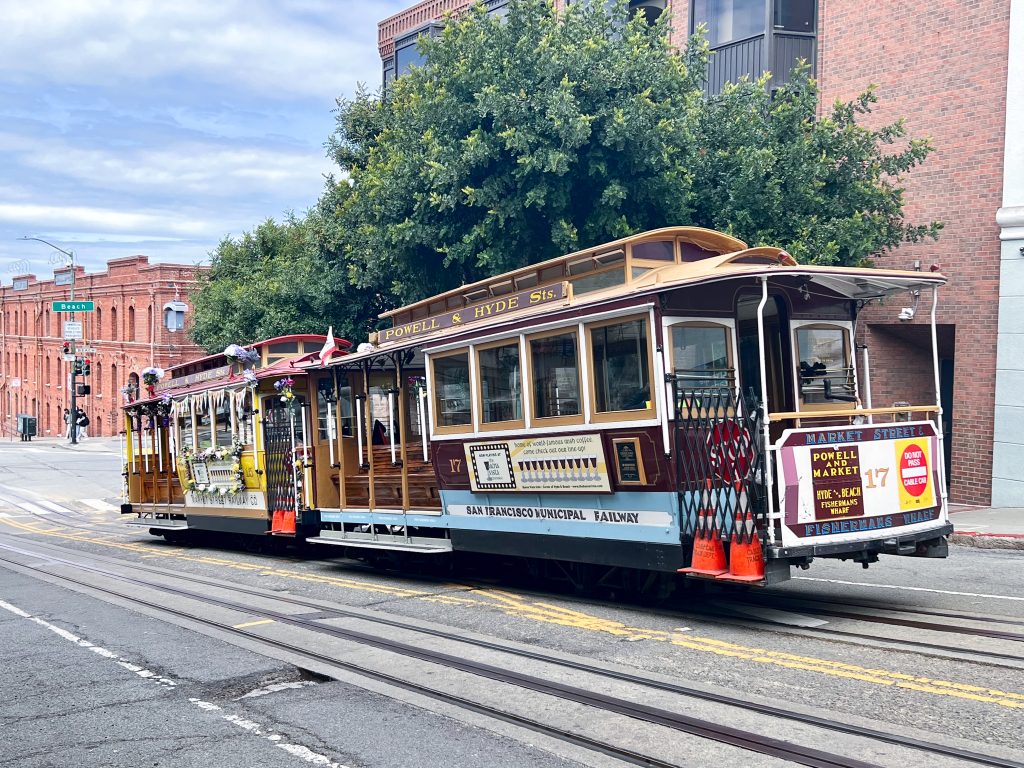
- Cable cars – run on steel wheels but do not have a trolley pole overhead, therefore they are not trolley cars. The cable cars are wooden with painted signage.
- Trolley coaches – buses connected to a pair of overhead wires. Look for their rubber tyres.
So, none of them are called trams, and street cars are not trolleys – crystal clear!
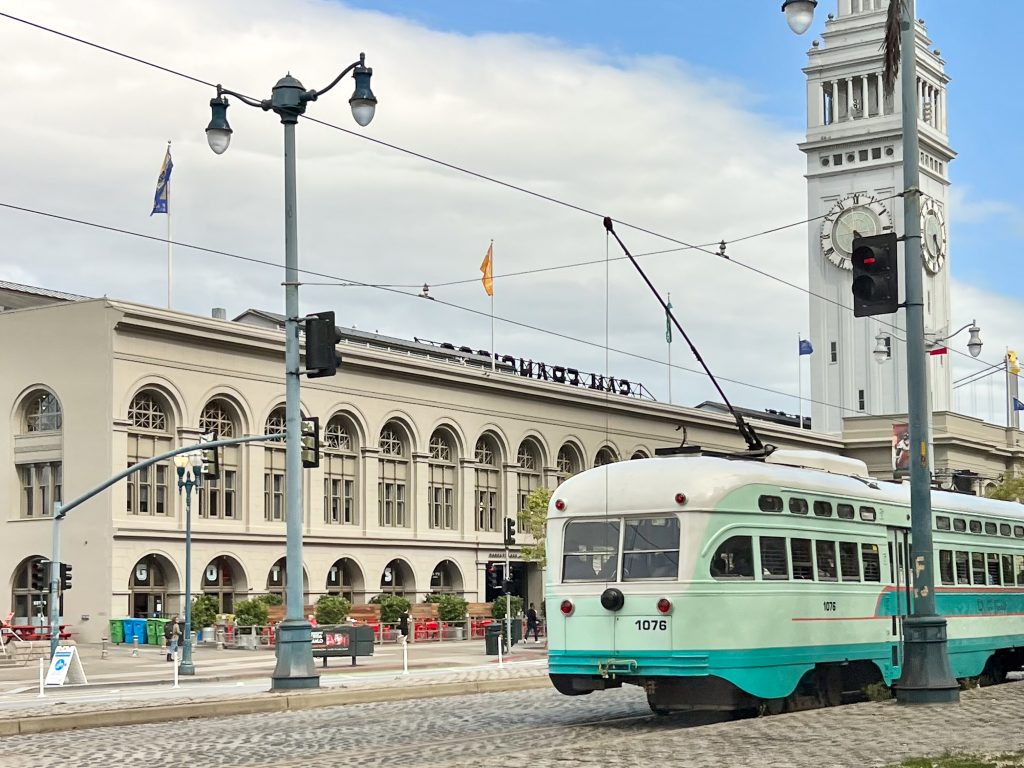
If you want to know more about the city’s famous cable cars, then plan in a visit to the Cable Car Museum on Washington at Mason. It’s small so doesn’t take long to visit, but it gives you the background you need.
Today there are only 3 cable car lines operating in the city: Powell-Mason, Powell-Hyde and the California line which is the oldest and goes up the steepest route on Nob Hill, and through Chinatown.
How to catch a cable car
If you get on a cable car at a turning circle, then you should pre-buy your ticket from the ticket booth at the stop.
If you jump on at a stop along the way (denoted by purple signs), then you can get on, find a seat, and then pay the ticket inspector.
Note – if you are getting on the cable car along the line then, you need to wave or signal to the approaching cable car for it to stop, otherwise it will pass you by. Tickets are around $8 per journey.
DAY 1 - Morning - Bike the bridge to Sausalito
Start your time in San Francisco by making the iconic Golden Gate Bridge the focus of the day. A great way to do this is to book a guided bike tour to cross the bridge, or hire bikes and make the journey under your own steam.
We booked a Golden Gate Bridge to Sausalito Cycling Tour via Get Your Guide (3 hours) which I would highly recommend.
This tour ends on the other side of the bridge in the gorgeous waterside town of Sausalito, an 8-mile cycle ride (one way). You can have lunch in Sausalito before catching the ferry back to Fisherman’s Wharf making a very satisfactory half day adventure.
What to expect on the bike tour
After a safety briefing and getting fit-out with bikes and helmets, you will set off with your guide towards the Golden Gate Bridge. It takes quite a while to reach the start of the bridge but there’s plenty to see on the way:
- Aquatic Park Cove – with a curved pier which creates a sheltered harbour where, even on this fresh morning, locals were swimming. There are great views of the Golden Gate Bridge and Alcatraz in the bay from the pier.
- Historical buildings – including the first Dr Pepper factory, the Del Monte canning factory and the Ghirardelli chocolate factory.
- Fort Mason – a former military post now used for festivals, galleries, and food truck nights.
- Crissy Fields – a former airfield and part of the Presidio military installation, now a park and marina area.


Meanwhile, as the Golden Gate Bridge gets closer and closer, the views of this iconic structure improves with every turn. Our guide gave us bridge facts along the way:
- The suspension bridge is made of enough cable to go around the world 3 times over.
- Amazingly it only took a couple of years to build and opened in 1937.
- The bridge is constantly being repainted, but has only ever been fully repainted twice.
- There are 5 different authorities policing the bridge including a dedicated bridge police force.
The rules of using the bridge are taken very seriously – stop only if you have to, pull over and give way to faster road-bike cyclists and commuters. Basically, do not get in anyone’s way.

The bridge is very high at 227 meters (746 feet) above the water. The cable towers themselves are 152 meters (500 feet) above the road on the bridge. Sadly, because the bridge is so high, it has a lot of jumpers, the majority of whom do not survive. As a result, there are phones all the way along the bridge giving crisis counselling helplines for those in need. One of the key jobs of the bridge police is to talk down potential jumpers – what an important responsibility.
The opportunity to bike the bridge in San Francisco with teenagers was a fantastic experience and the views were memorable. As you pass the towers you can see the Art Deco detailing more clearly and marvel at just how tall they are.

Freewheel down to Sausalito
At the other side of the Golden Gate Bridge, you reach the Marin Headlands before descending downhill to Sausalito, an extremely attractive town on the water. The downhill section of the bike ride is fun, but so long and steep that your hands get tired on the brakes whilst you are freewheeling!
If you’ve watched The Last Thing He Told Me with Jennifer Garner, then you will recognise Sausalito as the setting for Jennifer’s incredible houseboat home. There are several docks where the houseboats are parked up, and one of them is apparently where Otis Reading lived and wrote Sitting on the dock of the bay. I loved the colourful post-boxes for the houseboats.

We enjoyed resting our legs in the sun on the outdoor deck of The Joinery restaurant, with a beer, chicken burger and salad. Well earnt we thought.
After lunch, catch the Blue and Gold Ferry back to Fisherman’s Wharf in San Francisco, passing Alcatraz on the way. If this is some people’s commute to work, then I am extremely jealous. It is all so pretty.

If you decide to bike the bridge in San Francisco then I would strongly recommend a trip with goes over the Golden Gate Bridge to Sausalito, as this was our favourite activity when in San Francisco with teenagers.
DAY 2 - Afternoon - Visit Chinatown
Take your first Cable Car
Your bike tour will end near the turning circle for the Powell-Hyde Cable Car line. For your first trip on one of the iconic cable cars of San Francisco, pick up this cable car line and get off at California or Sacramento and walk two blocks to Grant for Chinatown.
On the way, it is hard to ignore the fact that nothing is straight here, which all adds to the charm of this unique city. One minute you are heading up a hill, and the next you are heading downhill which makes for a fun ride.
Find the Fortune Cookie Factory
Chinatown in San Francisco has the oldest Chinese American community in the USA, but not the biggest, which is in New York. The earliest Chinese immigrants came in 1840s to the Bay Area just before the Gold Rush.
Dragon Gate is the main entrance to San Francisco’s Chinatown, and the outer arches of the Dragon Gate (erected in 1970) were originally intended for the common people to pass through. The dragons on either side of the gate keep evil spirits out.

Walk through the Dragon Gate and along Grant Street into San Francisco’s Chinatown. Once this area was a red-light district, but after the 1906 earthquake and devastation of the city, Chinatown was established.

Things to look for on your walk-through San Francisco’s Chinatown include the:
- Sing Chung Building – on California Street, featuring Chinese architecture but designed by a Scottish architect using a pagoda style.
- Bank of Canton – once home to the Chinese Telephone Exchange which began operating switchboards in 1891 but was destroyed in the 1906 earthquake. It was rebuilt in an ornate style and remained a switchboard until 1949 when it no longer necessary, being bought by the Bank of Canton in 1960.
- Chinese decorations – colourful lanterns strung from buildings, wonderful orange painted buildings with turquoise accents, and endless shops selling dragons and jade jewellery.
- Bubble tea refreshments with bursting boba made of a seaweed extract filled with a flavoured juice.
- Chinese murals – There is a large Horoscope mural and Bruce Lee mural on Jack Kerouac Alley, although you will find other murals throughout the neighbourhood as you wander around.


Our favourite stop in San Francisco’s Chinatown was at The Fortune Cookie Factory, which opened in 1962 and is the last of its kind. Inside this tiny space, a couple of ladies were sitting at desks stuffing the cookies with the fortune messages before shaping them, ready to be baked on-site. The ladies make about 20,000 cookies a day, which you can buy in packs from the shop.

Step into history at the City Lights Bookstore
Exit San Francisco’s Chinatown at Kerouac Alley, near the famous City Lights Bookstore in North Beach (in reality, nowhere near a beach!). This is the famous bookshop where Beat Generation authors, such as Allen Ginsberg and Jack Kerouac, used to meet for readings after the bookshop published a poem called Howl by Ginsberg. City Lights Bookstore was America’s first all paperback bookshop.

Head to Coit Tower
As you walk from City Lights Bookstore through North Beach towards Filmore Street, you will spot the Transamerica Pyramid building, one of the city’s more modern landmarks. Then, go in search of a different type of tower – the Art Deco tower, Coit Tower at the top of the very steep Filmore Street.
On Filmore Street all the houses are built on a slant, and you have to park at 90 degrees to your house to reduce the risk of our car rolling away down the hill. All very San Francisco!

Unfortunately, the Coit Tower was closed when we arrived on our walking tour of San Francisco with teenagers, so we continued our walking route to look for parrots on Telegraph Hill instead.
Look for green parrots on Telegraph Hill
From Coit Tower pick up the signs for Telegraph Hill and the Filmore Steps which lead all the way down Telegraph Hill back to the Embarcadero.
These wooden steps are built through the back gardens of the large houses on Telegraph Hill, so the area is lush with plants and trees. A flock of green parrots lives here, but sadly we didn’t manage to spot any on the way, but it didn’t matter because we really enjoyed the garden views.
Note – Telegraph Hill features in the Tales of the City book series by Armistead Maupin.

Stroll the Embarcardero
Once back at the Embarcadero you can either find your way back to your hotel, or go in search of food at the nearby Ferry Building which is full of food shops and restaurants.
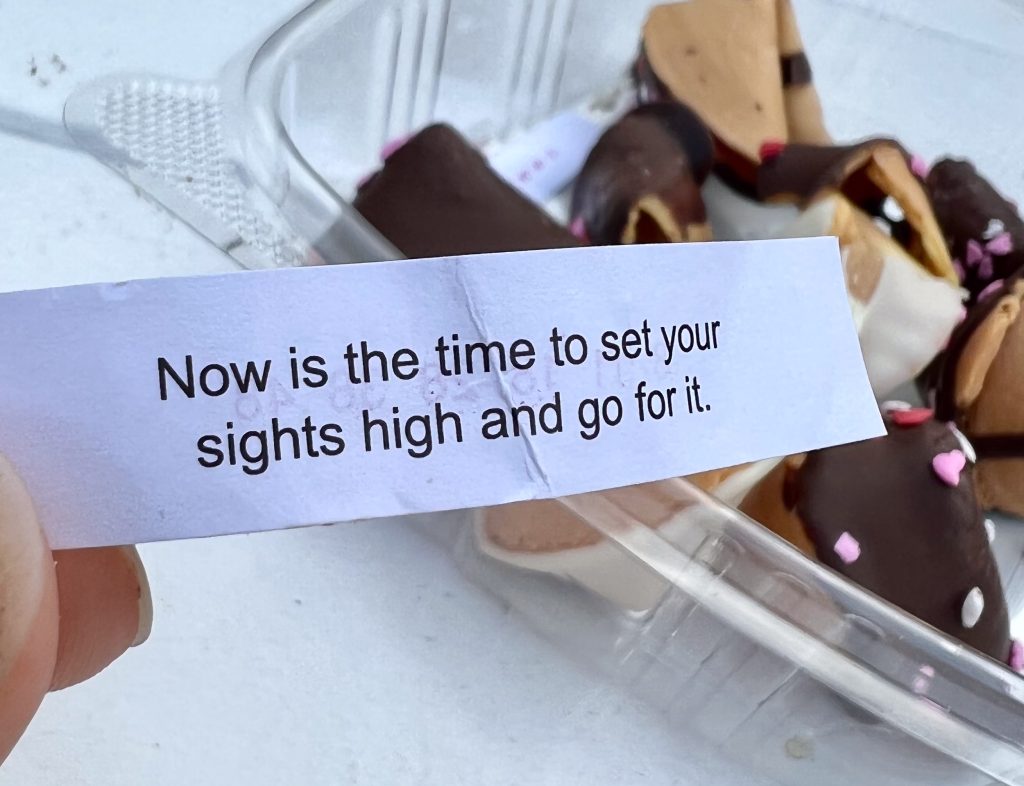
We stopped for coffee on the Embarcadero and opened our cookies from the Fortune Cookie Factory to see what messages we had inside – “Now is the time to set your sights high and go for it!”
Your Day 1 itinerary is a great introduction to San Francisco – its iconic bridge, the cool cable cars, extensive Chinatown and the quirky back gardens of Telegraph Hill. Tomorrow we go in search of hippies…
DAY 2 - Morning - Painted Ladies and Hippie Vibes
San Francisco is synonymous with the Hippie counterculture movement of the 1960s and 1970s, hosting the a ‘gathering of the tribes’ on Hippie Hill in 1967 which initiated the Summer of Love, attracting over 100,000 young people to the Haight-Ashbury neighbourhood in the city.
Whilst not everything about the Hippie movement was romantic, it has left a lasting memory of ‘flower power’ fashions – long hair, sandals, flowing dresses, beads, tie-dyed clothes, and psychedelic colours. On your visit to San Francisco with teenagers, it’s time to go in search of some hippie vibes.
Take the Love Bus Tour in a VW Camper Van
For a fun way to explore San Francisco with teenagers and search for Hippie vibes, book a 2-hour Love Bus Tour through Viatour.
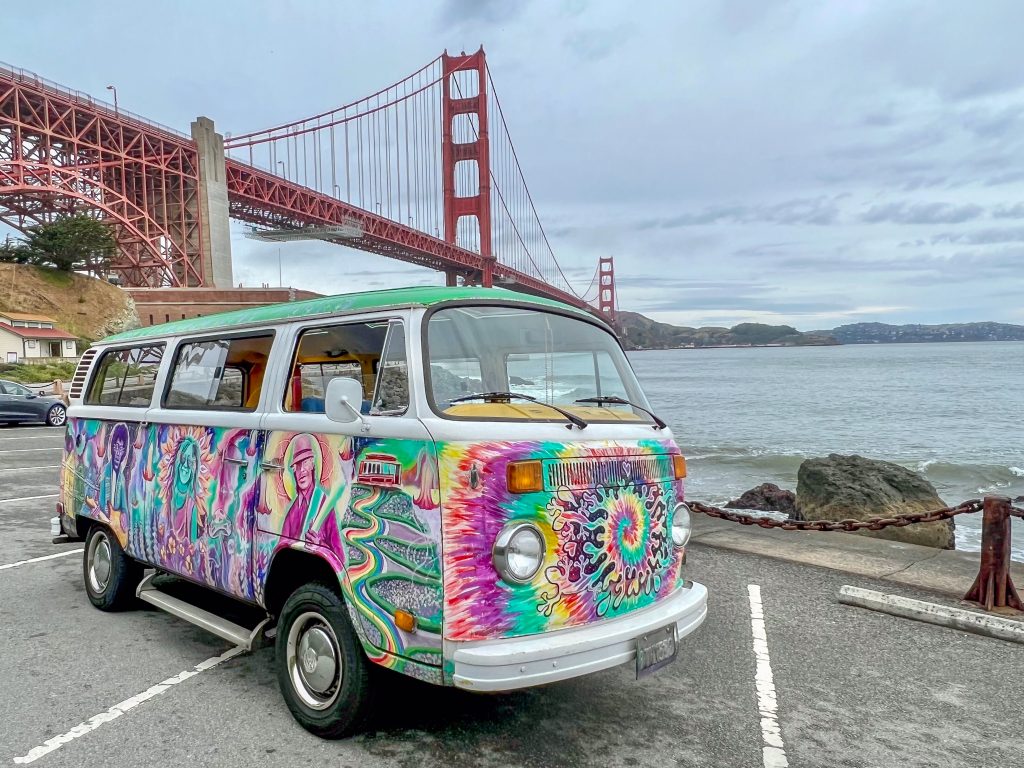
Our Love Bus Tour was in a retro 1970s VW Camper Van hand-painted in psychedelic patterns, driven by Albert who played funky tunes and passed on stories about the city as we explored.
General sightseeing on the Love Bus tour
Despite the fact that we had hippie tunes from the 1960s ad 70s playing in the bus from the start, the first section of sightseeing on the Love Bus Tour was more general. We headed off in the same direction as our bike ride yesterday, and then on to some new sights including:
- The Palace of Fine Arts – built for the 1915 Panama-Pacific Exposition in the Marina District of the city, this venue has a Greco-Roman design with stunning views of the Golden Gate Bridge. It is now used for weddings and parties but is understandably pricey.
- Statue of Yoda – outside of Lucas films HQ in the Presidio.
- Fort Point – at the base of the Golden Gate Bridge, Fort Point was built in 1853, during the Gold Rush as part of the defence system for the city.
Our driver parked the Love Bus in front of Fort Point with the Golden Gate Bridge in the background for a photo opportunity, and to watch a group of surfers catching waves under the bridge. It seemed like an unlikely spot to get surf but was providing them some good waves. Meanwhile, in the distance, a whale made a bonus appearance in the Bay, spouting water through its blow hole every couple of minutes and turning over in the ocean. How wonderful!
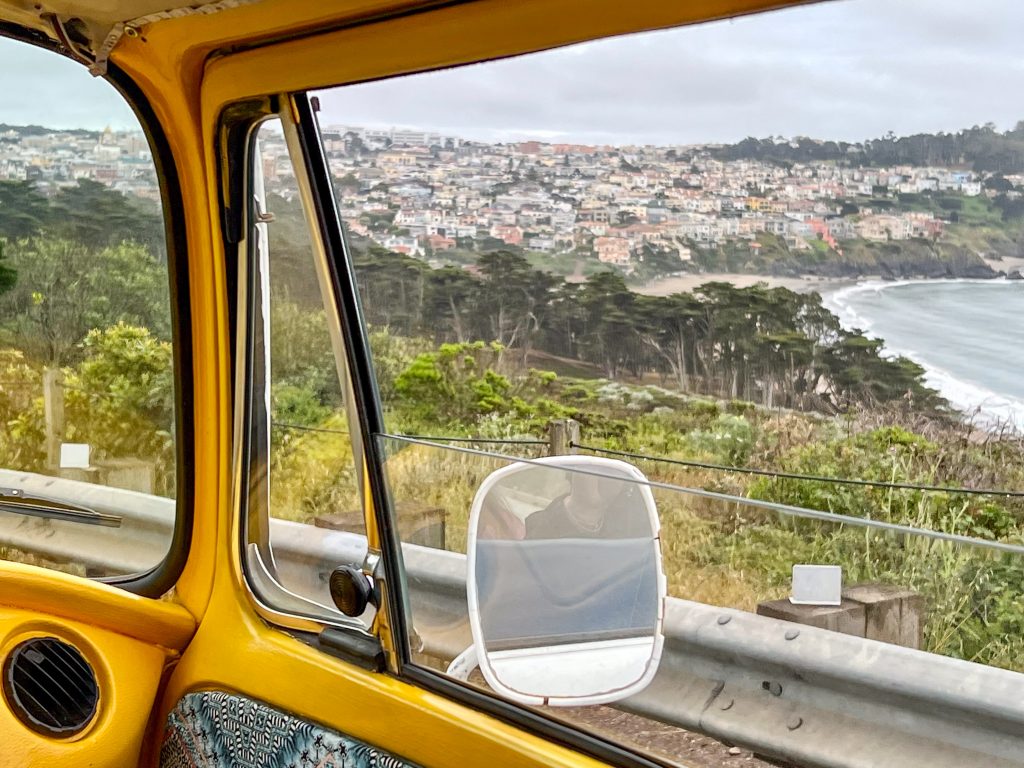
From Fort Point, the Love Bus Tour headed over to Baker Beach, which is a nudist beach at one end and the exclusive Sea Cliff residential area (the houses are worth tens of millions here) at the other end of the beach. We passed the lovely cliff-top park at Lands End Lookout which offered tree-lined coastal walks (to explore another time), before arriving at Ocean Beach. It was interesting to see how close this major surf beach was the centre of the city.
Then the Love Bus Tour headed through Golden Gate Park which we entered from the bottom edge. The drive through the park showed us just how large it is – 174 acres bigger than Central Park in New York. Amongst the main attractions of Golden Gate Park are the DeYoung Museum, a Japanese Tea Garden, baseball park, windmills, boating lake, coyotes and even bison.
The hippie section of the Love Bus Tour
At the top of Golden Gate Park is an area called Hippie Hill, which was the main site of the enormous Summer of Love gathering in 1967, drawing 100,000 people to the park, including hippies, beatniks, people of all ages and those of an anti-war sentiment. “Peace not war man!”
The Love Bus exited Golden Gate Park into the Haight-Ashbury neighbourhood, which is the epicentre of the hippie vibes in San Francisco (although just the commercialised aspects of it today).
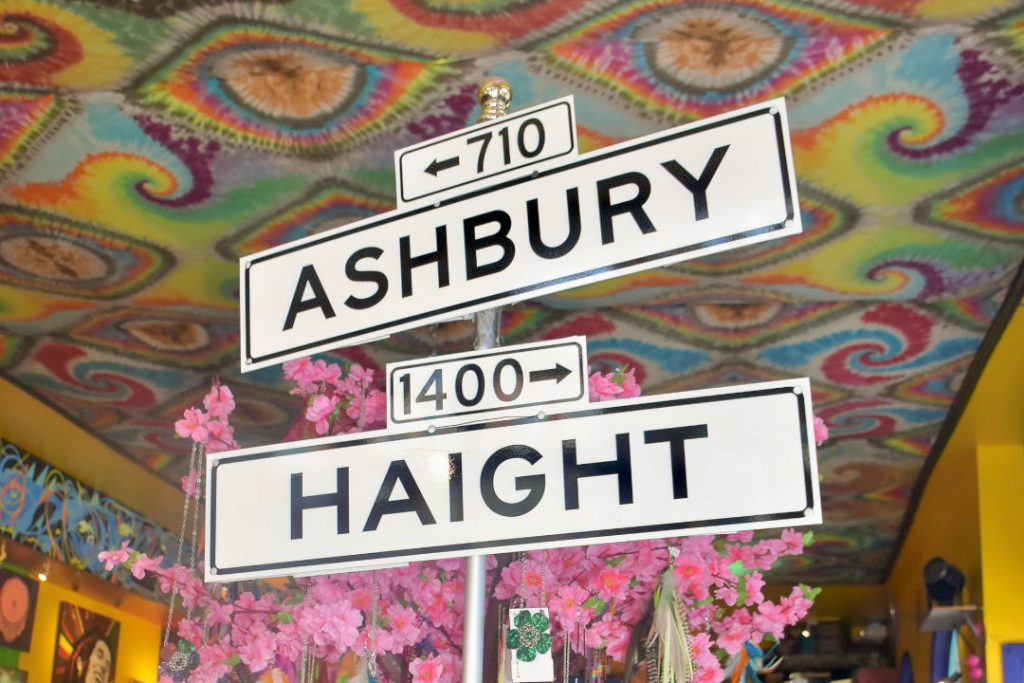
As we drove along Haight Street, our guide pointed out homes previously inhabited by famous people of a hippie persuasion along the way. To be honest, it was all quite quick passing through in the van, but we were intending to return to the area later, so just sat back and enjoyed the ride, listening to San Francisco (Be Sure to Wear Flowers In Your Hair) by the Scott McKenzie on Albert’s radio.
Pacific Heights
Next, Albert took us around the Pacific Heights neighbourhood and pointed out the house from movie Mrs Doubtfire. If you’ve seen the movie Pacific Heights starring Melanie Griffiths, Matthew Modine and Michael Keaton, then you’ll be able to picture the wonderful Victorian houses filling this area.
Then the Love Bus drove past Billionaire’s Row – a three block stretch between Divisadero and Lyon Street full of Russian Oligarch houses (according to Albert), some of the most expensive houses on the Bay. They really were in a stunning location on top of the hill overlooking the whole city and Bay area.
Fun on curvy Lombard Street
There are 44 hills in San Francisco and as you tour the city, it certainly feels like it – nothing is flat, and few things are straight. This includes Lombard Street in the Russian Hill neighbourhood, a unique street featuring eight hairpin turns running down a narrow steep hill for one block. It is claimed to be “the crookedest street in the world”. You can only drive down the Lombard Street.
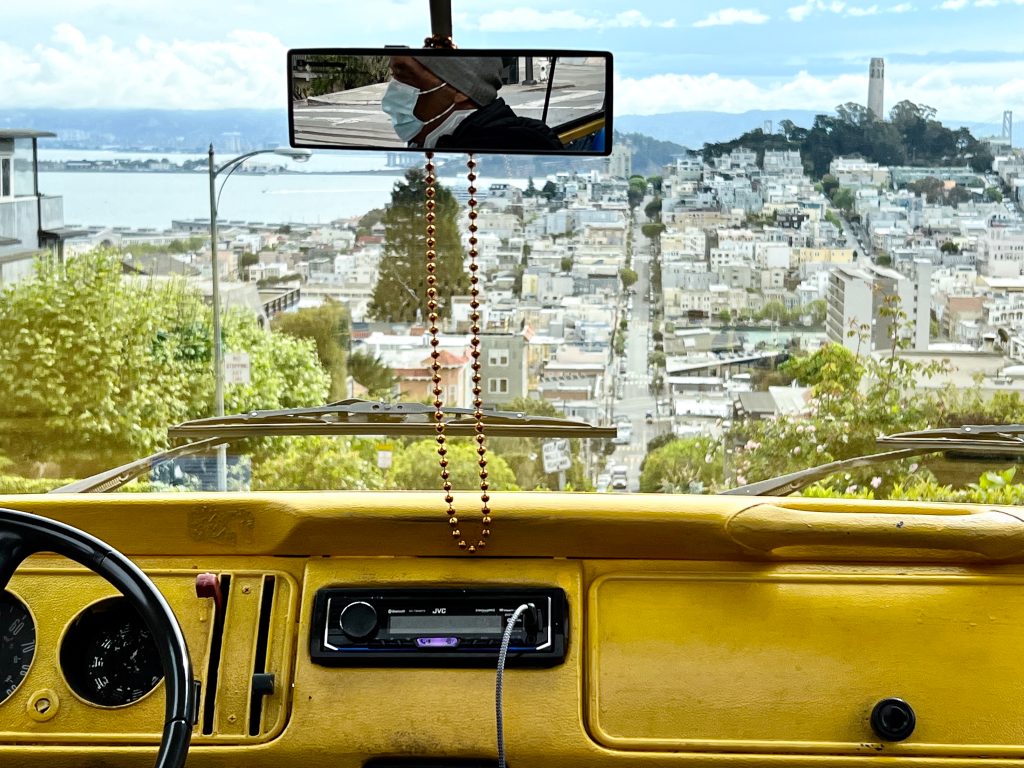
That sadly brought our Love Bus Tour to an end. You do get quite a lot of attention when you are driving around on the Love Bus Tour, so be prepared for bystanders to wave at the bus and take photos as you drive around. You need to enter into the spirit of things for this tour!
Taxi back to Haight-Ashbury – if you want to explore the area on foot, rather than cruising through in the Love Bus, then take a taxi back to the area in time for lunch.
DAY 2 - Afternoon - Neighbourhood Walks
A 'light' lunch at Tartine Bakery
Tartine is a very famous bakery chain in San Francisco – there are 3 in the city, and we heard about them on the TV programme Somebody Feed Phil. Take a taxi to the Tartine Bakery outlet on the east side of the Golden Gate Park. Expect delicious but heavy-duty menu options, with lots of French pastries, bread, cheese and cream. Forget about diets when you step through the door of Tartine Bakery and just enjoy your food!
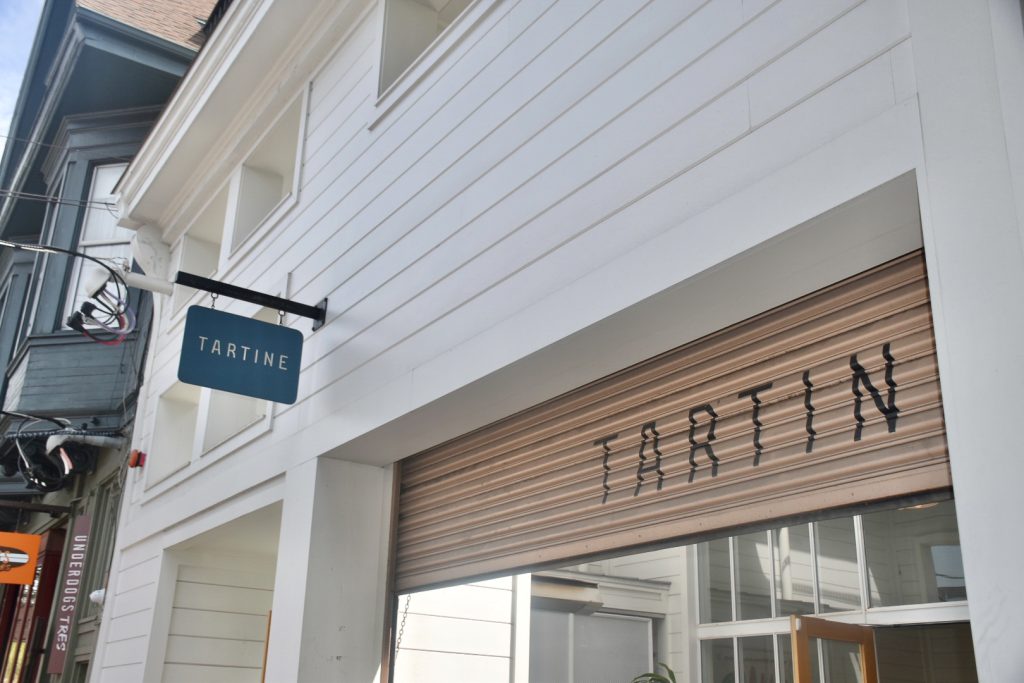
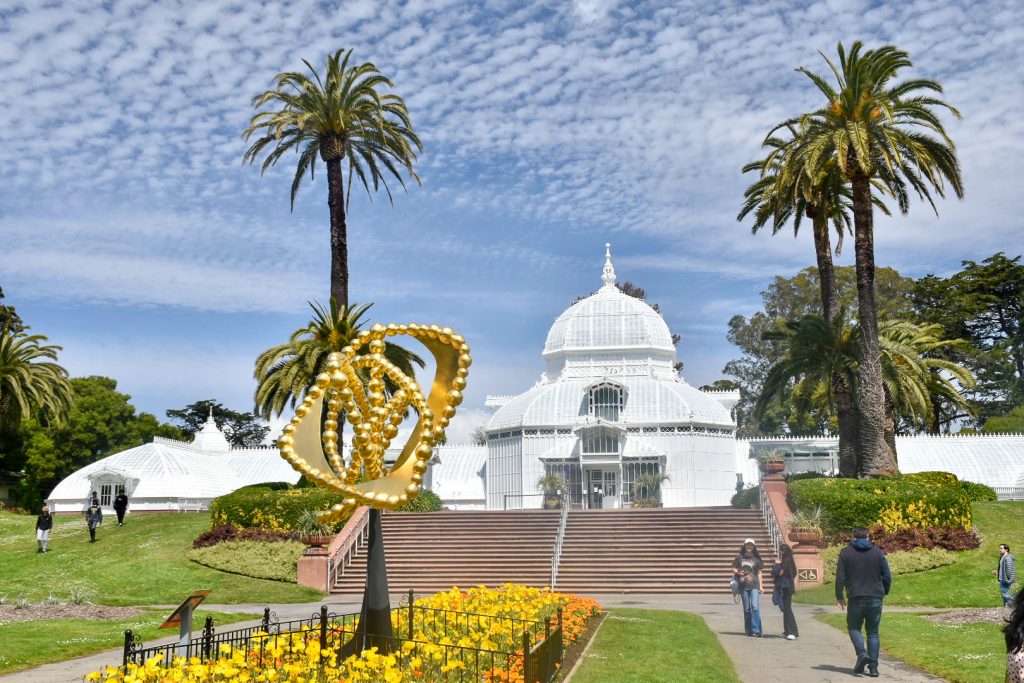
To walk off your lunch, head into the top part of Golden Gate Park to visit the Conservatory of Flowers, a striking glasshouse fashioned on those in Kew Gardens, London – a touch of home for us in this beautiful city. The glasshouse was full of tall palms and lily pads.
Walk along Haight Street
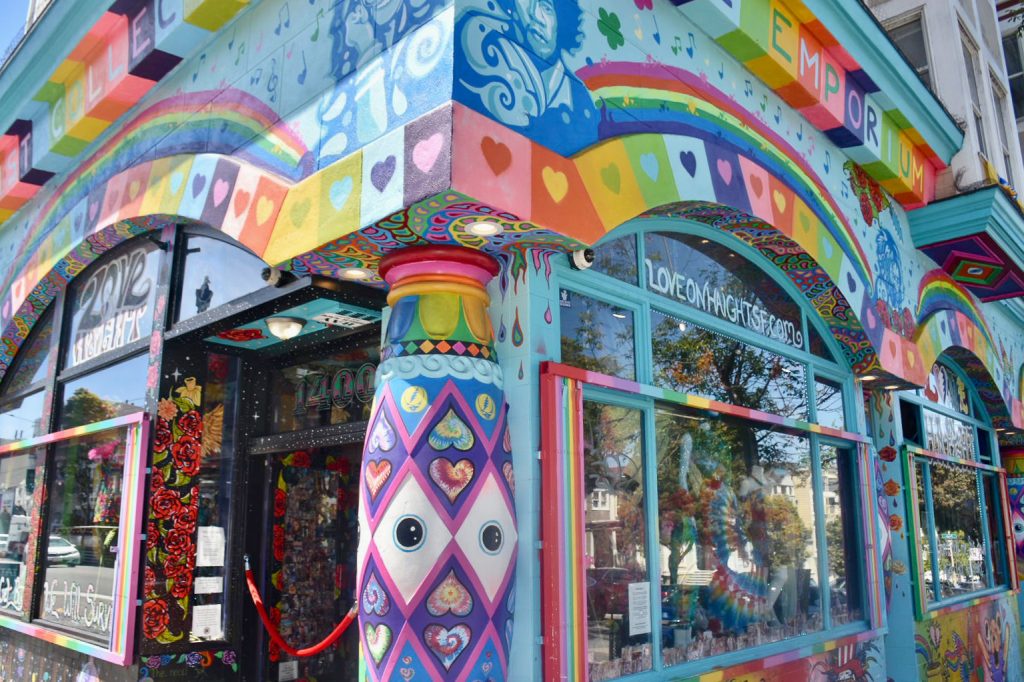
From the Conservatory of Flowers, pick up Haight Street and re-enter the Haight-Ashbury neighbourhood on foot in search of the hippie vibe.
Stop off at Amoeba Music, a huge independent music shop with an incredible selection of vinyl, new and second hand. I’m not sure how we managed to come out empty handed, perhaps because the choice was so great that it was a little overwhelming.

Haight Street is made up of all manner of shops – healing crystals, weed and vapes, vintage clothing and tie-dyed everything. There is even an ‘Anarchist Collective Bookstore’.
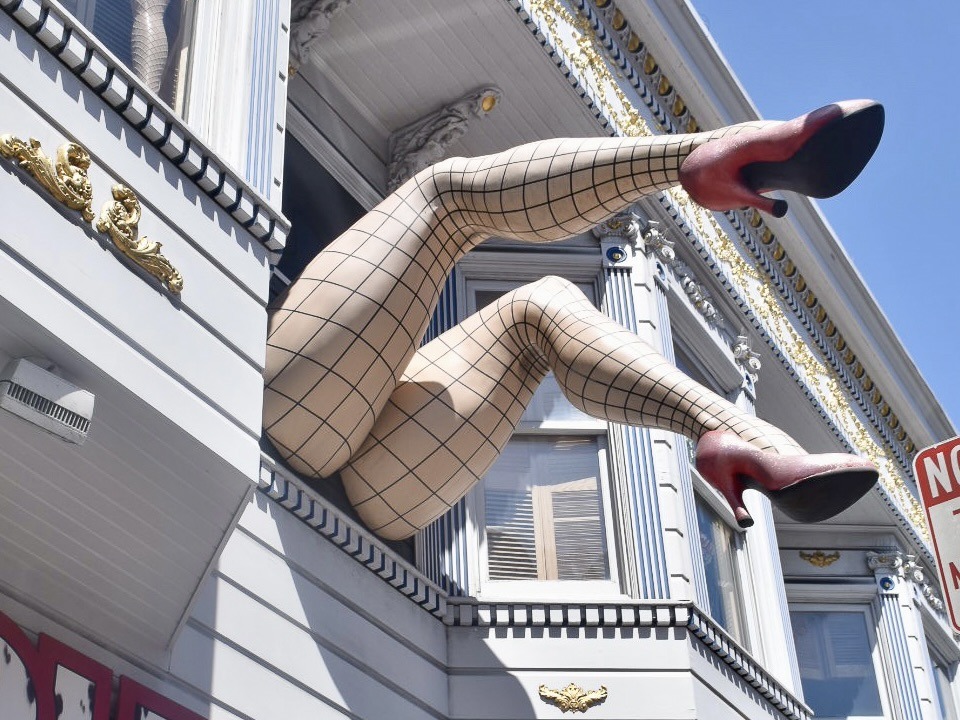
The Piedmont Boutique has outlandish fashions (think sequins, faux fur and feathers) and features a pair of legs sticking out of the first-floor window!
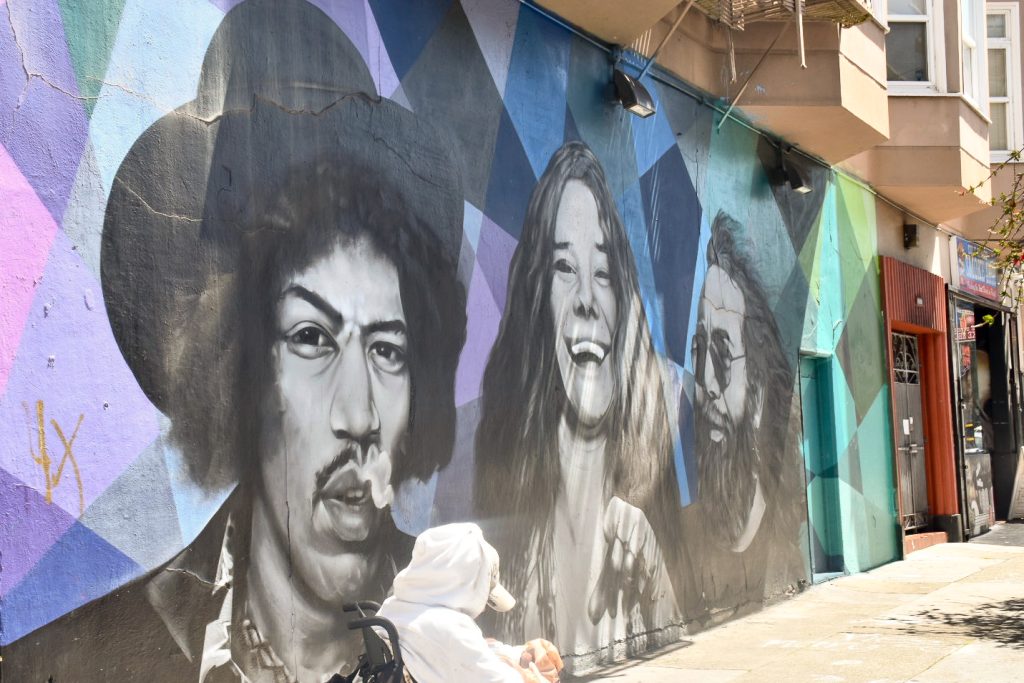
Your walk through the Haight-Ashbury neighbourhood in San Francisco with teenagers, will pass several notable houses and murals, such as:
- Jimi Hendrix’s Red House at 1524A Haight Street – where Jimi Hendrix lived for a few years in the 1960s.
- The Grateful Dead’s House at 710 Ashbury Street – opposite the original Hells Angels House at number 715 Ashbury Street. The Grateful Dead band hired the Hells Angels to serve as their bodyguards (and alleged suppliers of drugs) and wanted them nearby.
- Janis Joplin’s House at 635 Ashbury Street – the first place she lived in San Francisco, but only for 4 months, with a roommate who later wrote a book about living with her in this pretty pink painted lady.
Meet the famous Painted Ladies (Seven Sisters)
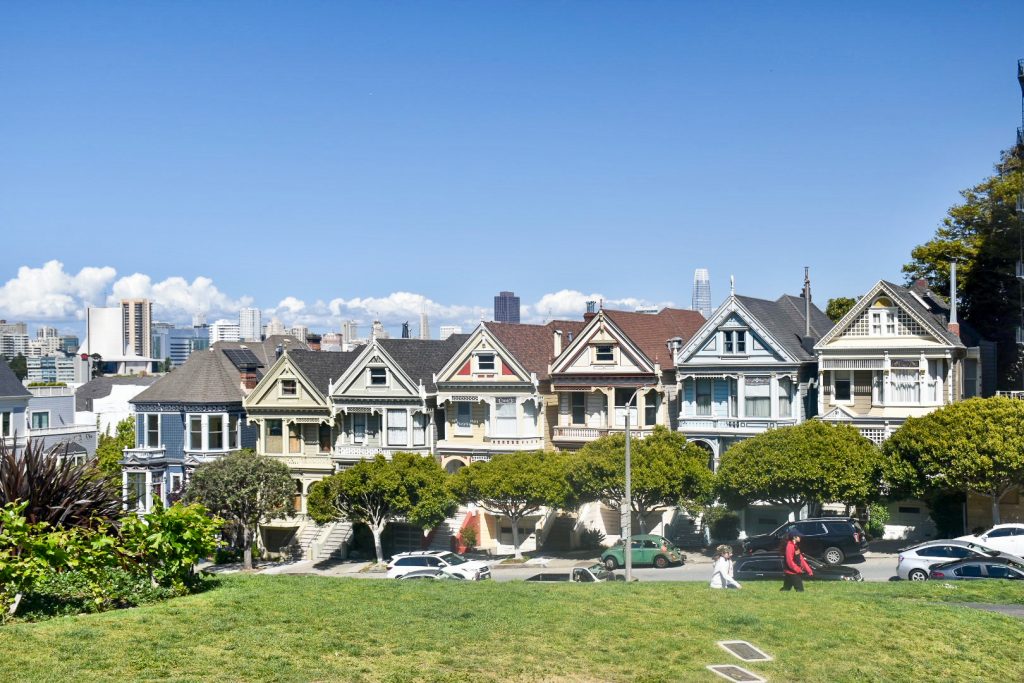
From Haight Street walk to Alamo Square to see the famous row of Painted Ladies(sometimes known as Postcard Row, or the Seven Sisters) at 710-720 Steiner Street. Painted Ladies are Victorian or Edwardian Houses, which are painted to embellish their architectural details in a few different colours.
In total, it was a 30-minute walk from Amoeba Records on Haight Street to Alamo Square, and we picked up some picnic supplies in a local grocery, so we could sit in Alamo Square and admire the view of the houses. From Alamo Square, walk to the streetcar stop to catch the F Line back to Fisherman’s Wharf, or elsewhere depending on your plans for dinner.
A note on Downtown San Francisco
My pre-trip research had suggested avoiding the Tenderloin area of Downtown San Francisco due to the level of homelessness and drug misuse on streets. As we were visiting San Francisco with teenagers, then we decided to avoid this area.
We only ventured near Downtown San Francisco on two occasions, once to shop near the Powell-Mason cable car turnaround stop which was fine, and once on the F line streetcar which passed through Downtown when a young homeless man got on the streetcar and the driver started shouting at him which wasn’t nice to see (for the homeless man).
Dinner at Coqueta or at the Ferry Building
There are endless and excellent options for dinner when in San Francisco with teenagers, especially in the Ferry Building on the Embarcadero, so I’m sure that you’ll find something to suit your tastes and circumstances.
We very much enjoyed a dinner at Coqueta, a modern take-on Spanish dishes including tapas, paella and sharing dishes. It was a warm and bustling atmosphere, a great end to the day.
DAY 3 - Morning - Take a tour to Alcatraz Island
Book a morning tour of the famous Alcatraz prison on your visit to San Francisco with teenagers, catching the ferry from Pier 33 on Fisherman’s Wharf. You can book the Alcatraz Ticket, Ferry & Self Guided App through Get Your Guide.
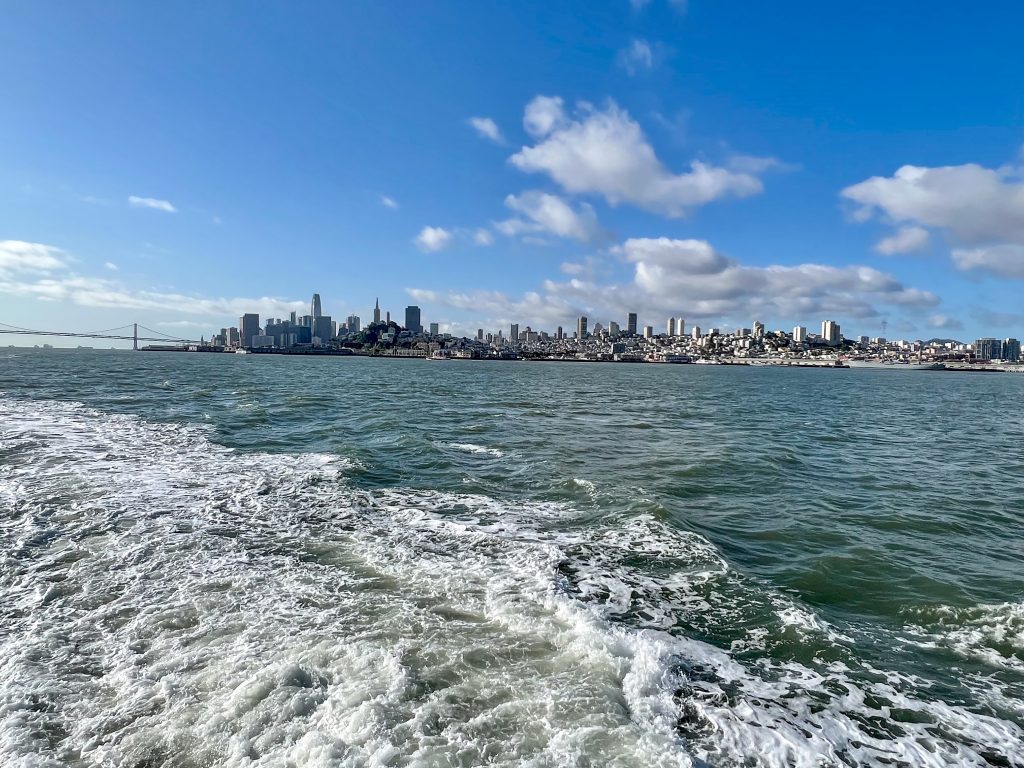
The ferry journey to Alcatraz Island is only 15 minutes each way, although the total time for the tour of Alcatraz Island its prison is between 2.5-3 hours. The boat ride offers a fantastic view of the prison as you approach Alcatraz Island, or ‘the Rock’.
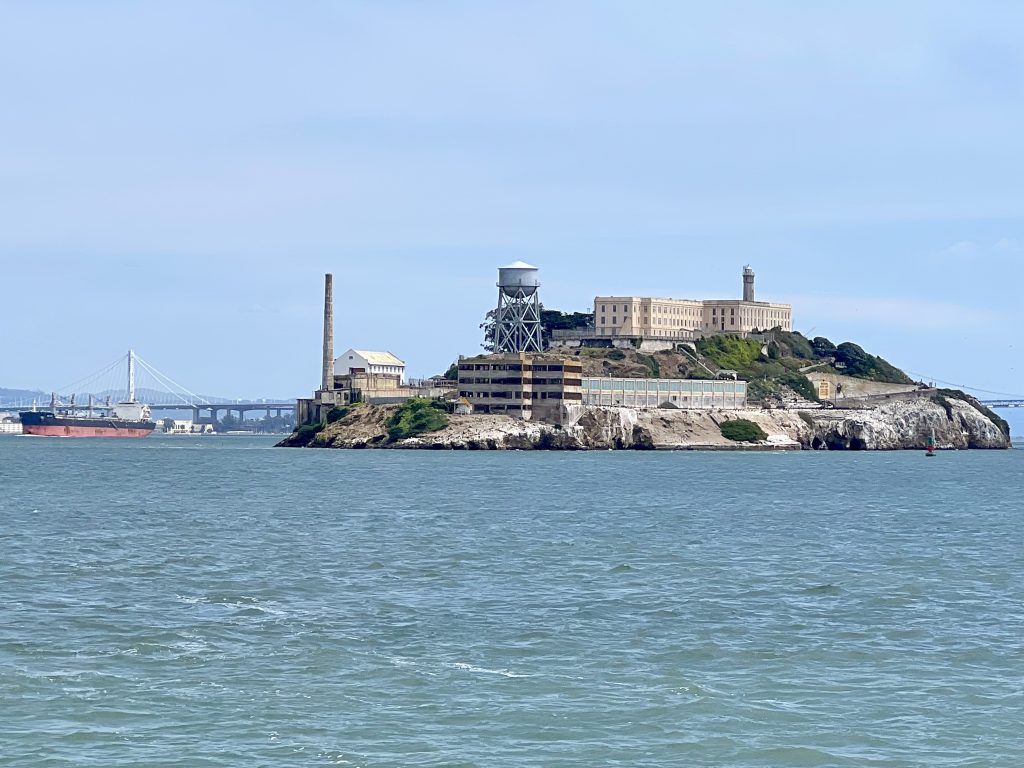
Alcatraz Island is well known because it was once the home of an ultimate maximum-security prison based on its own island, but still visible from the city of San Francisco. The prison played host to several notorious prisoners, including Al Capone and George “Machine Gun” Kelly, plus criminals who had a history of escapes, and the occasional odd character like the infamous “Birdman of Alcatraz.”
Once on Alcatraz Island, you are given a short orientation talk from representatives of the National Park Service, highlighting what there is to see on the island before exploring under your own speed.
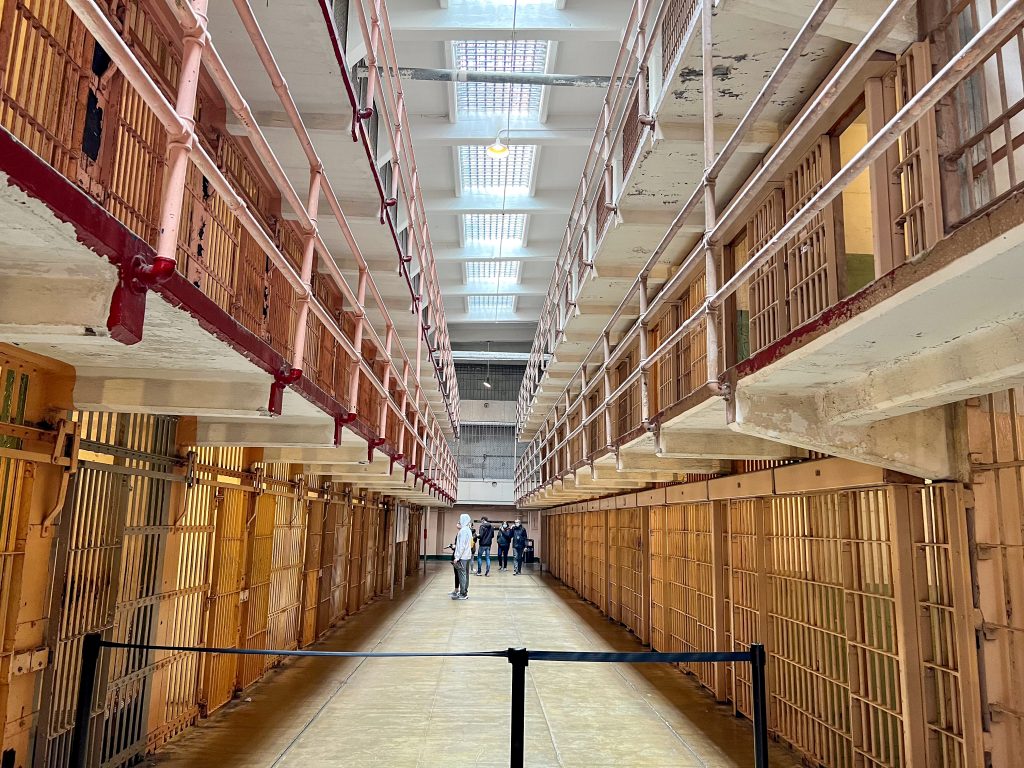
Touring the inside of the prison buildings, you will see:
- Arrivals room – where inmates report in, shower and collect their uniforms.
- The Cells – 5 x 9 x 17 meters.
- D Block – for most serious offenders or most badly behaved in jail.
- Solitary confinement – where the guards used to turn the lights off for weeks at a time which was grim.
- Library – the best room in the prison for the well behaved due to the light coming through the windows. Also, the Library hosted a music hour every night after dinner, so many inmates learnt instruments just to be able to spend time here.
- Dining room – known as the most dangerous room in the jail…
- Outdoor yard – with nice views over the Bay visible over the tall concrete walls and fencing.
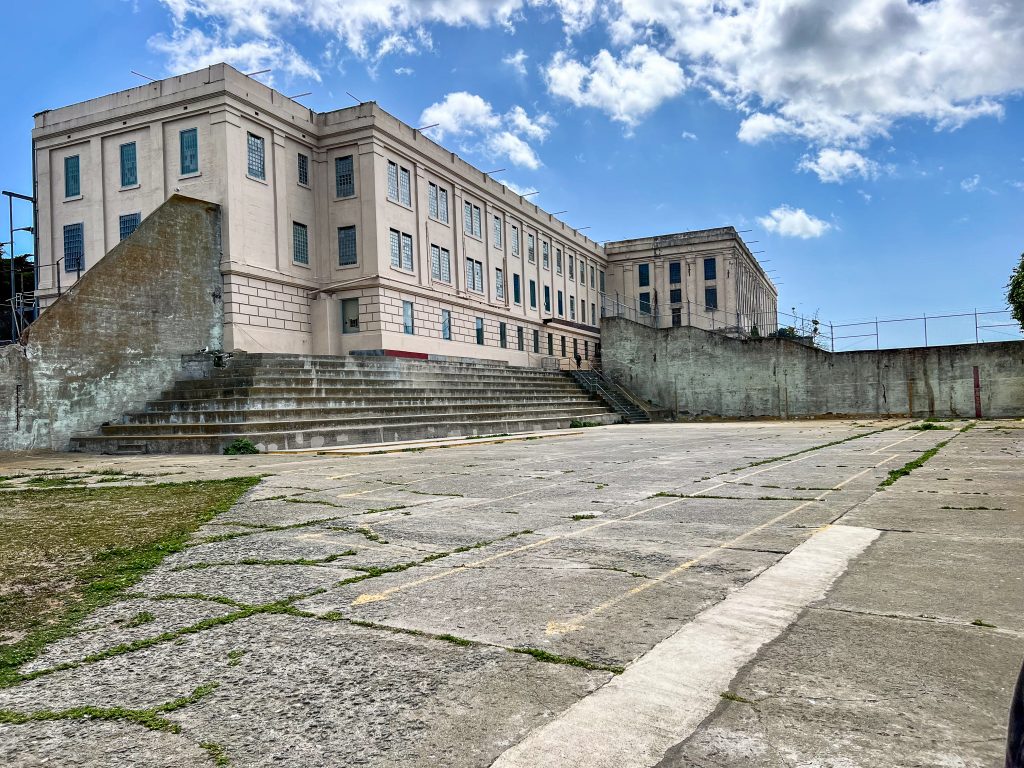
The occupants of a few lucky cells had small windows offering a view of the sunset and the fireworks on New Year’s Eve. If the wind was blowing in the right direction, they could also hear party noises coming from the city, although this must have been torture.
In the years when the prison was open, from 1934 to 1963, 36 men tried 14 separate escapes. Nearly all of them were caught or didn’t survive the attempt. However, three inmates escaped and went missing from Alcatraz.
The three missing prisoners escaped from their cells by creating waxwork heads which they put in their beds to make it look like they were sleeping, whilst they escaped through a hole in the wall dug by spoons. However, their escape route took them out to the icy sea, and they were never seen again, so it is assumed that they perished in the water. The 1979 film Escape from Alcatraz is based on these prisoners.
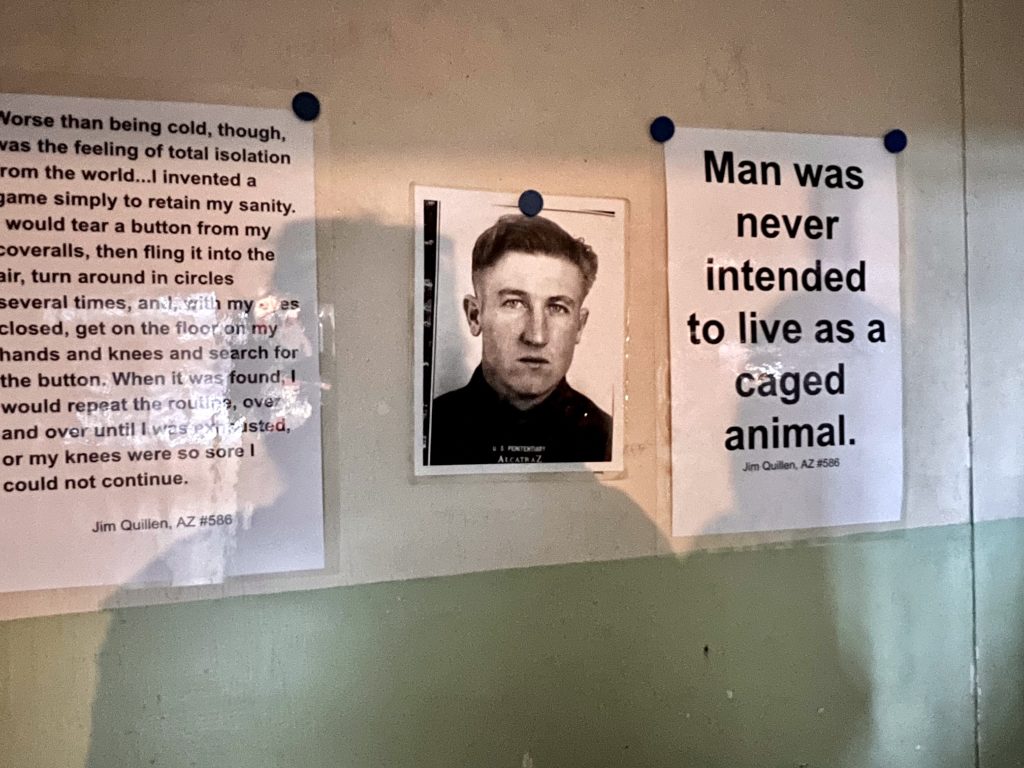
Alcatraz Prison was closed in 1963 simply because it became uneconomical to run.
Slightly later, in 1969, 89 Native Americans occupied the island for 19 months to bring attention to past injustices. There were banners on the front of the prison relating to this.
Outside the prison, around the edges of Alcatraz Island, are some amazing views of the Bay area and pretty gardens on the west side of the island. There are large numbers of birds who call the island their home and bird sightings are listed on boards near the ferry docks. When we visited there were nesting snowy egrets and grey herons, and staff on hand with binoculars to show you the nests. I didn’t expect to be bird watching at a prison on a visit to San Francisco with teenagers!
DAY 3 - Afternoon - View the Mission District murals
After returning by ferry to Fisherman’s Wharf, take a taxi straight to the Mission District, named after Mission San Francisco de Asís (‘Mission Dolores’) which was built by Spanish Catholic missionaries in 1776, and creating one of the oldest neighbourhoods in the city. The Mission District has remained an area inhabited by Mexican and Central American immigrants to the city.
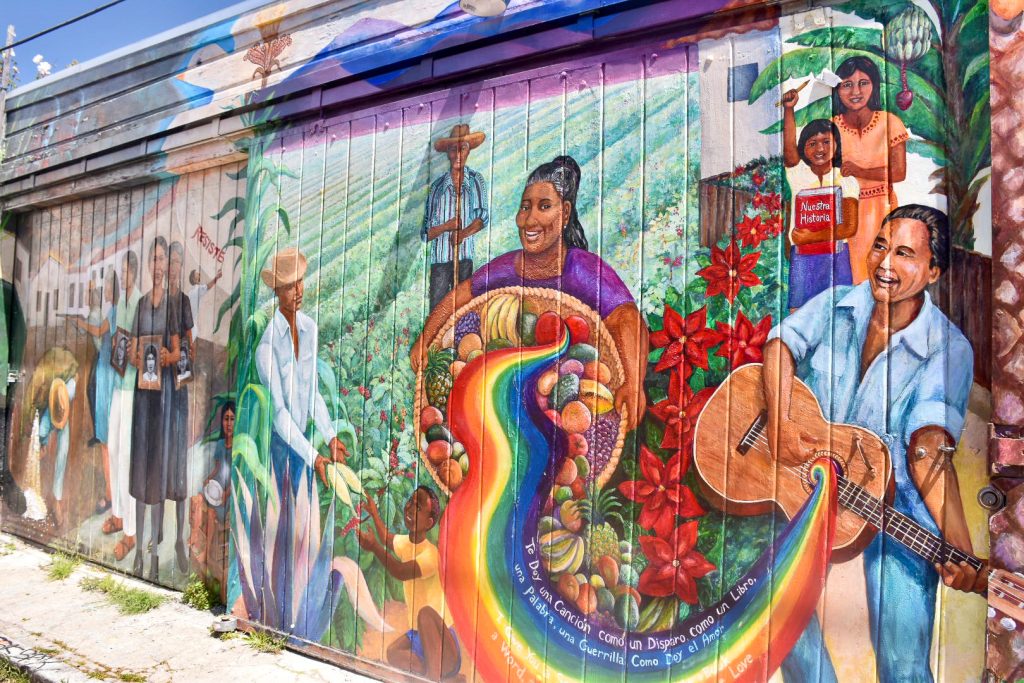
Make sure to visit the brightly coloured murals around the Mission District, with Latino roots and a hipster vibe. There are a couple of alleys in the Mission District featuring a large concentrated of murals – Balmy Alley and Clarion Alley.
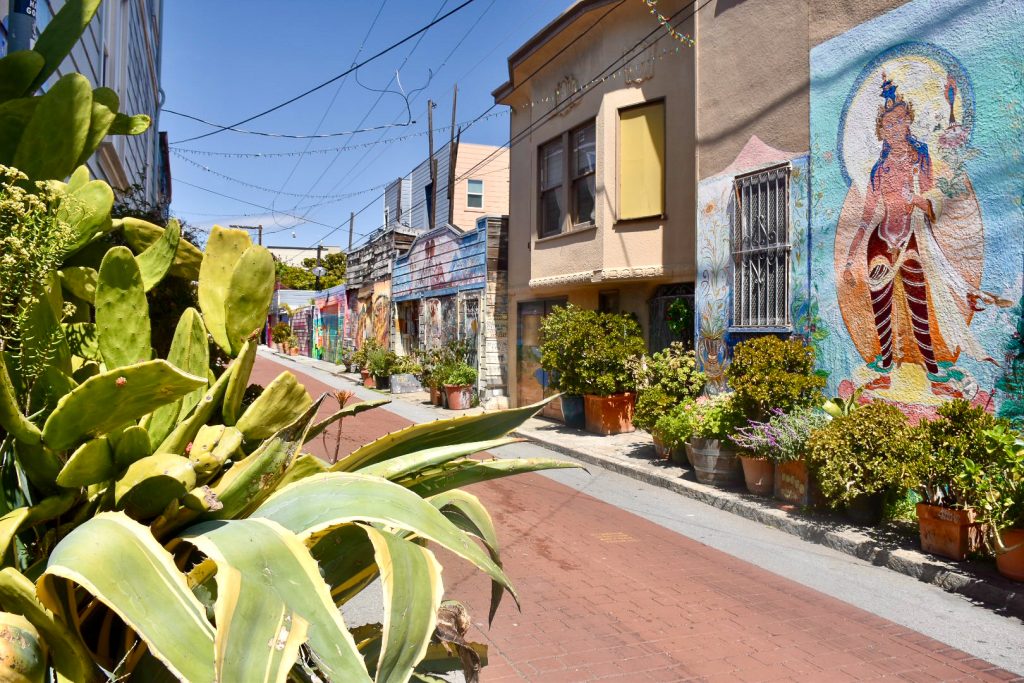
The murals were initiated by the Chicano Art Mural Movement of the 1970s and started to appear in numbers during the 1980s as an expression of outrage over human rights and political abuses in Central America. Today the alleys contain murals about similar political issues, but also more local issues, such as, gentrification or social issues such as inclusiveness.


In line with the make-up of the neighbourhood, there are an unusually high number of taquerias in the area, many selling the speciality Mission Burritos which became popular during the 1960s in this area. The Mission Burrito is typically a large flour tortilla that is wrapped and folded around a variety of ingredients including rice, served in a piece of aluminium foil.
On our visit to the Mission District on our trip to San Francisco with teenagers, we had intended to seek out burritos but changed course after our Blazing Saddles tour guide recommended trying the Rubens sandwich at Wise & Sons, which did not disappoint.
Take one last cable car ride
Powell-Mason cable car line
After lunch in the Mission District, catch a taxi to Downtown for some shopping before leaving San Francisco. Then pick up the Powell-Mason cable car (running from Downtown to Fisherman’s Wharf) from outside the shops.
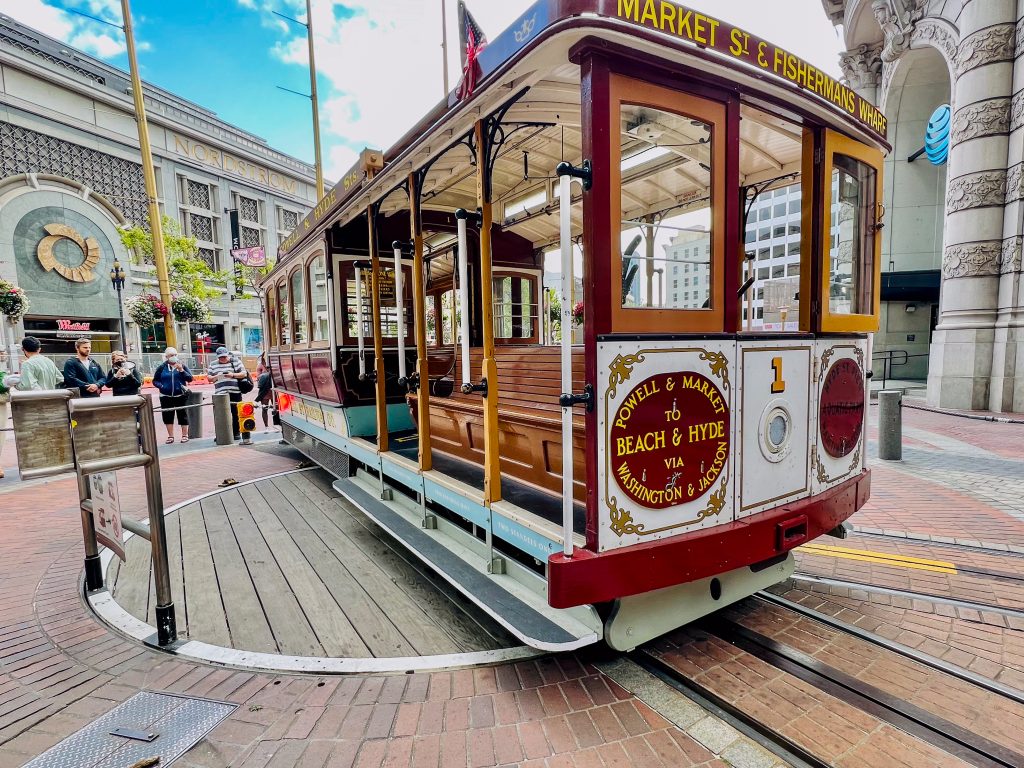
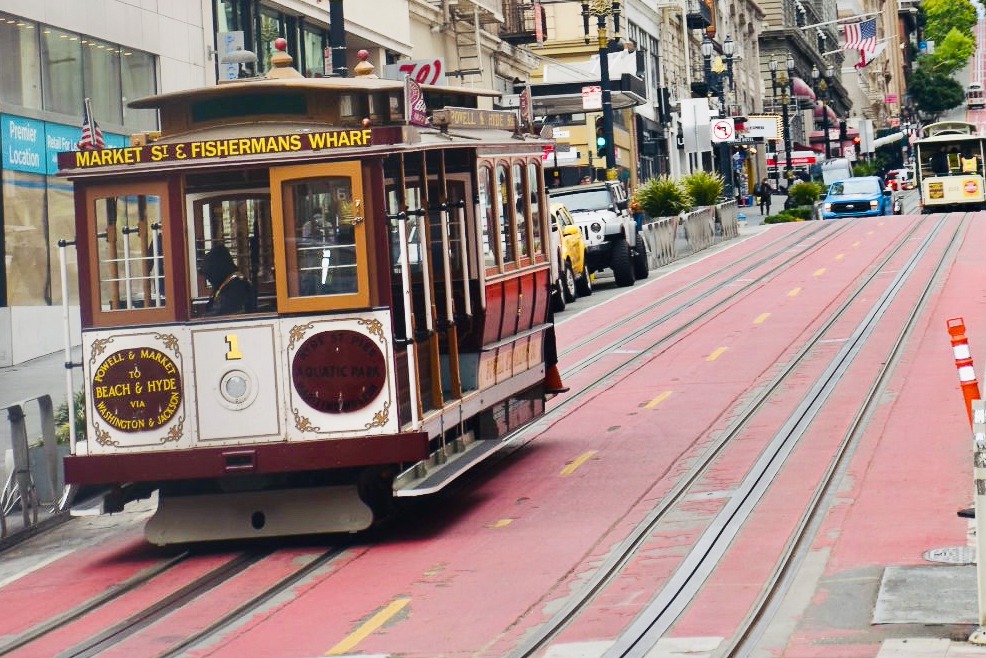
I was so pleased not to have missed the cable car ride experience as it was great fun. We managed to get seats outside, and there were people hanging off the sides, just like in the movies. I was impressed with how hard the operator was working, pulling levers to operate the brakes and gears, it looked exhausting…
The cable car rails were mainly straight on the section we rode, but there were two corners where the cable car swung around at speed – luckily, we managed not to lose anyone hanging on to the sides!
The route provided a nice view down to the Bay and a bit of Alcatraz, although apparently the Powell-Hyde cable car line, gives you a better view of Alcatraz along the way – it also stops at popular Lombard Street, making it the most popular cable car line.
Final thoughts...
San Francisco with teenagers was a fun experience. The cable car was epic, and San Francisco the city was epic – protect the city at all costs!
Our teenagers loved the Coastal California road trip, as did we, and created memories to cherish. California is an enormous State, and obviously we only covered a small amount of ground on this trip, so there is plenty of scope for a return visit in the future, or several times!

Leave a reply
You must be logged in to post a comment.