


The San Marco sestiere (neighbourhood) is the epicentre and beating heart of Venice – surrounded on three sides by the Grand Canal, it holds some of the most iconic sights and historical treasures of the city. As a result, you are likely to spend quite a bit of time in the San Marco sestiere, either passing through, or visiting key sights. It is also a key hub for vaporetto stops and so you will keep coming back to San Marco and its piazza, one way or another. Here are some ideas for exploring the neighbourhood of San Marco.
Visit St Mark’s Square (Piazza San Marco) early in the morning
The earlier the better at St Mark’s Square
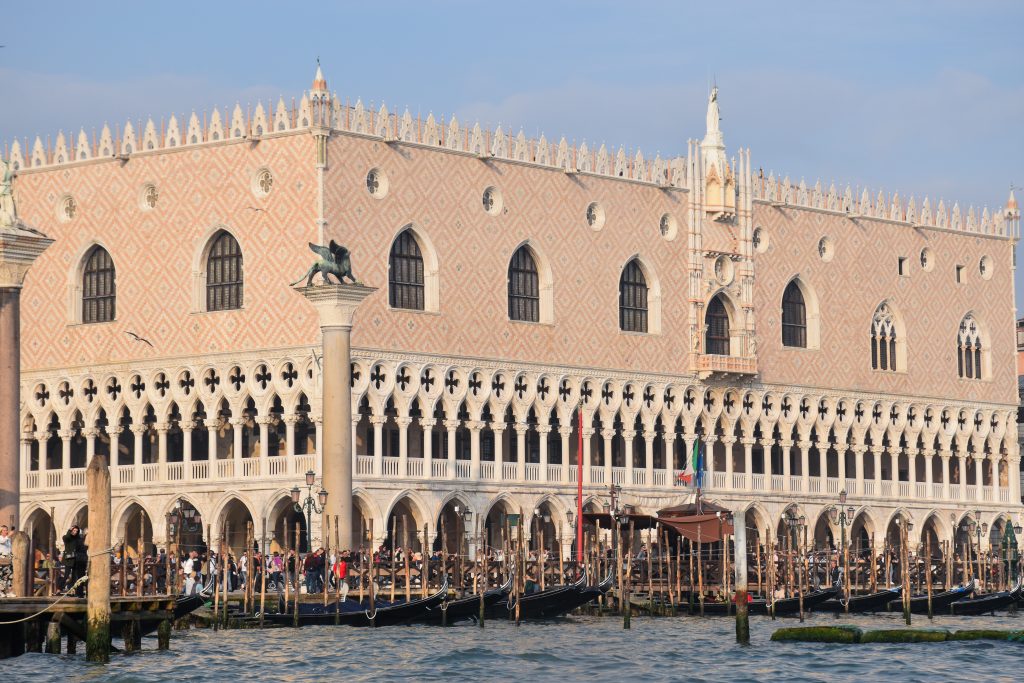
To be fair St Mark’s Square wasn’t as busy as we’d expected when we visited at the end of October, but you still needed to come early in the morning to stand a chance of seeing it without the crowds.
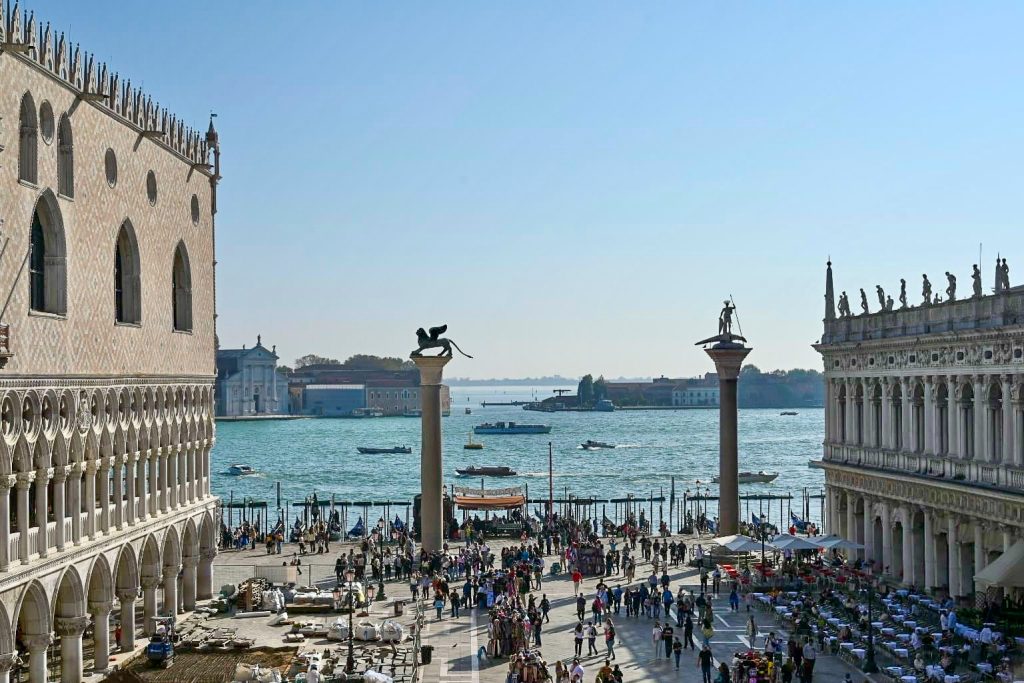
There is much to admire in St Mark’s Square – the Doge’s Palace, St Mark’s Basilica, the Campanile (Bell Tower), and the two huge granite columns by the waterfront which came from Constantinople, one supporting St Theodore with a crocodile and one supporting the winged lion of St Mark. These columns mark the entrance to Venice and are designed to be viewed from the water. However, take note, locals think its unlucky to walk between them as they were once the site of public executions.
Café Florian
There are several beautiful and famous cafes around the Proccuratie, the double-decker arches forming a U shape around St Mark’s Square. Many of the cafes have string quartets outside playing classical music, which sets the scene very nicely for those having morning coffee on the square. However, beware, these cafes are notoriously expensive, and you could find yourself paying the same for one coffee as your entire lunch.
Café Florian is perhaps the most famous, having been serving the likes of Casanova, Hemmingway, Lord Byron and even Dickens, since 1720.
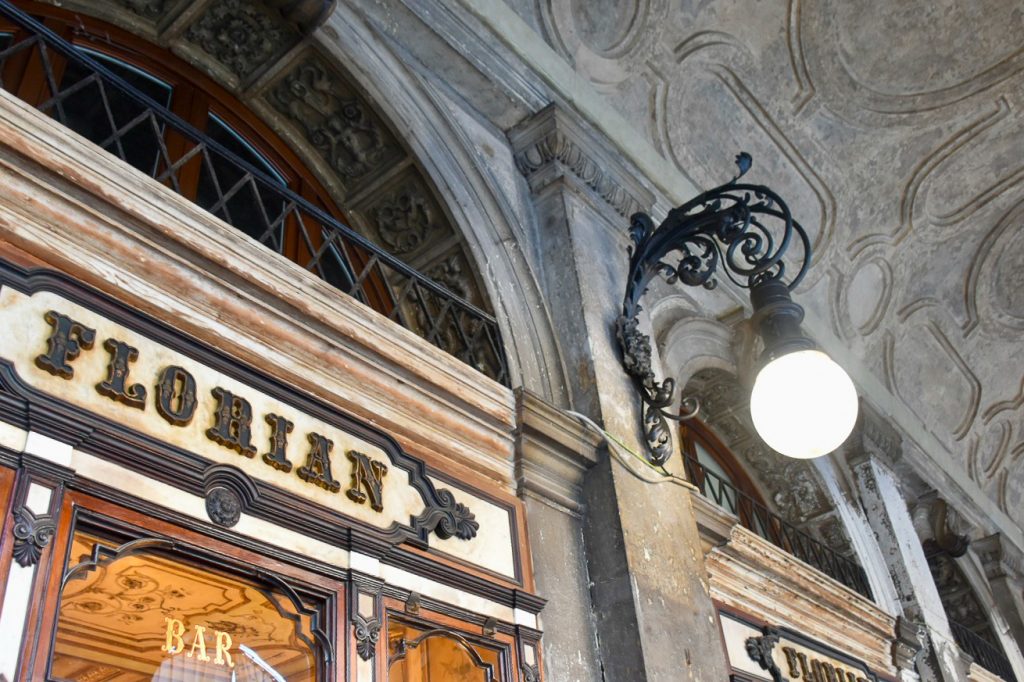
We decided to test the local’s advice and head straight to the bar at the back of Café Florian to order a coffee at the bar – the theory being, that if you stand at the bar, your coffee will be a third of the price of one drunk inside the café or on its terrace. The theory worked and our coffees cost 5 Euros each as opposed to the rumoured 18 Euros each!
We also got to see the inside of Cafe Florian as well as securing a seat at one of the small tables in the bar area. A good locals tip!
Take a Skip-the-line tour of the Doge’s Palace and St Mark’s Basilica
The Doge’s Palace (Palazzo Ducale)
We booked a Skip The Line Tour of the Doge’s Palace and Basilica through Get Your Guide to get the most out of our visit and avoid the queues on entry. This was a good move, and we learnt a lot about this President’s Palace, and how it was built from pink marble as a show of power and wealth in Venice.
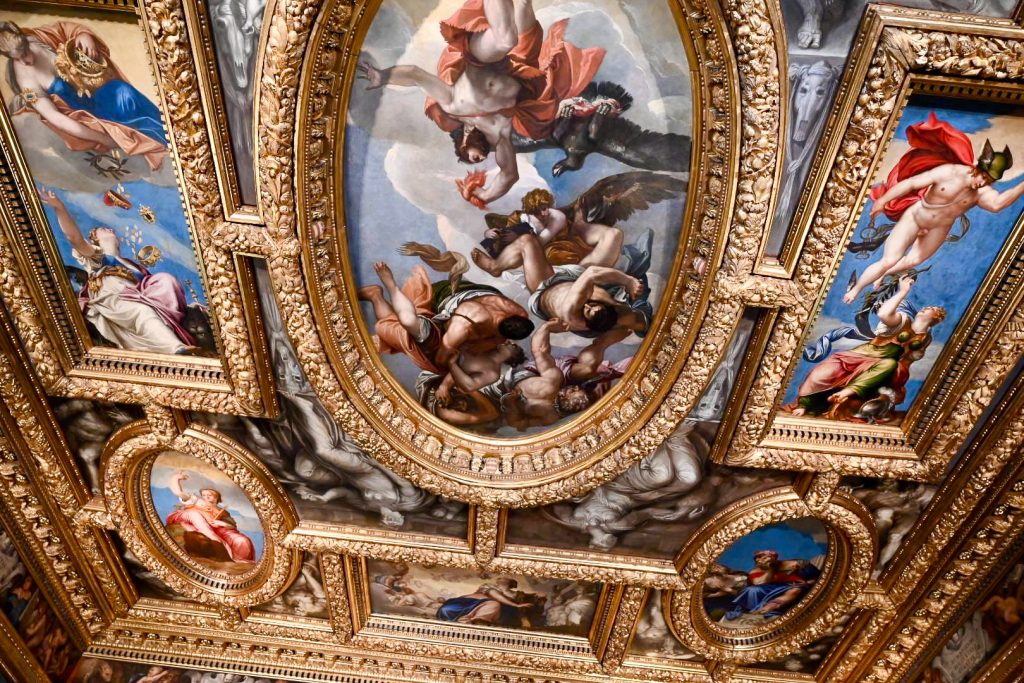
As you can imagine, the inside rooms of the official residence of 120 doges between 697 and 1797, were quite something – golden staircases, ornate ceilings decorated with paintings by famous artists, and impressive rooms fit for council meetings – one of which displays the enormous painting Paradise by Tintoretto featuring 400 faces.
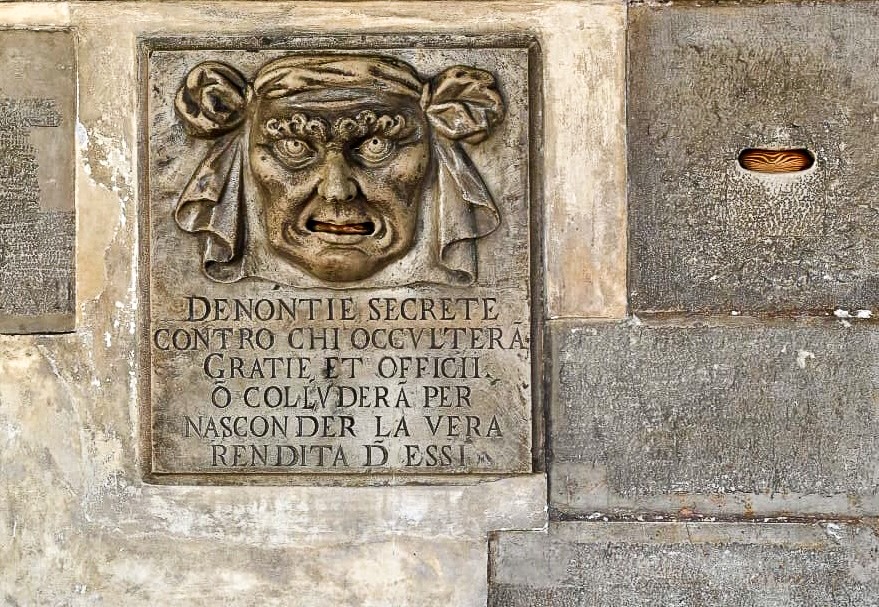
The tour gave us a fascinating insight into the climate of suspicion which was prevalent during the Republic of Venice period. The palace features mailboxes shaped as faces, through which you could pass on secrets or gossip about your friends and neighbours, which were used by the government for monitoring purposes.
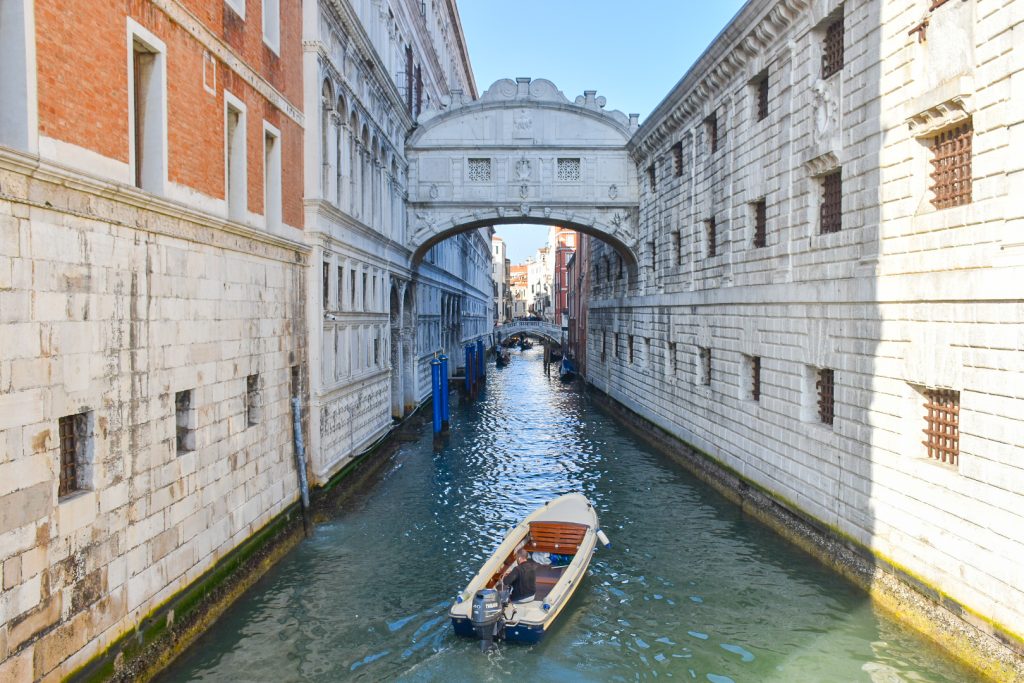
The tour visits the courtroom where the fates of the accused were decided – free, torture or imprison – before passing over the Bridge of Sighs into the adjoining prison. The Bridge of Sighs has small square windows from which the prisoners could take their last views of Venice before incarceration. This is what gave the Bridge its name, as the prisoners would sigh as they took their last look over the Lagoon.
Basilica di San Marco (St Mark’s Basilica)
Next our tour took us to St Mark’s Basilica which is stunning, both inside and out. Standing in St Mark’s Square looking at the front of the Basilica, there is just so much decoration to take in that it’s a little overwhelming!
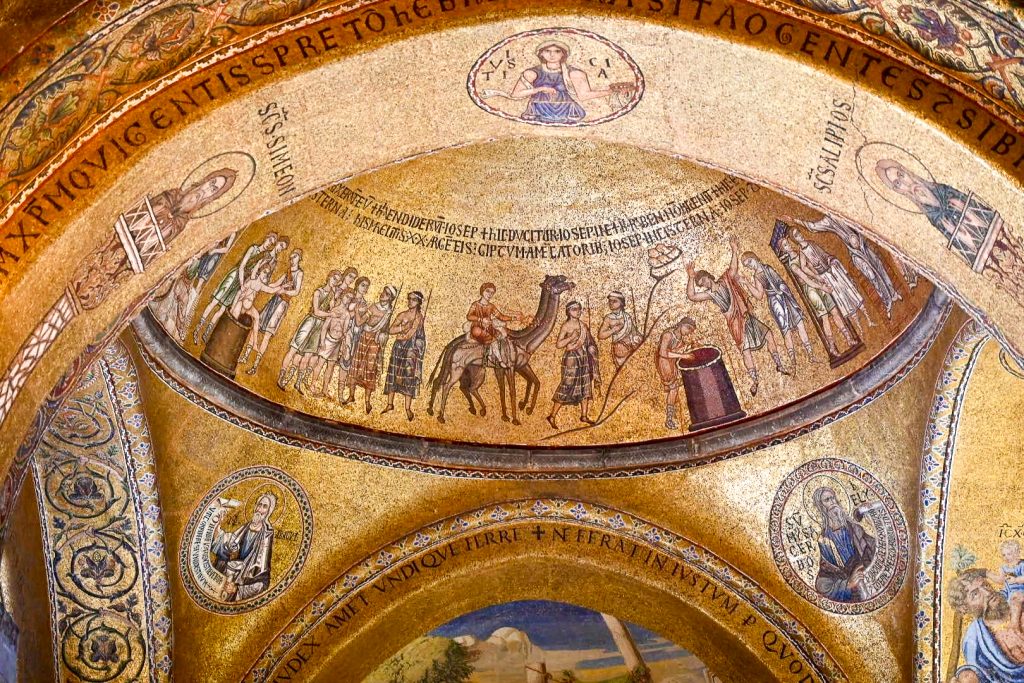
The alcoves over the doorways are filled with colourful mosaics blending decorative styles from the East and West. Then once you are inside, you will be awe-stuck by the gold mosaics covering the ceilings and walls – they must be seen to be believed.
Tip – There are a few areas of the Basilica which require additional payment to access, such as the gold alter (Pala d’Oro) and the first floor terrace overlooking St Mark’s Square. The cost of visiting these areas were on top of the price of our Get Your Guide tour, if we wanted to visit them.
We skipped the golden alter this time, but paid 6 euros to access the terrace and small museum displaying mosaics and copies of the famous bronze horses brought from Constantinople in 1204. The view over St Mark’s Square from the balcony is well worth the additional fee.
Pop into Museum Corre for a surprise view
Our tour ticket to the Doge’s Palace and St Mark’s Basilica included entry to the Museum Corre on the opposite corner of St Mark’s Square. Unfortunately, we did not have time to use this but understand that there is a fantastic view of St Mark’s Square from the café on the first floor of the Museum. Tip – you can access the Museum café without paying to visit the museum itself if you just want food with a view.
Admire the Torre dell’Orologio (Astrological Clock)
To the left of St Mark’s Basilica, you’ll see the stunning Renaissance clock tower Torre dell’Orologio made of white stone and marble with blue and gold detailing, and a winged lion statue. On the top of the clock tower are bronze statues two Moors who strike the bell on the hour.
Torre dell’Orologio was built in the late 15th century with a complex clock mechanism and shows the phases of the moon and the Zodiac. One story suggests that the two inventors had their eyes gorged out to prevent them from creating a replica, which is particularly gory if true? Tours are available.
Spend time in St Mark’s Square after dark
St Mark’s Campanile (Bell Tower)
We pre-booked a visit to St Mark’s Campanile on-line before visiting Venice, and therefore were able to join the shorter queue to go up the tower. The queues are partly caused by the limited number of people who can access the lift for the tower at any one time but, thank goodness for the lift replacing 300 stairs ascending 98.5 meters.
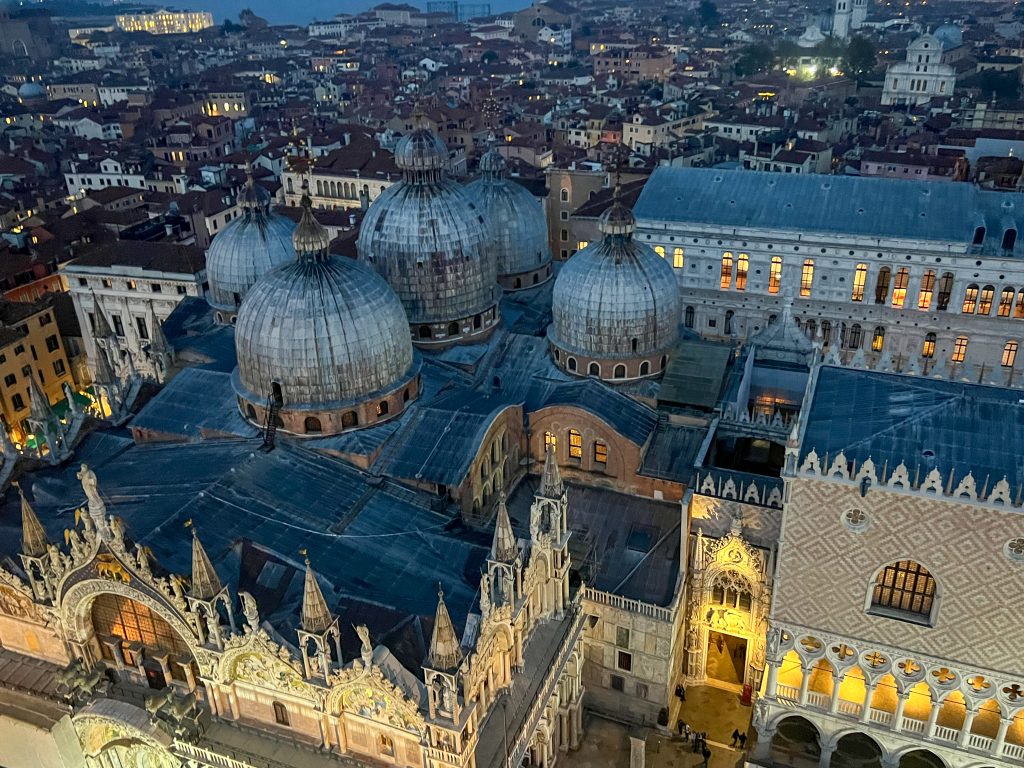
We went up the Campanile at dusk when the lights were just coming on across the city. As well as being very pretty, it also provided a great view over the roof of St Mark’s Basilica, so you could see its 5 domes clearly, and the gorgeous Doge’s Palace.
The Campanile was originally built as a lighthouse to assist boats navigating the lagoon, but later became a torture cage for prisoners in the Medieval Ages. It was destroyed by an earthquake and rebuilt as a replica, so it has quite a history. It uses 5 bells, each of which is rung for a different reason, such as, midday, midnight, or…executions!
Walk around the San Marco sestiere – two ways
1. Take the Merceria Orologio to the Rialto Bridge
Next to the Torre dell’Orologio in St Mark’s Square is an arch over a passageway marking the entrance into the Mercerie area of the San Marco sestiere – a series of narrow alleys filled with a variety of shops and pasticcerias with inviting cannoli pastries in the windows.
Tip – this route is the fastest way to walk from St Mark’s Square to the Rialto Bridge. Just follow the yellow signs on the walls. It tends to feel busy as the lanes are narrow and full of visitors and locals alike using the route – the visitors are the ones walking slowly and stopping to take photos, the locals are the ones walking with purpose!
2. Walk west without a map and get lost in San Marco sestiere
One morning, we got off the vaporetto at St Mark’s Square and walked west, instead of north towards the Rialto Bride, just exploring and soaking in the sights and sounds. It was amazing how much quieter it got, just a few streets away from the action. Things we found along the way included:
- Harry’s Bar – the 1930s bar famous for its Bellini cocktail and celebrity clientele over the years.
- Church of San Moise – built in 1668 with over-the-top Baroque detailing which many locals feel is ‘clumsy’. That said, there is a Tintoretto painting to see inside and you can pay one Euro for the painting to be lit up whilst you view it. The church also holds the remains of John Law, inventor of the bank note. It is said that rubbing the doormat on entry will give you positive financial fortune!
- Leather goods shop – a wonderful non-branded Italian leather shop selling quality leather goods for reasonable prices – purchases were made…
- La Fenice (‘phoenix’) – the grand opera house of Venice, which was rebuilt after being destroyed in a fire.
- Campo Santo Stefano – a large piazza with cafes and bars, including Terraza Aperol, but sadly it was too early in the day for us to enjoy this Spritz bar.
- Ponte dell’Accademia – the wooden pedestrian bridge which passes over the Grand Canal to the Dorsoduro neighbourhood and Accademia Museum. This is one of only four bridges across the Grand Canal.
Other places to find in San Marco sestiere
As mentioned in my previous blog Travel Planning a Week in Venice with Teenagers, don’t miss the following in the San Marco neighbourhood:
- The Scala Contarini del Bovolo – ‘snail staircase’
- The view of the Grand Canal from the rooftop of the T Fondaco dei Tedeschi, luxury shopping centre, and
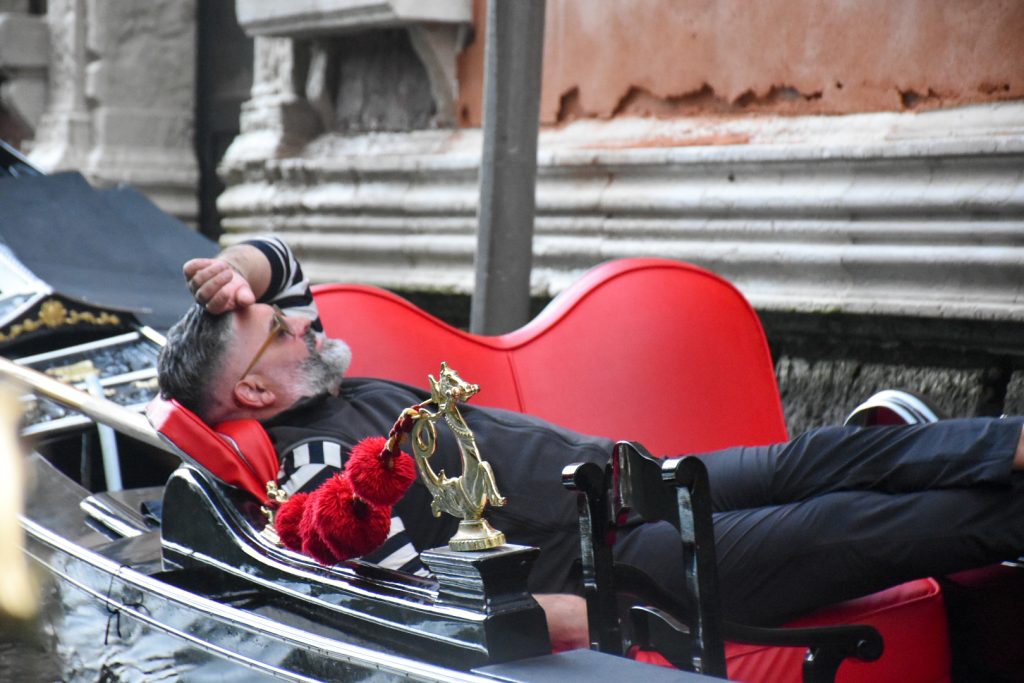
- A gondola ride from Campo San Moise.
Final thoughts…
The San Marco sestiere is a very special place, and one which you cannot, and should not ignore. If crowds aren’t your thing, then you can work around them, by getting up early to visit, or visiting in the evening when many of the day-tripper tourists have gone home.
On the flip side, try not to get stuck in St Mark’s Square as there is so much else to see around the neighbourhood, and beyond!
Thank you so much for reading my blog, I hope you found it useful?
For more stories, itineraries, and advice, check out my Related Posts and sign up to receive my blogs by email.
If you have a blog-related question, please do ask in the Comments box and I’ll try to help…
Request please – if you use my photos, then please credit Love Travel Planning on your social media or give me a shout out on Instagram @lovetravelplanning as I am growing my website. Huge thanks.
Enjoy your travels!


Leave a reply
You must be logged in to post a comment.